
In the landscape of Silicon Valley giants, few companies are shrouded in as much intrigue and complexity as Palantir Technologies. Founded in 2003 by a group including Peter Thiel and Alex Karp, Palantir has evolved from a niche data tool for the intelligence community into a foundational software layer for the world’s most critical institutions. To understand what Palantir does, one must move past the buzzwords of “big data” and “analytics.” Palantir does not simply collect data; it builds the platforms that allow organizations to integrate their data, decisions, and operations into a single, cohesive environment.
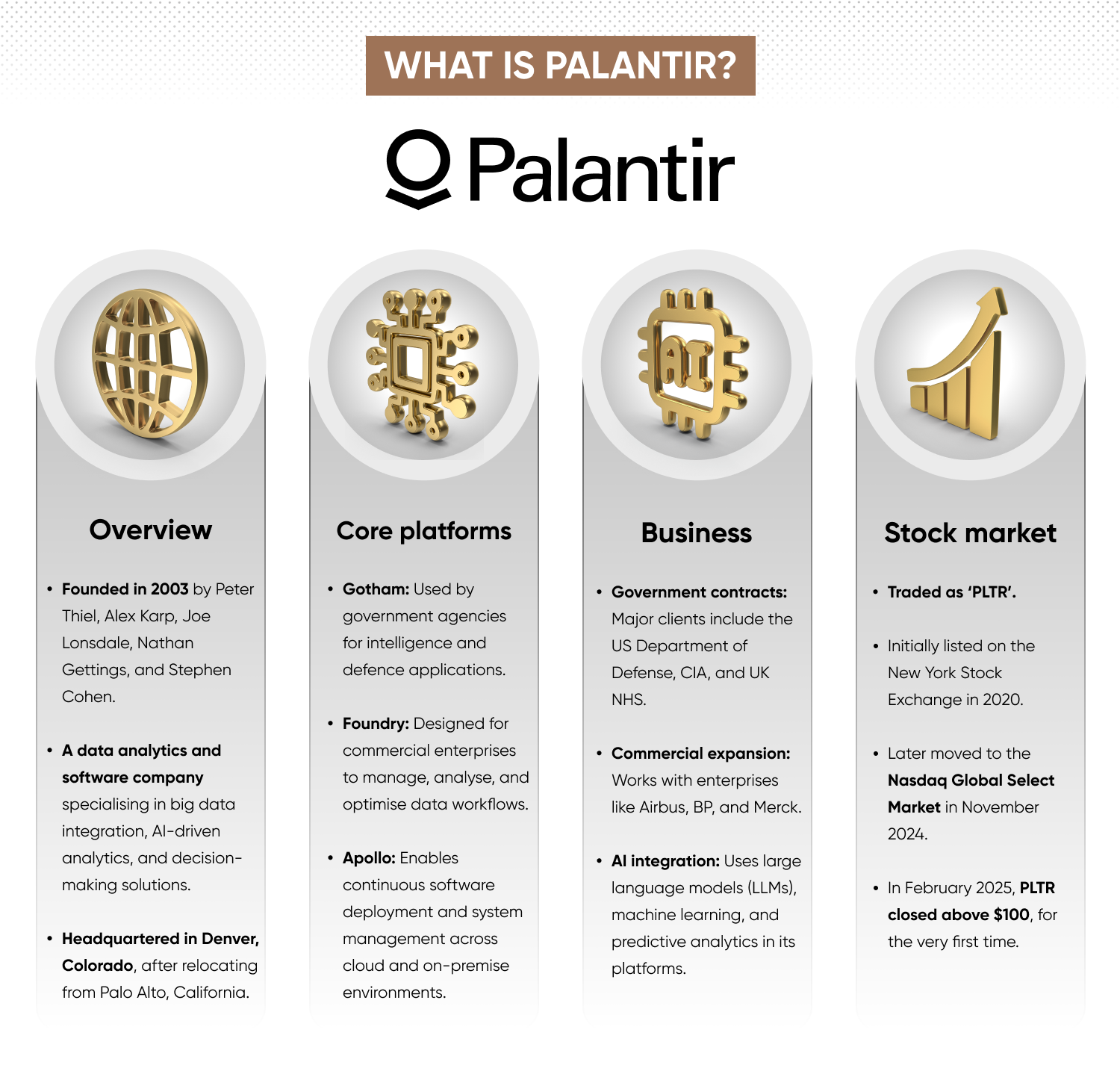
At its core, Palantir functions as an “operating system” for the enterprise. Just as a computer’s OS manages hardware and software to let a user perform tasks, Palantir’s software manages a company’s disparate data sources and legacy systems to allow human operators to make better decisions in real-time.
The Core Platforms: Gotham, Foundry, and Apollo
Palantir’s technological value proposition is delivered through three primary legacy platforms, each designed for specific operational environments. While they share a common philosophy of data integration, their applications vary significantly across the public and private sectors.
Gotham: Intelligence and Defense Operations
Gotham was Palantir’s first flagship product, designed primarily for government agencies, counter-terrorism analysts, and defense departments. In the world of intelligence, data is often fragmented—spread across signals intelligence, human reports, financial records, and satellite imagery.
Gotham’s primary function is to “connect the dots.” It allows analysts to search through massive volumes of unstructured data to find hidden patterns. For example, a Gotham user can track a specific entity across multiple data streams to identify a potential threat. The platform uses a graphical interface that represents real-world objects—people, places, things—and the relationships between them, rather than just rows and columns in a database.
Foundry: Integrating Data for the Commercial Sector
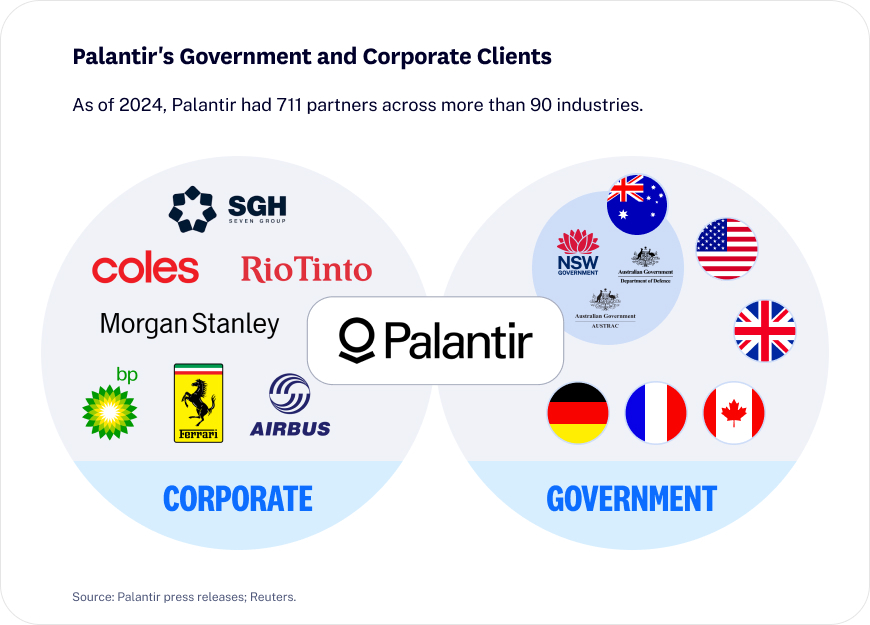
As Palantir expanded into the corporate world, it developed Foundry. While Gotham focuses on investigative workflows, Foundry is built for the operational complexities of large-scale enterprises like Airbus, BP, or Merck.
Foundry acts as a centralized environment where data engineers and business users can collaborate. It addresses the “data silo” problem by ingesting data from every corner of a corporation—supply chains, HR systems, sensors on factory floors—and creating a digital twin of the organization. This allows executives to simulate “what-if” scenarios, such as how a port strike in Asia might affect production schedules in Europe.
Apollo: The Continuous Delivery Engine
The third pillar of the Palantir ecosystem is Apollo. Historically, deploying sophisticated software into secure or remote environments (like a submarine or a high-security government facility) was a logistical nightmare. Apollo is the specialized software layer that manages the deployment and management of Gotham and Foundry.
It allows Palantir to provide “continuous delivery” of software updates across any environment—be it public clouds, on-premise servers, or “at the edge” in disconnected hardware. This ensures that the software is always operational and secure, regardless of the physical or digital infrastructure it resides on.
The Evolution into AI: The Artificial Intelligence Platform (AIP)
In recent years, the conversation around Palantir has shifted toward the Artificial Intelligence Platform (AIP). As Large Language Models (LLMs) and generative AI began to dominate the tech landscape, Palantir recognized a fundamental problem: businesses wanted to use AI, but they lacked the infrastructure to do so safely and effectively with their private data.
Bridging LLMs with Private Data
Most standard AI models are trained on public data and operate in a vacuum. For a corporation or a military unit, an AI that hallucinates or leaks sensitive information is a liability. Palantir’s AIP solves this by anchoring LLMs within the company’s existing data “Ontology” (its structured digital twin).
AIP allows users to interact with their data using natural language. A logistics manager can ask, “Show me which shipments are at risk due to the upcoming hurricane and suggest a rerouting plan,” and the AI will generate a response based on the company’s actual real-time inventory and shipping data.

Governance and Security in AI Deployment
One of Palantir’s strongest technological differentiators is its focus on ethics and security. Within AIP, every action taken by the AI is governed by strict access controls. The software provides a full audit trail, showing exactly which data the AI accessed to reach a conclusion. This “guardrail” system ensures that the AI operates within the legal and ethical boundaries defined by the organization, preventing the “black box” problem often associated with neural networks.
How Palantir Solves the “Data Silo” Problem
The primary technical challenge for any modern organization is not a lack of data, but an overwhelming surplus of it stored in incompatible formats. This is known as the “data silo” problem. Palantir’s approach to solving this is fundamentally different from traditional business intelligence tools.
The Ontological Approach to Data Modeling
Most software requires data to be cleaned and moved into a central warehouse before it can be used. Palantir’s “Ontology” layer sits on top of existing data sources without necessarily requiring them to be moved.
The Ontology translates technical data (like a SKU number in an SQL database) into a human-readable object (like “Aviation Engine”). This allows non-technical users to interact with complex data structures intuitively. By creating a unified language for the business, Palantir ensures that the finance department and the operations department are looking at the same “source of truth.”
Real-time Decision Making and Digital Twins
By creating a digital twin of an organization, Palantir moves beyond retrospective reporting. Traditional tools tell you what happened last month; Palantir tells you what is happening now and what might happen tomorrow. This real-time capability is essential for high-stakes environments. In healthcare, for instance, Palantir has been used to manage hospital bed capacity and vaccine distribution, where data latencies of even a few hours could result in systemic failures.
Industry Applications and Use Cases
The versatility of Palantir’s tech stack means it is applicable to almost any data-intensive industry. Its software has been deployed in sectors ranging from energy and manufacturing to law enforcement and aerospace.
Supply Chain Optimization and Resilience
Global supply chains are incredibly fragile. Palantir’s Foundry platform allows companies to map their entire supply chain, including second and third-tier suppliers. When a disruption occurs—such as a natural disaster or a geopolitical shift—the software can automatically suggest alternative suppliers or shipping routes. This proactive stance on supply chain management has saved multi-national corporations hundreds of millions of dollars in potential losses.
Healthcare and Precision Medicine
In the medical field, Palantir facilitates the integration of genomic data, clinical trial results, and patient records. This allows researchers to identify trends in how different demographics respond to specific treatments. During the COVID-19 pandemic, Palantir’s software was instrumental in the UK’s National Health Service (NHS) for managing the logistics of the vaccine rollout, ensuring that doses were distributed based on real-time demand and localized infection rates.
The Future of Palantir’s Software Ecosystem
As we move into a future defined by decentralized data and edge computing, Palantir is positioning itself at the vanguard of “software-defined operations.” The goal is no longer just to analyze data, but to create a closed-loop system where data informs action automatically.
Edge Computing and Decentralized Data
The next frontier for Palantir is “the edge.” This refers to processing data at its source—whether that is a sensor on a satellite, a camera on a drone, or a diagnostic tool in a remote oil rig. By deploying lightweight versions of their software directly onto hardware, Palantir enables real-time processing in environments with limited connectivity. This reduces the time it takes to turn raw data into actionable intelligence, a critical requirement for autonomous systems and modern defense.
The Shift Toward “Bootcamps” and Rapid Integration
Palantir has also revolutionized how it delivers tech to customers. Historically, enterprise software took years to implement. Palantir has shifted to a “Bootcamp” model, where they prove the value of their AIP and Foundry platforms in just a matter of days. This rapid deployment capability is a testament to the flexibility of their underlying architecture, allowing them to integrate with a customer’s existing tech stack with minimal friction.
In summary, Palantir is a software company that builds the connective tissue for the modern world. By providing the tools to integrate data, apply AI safely, and manage operations across any environment, Palantir ensures that the world’s most important institutions can function in an increasingly complex and data-driven era. Whether it is preventing a terror attack, streamlining a global supply chain, or accelerating medical research, Palantir’s technology is the invisible engine driving critical decision-making across the globe.
aViewFromTheCave is a participant in the Amazon Services LLC Associates Program, an affiliate advertising program designed to provide a means for sites to earn advertising fees by advertising and linking to Amazon.com. Amazon, the Amazon logo, AmazonSupply, and the AmazonSupply logo are trademarks of Amazon.com, Inc. or its affiliates. As an Amazon Associate we earn affiliate commissions from qualifying purchases.