
The stock market is often viewed as a barometer for economic health, a complex ecosystem where millions of participants trade ownership in global corporations. Most of the time, this system functions with a degree of predictable volatility, trending upward over the long term as productivity increases and economies grow. However, occasionally, the system experiences a violent and rapid decline—a crash. A stock market crash is typically defined as a sudden, double-digit percentage drop in stock indices over a few days or weeks. While these events are rare, they are a fundamental part of the financial cycle. Understanding why they happen requires a deep dive into the intersection of economic fundamentals, human psychology, and the structural mechanics of modern trading.
Macroeconomic Foundations and the Weight of Monetary Policy
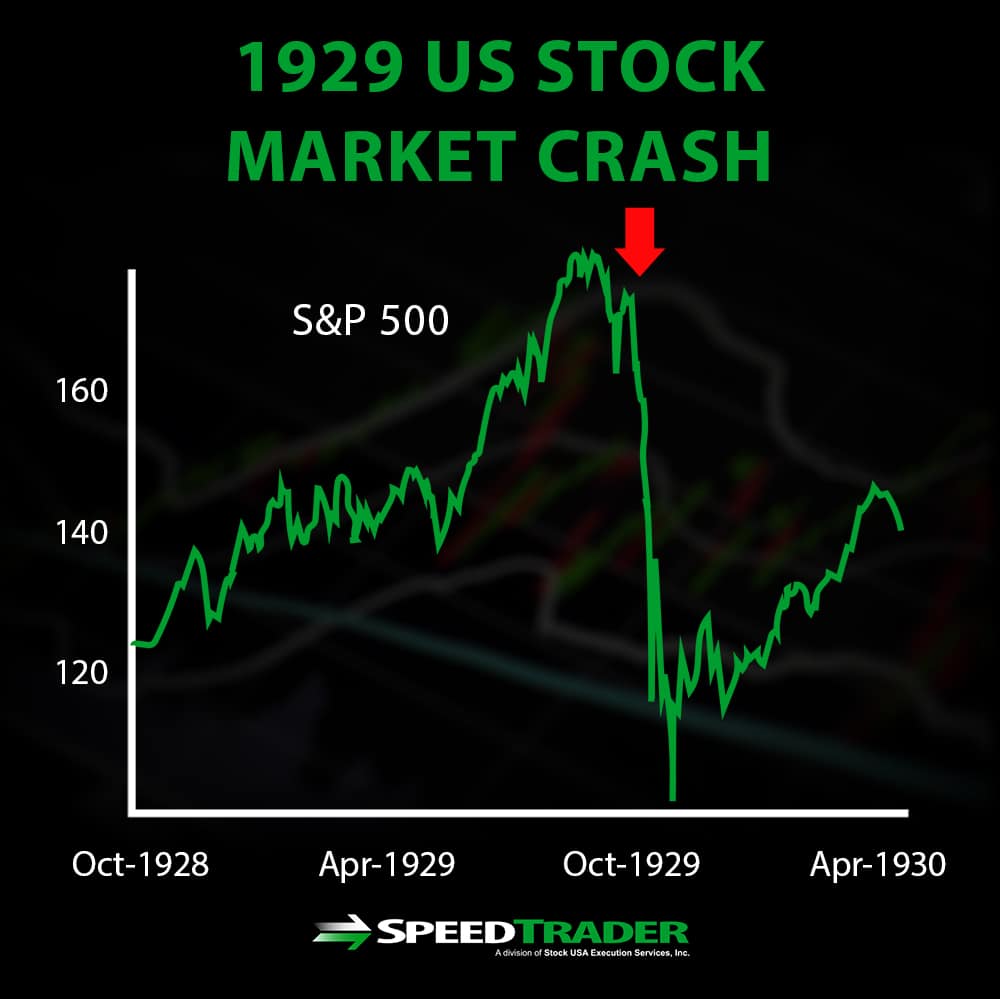
At its core, a stock market crash is often the result of a disconnect between asset prices and the underlying economic reality. When stock prices rise far beyond the intrinsic value of the companies they represent, the market becomes fragile. Several macroeconomic factors can act as the needle that pops this valuation bubble.
Interest Rates and the Cost of Capital
One of the most significant drivers of market stability is monetary policy, specifically the federal funds rate set by central banks. When interest rates are low, borrowing is cheap, encouraging businesses to expand and consumers to spend. This creates a “risk-on” environment where investors seek higher returns in the stock market because “safe” investments like bonds offer negligible yields.
However, when central banks raise interest rates—often to combat inflation—the dynamic shifts. Higher rates increase the cost of debt for corporations, eating into profit margins. Furthermore, the “discount rate” used to value future cash flows increases, which mathematically lowers the present value of stocks, particularly high-growth tech companies. If the transition from a low-rate environment to a high-rate environment happens too quickly, or if rates reach a level that threatens to trigger a recession, investors may flee equities en masse, leading to a rapid price collapse.
Inflation and Corporate Profitability
Inflation is a double-edged sword for the equity markets. While moderate inflation can reflect a growing economy, runaway inflation erodes purchasing power and increases input costs for businesses. If a company cannot pass these costs on to consumers, its earnings will suffer. When the market realizes that projected earnings growth was overly optimistic, a mass repricing occurs. This “earnings recession” can trigger a broader market crash as investors realize they have overpaid for future growth that is no longer attainable.
The Psychology of Speculation: From Irrational Exuberance to Fear
While numbers and balance sheets provide the framework, human emotion provides the fuel for both market peaks and market troughs. Financial markets are not purely rational; they are driven by the collective psychology of participants who are prone to the extremes of greed and fear.
The Anatomy of a Speculative Bubble
Most market crashes are preceded by a period of “irrational exuberance,” a term famously coined by former Fed Chairman Alan Greenspan. During these periods, asset prices rise based on the expectation that they will continue to rise, rather than on fundamental value. This creates a positive feedback loop: rising prices attract more investors, which pushes prices even higher.
In this phase, the “fear of missing out” (FOMO) overrides traditional risk assessment. Investors begin to ignore red flags, believing that “this time is different.” Whether it was the Dutch Tulip Mania of the 1630s, the Dot-com bubble of the late 1990s, or the housing bubble of the mid-2000s, the pattern is the same. Eventually, the pool of “greater fools” willing to buy at inflated prices dries up. Once the upward momentum stalls, the realization sets in that the asset is overvalued, and the collective rush for the exit begins.
Herd Behavior and Panic Selling
Psychologically, the pain of a loss is felt much more intensely than the joy of a gain—a concept known as loss aversion. When a market starts to dip, fear can quickly transform into panic. Because investors look to one another for cues on how to act, selling begets more selling. This herd behavior creates a downward spiral. As prices drop, investors see their portfolios shrinking and sell to “preserve what is left.” This mass liquidation removes liquidity from the market, causing prices to gape downward as there are fewer buyers willing to step in front of the falling knife.
Structural Fragility: Technology, Leverage, and Liquidity
Modern markets are not just influenced by humans; they are governed by complex technological infrastructures and financial instruments that can exacerbate a decline, turning a correction into a full-blown crash.
High-Frequency Trading and Algorithmic Cascades
In the contemporary financial landscape, a significant portion of trading volume is executed by algorithms and high-frequency trading (HFT) systems. These programs are designed to react to market movements in milliseconds. While they provide liquidity during normal times, they can contribute to “flash crashes” during periods of stress.
If an algorithm is programmed to sell when a certain price floor is breached, and thousands of other algorithms have similar triggers, a domino effect occurs. These systems can execute thousands of trades before a human trader can even process what is happening. This automated selling can cause the market to plummet so rapidly that exchange “circuit breakers” are triggered to temporarily halt trading and prevent a total systemic collapse.
The Danger of Excessive Leverage and Margin Calls
Leverage—the use of borrowed money to increase the potential return on an investment—is a major accelerant during a crash. When the market is rising, leverage allows investors to see outsized gains. However, when prices fall, leverage becomes a liability.
Investors who buy stocks “on margin” use their existing portfolio as collateral for loans to buy more stock. If the value of that collateral drops below a certain threshold, brokers issue a “margin call,” requiring the investor to deposit more cash or sell assets immediately to cover the loan. If the investor cannot provide the cash, the broker forcibly liquidates their positions. This forced selling happens regardless of the stock’s fundamental value, adding immense downward pressure on prices and often triggering a chain reaction of more margin calls across the market.
External Shocks and the “Black Swan” Phenomenon
Sometimes, the cause of a crash does not originate within the financial system itself but comes from an external, unpredictable event. Nassim Nicholas Taleb popularized the term “Black Swan” to describe these events: they are unexpected, have a massive impact, and are often rationalized with the benefit of hindsight.
Geopolitical Instability and Global Events
The global economy is highly interconnected. A sudden conflict in a region critical for energy production, a trade war between major superpowers, or a significant change in government policy can create a vacuum of uncertainty. Markets despise uncertainty more than they despise bad news. When a geopolitical shock occurs, investors typically move into “safe-haven” assets like gold or government bonds, withdrawing capital from the equity markets and causing prices to slide.
Unexpected Health or Environmental Crises
The 2020 market crash serves as a primary example of a non-financial catalyst. The COVID-19 pandemic was an exogenous shock that effectively halted global commerce overnight. The crash was not caused by a failure of the banking system or a speculative bubble in stocks, but by the sudden and total disappearance of consumer demand and industrial production. While the market eventually recovered due to unprecedented government intervention, the initial crash was a visceral reaction to an existential threat that the market had not priced in.
Strategic Resilience: Managing Risk in a Volatile Environment
For the individual investor, a stock market crash is a test of both financial strategy and emotional fortitude. While crashes are inevitable over long time horizons, their impact on a personal portfolio can be mitigated through disciplined risk management.
The Role of Diversification and Asset Allocation
The most effective defense against a market crash is a well-diversified portfolio. Diversification involves spreading investments across different asset classes (stocks, bonds, real estate, commodities) and different sectors or geographies. While a crash in the S&P 500 will likely affect most equities, other asset classes like long-term treasury bonds often move in the opposite direction during a “flight to quality.” Proper asset allocation ensures that a decline in one area of a portfolio does not lead to total financial ruin.

Maintaining a Long-Term Perspective
History shows that the stock market has a 100% recovery rate from crashes. While the short-term pain of a 20% or 30% drop is significant, the long-term trajectory of the market is driven by corporate innovation and economic expansion. Investors who attempt to “time the market” by selling during a crash often miss the most explosive days of the subsequent recovery, which are essential for long-term wealth accumulation.
The primary reason a stock market crashes is a convergence of overvaluation, psychological panic, and structural triggers. By recognizing these patterns, investors can move away from emotional reactivity and toward a structured approach that views volatility not as a disaster, but as a natural, albeit painful, component of the wealth-building process. Understanding the mechanics of a crash is the first step in surviving one.
aViewFromTheCave is a participant in the Amazon Services LLC Associates Program, an affiliate advertising program designed to provide a means for sites to earn advertising fees by advertising and linking to Amazon.com. Amazon, the Amazon logo, AmazonSupply, and the AmazonSupply logo are trademarks of Amazon.com, Inc. or its affiliates. As an Amazon Associate we earn affiliate commissions from qualifying purchases.