
In the world of business finance and investing, the allure of the “high profit margin” is universal. For an entrepreneur, a high margin represents a safety net against market volatility and a direct path to wealth accumulation. For an investor, it signals a competitive “moat”—a structural advantage that allows a company to retain a significant portion of its revenue after all operating expenses, taxes, and interests are paid.
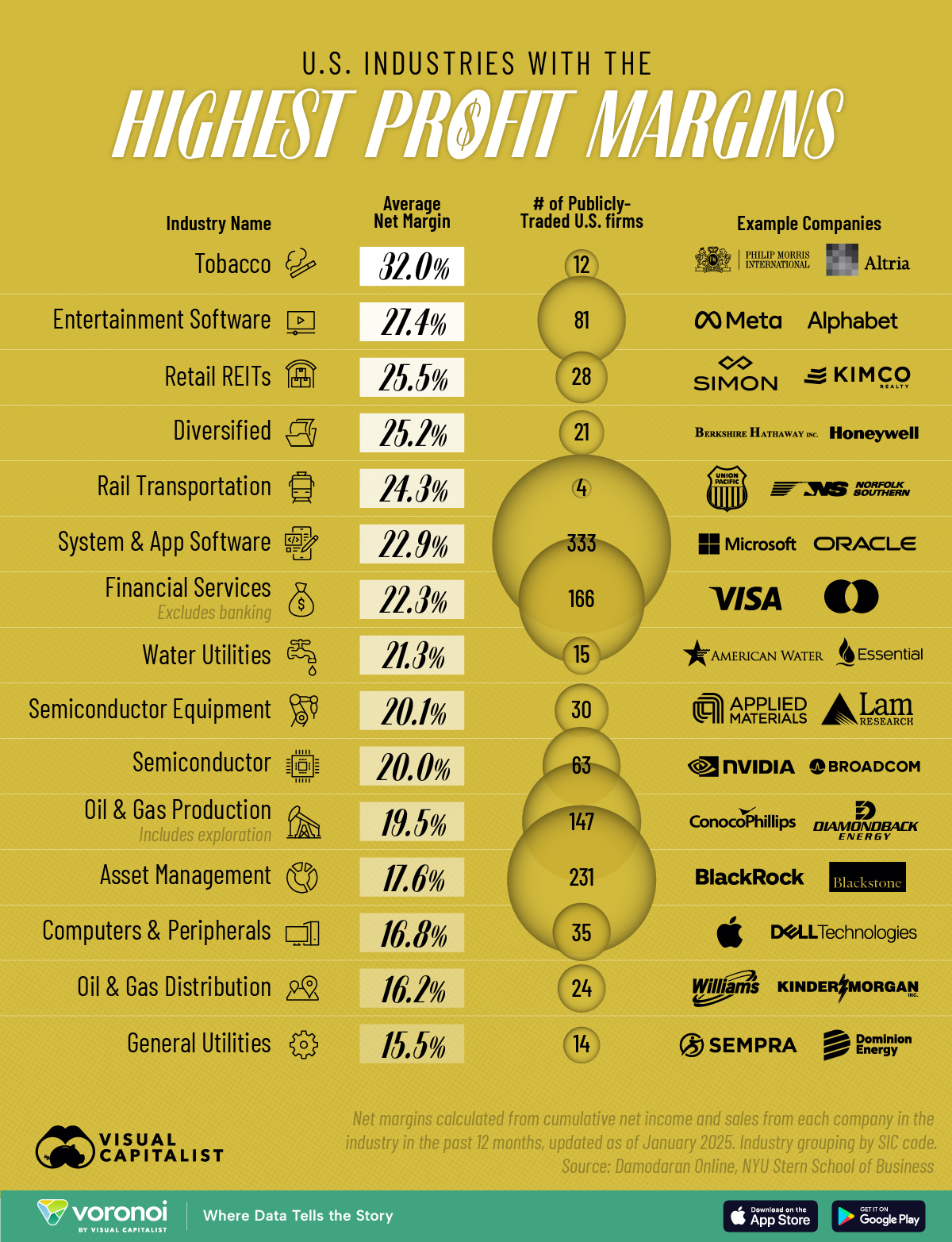
While the average net profit margin across all industries often hovers around 7% to 10%, certain sectors consistently achieve margins of 20%, 30%, or even higher. Understanding which businesses command these numbers requires a deep dive into capital structures, scalability, and the distinction between gross and net profitability.
The Dominance of Software and Digital Assets
When analyzing the most profitable business models in the modern economy, software—specifically Software as a Service (SaaS)—is the undisputed leader. The financial architecture of a software company is fundamentally different from traditional manufacturing or retail.
Software as a Service (SaaS) and Cloud Computing
The primary reason SaaS businesses boast net profit margins often exceeding 20% to 30% lies in the “zero marginal cost” of reproduction. Once the initial code for a platform is developed, the cost of serving the ten-thousandth customer is virtually identical to the cost of serving the ten-thousand-and-first.
Unlike a car manufacturer that must purchase steel, rubber, and glass for every new unit, a software company like Adobe or Salesforce simply grants a new license. While research and development (R&D) and customer acquisition costs (CAC) are high upfront, the recurring revenue model ensures that once a customer is onboarded, the lifetime value (LTV) far outweighs the maintenance costs.
Digital Products and Online Education
In the realm of online income and side hustles, digital products represent the pinnacle of high-margin ventures. E-books, online courses, and specialized templates require significant time investments but almost zero overhead. For a creator with an established brand, an online course priced at $500 might cost only pennies in hosting fees to deliver. This results in gross margins that frequently approach 90% or higher.
Fintech and Payment Processing
Financial technology firms occupy a unique space where tech meets traditional finance. Companies that provide payment gateways or financial management tools benefit from the scalability of software while taking a percentage of every transaction that passes through their system. This “toll booth” model allows for massive scaling with relatively lean staffing, leading to impressive bottom-line results.
High-End Professional Services and Intellectual Capital
If software dominates through automation, professional services dominate through specialized expertise. Businesses that sell “knowledge” rather than “stuff” avoid the heavy costs associated with inventory, logistics, and physical depreciation.
Specialized Legal and Accounting Services
Top-tier law firms and accounting practices consistently rank among the highest-margin businesses. The primary “inventory” is the billable hour of highly trained professionals. While salaries for top talent are high, the overhead for office space and administrative support is relatively fixed. Specialized niches, such as intellectual property law or corporate tax restructuring, can command premium rates that far outpace the operational costs of the firm.
Management Consulting
Consulting firms operate on a value-based pricing model rather than a cost-plus model. When a consulting firm helps a Fortune 500 company save $100 million in operational inefficiencies, they can charge a multi-million dollar fee that bears little relation to the actual hours worked. This decoupling of “time” from “value” is a hallmark of high-margin business finance.
Private Wealth Management and Financial Advisory
Wealth management is a high-margin sector due to the “assets under management” (AUM) fee structure. A boutique firm managing $500 million for high-net-worth individuals might charge a 1% annual fee. Once the infrastructure for compliance and portfolio management is in place, adding more assets requires very little additional expenditure. The scalability of managing capital makes this one of the most lucrative sectors in the financial services industry.
Specialized Real Estate and Asset Leasing
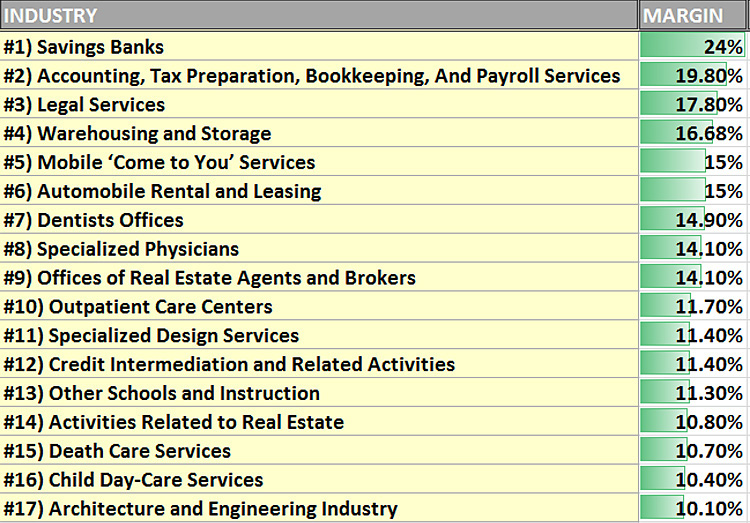
While traditional residential real estate often yields modest margins after accounting for maintenance, taxes, and financing, specific niches within the real estate world are designed for maximum profitability.
Self-Storage Facilities
Self-storage has long been a favorite of savvy investors due to its remarkably low overhead. Unlike multi-family housing, self-storage units do not require expensive HVAC systems, high-end finishes, or intensive maintenance. The “tenants” are inanimate objects that don’t call for repairs in the middle of the night. With automated entry systems and minimal staffing requirements, successful self-storage operations can see net profit margins that dwarf traditional rental properties.
Commercial Equipment Leasing
Businesses that own and lease specialized equipment—such as medical imaging machines, industrial cranes, or aircraft—operate in a high-barrier-to-entry environment. The profit comes from the spread between the cost of financing the asset and the lease payments collected. Because these assets are essential for the lessees’ operations, the providers can maintain high margins while also benefiting from significant tax advantages like accelerated depreciation.
Data Centers and Infrastructure REITs
As the world moves toward an AI-driven economy, the physical infrastructure that houses servers has become a high-margin powerhouse. Real Estate Investment Trusts (REITs) focused on data centers provide the cooling, security, and power for the world’s digital information. These facilities involve high initial capital expenditures (CapEx), but once operational, the long-term contracts and essential nature of the service allow for sustained high-margin returns.
Luxury Goods and Niche Manufacturing
In the world of physical products, the only way to achieve margins comparable to software is through the “luxury premium.” This is where brand strategy intersects with business finance to create massive profitability.
Luxury Fashion and Accessories
The cost of materials for a $2,000 designer handbag—the leather, the stitching, the hardware—might only be $150 to $200. The remaining $1,800 is a margin attributed to brand equity, exclusivity, and design. Luxury houses like LVMH or Hermès maintain high margins by strictly controlling supply and investing heavily in the “mythology” of the brand, which allows them to ignore the price sensitivity that plagues the mass-market retail industry.
Specialized Medical Devices and Pharmaceuticals
The pharmaceutical industry is often criticized for its margins, but from a purely financial perspective, it is a masterclass in high-margin operations. While the R&D costs to bring a drug to market are astronomical (often in the billions), the actual cost of manufacturing a pill is frequently measured in cents. Once a patent is secured, the pharmaceutical company has a legal monopoly, allowing for margins that compensate for the years of failed research and high development risks.
Proprietary Industrial Components
Beyond consumer goods, businesses that manufacture specialized, patented components for the aerospace or defense industries enjoy significant pricing power. When a company produces a specific valve or sensor that is a critical failure point in a multi-million dollar jet engine, they can charge a premium that reflects the risk and the specialization required. These “invisible” high-margin businesses form the backbone of industrial profitability.
Strategic Pillars of a High-Margin Business
Identifying high-margin industries is only half the battle; understanding the underlying financial principles allows entrepreneurs to build or invest in businesses that sustain these margins over time.
Low Capital Intensity
The most profitable businesses usually don’t have to reinvest a huge portion of their profits back into “hard” assets like factories or heavy machinery. This allows “Free Cash Flow” to remain high, which can then be used for dividends, acquisitions, or further expansion.
High Barriers to Entry
High margins act as a magnet for competition. To maintain them, a business must have a “moat.” This could be a patent (Pharma), a powerful brand (Luxury), high switching costs (SaaS), or regulatory hurdles (Banking). Without these barriers, competitors will enter the market, undercut prices, and eventually compress margins toward the industry average.
Pricing Power
The ultimate indicator of a high-margin business is pricing power—the ability to raise prices without a significant drop in demand. This is typically achieved through extreme specialization or emotional branding. In business finance, the goal is always to move away from “commoditization” (where you compete on price) and toward “differentiation” (where you compete on unique value).
In conclusion, the businesses with the highest profit margins are those that have successfully decoupled their revenue from their physical labor or material inputs. Whether through the scalability of code in SaaS, the intellectual leverage of professional consulting, or the brand prestige of luxury goods, these models share a common thread: they provide a value that far exceeds the tangible cost of delivery. For the investor or the entrepreneur, focusing on these high-margin corridors is the most effective way to maximize the return on both time and capital.
aViewFromTheCave is a participant in the Amazon Services LLC Associates Program, an affiliate advertising program designed to provide a means for sites to earn advertising fees by advertising and linking to Amazon.com. Amazon, the Amazon logo, AmazonSupply, and the AmazonSupply logo are trademarks of Amazon.com, Inc. or its affiliates. As an Amazon Associate we earn affiliate commissions from qualifying purchases.