
A business plan is much more than a document; it is a financial roadmap and a strategic blueprint. Whether you are seeking venture capital, a bank loan, or simply trying to navigate the complexities of a new startup, a well-structured business plan serves as the foundation for your fiscal health. In the world of business finance, clarity is currency. To move from a concept to a profitable enterprise, you must articulate your vision through the lens of market viability and financial sustainability.
This guide breaks down the process of preparing a comprehensive business plan step by step, focusing on the core pillars of business finance, resource management, and strategic growth.
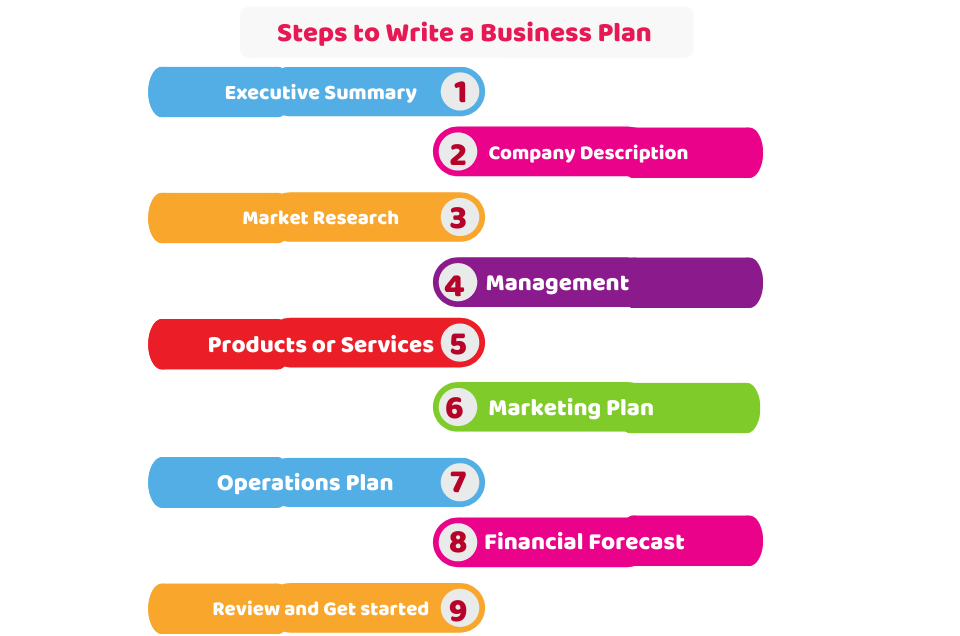
The Executive Summary: Your Financial Elevator Pitch
The executive summary is the most critical part of your business plan. While it appears first, it should be written last. It serves as a distilled version of your entire proposal, designed to capture the interest of investors and lenders within the first few minutes of reading. In financial terms, this is your opening bid.
Defining the Value Proposition
Your summary must clearly state what your business does and why it matters. From a financial perspective, this involves defining the “problem-solution” fit. If you are solving a high-value problem for a large market, the potential for high returns on investment (ROI) increases. Investors look for a clear value proposition that suggests a scalable business model.
Summarizing Financial Goals
Do not wait until the end of the document to mention money. The executive summary should highlight your funding requirements and your high-level financial projections. State clearly how much capital you need, what it will be used for (e.g., R&D, inventory, marketing), and the projected timeline for reaching a break-even point. This transparency builds immediate credibility with financial stakeholders.
Market Analysis and Revenue Projections
A business plan is only as strong as the data supporting it. Before you can project income, you must understand the environment in which your business operates. This section requires a deep dive into industry trends, competitor financial health, and customer demographics.
Industry Outlook and Segmenting the Market
Start by analyzing the size of your industry. Is it growing or contracting? Use “Top-Down” and “Bottom-Up” approaches to estimate your Total Addressable Market (TAM), Serviceable Addressable Market (SAM), and your Share of Market (SOM). Investors want to see that you have a realistic grasp of how much of the “money pie” you can actually claim.
Competitive Analysis and Pricing Strategy
Identify your primary and secondary competitors. Analyze their pricing models. Are they high-volume/low-margin or low-volume/high-margin? Your pricing strategy is a direct driver of your revenue projections. You must justify your price point based on production costs, perceived value, and competitor benchmarks. A well-defined pricing strategy ensures that your gross margins are sufficient to cover operational expenses and debt service.
Operational Strategy and Capital Allocation

Once the market opportunity is established, you must outline how you will deploy capital to capture that opportunity. This section focuses on the “how” of your business—the internal mechanisms that convert investment into output.
Organizational Structure and Human Capital
In business finance, labor is often the largest expense. Your plan should detail your management team’s expertise and your hiring roadmap. Detail the roles essential for early-stage growth and the cost associated with attracting top talent. Investors are not just investing in an idea; they are investing in the people who will manage their capital.
The Lifecycle of Products and Services
Describe the production or service delivery process. What are the costs of goods sold (COGS)? How do you manage inventory or supply chain logistics to maximize cash flow? For service-based businesses, focus on the “unit economics”—the cost to acquire a customer versus the lifetime value (LTV) that customer brings to the business. High LTV/CAC ratios are a hallmark of a financially healthy business model.
The Financial Plan: Forecasting and Cash Flow Management
This is the heart of your business plan. The financial section translates all your previous narrative into numbers. For lenders and investors, this is the most scrutinized section. It requires precision, realism, and a thorough understanding of accounting principles.
Projected Financial Statements
You must provide three key financial statements, typically projected over a three-to-five-year period:
-
The Income Statement (P&L): This shows your revenues, expenses, and profit over time. It demonstrates the business’s ability to generate earnings.
-
The Cash Flow Statement: This is perhaps the most important document for a startup. It tracks the actual flow of cash in and out of the business. Many profitable businesses fail because they run out of cash; showing a healthy cash flow projection proves you can meet your short-term obligations.
-
The Balance Sheet: This provides a snapshot of your financial health at a specific point in time, listing assets, liabilities, and equity.
Funding Request and Use of Proceeds
If you are seeking external financing, be explicit. State the exact amount of funding required and the type of funding (equity vs. debt). Create a “Use of Proceeds” chart that breaks down how the funds will be allocated. For example: 40% for product development, 30% for marketing, 20% for operational overhead, and 10% for a liquidity reserve. This level of detail shows that you are a disciplined steward of capital.
Risk Mitigation and Scaling for Profitability
Every investment carries risk. A professional business plan does not ignore these risks; it identifies them and provides a mitigation strategy. This section demonstrates your financial foresight and your commitment to protecting investor interests.
Sensitivity Analysis and Contingency Planning
What happens if your sales are 20% lower than projected? Or if the cost of raw materials increases by 15%? Performing a sensitivity analysis (often called “what-if” scenarios) shows how your financial health changes under different conditions. Having a contingency plan—such as a secondary supplier or a leaner operating mode—proves to lenders that your business is resilient.
Exit Strategy and Long-term ROI
For equity investors, the “exit” is where they see their return. Whether it is an Initial Public Offering (IPO), an acquisition by a larger corporation, or a management buyout, you should outline the most likely path to liquidity. Even if an exit is years away, discussing it shows that you are aligned with the financial goals of your backers. You should also highlight your projected Return on Equity (ROE) and Return on Assets (ROA), as these metrics provide a standardized way for investors to compare your business against other opportunities in their portfolio.

Conclusion of the Planning Process
Preparing a business plan step by step is an exercise in discipline. It forces you to move beyond the excitement of a new idea and confront the cold, hard numbers of business finance. By meticulously detailing your market position, operational costs, and financial projections, you create a document that does more than just ask for money—it proves that your business is a viable, sustainable, and profitable investment. Success in business is rarely an accident; it is the result of a well-executed plan that treats every dollar as a tool for growth.
aViewFromTheCave is a participant in the Amazon Services LLC Associates Program, an affiliate advertising program designed to provide a means for sites to earn advertising fees by advertising and linking to Amazon.com. Amazon, the Amazon logo, AmazonSupply, and the AmazonSupply logo are trademarks of Amazon.com, Inc. or its affiliates. As an Amazon Associate we earn affiliate commissions from qualifying purchases.