
The allure of working with animals is strong for many, and a career as a veterinary technician offers a fulfilling path within the animal healthcare industry. While the passion for animal welfare is a primary driver, understanding the financial aspect, specifically the veterinary technician salary, is crucial for anyone considering this profession. This article delves into what influences a vet tech’s earning potential, exploring the various factors that shape their income and how it aligns with broader trends in technology, branding, and personal finance.
Understanding the Foundation of Vet Tech Salaries
Before diving into specific figures, it’s essential to grasp the fundamental components that contribute to a veterinary technician’s salary. This isn’t a one-size-fits-all profession, and a multitude of variables play a significant role in determining how much a vet tech can earn.

The Role and Responsibilities of a Veterinary Technician
At its core, the veterinary technician salary is a reflection of the vital and diverse roles they fulfill. Unlike veterinary assistants, vet techs are trained professionals with specialized skills. They are the backbone of a veterinary practice, working closely under the supervision of a licensed veterinarian. Their responsibilities are extensive and demanding, often mirroring those of a registered nurse in human healthcare.
These responsibilities include:
- Anesthesia: Administering and monitoring anesthesia during surgical procedures, ensuring patient safety and stability.
- Surgical Assistance: Preparing surgical suites, sterilizing instruments, assisting surgeons during operations, and monitoring post-operative recovery.
- Diagnostic Imaging: Operating X-ray machines, performing ultrasounds, and assisting with other imaging techniques to aid in diagnosis.
- Laboratory Procedures: Performing blood work, urinalysis, fecal tests, and other laboratory analyses to identify diseases and monitor patient health.
- Medication Administration: Dispensing and administering medications, vaccines, and treatments as prescribed by the veterinarian.
- Patient Care: Providing essential nursing care, including wound management, fluid therapy, bandage changes, and close observation of patient vital signs.
- Client Education: Communicating with pet owners about their animal’s condition, treatment plans, and home care instructions, often acting as a crucial bridge between the vet and the client.
- Emergency and Critical Care: Responding to and stabilizing critically ill or injured animals, providing intensive care in emergency situations.
- Dentistry: Performing dental cleanings, extractions, and dental radiography.
- Record Keeping: Maintaining accurate and detailed patient medical records.
The breadth of these duties signifies the critical importance of vet techs to the efficiency and quality of care within a veterinary clinic. The investment in their education and the ongoing development of their skills directly translate into their earning potential.
Education and Certification: The Cornerstones of Higher Salaries
The most significant factor influencing a veterinary technician’s salary is their educational background and credentials. To become a certified or licensed veterinary technician (CVT, LVT, RVT – the terminology varies by state/province), individuals must complete an accredited veterinary technology program. These programs are typically Associate’s (2-year) or Bachelor’s (4-year) degrees.
- Associate’s Degree: Most vet tech programs are Associate’s degrees. Graduates are eligible to sit for licensing or certification exams in their respective states.
- Bachelor’s Degree: While less common for direct clinical roles, a Bachelor’s degree can open doors to more specialized or advanced positions, such as research, education, or management, which often come with higher salary expectations.
Certification/Licensure: Passing the Veterinary Technician National Exam (VTNE) and meeting state-specific requirements is mandatory in most jurisdictions to practice as a credentialed veterinary technician. This credential signifies a standardized level of knowledge and competence, making certified technicians more marketable and commanding higher salaries than uncertified individuals performing similar tasks. Continuous education and specialized certifications in areas like anesthesia, emergency care, or dentistry can further enhance earning potential.
Experience Matters: The Value of On-the-Job Expertise
Much like any profession, experience is a powerful driver of salary growth for veterinary technicians. Entry-level positions will naturally command lower salaries as technicians gain hands-on experience, refine their skills, and build a track record of competence and reliability.
- Entry-Level (0-2 years): New graduates will typically start at the lower end of the salary spectrum. Their focus is on learning the ropes, applying their academic knowledge in a practical setting, and proving their capabilities.
- Mid-Level (3-7 years): With several years of experience, vet techs develop a deeper understanding of complex cases, become more efficient, and often take on more responsibility. This experience is reflected in increased earning potential.
- Senior-Level/Specialized (8+ years): Highly experienced technicians, particularly those who have specialized in areas like emergency and critical care, surgery, or anesthesia, can command significantly higher salaries. They may also move into roles supervising junior staff or managing hospital operations.
Beyond just the number of years, the quality of experience is also important. Working in high-volume emergency hospitals, referral centers, or specialized clinics often provides exposure to a wider range of complex cases, which can accelerate skill development and career advancement.
Factors Influencing Vet Tech Salaries Beyond the Basics
While education, certification, and experience form the bedrock of a vet tech’s salary, several other crucial factors come into play, impacting earning potential in tangible ways. These external influences are dynamic and can lead to significant variations in income across different roles and geographic locations.
Geographic Location: The Cost of Living and Demand Nexus
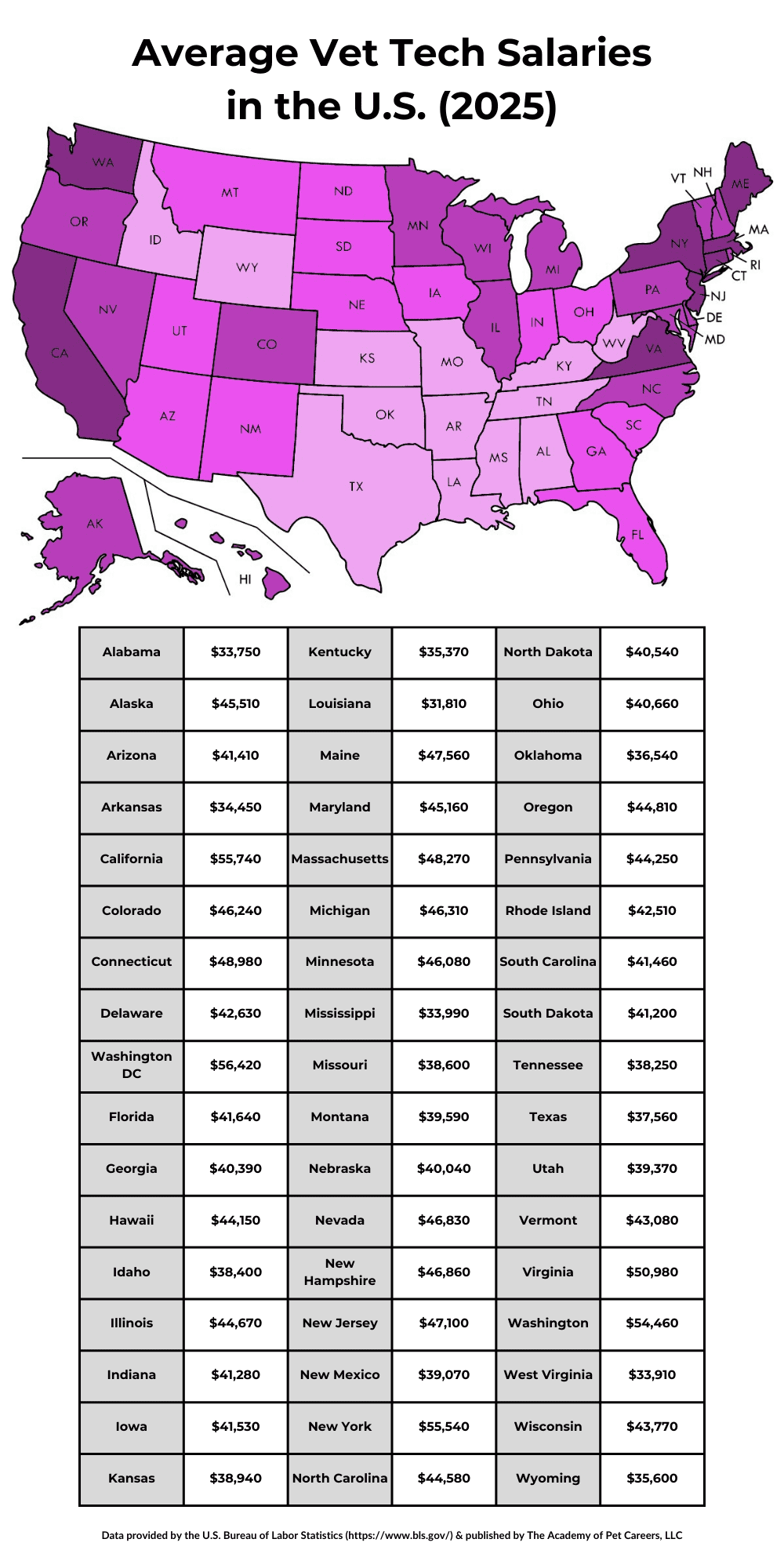
The adage “location, location, location” holds true for veterinary technician salaries. The cost of living in a particular area directly influences wages across all professions, and veterinary medicine is no exception.
- Metropolitan Areas vs. Rural Areas: Major metropolitan areas and densely populated regions, with a higher cost of living and often a greater demand for veterinary services, tend to offer higher salaries. Cities like Los Angeles, New York, or San Francisco, for example, will generally have higher salary ranges than smaller towns or rural communities.
- Regional Demand: Areas with a high concentration of pet owners and a robust veterinary infrastructure will naturally have a stronger demand for skilled vet techs. This demand, coupled with a potentially smaller pool of qualified professionals, can drive up wages.
- Provider Competition: In areas with numerous veterinary practices, competition for qualified staff can also lead to higher compensation packages to attract and retain talent.
Understanding the local job market and cost of living is essential for setting realistic salary expectations. A salary that might seem high in a low-cost-of-living area could be standard or even below average in a more expensive region.
Type of Practice: Specialization and Practice Setting
The specific environment in which a veterinary technician works can dramatically impact their salary. Different practice settings cater to different needs and often have varying compensation structures.
- General Practice Clinics: These are the most common type of veterinary facility, offering routine care, vaccinations, and treatment for common illnesses and injuries. Salaries here tend to be within the average range for the profession.
- Specialty Hospitals: These facilities focus on specific areas of veterinary medicine, such as surgery, internal medicine, cardiology, neurology, or oncology. Technicians working in specialty hospitals often require advanced skills and experience, and consequently, their salaries are typically higher. The complexity of cases and the specialized equipment used contribute to this higher earning potential.
- Emergency and Critical Care Hospitals: Operating 24/7, these hospitals deal with life-threatening emergencies and critically ill patients. The high-stress environment and the need for immediate, expert care mean that vet techs in these settings often earn more due to the intensity of their work and specialized skills in stabilization and intensive care.
- Research Facilities: Veterinary technicians in research settings contribute to scientific advancement, working with animals in controlled environments. Their roles might involve data collection, animal care, and assisting researchers. Salaries in this sector can vary widely depending on the institution, funding, and specific research being conducted.
- Veterinary Teaching Hospitals: Associated with universities, these hospitals offer advanced diagnostics and treatments and serve as training grounds for future veterinarians and technicians. Vet techs here often have opportunities for further specialization and may earn competitive salaries, especially those with advanced degrees or extensive experience.
- Zoos and Wildlife Rehabilitation Centers: Working with exotic or wild animals presents unique challenges and requires specialized knowledge and training. Salaries in these niche areas can be highly variable and may not always be as high as in private practice, often driven by passion for conservation and specific institutional budgets.
The Impact of Technology and Modern Vet Tech Roles
In today’s rapidly evolving world, technology plays an increasingly significant role in all professions, and veterinary medicine is no exception. The integration of advanced technologies in veterinary practices directly influences the skill set required of vet techs and, consequently, their earning potential. This aligns with the “Tech” pillar of the website’s core topics.
- Advanced Diagnostic Tools: Modern veterinary practices are equipped with sophisticated diagnostic equipment, including CT scanners, MRI machines, advanced ultrasound devices, and in-house laboratories with automated analyzers. Proficiency in operating and troubleshooting these technologies is a valuable skill that can command higher compensation. Vet techs who can expertly interpret images or manage complex lab results are in high demand.
- Digital Record Keeping and Practice Management Software: The shift from paper charts to electronic health records (EHR) and sophisticated practice management software has become standard. Vet techs who are adept at navigating these systems, ensuring data accuracy, and utilizing their features for efficient patient management are essential. This digital fluency is no longer a bonus but a fundamental requirement, impacting salary expectations.
- Telemedicine and Remote Monitoring: The rise of telemedicine in veterinary care is creating new avenues for vet techs. While the veterinarian typically leads telemedicine consultations, technicians can be involved in initial client communication, gathering patient information remotely, and even assisting with remote monitoring technologies. As these services expand, specialized skills in this area could lead to new earning opportunities.
- Robotics and AI in Veterinary Medicine: While still in its nascent stages, the application of robotics and artificial intelligence (AI) in veterinary diagnostics and even surgical assistance is on the horizon. Vet techs who are open to learning and adapting to these emerging technologies will be at the forefront of the profession, potentially leading to higher salaries as they become crucial in managing and utilizing these advanced tools.
The willingness of a veterinary technician to embrace and master new technologies not only enhances their efficiency and effectiveness but also positions them as more valuable assets to practices that are investing in the future of animal healthcare. This proactive approach to technological integration is a significant differentiator in the current job market.
Enhancing Your Vet Tech Salary: Strategies for Growth
Understanding the factors that influence a vet tech salary is the first step. The next is to strategically position yourself for higher earnings throughout your career. This involves continuous learning, professional development, and making informed career choices.
Pursuing Advanced Certifications and Specializations
As mentioned earlier, obtaining advanced certifications can significantly boost a veterinary technician’s earning potential. The veterinary field is increasingly recognizing the value of specialized knowledge and skills.
- Academy of Veterinary Technicians in Anesthesia and Analgesia (AVTAA): Technicians specializing in anesthesia can pursue certifications through organizations like AVTAA, demonstrating a high level of expertise in this critical area.
- Academy of Veterinary Emergency Technicians (AVET): For those passionate about emergency and critical care, certifications in this field highlight proficiency in managing life-threatening situations.
- Academy of Veterinary Dental Technicians (AVDT): Dental care is a growing area of veterinary medicine, and specialized dental technicians are highly valued.
- Other Specialty Areas: Certifications exist in fields such as surgical technology, diagnostic imaging, and oncology.
These advanced credentials not only validate expertise but also make technicians more competitive for roles in specialty hospitals and referral centers, which typically offer higher salaries.
Leadership and Management Opportunities
As a veterinary technician gains experience, opportunities for leadership and management often arise. Taking on these roles can lead to increased responsibility and, consequently, higher compensation.
- Lead Technician/Supervisor: In this role, a senior technician may oversee a team of junior technicians, manage daily operations, and ensure adherence to protocols.
- Hospital Manager: While not always held by a vet tech, experienced technicians with strong organizational and administrative skills can transition into hospital management roles, overseeing all aspects of the practice’s operations, including staff, finances, and client relations.
- Practice Owner: For highly entrepreneurial technicians, owning their own veterinary practice or a specialized service (like mobile grooming with advanced medical capabilities) represents the ultimate path to financial control and potential for significant income.
These positions often require additional skills in areas like human resources, financial management, and strategic planning, and further education or experience in these domains can be beneficial.
The Role of Personal Branding and Networking
In any competitive field, a strong personal brand and robust professional network can be invaluable for career advancement and salary negotiation. This ties into the “Brand” pillar of the website’s focus.
- Developing Your Personal Brand: This involves showcasing your skills, expertise, and passion for veterinary medicine. This can be done through:
- Professional Online Presence: Maintaining an updated LinkedIn profile, sharing relevant industry articles, and engaging in professional groups.
- Continuing Education and Presentations: Presenting at conferences, writing articles for industry publications, or offering workshops can establish you as an expert in your field.
- Demonstrating Value: Consistently going above and beyond in your role, taking initiative, and contributing positively to the practice’s success builds a reputation for reliability and excellence.
- Networking: Building relationships with other veterinary professionals – veterinarians, technicians, specialists, and industry representatives – can open doors to new opportunities. Attending industry conferences, joining professional organizations, and participating in online forums are excellent ways to expand your network. A strong network can provide insights into job openings, salary benchmarks, and even mentorship for career growth.
By proactively managing your professional reputation and cultivating valuable connections, you increase your visibility and your ability to negotiate for better compensation when seeking new roles or seeking advancement within your current practice.
The Financial Landscape: Vet Tech Salaries in the Broader Context
When considering a veterinary technician salary, it’s important to view it within the broader landscape of personal finance and earning potential, aligning with the “Money” pillar of the website’s focus. While passion drives many into this field, financial stability and growth are equally important for long-term career satisfaction.
Salary Benchmarks and Earning Potential
The average salary for a veterinary technician in the United States typically ranges from $35,000 to $55,000 annually, with variations based on the factors discussed above. However, experienced technicians in high-demand specialty roles or in high-cost-of-living areas can easily exceed $60,000, and some may even reach into the $70,000s or higher.
- Starting Salaries: Entry-level positions may start in the low $30,000s, especially in less competitive markets or for uncertified individuals.
- Mid-Career Earnings: With 5-10 years of experience and potentially a specialization, earnings can rise to the $45,000 – $60,000 range.
- Senior/Specialized Roles: Technicians with extensive experience, advanced certifications, and roles in specialty or emergency hospitals can expect to earn $55,000 and upwards.
The Value Proposition: Beyond the Paycheck
While salary is a critical component, it’s also essential to consider the overall compensation package and the intangible benefits of a career as a veterinary technician.
- Benefits: Many practices offer benefits packages that can significantly add to the overall value of employment. These often include health insurance, dental and vision coverage, retirement plans (like 401k matching), paid time off, and continuing education stipends. These benefits can represent a substantial financial value, even if not directly reflected in the base salary.
- Job Satisfaction and Fulfillment: The profound satisfaction derived from caring for animals, contributing to their well-being, and being part of a dedicated team is a significant draw for veterinary technicians. This emotional and psychological reward is often considered priceless by those in the profession.
- Career Stability: The demand for skilled veterinary professionals remains consistently strong, as pet ownership continues to rise. This provides a degree of job security and stability that is attractive in the current economic climate.

Financial Planning for Veterinary Technicians
For veterinary technicians looking to maximize their financial well-being, several strategies can be employed:
- Budgeting and Saving: Like any profession, effective personal financial management is key. Creating a budget, tracking expenses, and prioritizing saving for future goals (down payment on a home, retirement, further education) is essential.
- Investing Wisely: Understanding personal investment options, whether through employer-sponsored retirement plans or individual investment accounts, can help grow wealth over time. This aligns with the “Investing” and “Personal Finance” aspects of the “Money” pillar.
- Exploring Side Hustles: While demanding, some veterinary technicians might explore related side hustles, such as pet sitting for specialized cases, offering pet first-aid instruction, or contributing freelance content to pet-related blogs. This taps into the “Online Income” and “Side Hustles” themes.
- Negotiating Effectively: Being prepared to negotiate salary based on experience, skills, and market rates is crucial. Understanding your worth and confidently communicating it can lead to better offers.
In conclusion, a veterinary technician salary is a dynamic figure influenced by a complex interplay of education, experience, location, practice type, and technological proficiency. By understanding these factors and proactively pursuing opportunities for growth and specialization, veterinary technicians can build rewarding and financially stable careers dedicated to the health and well-being of animals.
aViewFromTheCave is a participant in the Amazon Services LLC Associates Program, an affiliate advertising program designed to provide a means for sites to earn advertising fees by advertising and linking to Amazon.com. Amazon, the Amazon logo, AmazonSupply, and the AmazonSupply logo are trademarks of Amazon.com, Inc. or its affiliates. As an Amazon Associate we earn affiliate commissions from qualifying purchases.