
In the modern financial landscape, the days of writing paper checks and mailing them via certified mail are rapidly fading. For the proactive taxpayer and the savvy business owner, mastering the art of electronic payments to the Internal Revenue Service (IRS) is no longer just a convenience; it is a critical component of sophisticated cash flow management. Moving your tax obligations into the digital sphere ensures precision, provides an immediate paper trail, and eliminates the “check in the mail” anxiety that has plagued taxpayers for decades.
As the IRS continues to modernize its infrastructure, the options for digital transmission have expanded significantly. Understanding which tool to use—and when to use it—can save you both time and potential penalties. Whether you are settling a year-end balance, paying quarterly estimated taxes, or managing payroll liabilities for a corporation, the transition to electronic payments represents a significant upgrade in your personal or business financial strategy.
The Strategic Advantage of Digital Tax Compliance
The shift toward electronic payments is driven by more than just technological progress; it is rooted in financial efficiency. When you pay the IRS electronically, you gain a level of control over your liquidity that paper-based systems cannot match.
Instant Confirmation and Certainty
One of the most significant risks with physical mail is the lack of immediate feedback. A lost envelope or a delayed postmark can result in costly Failure to Pay penalties. Electronic systems provide a confirmation number the moment the transaction is initiated. This digital receipt is your legal proof of timely payment, serving as an immutable record in your financial archives.
Precision in Cash Flow Management
For those managing tight margins or high-yield savings accounts, timing is everything. Electronic payment systems allow you to schedule payments for the exact day they are due. Instead of losing the interest on your money five days early by mailing a check, you can keep your capital working for you until the 11th hour. This granular control over the timing of outflows is a hallmark of professional financial management.
Enhanced Security Protocols
Modern encryption and multi-factor authentication make digital portals significantly more secure than physical checks, which pass through many hands and contain sensitive information like your routing and account numbers in plain sight. By using dedicated IRS portals, you leverage government-grade security to protect your banking data.
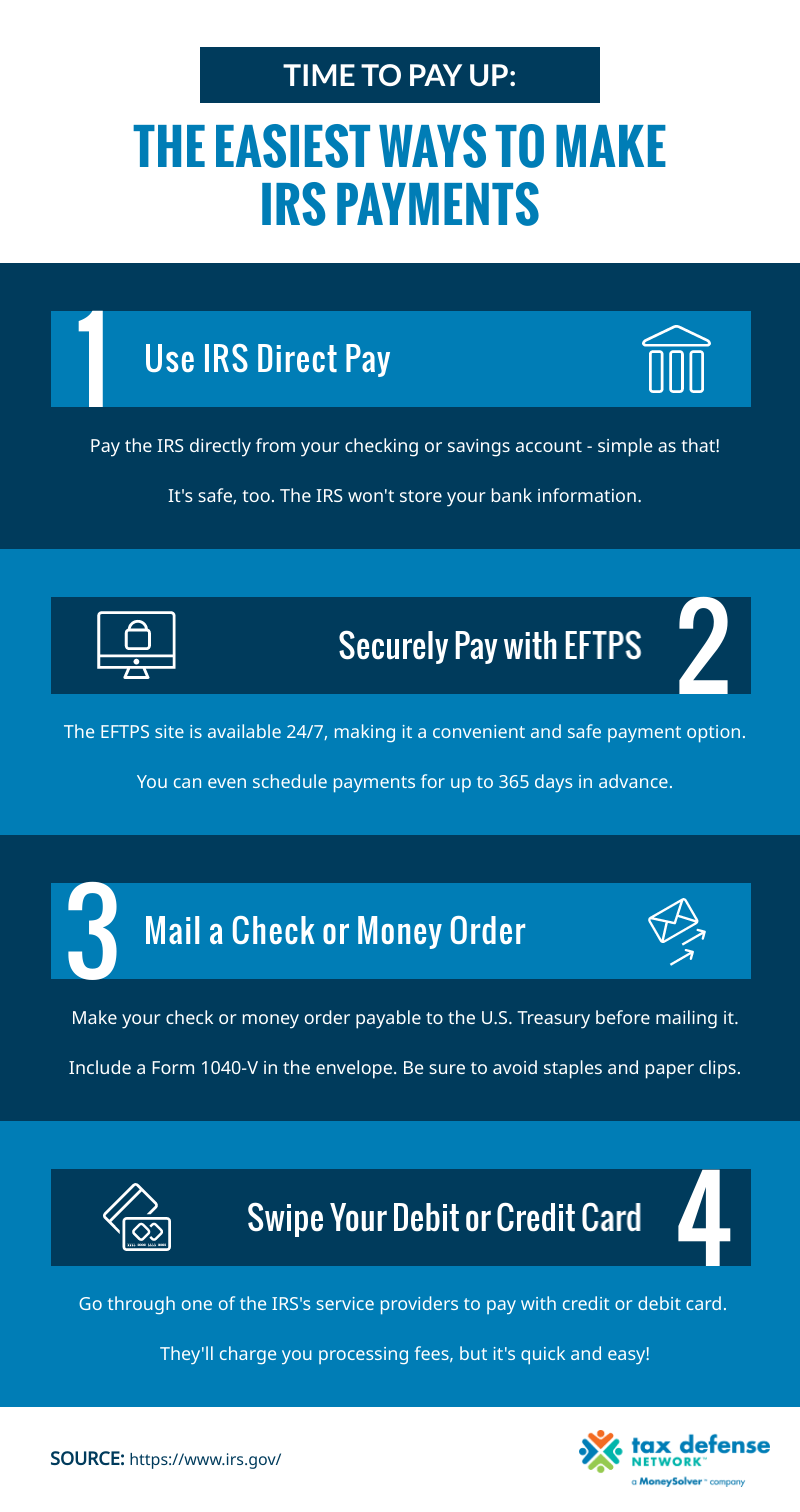
IRS Direct Pay: The Gold Standard for Individuals
For the individual taxpayer filing a Form 1040, IRS Direct Pay is the most streamlined and cost-effective tool available. It allows you to pay directly from your checking or savings account without any processing fees.
How Direct Pay Works
Direct Pay is designed for simplicity. It does not require a pre-registered account, which makes it ideal for one-time payments. To use it, you must verify your identity by providing information from a tax return filed in one of the last five years. Once verified, you can select the “Reason for Payment”—such as a balance due, an amended return, or an extension—and the “Apply Payment To” section (e.g., 1040).
Managing Estimated Tax Payments
Self-employed individuals, freelancers, and investors with significant non-wage income must navigate the world of quarterly estimated taxes. Direct Pay is the premier tool for this requirement. By using the “Estimated Tax” option, you ensure that your funds are correctly credited to the current tax year, helping you avoid the underpayment penalties that often surprise the unprepared at year-end.
Limitations to Consider
While Direct Pay is efficient, it does have a cap of two payments within a 24-hour period. Furthermore, it is strictly for individuals. Businesses, even single-member LLCs paying employment taxes, must look toward more robust systems like EFTPS.
EFTPS: The Professional Solution for High-Volume Compliance
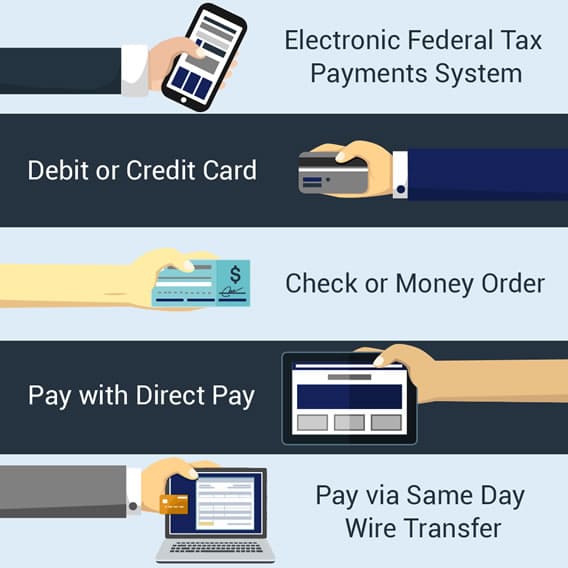
The Electronic Federal Tax Payment System (EFTPS) is a free service provided by the U.S. Department of the Treasury. While Direct Pay is built for ease of use, EFTPS is built for comprehensive management and high-frequency transactions.
The Registration Requirement
Unlike Direct Pay, EFTPS requires a formal enrollment process. After registering online with your Taxpayer Identification Number (TIN) or Employer Identification Number (EIN), the IRS mails a Personal Identification Number (PIN) to your address of record. This process can take seven to ten business days, so it is vital to set up your account well before your tax deadline.
Advanced Scheduling Features
The true power of EFTPS lies in its scheduling capabilities. Users can schedule payments up to 365 days in advance. For a business owner, this means you can sit down in January and schedule all four quarterly estimated payments for the year. This “set it and forget it” approach is an excellent hedge against the forgetfulness that leads to late fees.
Robust Reporting and History
EFTPS maintains a 16-month history of all your digital payments. For tax professionals and bookkeepers, this accessibility is invaluable during audits or annual reconciliations. Having a centralized repository of every federal tax dollar sent via the system simplifies the accounting process and ensures that your internal ledgers match the Treasury’s records perfectly.
Leveraging Credit Cards and Digital Wallets
In some scenarios, paying the IRS via a credit card or a digital wallet like PayPal or Venmo can be a strategic move, despite the associated costs. The IRS does not collect these fees; rather, they are charged by third-party processors like PayUSA, ACI Payments, or Link2Gov.
Calculating the Cost-Benefit Ratio
Third-party processors typically charge a fee ranging from 1.82% to 1.98% for credit cards. Before choosing this route, you must determine if the “cost of capital” makes sense. If you are using a card to meet a minimum spend requirement for a significant sign-up bonus—often worth $500 to $1,000—the 2% fee is a negligible price to pay. Similarly, if you are experiencing a temporary liquidity crunch, paying via credit card might be cheaper than the IRS’s late payment interest rates.
The Role of Modern Digital Wallets
The inclusion of PayPal and Venmo in the IRS payment ecosystem represents a significant shift toward consumer-friendly fintech. These options provide an extra layer of convenience for those who maintain balances within these apps. However, the same processing fees apply, so it remains a choice of convenience over cost-effectiveness for most high-net-worth individuals.
Documentation for Deductions
It is worth noting that for business owners, the convenience fees associated with paying taxes via credit card may be tax-deductible as a business expense. Always consult with a tax advisor, but this deduction can further soften the blow of the processing fee, making the “credit card strategy” even more viable for managing corporate cash flow.
Security Best Practices and Digital Hygiene
As you move your tax life into the digital realm, maintaining high standards of digital security is paramount. The IRS is a frequent target for phishing scams and identity theft, and your electronic payment habits should reflect a “security-first” mindset.
Recognizing Phishing and Spoofing
The IRS will never initiate contact with taxpayers via email, text message, or social media to request personal or financial information. Any electronic payment should be initiated by you navigating directly to IRS.gov or EFTPS.gov. Never click on a link in an email claiming your tax payment “failed” or that you owe an “immediate fine.” These are almost certainly fraudulent attempts to capture your banking credentials.
Maintaining a Digital Audit Trail
Every time you complete an electronic payment, save the confirmation page as a PDF. Store these in a secure, encrypted cloud folder or a dedicated “Tax History” drive. While the IRS systems are reliable, the burden of proof in an inquiry always falls on the taxpayer. Having your confirmation numbers, dates, and exact amounts organized by tax year is the ultimate defense in any dispute.
Updating Bank Information
If you change banks or close an account, remember that scheduled payments in EFTPS or Direct Pay do not automatically update. You must log in and cancel the pending transaction from the old account and re-establish it with the new one. Failure to do so will result in a “dishonored payment” fee from the IRS, which can be as much as 2% of the payment amount.

Conclusion: Integrating Electronic Payments into Your Wealth Strategy
Mastering the various methods of electronic payment to the IRS is a fundamental skill for anyone serious about their financial health. By utilizing Direct Pay for simple individual obligations, EFTPS for complex or business-related scheduling, and third-party processors for strategic credit card usage, you transform a traditionally stressful annual event into a streamlined, automated process.
The move to digital is more than just a rejection of paper; it is an embrace of financial clarity. When you have an immediate confirmation of every dollar sent to the Treasury, you can navigate the rest of your financial life with the confidence that your standing with the government is secure. In the world of personal and business finance, that peace of mind is the ultimate return on investment.
aViewFromTheCave is a participant in the Amazon Services LLC Associates Program, an affiliate advertising program designed to provide a means for sites to earn advertising fees by advertising and linking to Amazon.com. Amazon, the Amazon logo, AmazonSupply, and the AmazonSupply logo are trademarks of Amazon.com, Inc. or its affiliates. As an Amazon Associate we earn affiliate commissions from qualifying purchases.