
Determining how much you can borrow for a home is the foundational step in the journey toward homeownership. While it is tempting to browse listings and fall in love with a property first, the financial reality of mortgage lending dictates the parameters of your search. Lenders do not simply look at your bank balance; they employ a complex set of formulas to assess risk, stability, and long-term repayment capacity. Understanding these metrics allows you to see your financial profile through the lens of a mortgage underwriter, giving you a clearer picture of your borrowing power.

The Pillars of Borrowing Power: Debt-to-Income Ratios
The most significant factor in determining your loan amount is your Debt-to-Income (DTI) ratio. This is a mathematical comparison of your gross monthly income against your monthly debt obligations. Lenders use this to ensure that you have enough cash flow to cover a new mortgage payment alongside your existing financial commitments.
Front-End vs. Back-End Ratios
Lenders typically look at two types of DTI ratios. The “front-end” ratio refers strictly to your proposed housing expenses—including the mortgage principal, interest, property taxes, and homeowners insurance (PITI). Generally, lenders prefer this to be at or below 28% of your gross monthly income.
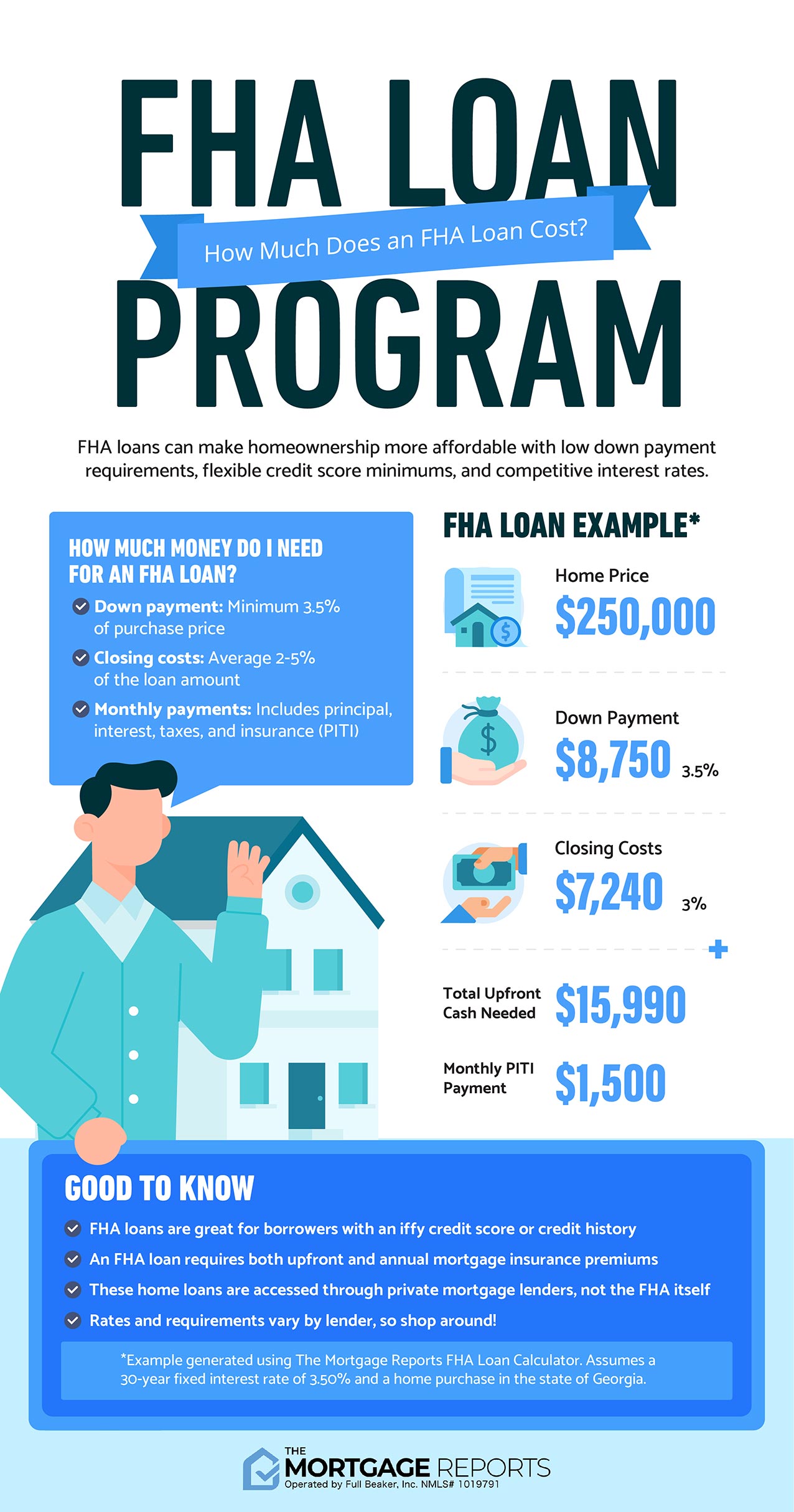
The “back-end” ratio is often considered more critical. This includes your proposed housing payment plus all other monthly debts, such as car loans, student loans, credit card minimums, and personal loans. Most conventional lenders look for a back-end ratio of 36% to 43%, though some government-backed programs, like FHA loans, may allow for a ratio as high as 50% in specific circumstances.
Calculating Qualifying Income
It is important to note that lenders use “gross” income—your earnings before taxes—rather than your “net” take-home pay. For salaried employees, this is straightforward. However, for those who are self-employed, receive commissions, or rely on bonus income, the calculation is more rigorous. Lenders typically average the last two years of tax returns and may exclude income that they deem “unstable” or “non-recurring.” Understanding how a lender views your specific income stream is vital to predicting the loan amount for which you will qualify.
The Credit Score Influence: Pricing and Eligibility
Your credit score does more than just determine whether you get a “yes” or a “no” from a lender; it dictates the cost of the money you are borrowing. Because the interest rate directly impacts your monthly payment, your credit score indirectly determines the total loan amount you can afford.
Interest Rates and Purchasing Power
A higher credit score translates to a lower interest rate. Even a 1% difference in your interest rate can result in tens of thousands of dollars in additional interest over the life of a 30-year loan. More importantly, in the context of “how much” you can get, a higher interest rate increases your monthly PITI. Since your DTI ratio is fixed based on your income, a higher interest rate means a larger portion of your allowed monthly payment goes toward interest, thereby reducing the total principal amount you can borrow.
Credit Tiers and Loan Programs
Lenders categorize borrowers into “tiers.” Those with scores above 740 to 760 typically receive the best available market rates. If your score falls into the 620 to 680 range, you may still qualify for a loan, but the higher interest rates and potential requirement for private mortgage insurance (PMI) will lower the maximum loan amount the lender is willing to offer. Furthermore, certain loan products, such as Jumbo loans (for amounts exceeding conforming limits), often require significantly higher credit scores, often 700 or above, to qualify at all.
Down Payments, Loan-to-Value, and Collateral

The amount you can get for a house loan is also inextricably linked to the value of the asset you are buying and the amount of “skin in the game” you provide. This is measured through the Loan-to-Value (LTV) ratio.
The 20% Benchmark and PMI
Traditionally, a 20% down payment has been the gold standard. When you put 20% down, your LTV is 80%. At this level, lenders view the loan as lower risk and do not require Private Mortgage Insurance (PMI). If you have a smaller down payment—say 3% or 5%—your LTV is much higher. In these cases, the lender will require you to pay for PMI, which is an additional monthly cost added to your mortgage payment. Because this insurance premium counts toward your DTI ratio, it effectively lowers the total loan amount you can afford.
Appraisals and Loan Caps
Lenders will only lend based on the appraised value of the home, not necessarily the purchase price. If you agree to buy a house for $500,000 but the bank’s appraiser values it at $480,000, the lender will base their loan amount on the $480,000 figure. In such a scenario, to maintain the deal, the buyer must either bridge the “appraisal gap” with extra cash or negotiate the price down. Therefore, your maximum loan is always capped by the underlying value of the collateral.
Navigating Loan Limits and Specialized Programs
The “how much” question is also answered by the specific loan program you choose. Different programs have different maximum limits and qualifying criteria that can drastically change your borrowing capacity.
Conforming vs. Jumbo Loans
The Federal Housing Finance Agency (FHFA) sets annual limits on “conforming loans”—loans that can be backed by Fannie Mae and Freddie Mac. If you need to borrow more than these limits, you enter the territory of “Jumbo loans.” Jumbo loans often have stricter underwriting requirements, including higher down payments, higher credit scores, and more significant cash reserves (often 6 to 12 months of mortgage payments in the bank). If you do not meet these stricter criteria, your loan amount will be capped at the conforming limit regardless of your income.
Government-Backed Incentives
For some borrowers, programs like VA loans (for veterans) or USDA loans (for rural properties) offer unique advantages. VA loans, for instance, often allow for 0% down payments and do not require monthly mortgage insurance, despite a high LTV. This can significantly increase the loan amount a veteran can qualify for compared to a conventional loan, as the absence of monthly insurance premiums frees up more of their DTI ratio for the actual mortgage principal.
Long-Term Affordability vs. Maximum Qualification
While a lender may tell you that you qualify for a $600,000 loan, it is imperative to distinguish between what a bank will give you and what you can actually afford. Professional financial planning suggests looking beyond the maximum approval to ensure the loan fits within a healthy lifestyle.
The “Hidden” Costs of Homeownership
The loan amount you receive covers the purchase, but it does not cover the ongoing costs of owning that specific asset. Larger, more expensive homes typically come with higher property taxes, more expensive homeowners insurance, and significantly higher maintenance costs. Financial experts often suggest the “1% rule,” where you should expect to spend 1% of the home’s value annually on maintenance. On a $600,000 home, that is an additional $500 per month that the lender’s DTI calculation does not account for.
Interest Rate Environment and Timing
The macroeconomic environment plays a silent but powerful role in your borrowing power. In a low-interest-rate environment, your money goes much further. When rates rise, as they do during inflationary periods, your purchasing power shrinks rapidly. For example, on a $3,000 monthly budget for principal and interest, a 3% interest rate might allow you to borrow roughly $711,000. If rates rise to 7%, that same $3,000 monthly payment only supports a loan of approximately $450,000. Monitoring market trends is essential to timing your entry into the market to maximize the loan amount available to you.
Ultimately, “how much you can get” is a dynamic figure. It is a snapshot of your current income, your history of financial responsibility, and the current state of the global economy. By optimizing your credit score, minimizing existing debts, and choosing the right loan product, you can maximize your borrowing potential and secure a home that serves as both a sanctuary and a sound financial investment.
aViewFromTheCave is a participant in the Amazon Services LLC Associates Program, an affiliate advertising program designed to provide a means for sites to earn advertising fees by advertising and linking to Amazon.com. Amazon, the Amazon logo, AmazonSupply, and the AmazonSupply logo are trademarks of Amazon.com, Inc. or its affiliates. As an Amazon Associate we earn affiliate commissions from qualifying purchases.