
In the realm of personal finance, clothing often represents one of the most significant “leakages” in a monthly budget. Unlike fixed costs such as rent or insurance, apparel spending is highly variable and subject to the whims of marketing cycles and emotional purchasing. American Eagle Outfitters (AEO) occupies a unique position in the retail landscape, sitting comfortably between the ultra-cheap fast-fashion giants and the high-end premium denim brands. For the budget-conscious consumer, understanding the true cost of American Eagle jeans requires looking beyond the price tag to evaluate long-term value, cost-per-wear, and strategic purchasing windows.

Navigating the Price Architecture of American Eagle Denim
When assessing how much American Eagle jeans cost, one must distinguish between the Manufacturer’s Suggested Retail Price (MSRP) and the “real-world” price that savvy consumers actually pay. American Eagle employs a high-low pricing strategy, where the initial price is set high to establish a perceived value, while frequent promotional events drive the majority of sales volume.
The MSRP Spectrum: From Entry-Level to Premium Real Good
Typically, the baseline MSRP for a standard pair of American Eagle jeans ranges from $39.95 to $59.95. However, this is merely the starting point. The brand’s “Real Good” initiative—which focuses on sustainably produced denim—often sits at the higher end of the spectrum, sometimes reaching $69.95 or $79.95 for specialized fits like the “AirFlex+” or “Dream” lines.
From a financial planning perspective, it is critical to recognize that these MSRPs are rarely the final transaction price. In the retail sector, a product’s “initial markup” (IMU) is designed to absorb significant discounts while still maintaining a healthy gross margin for the corporation. For the consumer, this means that paying the full $60 for a pair of jeans is often an inefficient use of capital, as the average realized price across their customer base is significantly lower.
The Impact of Sales Cycles on Consumer Expenditure
American Eagle is famous for its “BOGO” (Buy One, Get One) promotions, which effectively slash the unit price by 50% or more. Historically, these promotions bring the effective cost per pair down to the $25 to $35 range. When analyzing the fiscal impact of these sales, consumers must be wary of “bulk buying” traps. While a 50% discount represents a high return on investment (ROI) in terms of savings, purchasing four pairs of jeans when you only needed one results in a net increase in total expenditure, a common pitfall in behavioral finance.
Cost-Per-Wear Analysis: Evaluating the Long-Term Financial Value
In personal finance, the most accurate way to measure the value of a purchase is not the initial price, but the cost-per-wear (CPW). This metric is calculated by dividing the total cost of the item by the number of times it is worn before it needs to be replaced.
Durability and Depreciation
A $30 pair of jeans from a fast-fashion competitor may seem like a bargain compared to a $50 pair from American Eagle. However, if the $30 pair suffers from “crotch blowout” or structural failure after 30 wears, the CPW is $1.00. Conversely, if an American Eagle pair—noted for its high-stretch retention and reinforced stitching—lasts for 150 wears, the CPW drops to approximately $0.33.
American Eagle utilizes various fabric blends, including Lycra and recycled polyester, which are engineered to maintain shape. From an asset-management perspective, these materials extend the life of the product, thereby reducing the “replacement frequency” and freeing up future cash flow for other investments or savings goals.
Benchmarking Against Competitors in the Mid-Market Space
When compared to brands like Levi’s or Gap, American Eagle often offers a superior “fit-to-price” ratio for younger demographics. While Levi’s might command a higher resale value (which we will discuss later), American Eagle’s frequent discounting makes it a more accessible entry point for those managing tight discretionary budgets. The financial goal here is to find the “sweet spot” where quality meets affordability, preventing the need for frequent, low-quality replacements that erode wealth over time.
Strategic Purchasing: Tools and Tactics for Budget Optimization
To minimize the financial impact of clothing expenses, consumers should treat the acquisition of American Eagle jeans with the same tactical mindset used for stock market entries or large-scale household purchases.
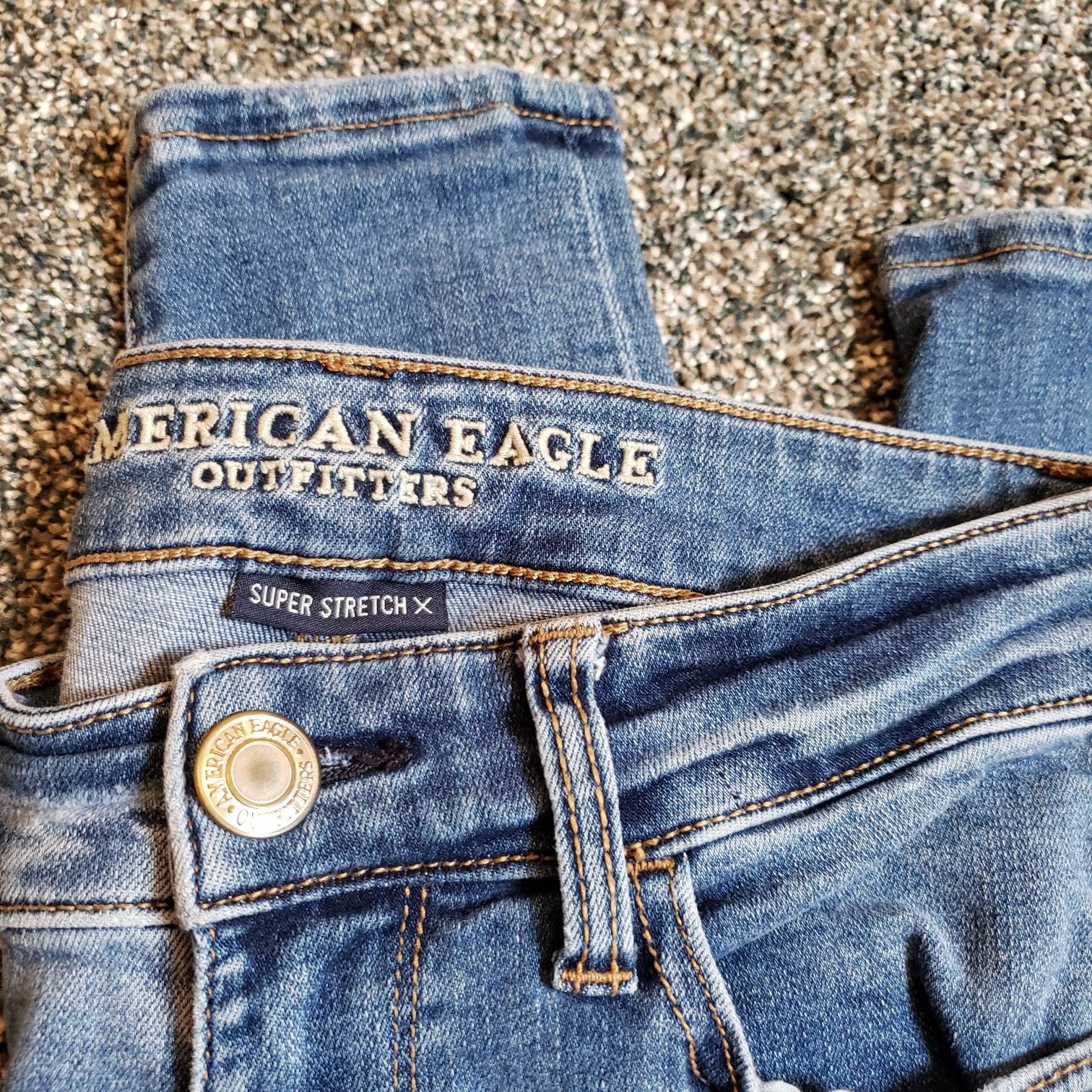
Leveraging Loyalty Programs and Stacking Discounts
The “RealRewards” program is a central pillar of the American Eagle financial ecosystem. For every dollar spent, members earn points that eventually convert into “Reward Dollars.” From a cash-back perspective, this functions similarly to a 5% or 10% rebate on total spend.
More importantly, American Eagle allows for “discount stacking.” A common strategy involves:
-
Waiting for a site-wide sale: (e.g., 30% off).
-
Using a RealRewards coupon: (e.g., $10 off).
-
Purchasing via a cash-back portal: (e.g., Rakuten or Honey), which can offer an additional 2% to 10% back.
-
Paying with a high-rewards credit card: (e.g., 1.5% to 2% cash back).
When these layers are combined, a pair of jeans with an MSRP of $59.95 can often be acquired for a net cost of $22.00 to $26.00. This represents a 60% reduction in capital outlay, a significant win for any personal budget.
Timing the Market: Seasonal Liquidation and Clearance Windows
Retailers operate on a strict seasonal calendar. To make room for new inventory, American Eagle aggressively liquidates “out-of-season” styles. The deepest discounts typically occur in January (post-holiday clearance) and July (mid-summer clearance). During these windows, the “clearance” section often features jeans for as low as $19.99. While sizes may be limited, the financial advantage of purchasing core staples—like dark-wash straight jeans that do not go out of style—during these liquidation events is immense.
The Resale Economy: Turning Used Apparel into Liquid Assets
A sophisticated approach to personal finance views clothing not just as an expense, but as a depreciating asset with potential residual value. Unlike ultra-cheap brands that have zero resale value, American Eagle maintains a strong secondary market presence.
Valuation on Peer-to-Peer Marketplaces
Platforms such as Poshmark, Depop, and eBay show a consistent demand for American Eagle denim, particularly the “Mom Jean” and “Curvy” fits. A well-maintained pair of AE jeans can often be resold for $15 to $25.
If you purchased the jeans during a strategic sale for $30 and resold them a year later for $15, your “net cost of ownership” for the year was only $15. This ability to recoup capital makes American Eagle a much more financially sound choice than brands that end up in landfills because they lack brand equity or durability.
Sustainability as a Financial Driver
There is an increasing correlation between a brand’s sustainability efforts and its long-term financial viability. American Eagle’s “Real Good” label signals to the market that the product is made with ethical standards. In the resale market, “sustainable” tags are currently fetching a premium. By purchasing these specific lines, consumers are effectively “future-proofing” the resale value of their wardrobe.
Macro Factors and the Future of Apparel Pricing
As we look toward the future, several macroeconomic factors are likely to influence the cost of American Eagle jeans. Inflation in the textile supply chain, rising labor costs in manufacturing hubs, and increased shipping expenses are putting upward pressure on MSRPs.
Inflation and the Shifting MSRP
Over the last three years, the average price of a pair of jeans has risen by approximately 10-15% across the industry. For the consumer, this means that the “bargain” prices of five years ago ($20) are becoming the “average” prices of today ($30). Budgeters must adjust their expectations and perhaps allocate a slightly higher percentage of their discretionary income to apparel if they wish to maintain the same level of quality.

Inventory Management and Its Effect on Discounts
Modern retailers are becoming increasingly proficient at using Artificial Intelligence and big data to manage inventory. By predicting demand more accurately, brands like American Eagle can avoid the massive overstocks that lead to 70% off clearance sales. For the consumer, this means that the “deep discount” windows may become shorter and less frequent. The financial takeaway is clear: when you find your preferred fit at a price point that matches your budget, the opportunity cost of waiting for a “better” sale may be higher than the potential savings.
In conclusion, while the sticker price of American Eagle jeans may suggest a mid-range expense, a strategic financial approach reveals a different story. By utilizing loyalty programs, timing the market, and accounting for the high cost-per-wear and resale value, American Eagle denim emerges as a highly cost-effective component of a balanced personal budget. Wealth is built through small, consistent optimizations, and mastering the “math” of everyday purchases like denim is a vital step in that journey.
aViewFromTheCave is a participant in the Amazon Services LLC Associates Program, an affiliate advertising program designed to provide a means for sites to earn advertising fees by advertising and linking to Amazon.com. Amazon, the Amazon logo, AmazonSupply, and the AmazonSupply logo are trademarks of Amazon.com, Inc. or its affiliates. As an Amazon Associate we earn affiliate commissions from qualifying purchases.