
The financial landscape of the last decade has been defined by the meteoric rise of specific technology titans, but few have captured the collective imagination—and capital—of the investing world quite like NVIDIA Corporation (NVDA). To ask what NVDA costs per share is to initiate a conversation that goes far beyond a simple numerical figure on a ticker tape. In the modern era of high-growth investing, the nominal price of a single share is merely a gateway into a complex ecosystem of valuation metrics, market sentiment, and macroeconomic forecasting.
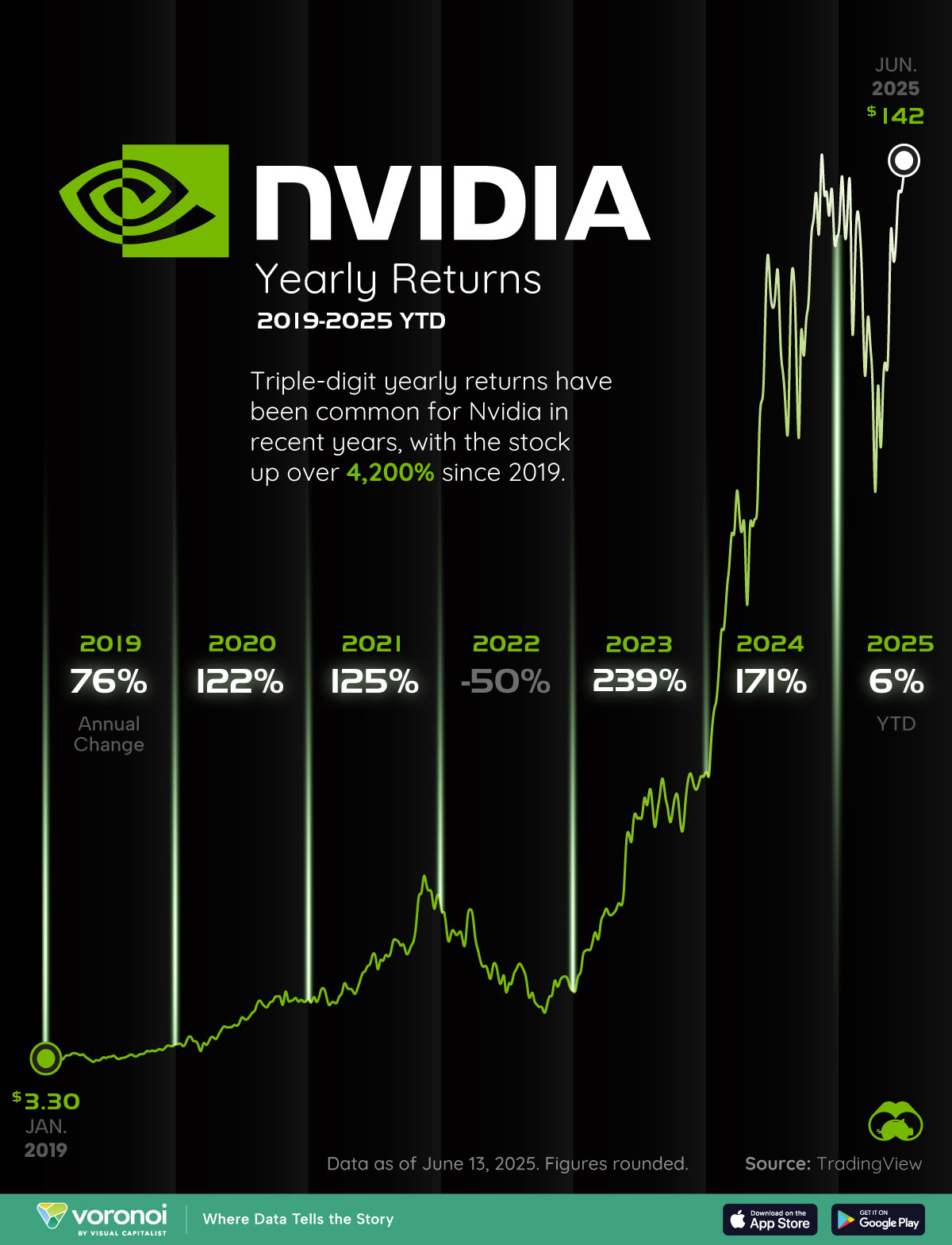
As of the current market cycle, NVIDIA stands as a cornerstone of the semiconductor industry and, by extension, the backbone of the global artificial intelligence infrastructure. However, for the individual investor, understanding the “cost” of NVDA requires a multi-dimensional approach that considers the company’s recent stock split, its fundamental earnings power, and its position relative to historical valuation norms.
Decoding the Price: The Impact of the 10-for-1 Stock Split
To understand what NVDA costs per share today, one must first look back at the structural changes the company underwent in mid-2024. In June of that year, NVIDIA executed a 10-for-1 forward stock split. Before this event, a single share of NVDA was trading well above the $1,000 mark, a price point that often acts as a psychological and practical barrier for retail investors.
The Mechanics of Share Accessibility
A stock split does not change the fundamental value of a company; it simply divides the existing “pie” into more pieces. For NVIDIA, the move to split the stock was a strategic decision to make share ownership more accessible to employees and individual investors. When the price per share dropped from four figures to three figures—landing in the $100 to $130 range post-split—it invited a new wave of liquidity into the stock. For the investor looking at their brokerage account today, the “cost” seems lower, but the market capitalization (the total value of all shares combined) remains at a historic high, often rivaling or exceeding the valuations of Apple and Microsoft.
Liquidity and Options Trading
Beyond simple accessibility, the lower cost per share has significant implications for the options market. Options contracts are typically written for 100 shares. When the share price was $1,200, a single call option contract represented $120,000 worth of underlying stock, making it prohibitively expensive for most non-institutional traders to hedge or speculate. With the share price reset, the “cost per share” allows for a more robust derivatives market, which in turn influences the daily volatility and price action of the stock itself.
Fundamental Drivers: Why the Share Price Commands a Premium
When evaluating what a share of NVDA is worth, investors are not just buying a piece of hardware; they are buying a claim on future cash flows generated by the most sought-after silicon in the world. The “cost” of the share is a reflection of the market’s belief in NVIDIA’s continued dominance in the Data Center and AI sectors.
Revenue Growth and Gross Margins
The primary engine behind NVDA’s share price appreciation has been its unprecedented revenue growth. Unlike many “hype” stocks that trade on potential, NVIDIA has delivered tangible financial results. The company has consistently reported triple-digit year-over-year revenue growth in its Data Center division. More importantly for investors, NVIDIA maintains incredibly high gross margins—often exceeding 70%. This means that for every dollar of high-end H100 or Blackwell chips sold, a significant portion drops straight to the bottom line. When an investor pays $130 or $140 for a share, they are paying for a company that has managed to maintain a near-monopoly on the compute power required for Large Language Models (LLMs).
The “AI Moat” and Blackwell Cycles
The cost per share is also a bet on the product roadmap. The transition from the Hopper architecture to the Blackwell platform represents a leap in processing power and energy efficiency. Financial analysts watch these product cycles closely, as each new generation of chips allows NVIDIA to maintain its premium pricing power. As long as the hyperscalers—Google, Amazon, Meta, and Microsoft—continue to spend tens of billions of dollars on AI infrastructure, the intrinsic value of an NVDA share remains tethered to this massive capital expenditure cycle.
Valuation Metrics: Is the Current Share Price Justified?
A common pitfall for novice investors is equating a low share price with a “cheap” stock or a high share price with an “expensive” one. To truly understand the cost of NVDA, one must look at valuation ratios that compare the price to the company’s actual financial performance.
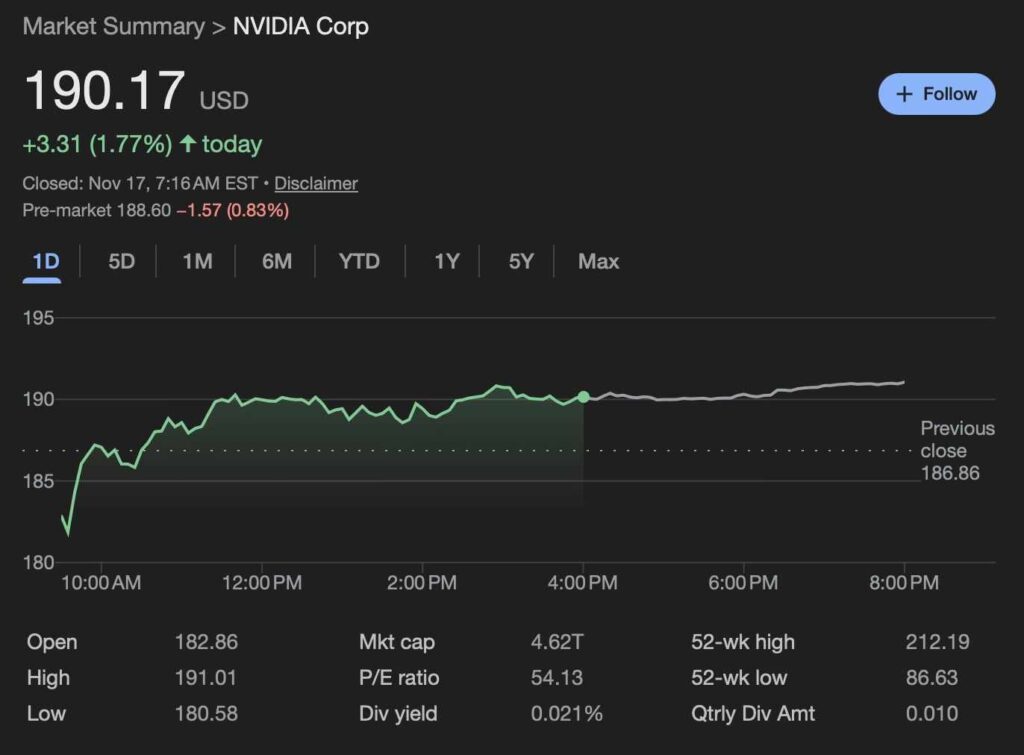
The Price-to-Earnings (P/E) Ratio
The most common metric used to judge the cost of a share is the P/E ratio. For much of its recent history, NVDA has traded at a high trailing P/E ratio, often leading skeptics to claim the stock is overvalued. However, forward-looking investors prefer the Forward P/E ratio, which uses estimated earnings for the next twelve months. Because NVIDIA’s earnings have grown so rapidly, its Forward P/E has often looked surprisingly reasonable—sometimes even lower than more mature, slower-growing software companies. This suggests that while the cost per share is high in absolute terms, it may be “fair” relative to the explosive growth in profits.
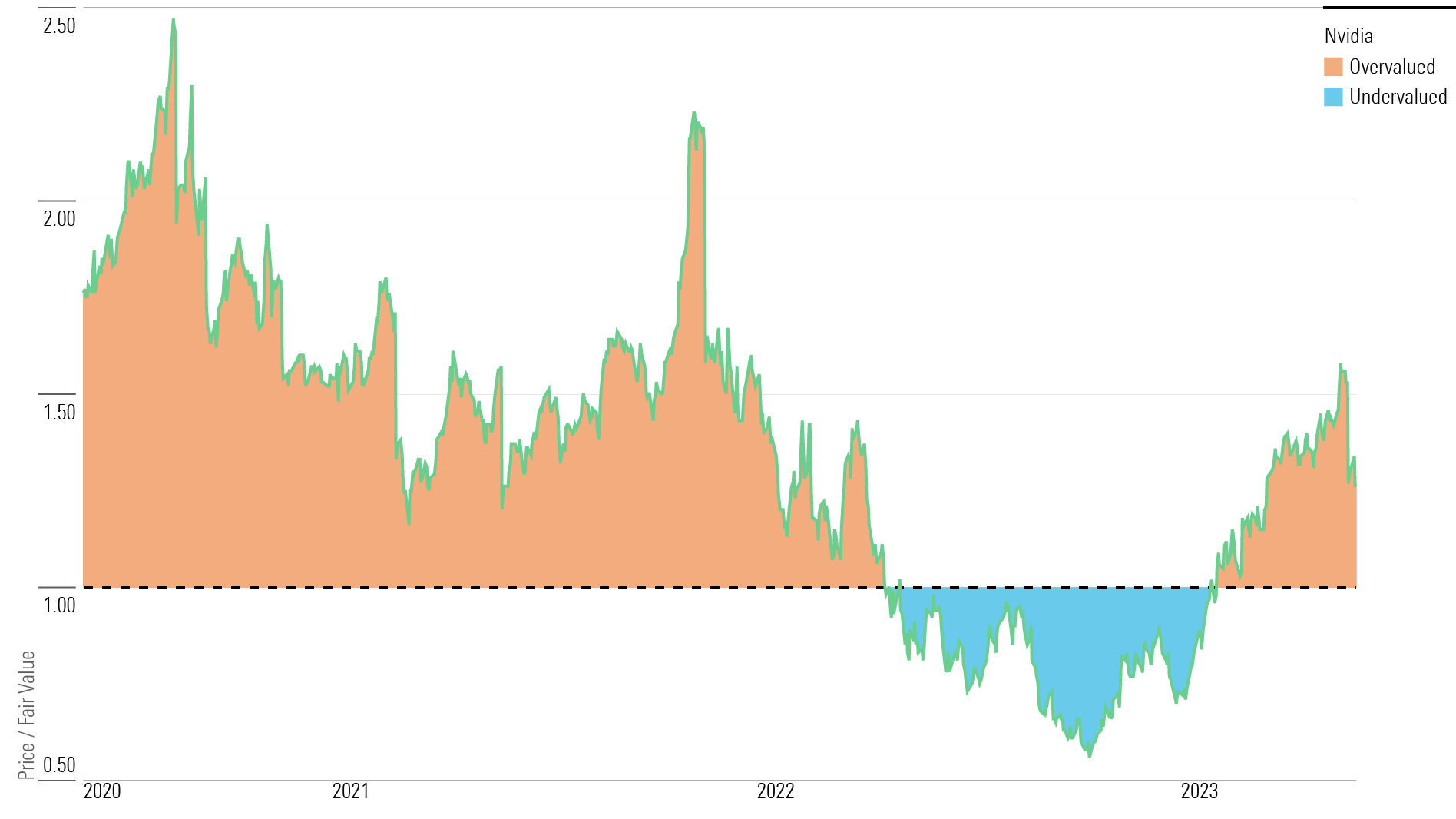
PEG Ratio and Growth Estimates
The Price/Earnings-to-Growth (PEG) ratio is perhaps the most vital tool for an NVDA investor. By dividing the P/E ratio by the annual earnings growth rate, the PEG ratio provides a more complete picture. A PEG ratio around 1.0 is often considered a fair valuation for a growth stock. Throughout various points in its rally, NVDA’s PEG ratio has signaled that the stock was actually undervalued relative to its growth trajectory, despite the share price hitting all-time highs. This nuance is why institutional “smart money” has continued to hold the stock even as the cost per share escalated.
Strategic Considerations for Investors
Investing in NVDA at its current cost per share requires a strategic mindset that balances the potential for further gains against the inherent risks of high-growth semiconductor stocks.
Dollar-Cost Averaging (DCA)
Given the volatility associated with NVDA, many financial advisors suggest a Dollar-Cost Averaging approach. Instead of attempting to time the market and buy a large block of shares at a specific price, investors can commit to buying a fixed dollar amount at regular intervals. This strategy mitigates the risk of buying at a temporary peak and allows the investor to benefit from the “cost per share” fluctuations over time, effectively lowering their average basis.
The Role of Fractional Shares
For those who still find the triple-digit share price a hurdle, many modern brokerage platforms offer fractional shares. This allows an investor to buy $10 or $100 worth of NVDA, regardless of what the full share price is. This democratization of investing means that the nominal “cost per share” is becoming less of a barrier to entry, allowing even small-scale investors to participate in the growth of the AI economy.
Risk Factors and Volatility: The Hidden Cost of Ownership
While the financial rewards of owning NVDA have been substantial, there is a “hidden cost” in the form of extreme volatility. Investors must be prepared for the psychological toll of holding a stock that can move 5% or 10% in a single trading session.
Cyclicality and Market Sentiment
The semiconductor industry is historically cyclical. While the current demand for AI chips seems insatiable, there is always the risk of a “digestion period” where customers slow their orders as they integrate existing hardware. Furthermore, as a high-beta stock, NVDA often reacts more violently to market-wide sell-offs than the broader S&P 500. When the cost per share drops during a market correction, it tests the conviction of those who bought at the highs.
Geopolitical and Competitive Risks
No analysis of NVDA’s share price is complete without considering the geopolitical landscape. NVIDIA’s reliance on TSMC (Taiwan Semiconductor Manufacturing Company) for fabrication introduces a layer of geographic risk. Any instability in the Taiwan Strait could have an immediate and catastrophic impact on NVIDIA’s ability to supply the market, causing the share price to plummet regardless of demand. Additionally, while NVIDIA currently leads the pack, competition from custom silicon (like Google’s TPUs) and traditional rivals like AMD represents a long-term threat to the premium valuation the stock currently enjoys.
The Long-Term Outlook for Shareholders
Ultimately, the cost per share of NVDA today is a reflection of the market’s consensus on the future of computing. As we transition from general-purpose computing to accelerated computing, NVIDIA has positioned itself as the toll booth for the new digital age. For the long-term investor, the daily fluctuations in the share price are secondary to the company’s ability to maintain its technological lead and its pricing power.
Whether the stock is trading at $120, $150, or eventually back to $1,000, the fundamental question remains the same: Does the company’s earnings growth justify the price of admission? As long as NVIDIA continues to beat expectations and raise guidance, the cost per share—no matter how high it seems in the moment—may eventually be viewed as a bargain in the rearview mirror of financial history. Understanding the nuances of this valuation is the difference between speculative gambling and informed, strategic investing in the most consequential company of the 2020s.
aViewFromTheCave is a participant in the Amazon Services LLC Associates Program, an affiliate advertising program designed to provide a means for sites to earn advertising fees by advertising and linking to Amazon.com. Amazon, the Amazon logo, AmazonSupply, and the AmazonSupply logo are trademarks of Amazon.com, Inc. or its affiliates. As an Amazon Associate we earn affiliate commissions from qualifying purchases.