
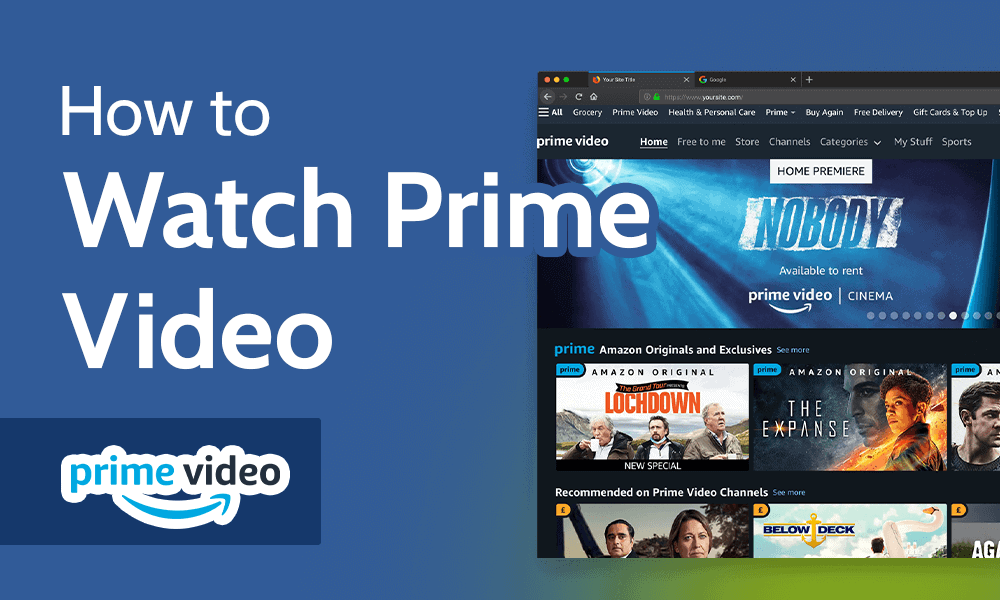
The landscape of digital entertainment has undergone a radical transformation, moving from linear broadcasting to a complex, interconnected web of streaming services, hardware interfaces, and cloud-based distribution. When users ask “how can I watch Amazon TV,” they are typically referring to Prime Video, the central hub for Amazon’s massive library of original content, licensed films, and live sports. Accessing this ecosystem involves a convergence of hardware selection, software optimization, and network configuration. To fully leverage the technological capabilities of the platform, one must understand the various entry points—from dedicated streaming sticks to integrated smart home ecosystems.
Navigating the Hardware: Fire TV Devices and Integrated Smart TVs
The most direct way to access the Amazon TV experience is through the company’s proprietary hardware line: the Fire TV series. These devices are designed to serve as a bridge between the user’s television and the cloud, utilizing a modified version of the Android operating system specifically optimized for media consumption.
Fire TV Stick and Fire TV Cube
The Fire TV Stick remains one of the most ubiquitous pieces of streaming hardware in the world. Ranging from the Lite version for standard high-definition viewing to the 4K Max, which features Wi-Fi 6E support and an enhanced quad-core processor, these “HDMI dongles” are engineering marvels. They pack significant computing power into a form factor roughly the size of a USB drive.
For users seeking the pinnacle of performance, the Fire TV Cube represents the high-end hardware tier. It functions as a hybrid between a streaming player and an Echo speaker, utilizing far-field voice control and an octa-core processor to handle 4K Ultra HD content at 60fps. The technical advantage here is the inclusion of an Ethernet port and an HDMI input, allowing for more stable data throughput compared to wireless connections.
Smart TVs with Built-in Fire OS
Beyond external peripherals, many modern displays now come with “Fire TV Edition” software pre-installed. Manufacturers like Toshiba, Insignia, and Hisense have integrated Amazon’s operating system directly into the television’s firmware. This removes the need for an external device and simplifies the tech stack. The integration allows for a unified interface where live antenna television, HDMI inputs, and streaming apps coexist seamlessly. From a technical standpoint, these TVs utilize specialized System-on-a-Chip (SoC) architectures designed to balance the demands of panel refresh rates with the processing requirements of the streaming interface.
The Software Experience: Accessing Prime Video Across Platforms
While dedicated hardware offers the most cohesive experience, Amazon’s TV services are essentially platform-agnostic. The software architecture is designed to scale across a vast array of devices, ensuring that the user experience remains consistent whether viewed on a 6.1-inch smartphone or an 85-inch theater display.
Mobile and Tablet Optimization
On iOS and Android, the Prime Video app is a sophisticated piece of software that manages dynamic bitrates to prevent buffering. One of the key technological features of the mobile app is the “Download and Go” functionality. This uses advanced compression codecs (typically H.264 or H.265/HEVC) to allow users to store content locally. The app also features a “Data Saver” mode, which limits the bitrate to approximately 0.12GB per hour, a crucial tech feature for users on metered cellular connections.
Browser-Based Viewing and Resolution Specs
For PC and Mac users, the experience is handled via web browsers or a dedicated Windows app. To ensure high-quality playback, the browser must support Digital Rights Management (DRM) technologies like Widevine or FairPlay. While most browsers support 1080p (Full HD), certain hardware configurations and browser limitations may cap the resolution at 720p to maintain stability. The specialized Windows and macOS apps generally offer better resource management and support for features like offline viewing, which are often unavailable through a standard browser interface.
Gaming Consoles and Third-Party Media Players
Amazon has developed robust applications for the Sony PlayStation 5, Xbox Series X/S, and previous-generation consoles. These apps are optimized to leverage the high-performance GPUs found in gaming hardware, often resulting in faster UI navigation and lower latency. Similarly, the service is a cornerstone of third-party platforms like Apple TV 4K, Roku, and Nvidia Shield. In these environments, the software must interact with different kernels and graphics APIs, demonstrating the versatility of Amazon’s cross-platform development strategy.
Technical Requirements for High-Definition Streaming

Watching Amazon TV is not merely about having the app; it is about having the infrastructure to support modern video standards. As resolutions have climbed from 1080p to 4K and beyond, the technical burden on the user’s home network has increased exponentially.
Bandwidth and Connectivity Standards
The quality of the video stream is directly proportional to the available bandwidth. For a standard definition (SD) stream, a minimum of 1 Mbps is required. High Definition (HD) requires at least 5 Mbps. However, for 4K Ultra HD—the gold standard for Amazon Originals like The Rings of Power—a sustained connection of at least 15 to 25 Mbps is necessary.
Modern routers utilizing Wi-Fi 6 (802.11ax) provide the necessary throughput and lower latency to handle multiple 4K streams simultaneously. In tech-heavy households, utilizing the 5GHz or 6GHz bands is recommended to avoid the congestion typical of the 2.4GHz spectrum, which is often crowded by legacy devices and household appliances.
4K Ultra HD, HDR, and Audio Codecs
Amazon was an early adopter of High Dynamic Range (HDR) technology, specifically HDR10+ and Dolby Vision. These technologies expand the color gamut and contrast ratio, allowing for deeper blacks and more vibrant highlights. On the audio side, many titles support Dolby Atmos, which provides a spatial, three-dimensional soundscape. To access these features, the entire “handshake” between the streaming device, the HDMI cable (High Speed HDMI 2.0 or 2.1), and the display/audio receiver must support the relevant protocols. If one link in the chain is non-compliant, the system will default to the highest common denominator, often resulting in a downgraded experience.
Security and Account Management in the Digital Age
In a world of increasing cyber threats, the tech behind how you watch Amazon TV includes significant security layers. Because an Amazon account is often linked to credit card information and purchase history, securing the streaming interface is paramount.
Two-Factor Authentication and Device Management
Amazon utilizes multi-factor authentication (MFA) to prevent unauthorized access to the streaming profile. Users can manage their “Registered Devices” through the Amazon website, allowing them to remotely de-authorize any hardware that is no longer in use or has been compromised. This is a critical security feature for users who log into apps on hotel TVs or shared devices.
Parental Controls and Profile Customization
The technical backend of Prime Video allows for up to six different user profiles. Each profile can be customized with specific viewing restrictions based on age ratings. This is enforced through “Parental Control” PINs that are synced across all devices via the cloud. From a data management perspective, these profiles also feed the machine learning algorithms that provide personalized recommendations, ensuring that the “Up Next” queue for a child is distinct from that of an adult.
The Future: AI Integration and the Evolution of UI
The next frontier of watching Amazon TV lies in the integration of Artificial Intelligence and Large Language Models (LLMs). We are moving away from traditional grid-based interfaces toward conversational discovery.
X-Ray and Enhanced Metadata
One of Amazon’s standout technical features is “X-Ray,” powered by IMDb. By leveraging a massive database of metadata, X-Ray allows users to identify actors, music, and trivia in real-time by pausing the video. The future of this tech includes deep-link shopping (identifying a character’s clothing and providing a link to buy it) and AI-generated summaries that can catch a viewer up on a series’ plot points based on where they left off.
Generative AI Search
Amazon is currently testing generative AI to improve the search function on Fire TV. Instead of typing specific titles, users can use natural language prompts like, “Find me a gritty sci-fi movie with a twist ending,” or “Show me the show where the guy discovers he has superpowers in London.” This shift toward semantic search represents a major evolution in how we interact with streaming software, moving from a manual search process to an intuitive, AI-driven discovery engine.
Ultimately, watching Amazon TV is a multi-layered technological process. It begins with high-performance hardware, relies on sophisticated cross-platform software, demands a robust network infrastructure, and is increasingly governed by AI-driven personalization. Understanding these technical components ensures that the viewer isn’t just watching a show, but is experiencing the full potential of modern digital media distribution.
aViewFromTheCave is a participant in the Amazon Services LLC Associates Program, an affiliate advertising program designed to provide a means for sites to earn advertising fees by advertising and linking to Amazon.com. Amazon, the Amazon logo, AmazonSupply, and the AmazonSupply logo are trademarks of Amazon.com, Inc. or its affiliates. As an Amazon Associate we earn affiliate commissions from qualifying purchases.