
The question “What business can I open?” is rarely about a lack of ideas. More often, it is a question of financial viability, market timing, and capital allocation. In a global economy characterized by rapid shifts in consumer behavior and the democratization of digital tools, the barrier to entry for new businesses has never been lower. However, the barrier to profitability remains high. To choose the right business, one must look past the surface level of “what sounds fun” and delve into the mechanics of cash flow, scalability, and return on investment (ROI).
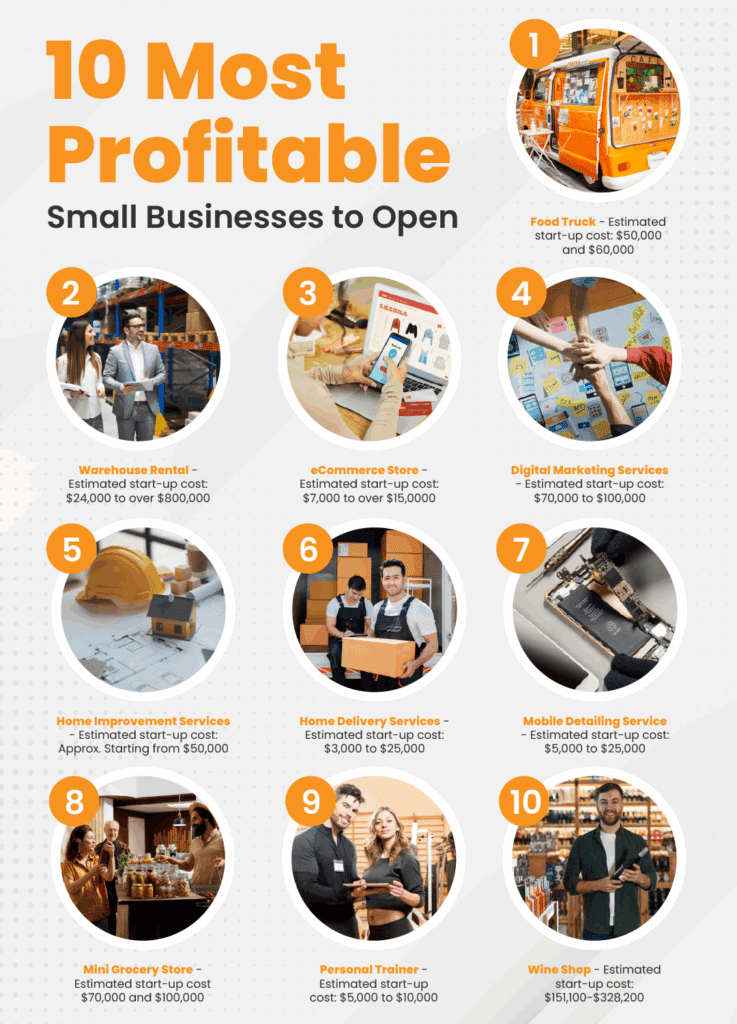
When evaluating potential ventures, the primary lens should be financial sustainability. Whether you are looking to replace a six-figure salary or build a passive income engine, the structure of the business dictates its ultimate success. This guide explores the most lucrative sectors for modern entrepreneurs, focusing on low-overhead models, scalable digital assets, and investment-heavy opportunities that offer long-term financial security.
Evaluating the Landscape: Low-Capital, High-Margin Business Models
For many aspiring entrepreneurs, the biggest hurdle is initial capital. Fortunately, some of the most profitable businesses in the current economy require more “sweat equity” than liquid cash. These models focus on high-margin services where the primary cost of goods sold is your time or the time of a specialized team.
The Service-Based Arbitrage Model
Service arbitrage involves identifying a high-demand need—such as copywriting, lead generation, or specialized accounting—and positioning yourself as the premium solution. The “Money” logic here is simple: you sell a result, not an hour of your time. By focusing on high-ticket B2B services, you can maintain profit margins of 70% or higher. As the business grows, you hire contractors to fulfill the work for a fraction of the contract price, allowing you to scale the business without a linear increase in your workload.
Digital Product Ecosystems
Selling information is one of the most financially efficient businesses one can open. Unlike physical products, digital goods (e-books, templates, recorded courses, or proprietary data sets) have near-zero marginal costs. Once the asset is created, every subsequent sale is almost pure profit. The key to success in this niche is identifying a “bleeding neck” problem—a specific financial or professional pain point—and providing a structured, repeatable solution.
High-Ticket Consulting and Specialized Coaching
If you possess a specific set of skills that helps others make money or save time, consulting is the fastest route to high-revenue months. Unlike general coaching, high-ticket consulting targets businesses or high-net-worth individuals. The financial advantage of this model is the low volume requirement; you don’t need thousands of customers to build a million-dollar business. You only need a dozen clients paying premium rates for high-level strategy and implementation.
Scalable Online Ventures for the Modern Entrepreneur
The internet has fundamentally changed the physics of business finance. It allows for “leverage”—the ability to do more with less. When considering what business to open, focusing on ventures that can scale globally without a corresponding increase in physical infrastructure is often the most prudent financial move.
Content Monetization and the Creator Economy
While often dismissed as a hobby, content creation is a formidable business model when treated with financial rigor. By building an audience around a specific financial or professional niche, you create a valuable marketing asset. Revenue streams in this business are diversified: sponsorships, affiliate commissions, and premium memberships. The goal is to build an “owned” audience (such as an email list) that can be monetized repeatedly without relying on shifting social media algorithms.
E-commerce and Direct-to-Consumer (DTC) Brands
While e-commerce requires more capital than service businesses due to inventory costs, the potential for brand equity is significant. The modern approach to e-commerce involves “lean” inventory management or 3PL (third-party logistics) partnerships to keep overhead low. By focusing on high-AOV (average order value) products and high customer lifetime value (LTV), an e-commerce business can become a highly sellable asset. Investors often look for DTC brands with strong recurring revenue and a clear path to acquisition.

Membership Platforms and Subscription Services
The most valuable businesses are those with predictable, recurring revenue. Opening a membership site or a “Productized Service” (where a service is sold as a monthly subscription) provides financial stability that one-off projects cannot match. From a financial planning perspective, subscription models make it easier to project cash flow, secure business loans, and manage reinvestment strategies. The focus here is on “churn reduction”—ensuring that the value provided far outweighs the monthly cost to the user.
Investment-Centric Business Opportunities
If you have access to significant capital, your question shouldn’t just be “what business can I open,” but “where can I deploy my capital for the highest yield?” These businesses are less about active labor and more about asset management and systems.
Real Estate Management and Short-Term Rentals
Real estate remains a cornerstone of wealth generation. Opening a business centered on property management or short-term rental (STR) arbitrage allows you to tap into the real estate market without necessarily owning every building. By using data-driven tools to identify high-yield locations and optimizing the guest experience, entrepreneurs can generate substantial cash flow. The financial benefit here lies in the combination of monthly income and the potential for long-term asset appreciation.
Franchising: Buying a Proven Financial System
For those who prefer a roadmap over a blank slate, franchising is a viable path to business ownership. When you buy a franchise, you are essentially purchasing a proven financial model. While the upfront costs (franchise fees) and ongoing royalties can be high, the risk of failure is significantly lower than a startup. The key is to look for “recession-proof” industries, such as commercial cleaning, restoration services, or specialized fitness, where demand remains steady regardless of economic volatility.
Automated Vending and Passive Asset Portfolios
There is a growing trend in “boring” businesses that provide passive income. This includes automated car washes, self-storage facilities, or high-end vending routes. These businesses require significant upfront investment but have low labor costs and high durability. From a wealth-building perspective, these assets provide the “passive” component of a diversified income portfolio, allowing the owner to focus on other high-growth ventures while maintaining a steady floor of monthly revenue.
Financial Planning and Risk Management for New Business Owners
Opening a business is a financial risk, but that risk can be calculated and mitigated. Successful entrepreneurs distinguish themselves by their ability to manage the “business of the business”—the underlying numbers that dictate whether the doors stay open.
Calculating Your Burn Rate and Runway
Before opening any business, you must understand your “burn rate”—the amount of money the business spends each month before it becomes profitable. Your “runway” is the amount of time you can survive at that burn rate before you run out of capital. A common mistake is underestimating the time it takes to reach the break-even point. Financial prudence dictates having at least six to twelve months of operating expenses in reserve before launching.
Tax Optimization and Business Structures
The way you structure your business (LLC, S-Corp, C-Corp) has profound implications for your take-home pay. Effective tax planning is one of the most overlooked aspects of business ownership. By choosing the right structure and understanding deductible expenses, an entrepreneur can save tens of thousands of dollars annually. This is “found money” that can be reinvested back into the business to accelerate growth or moved into personal investment accounts to build long-term wealth.

Reinvesting Profits for Compound Growth
The transition from a “side hustle” to a “wealth engine” occurs when you stop treating business profits as personal spending money and start treating them as investment capital. The most successful business owners operate on a “lean” personal budget during the growth phase, aggressively reinvesting profits into marketing, talent, and technology. This creates a compounding effect, where the business grows exponentially rather than linearly.
In conclusion, the business you choose to open should align with your financial goals, your risk tolerance, and the amount of capital you have at your disposal. Whether you are leveraging your expertise in a high-margin service business, building a scalable digital empire, or deploying capital into proven systems, the objective remains the same: to create a vehicle that generates sustainable, growing wealth. By focusing on the financial fundamentals—margins, scalability, and recurring revenue—you can move from the uncertainty of “what business can I open” to the clarity of a professional wealth-building strategy.
aViewFromTheCave is a participant in the Amazon Services LLC Associates Program, an affiliate advertising program designed to provide a means for sites to earn advertising fees by advertising and linking to Amazon.com. Amazon, the Amazon logo, AmazonSupply, and the AmazonSupply logo are trademarks of Amazon.com, Inc. or its affiliates. As an Amazon Associate we earn affiliate commissions from qualifying purchases.