
Determining the true value of Apple Inc. (AAPL) is a central pursuit for millions of investors, ranging from institutional hedge fund managers to retail investors looking for a cornerstone for their retirement portfolios. As one of the most valuable companies in history, Apple represents more than just a consumer electronics brand; it is a financial phenomenon that has redefined the concepts of cash flow, shareholder returns, and ecosystem dominance. However, “worth” is a multifaceted term in finance. To understand what Apple stock is worth today, one must look beyond the daily ticker price and examine the company’s intrinsic value through the lens of fundamental analysis, growth catalysts, and its unique position within the global economy.

Analyzing the Fundamentals: The Pillars of Apple’s Market Cap
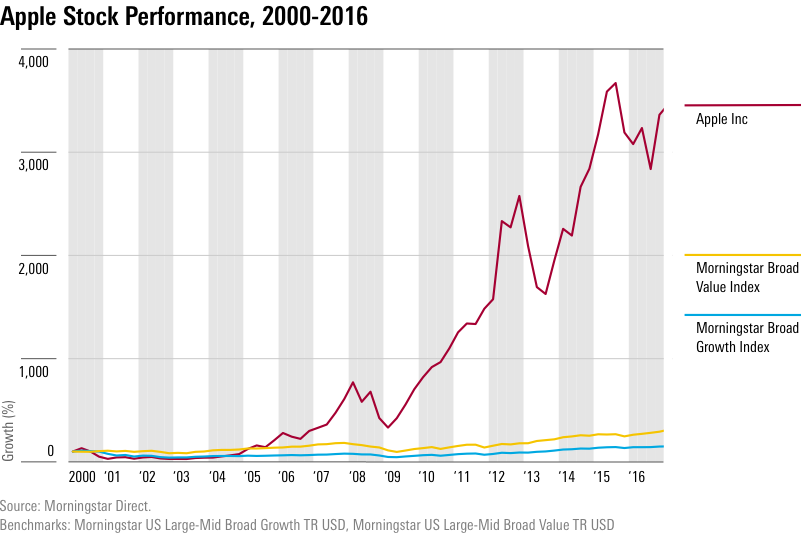
The primary method for determining what a stock is worth involves looking at its earnings power and the multiple the market is willing to pay for those earnings. For much of its history, Apple was valued as a hardware company, a category that typically commands lower Price-to-Earnings (P/E) multiples due to the cyclical nature of product launches. However, over the last decade, a massive re-rating has occurred.
Earnings Power and Revenue Streams
Apple’s valuation is anchored by its massive revenue base. With annual revenues exceeding $380 billion, the company operates at a scale that few can match. When investors ask what the stock is worth, they are essentially asking about the sustainability of these cash flows. The iPhone remains the crown jewel, contributing roughly half of the total revenue. However, the value of the iPhone is no longer just in the initial sale; it is in the “installed base” of over 2.2 billion active devices. This massive user base creates a recurring revenue stream that reduces the risk profile of the stock, justifying a higher valuation multiple than a pure-play hardware manufacturer.
The Importance of the P/E Ratio in Current Markets
Historically, Apple traded at a P/E ratio between 12x and 18x. Today, it frequently trades between 25x and 32x. This expansion reflects the market’s belief that Apple is now a “staple” of the digital age. To determine if the current price represents good value, an investor must decide if the growth rate justifies this premium. If Apple is expected to grow earnings by 10% annually, a 30x multiple might feel expensive. However, in an environment of low interest rates or when compared to other “Magnificent Seven” tech peers, Apple often appears as a middle-ground option—more expensive than value stocks, but cheaper and more stable than high-growth software companies.
The Service Sector and the High-Margin Ecosystem
The most significant driver of Apple’s valuation in recent years has been its shift toward Services. This segment includes the App Store, Apple Music, iCloud, Apple Pay, and Apple TV+. The transition from selling a device every three years to collecting monthly subscription fees has fundamentally changed how analysts calculate the stock’s worth.
Transitioning from Hardware to Subscription Revenue
Services revenue now accounts for approximately 20-25% of total sales, but more importantly, it carries gross margins often exceeding 70%. In contrast, hardware products typically see margins in the 35-40% range. From a financial perspective, a dollar earned through the App Store is significantly more valuable than a dollar earned from a MacBook sale because it is more predictable and costs less to generate. As the percentage of total revenue derived from Services grows, the “worth” of the company increases because its earnings become higher quality and more resilient to economic downturns.
Customer Retention and the “Walled Garden” Effect
The “Walled Garden” is a term used to describe Apple’s ecosystem, where hardware, software, and services are seamlessly integrated. This creates high switching costs. For an investor, this ecosystem represents a “moat”—a competitive advantage that protects the company’s profit margins. When calculating intrinsic value, the loyalty of the customer base is a critical variable. Apple’s extremely high retention rates suggest that its future cash flows are more certain than those of its competitors, which allows for a lower discount rate in valuation models, effectively pushing the stock’s worth higher.
Future Growth Catalysts: Beyond the iPhone
To justify its multi-trillion-dollar valuation, Apple cannot rely solely on the iPhone. The market prices stocks based on future expectations, not past performance. Therefore, determining what Apple is worth requires an assessment of its innovation pipeline.

Artificial Intelligence and the “Apple Intelligence” Era
The integration of generative AI into the Apple ecosystem, branded as “Apple Intelligence,” is the next major frontier for the company’s valuation. Unlike other tech giants that sell AI services to enterprises, Apple’s AI strategy is focused on the consumer. By embedding AI features directly into the operating system, Apple aims to trigger a “super-cycle” of device upgrades. If AI capabilities make older iPhones obsolete, the resulting surge in hardware sales—combined with new AI-driven service fees—could lead to a significant upward revision in the company’s projected earnings per share (EPS).
Wearables and New Product Categories
The Wearables, Home, and Accessories segment, which includes the Apple Watch and AirPods, has grown into a business the size of a Fortune 100 company on its own. Furthermore, the entry into spatial computing with the Vision Pro represents a long-term bet on the future of human-computer interaction. While these products may not contribute significantly to the bottom line today, their potential to become the “next iPhone” adds an “option value” to the stock. When investors buy AAPL, they are paying for the current business plus a premium for the innovations the company has yet to fully monetize.
Cash Flow, Buybacks, and Shareholder Value
One of the most compelling arguments for Apple’s high valuation is its approach to capital allocation. Apple is arguably the greatest “cash machine” in corporate history, and how it handles that cash directly impacts the stock’s worth.
The Fortress Balance Sheet
Apple maintains a “net neutral” cash goal, meaning it aims to eventually have an equal amount of cash and debt. With tens of billions of dollars in free cash flow generated every quarter, the company has an unprecedented ability to weather financial crises, invest in R&D, and acquire smaller companies that fill strategic gaps. This financial stability provides a “floor” for the stock price, as the company is never at risk of insolvency and can outspend almost any competitor.
Dividends and the Power of Compounding
While Apple’s dividend yield is relatively low compared to traditional “income stocks,” its growth is consistent. More impactful, however, is the share buyback program. Apple has spent hundreds of billions of dollars repurchasing its own shares over the last decade. Buybacks reduce the total number of shares outstanding, which means that even if the company’s total net income remains flat, the earnings per share (EPS) will rise. For the long-term investor, this creates a powerful compounding effect. A significant portion of what Apple stock is worth today is derived from the fact that each remaining share represents an increasingly larger slice of the Apple pie.
Risks and Headwinds: What Could Dampen the Valuation?
No investment is without risk, and an honest assessment of Apple’s worth must include the factors that could lead to a devaluation. Even the strongest companies face challenges that can compress their P/E multiples and erode their market cap.
Regulatory Pressure and Antitrust Challenges
Perhaps the greatest threat to Apple’s valuation is the increasing scrutiny from regulators in the United States, Europe, and China. Antitrust lawsuits targeting the App Store’s commission structure or the company’s default search engine agreements (specifically with Google) could threaten high-margin revenue streams. If Apple is forced to “open” its ecosystem, the exclusivity and “stickiness” that justify its current premium could be compromised. Investors must discount the stock’s worth to account for the possibility of significant legal or regulatory setbacks.
Geopolitical Risks and Global Supply Chains
Apple’s reliance on China for both manufacturing and as a major consumer market is a dual-edged sword. Any escalation in trade tensions or disruptions in the Chinese economy can have an immediate and outsized impact on Apple’s supply chain. While the company is diversifying its manufacturing to India and Vietnam, this transition is expensive and will take years. The “worth” of the stock is therefore tied to geopolitical stability, a variable that is notoriously difficult to predict but essential to monitor.
Conclusion: Synthesizing the Value of Apple
What is Apple stock worth? The answer lies in the balance between its peerless brand loyalty, its high-margin service revenue, and its aggressive return of capital to shareholders. While the stock may occasionally appear “expensive” on a trailing P/E basis, it often proves to be “fairly valued” when considering the quality of its balance sheet and the predictability of its cash flows.
For the disciplined investor, Apple represents a unique hybrid: it offers the safety of a blue-chip utility with the upside potential of a technology innovator. Its worth is not merely a reflection of the number of iPhones sold in a single quarter, but a calculation of the lifetime value of billions of users who are deeply integrated into its ecosystem. As long as Apple continues to innovate and return massive amounts of capital to its owners, its stock will likely remain a foundational asset in the world of finance, commanding a valuation that reflects its status as the heartbeat of the modern digital economy.
aViewFromTheCave is a participant in the Amazon Services LLC Associates Program, an affiliate advertising program designed to provide a means for sites to earn advertising fees by advertising and linking to Amazon.com. Amazon, the Amazon logo, AmazonSupply, and the AmazonSupply logo are trademarks of Amazon.com, Inc. or its affiliates. As an Amazon Associate we earn affiliate commissions from qualifying purchases.