
In the landscape of modern personal finance, the American Express card occupies a unique position. Known for its premium status and distinct rewards programs, it also stands out for a technical nuance that often catches first-time cardholders by surprise: the length and arrangement of its card numbers. While the vast majority of credit and debit cards globally adhere to a standardized 16-digit format, American Express—affectionately known as Amex—operates on a 15-digit system.
Understanding the configuration of an American Express card is more than just a matter of trivia; it is a fundamental aspect of financial literacy for anyone navigating the credit markets. From the way these numbers interact with merchant processing systems to the specific security protocols that protect your capital, the 15-digit structure is a cornerstone of the Amex ecosystem.

Understanding the 15-Digit Format: Why American Express Stands Apart
To understand why American Express uses 15 digits, one must first look at the international standards governing financial transactions. Most credit cards, including those issued by Visa, Mastercard, and Discover, follow the ISO/IEC 7812 standard. While Amex also follows this standard, it utilizes a specific variation that sets its numbering sequence apart.
The Anatomy of a 15-Digit Number
An American Express card number is not a random string of integers. It is a carefully encoded map of the account’s origin and type. The sequence is typically broken down into a 4-6-5 pattern (e.g., 37xx-xxxxxx-xxxxx).
The first two digits are the Major Industry Identifier (MII). For American Express, these digits are almost always “34” or “37.” In the world of financial tools, the number “3” is reserved for the travel and entertainment industry, reflecting Amex’s historical roots as a freight and travel company. This is distinct from Visa, which starts with “4,” or Mastercard, which begins with “5” or “2.”
The digits following the MII identify the currency, the specific card type (such as the Gold Card, Platinum Card, or Centurion), and the individual account number. The final digit in the sequence is the “check digit,” which is calculated using the Luhn algorithm. This mathematical formula is used by merchant systems to instantly verify that the card number is valid and has not been mistyped during a transaction.
Comparison with Visa and Mastercard
For the consumer, the primary difference lies in the user experience of online checkout. Many web forms are hard-coded to expect 16 digits. When a user enters a 15-digit Amex number, the system must be sophisticated enough to recognize the “34” or “37” prefix and adjust its validation logic accordingly. From a personal finance perspective, this distinction is a reminder of Amex’s independence; unlike other issuers that rely on the Visa or Mastercard networks, American Express acts as both the card issuer and the payment network.
Deciphering the Security Codes: The 4-Digit CID vs. the 3-Digit CSC
Beyond the 15-digit account number, American Express cards feature a secondary set of numbers that are vital for digital security and fraud prevention. This is perhaps the area of greatest confusion for cardholders.
The Front-Facing Card Identification Number (CID)
On a Visa or Mastercard, the security code (often called a CVV2 or CVC) is a 3-digit number located on the signature panel on the back of the card. American Express handles this differently. The primary security code for an Amex card—the Card Identification Number (CID)—is a 4-digit code located on the front of the card, usually printed in small black ink above the embossed account number.
This 4-digit CID is required for almost all “Card Not Present” (CNP) transactions, such as online shopping or phone orders. Because the CID is not part of the magnetic stripe data or the EMV chip data, it provides an essential layer of security. If a database breach leaks your 15-digit card number but not the CID, it becomes significantly harder for bad actors to use your account for unauthorized digital purchases.
The 3-Digit CSC on the Reverse
To add to the complexity, many newer American Express cards also feature a 3-digit Card Security Code (CSC) on the back. This number is occasionally used for specific types of validation, but for the vast majority of consumer transactions, the 4-digit code on the front is the one required. In the context of financial management, knowing the difference between these codes is essential for a seamless checkout experience and for maintaining the integrity of your personal credit profile.
The Financial Impact: Merchant Processing and the Amex Ecosystem
The unique numbering and structure of American Express cards are symptoms of a larger financial reality: the “closed-loop” system. This system has profound implications for how Amex cards are handled by businesses and how they impact your financial bottom line.

How Card Numbering Affects Merchant Fees
Because Amex uses a 15-digit system and operates its own network, the cost for a merchant to process an American Express transaction has historically been higher than for a Visa or Mastercard. While these “interchange fees” have become more competitive in recent years, the distinct numbering system acts as a signal to merchant POS (Point of Sale) systems. When a merchant swipes or dips an Amex card, the system immediately recognizes the 15-digit structure and routes the transaction through the American Express network rather than through a third-party processor.
For the cardholder, this means that while your card offers premium rewards, you may occasionally encounter smaller merchants who do not accept it due to these processing costs. Strategically, this is why many personal finance experts recommend carrying a 16-digit “backup” card from a different network to ensure total financial flexibility.
The Closed-Loop Advantage
The 15-digit system is a byproduct of Amex’s ability to see both sides of a transaction—the consumer’s spending habits and the merchant’s sales data. This “closed loop” allows American Express to offer highly targeted financial tools, such as bespoke spending limits and granular fraud detection. Because they control the entire numbering and authorization process, they can often detect suspicious activity more quickly than a traditional bank that has to communicate across multiple third-party networks.
Maximizing Your American Express Experience: Strategy and Finance
For those who use American Express as a primary financial tool, the numbers on the card represent more than just access to credit; they represent a relationship with a specific financial philosophy.
Credit Utilization and Limit Management
A unique feature of many American Express cards—particularly the Green, Gold, and Platinum versions—is that they have historically been “charge cards” rather than “credit cards.” While Amex has introduced more flexible “Pay Over Time” features, these cards often do not have a traditional pre-set spending limit.
How does this relate to the card numbers? In your credit report, the 15-digit account number for a charge card may be treated differently than a 16-digit credit card number. Because there is no fixed limit, these cards sometimes do not factor into your credit utilization ratio in the same way. This can be a powerful tool for high-net-worth individuals or business owners who need to make large purchases without temporarily “tanking” their credit score due to high utilization.
Choosing the Right Card for Your Portfolio
When selecting an Amex card, you are essentially choosing which set of numbers will represent your financial identity in the marketplace. Whether it is the 15 digits of a Blue Cash Everyday card for grocery rewards or the 15 digits of a Business Platinum card for corporate travel, each account is structured to optimize a specific type of cash flow. Engaging with these tools requires a professional understanding of how interest rates, annual fees, and rewards multipliers interact with your overall financial strategy.
Digital Security and Fraud Prevention in the Modern Financial Landscape
In an era of increasing digital vulnerability, the physical numbers on your card are becoming less relevant than the “virtual” numbers that represent them. American Express has been at the forefront of this transition, leveraging their unique 15-digit identity to enhance user security.
Virtual Card Numbers and Tokenization
One of the most effective ways to protect your financial accounts today is through tokenization. When you add your Amex card to a digital wallet like Apple Pay or Google Pay, the service does not store your actual 15-digit card number. Instead, it creates a “token”—a unique, digital set of numbers that represents your account.
From a security perspective, this is a game-changer. If a merchant’s database is hacked, the hackers only obtain the token, which is useless outside of that specific context. American Express also offers “Virtual Card Numbers” for certain business and consumer accounts, allowing users to generate a temporary set of numbers for a single transaction. This ensures that your primary 15-digit number remains confidential and secure.
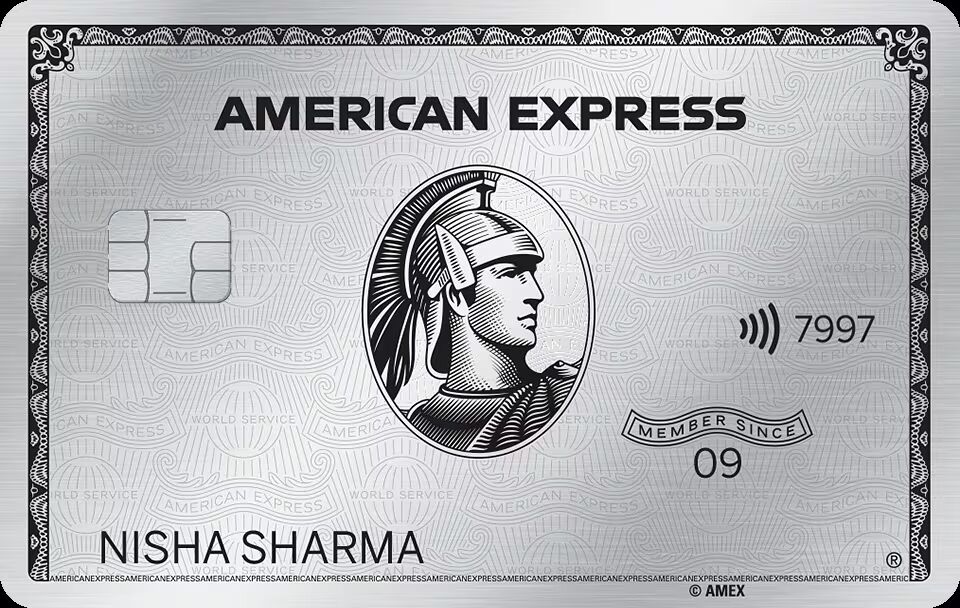
Protecting Your 15-Digit Identity
Despite these technological advances, the onus of security still falls partly on the cardholder. Protecting your 15-digit number and your 4-digit CID is a critical component of personal financial hygiene. Financial experts recommend:
-
Monitoring Statements: Reviewing your Amex app daily to catch any unauthorized uses of your number.
-
Using Secure Portals: Only entering your 15-digit number on websites with “https” encryption.
-
Shredding Documents: Any physical mail that contains even the last five digits of your account should be destroyed.
By understanding the specific architecture of American Express numbers—the 15-digit sequence, the 4-digit CID, and the “3” series prefix—you gain a deeper insight into the mechanics of your own wealth. These numbers are not just a tool for commerce; they are a sophisticated component of a global financial system designed to facilitate secure, high-value transactions for the discerning consumer.
aViewFromTheCave is a participant in the Amazon Services LLC Associates Program, an affiliate advertising program designed to provide a means for sites to earn advertising fees by advertising and linking to Amazon.com. Amazon, the Amazon logo, AmazonSupply, and the AmazonSupply logo are trademarks of Amazon.com, Inc. or its affiliates. As an Amazon Associate we earn affiliate commissions from qualifying purchases.