
When a consumer asks, “How much is the movie?” the answer typically fluctuates between a $15 cinema ticket and a $10 monthly streaming subscription. However, from a financial and business perspective, the answer is a multi-layered calculation involving hundreds of millions of dollars in capital investment, complex debt structures, and high-stakes revenue forecasting. The film industry is not merely a creative endeavor; it is one of the most volatile and capital-intensive asset classes in the global economy. To understand the true cost of a movie, one must look past the box office numbers and delve into the intricate financial machinery that drives Hollywood and the independent film market.
The Consumer Perspective: Decoding the Price of Cinema
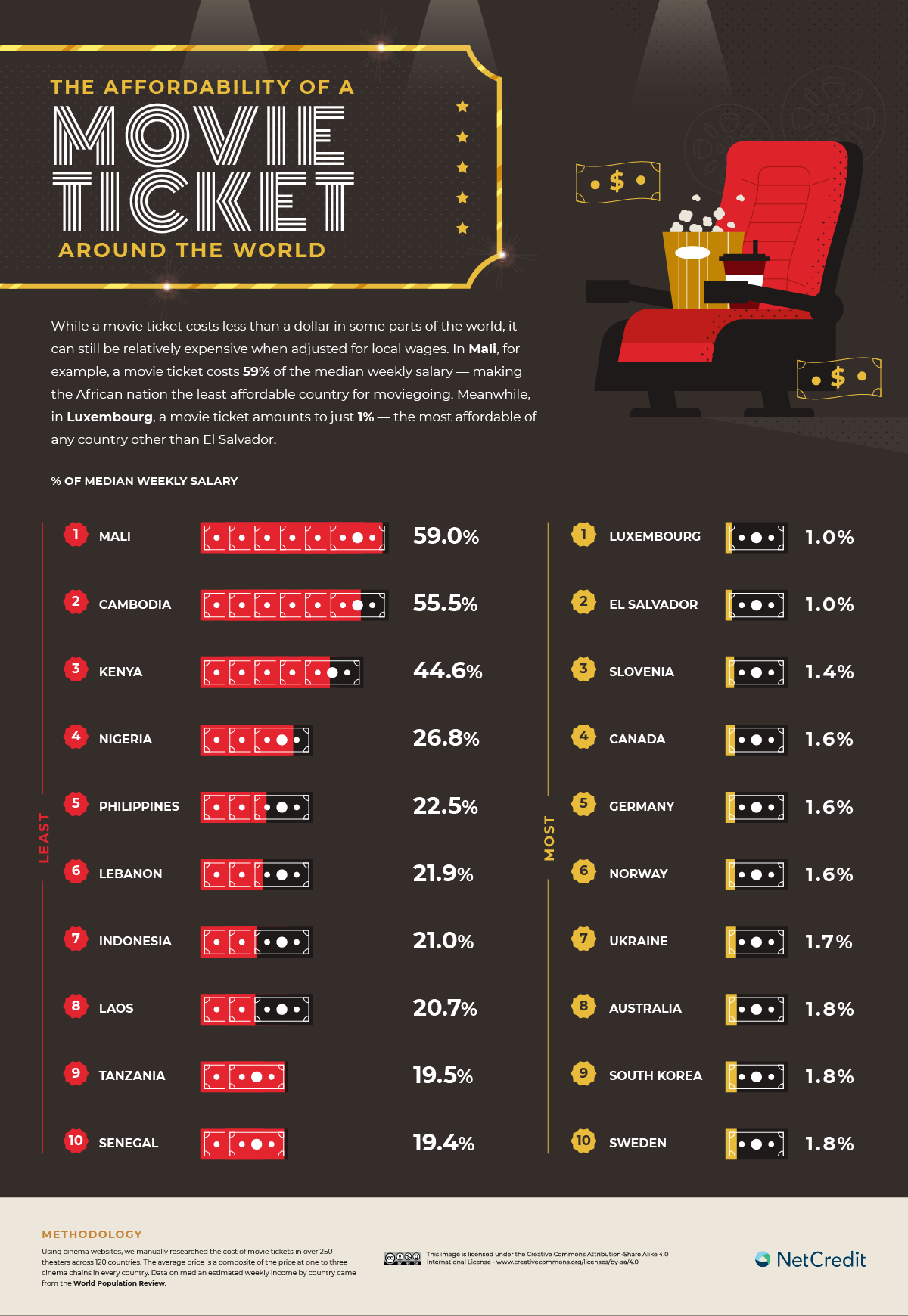
For the average viewer, the cost of a movie is a matter of personal finance and discretionary spending. Yet, the price paid at the counter or on a mobile app is the result of a sophisticated pricing strategy designed to balance theatre overhead with studio demands.
The Evolution of Ticket Pricing and Dynamic Models
Historically, movie tickets were priced uniformly. Today, the industry is shifting toward dynamic pricing—a model long used by airlines and hotels. Major theater chains now implement premium pricing for “tentpole” releases during opening weekends or for specialized formats like IMAX and Dolby Cinema. This tiered structure reflects the high capital expenditure required to maintain cutting-edge projection technology. From a financial standpoint, the ticket price is split between the exhibitor (the theater) and the distributor (the studio). In the opening weeks, a studio may take up to 60% of the ticket revenue, a figure that gradually shifts in favor of the theater as the run continues.
The Concession Economics
It is a well-known secret in business finance that movie theaters are effectively snack bars that happen to show films. Because the “film rental” fees paid to studios are so high, exhibitors rely on high-margin concessions to maintain profitability. With profit margins on popcorn and soda often exceeding 800%, these sales subsidize the operational costs of the facility, including real estate taxes, high-utility bills for climate control, and staffing. When we ask how much the movie costs the consumer, we must include the “hidden” inflation of the full experience, which has outpaced general CPI (Consumer Price Index) growth over the last decade.
The Subscription Pivot
The rise of SVOD (Subscription Video on Demand) has fundamentally altered the perceived value of a film. When a consumer pays $15.99 a month for access to thousands of titles, the individual “cost” of a movie approaches zero in the user’s mind. This creates a “devaluation of content” challenge for the industry. For the platforms, the financial metric shifts from “per-ticket revenue” to “Customer Acquisition Cost” (CAC) and “Lifetime Value” (LTV). The movie’s “cost” to the platform is a massive upfront licensing fee or production budget, amortized over millions of subscribers.
Behind the Scenes: The Financial Anatomy of a Blockbuster
When a studio greenlights a “tentpole” film, they are often committing to a spend that exceeds the GDP of small nations. To understand the “how much” of production, we must categorize the spend into distinct financial buckets.
Above-the-Line vs. Below-the-Line Costs
In film accounting, the budget is split into two primary categories. “Above-the-line” (ATL) costs include the “creative” talent: the director, producers, writers, and lead actors. For a major superhero film, ATL costs can consume 30% to 50% of the total budget, particularly if the stars command “twenty-twenty” deals (a $20 million salary against 20% of the gross).
“Below-the-line” (BTL) costs cover the actual production expenses: crew salaries, equipment rentals, location fees, visual effects (VFX), and catering. As movies become more reliant on CGI, the BTL costs for VFX houses have ballooned, often representing the single largest line item in a $200 million budget. Managing these costs requires rigorous financial oversight, as a single week of “overages” on a large set can cost millions.
The P&A Budget: The Second Price Tag
A common mistake in analyzing movie finances is looking only at the production budget. A film that costs $150 million to make often requires an additional $100 million to $150 million for P&A (Prints and Advertising). In the modern era, “prints” are digital, so the bulk of this spend is pure marketing. This includes global press tours, television spots, social media blitzes, and physical out-of-home advertising. Consequently, for a movie to be considered “profitable” in the traditional sense, it often needs to gross 2.5 to 3 times its production budget at the box office just to cover the P&A and the theater’s cut.

Contingency and Completion Bonds
Because film production is fraught with physical and financial risk, investors require “completion bonds.” This is a form of insurance that guarantees the film will be finished and delivered, even if it goes over budget or the director is replaced. The cost of this bond—usually 2% of the budget—is a mandatory expense for independent films seeking bank financing. It serves as a financial safety net for the lenders who treat the film’s “negative” (the finished product) as collateral.
Revenue Streams and the Modern Lifecycle of a Movie
The question “how much is the movie” is also a question of yield. How much money can a single piece of intellectual property (IP) generate over its lifetime?
The Traditional Waterfall
The “waterfall” is the chronological order in which revenue is distributed to various stakeholders. It begins with the exhibitors, followed by the distributors’ fees and expenses, and then moves to the “recoupment” of the production budget. Only after these costs are cleared do “net profit” participants see a return. For many investors, the goal is to reach the “cash break-even” point as quickly as possible.
The Shift to PVOD and Licensing
The “theatrical window”—the time a movie stays exclusively in theaters—has shrunk from 90 days to as little as 17 days for some releases. This has birthed the Premium Video on Demand (PVOD) market, where movies are rented for $19.99 in the home. This is a high-margin stream for studios because they bypass the theater’s 40-50% cut, keeping roughly 80% of the revenue. Furthermore, the “long tail” of a movie includes licensing it to international broadcasters and domestic streaming giants, providing a steady stream of passive income for years.
Merchandising and Ancillary Income
For “four-quadrant” movies (those appealing to all age and gender demographics), the movie itself is often a “loss leader” for merchandising. The “Cars” franchise or the “Star Wars” universe generates billions in retail sales of toys, apparel, and theme park attractions. In these cases, the financial value of the movie is measured not by its box office gross, but by its ability to drive consumer spending across a broader brand ecosystem.
Investing in Cinema: Risks, Rewards, and Financing Structures
From a business finance perspective, movies are high-risk, high-reward assets. Unlike real estate, where the asset has intrinsic physical value, a movie’s value is entirely speculative until it hits the market.
Slate Financing and Private Equity
To mitigate risk, large investment firms and hedge funds often engage in “slate financing.” Instead of investing in a single movie, they invest in a “slate” of 10 to 15 films. This diversifies the risk; one “breakout hit” can cover the losses of four “flops.” Private equity has become a mainstay in Hollywood, providing the liquidity necessary for studios to maintain a constant pipeline of content.
Tax Incentives and Soft Money
Global competition for film production has led to the rise of “soft money”—government subsidies and tax credits. Regions like Georgia (USA), the United Kingdom, and Canada offer tax rebates ranging from 20% to 30% of local spend. For a $100 million film, a $30 million tax credit is a massive financial boon, significantly lowering the “equity gap” the producers need to fill. Smart film financing always begins with a map of the most tax-efficient jurisdictions.

The Future: AI and Decentralized Finance (DeFi)
The financial landscape of film is currently facing disruption from technology. AI is being utilized to predict box office success based on script analysis, potentially reducing the risk for lenders. Meanwhile, some independent filmmakers are exploring “tokenization” and DeFi models to crowdfund production costs, allowing fans to own a fractional financial stake in the movie’s success. While still in its infancy, this could democratize film investment, moving it away from the centralized “Big Six” studios.
In conclusion, “how much is the movie” is a question with a thousand answers. It is the $15 spent at the ticket booth, the $200 million spent on the soundstage, the $30 million saved through tax incentives, and the billions generated in long-term licensing. For the savvy investor or the curious consumer, understanding these economics reveals that every frame of film is a calculated financial risk in a global industry where the stakes are as high as the rewards.
aViewFromTheCave is a participant in the Amazon Services LLC Associates Program, an affiliate advertising program designed to provide a means for sites to earn advertising fees by advertising and linking to Amazon.com. Amazon, the Amazon logo, AmazonSupply, and the AmazonSupply logo are trademarks of Amazon.com, Inc. or its affiliates. As an Amazon Associate we earn affiliate commissions from qualifying purchases.