
Navigating the landscape of automotive financing has become increasingly complex in recent years. For most consumers, the interest rate on a car loan is the single most important variable in determining the long-term affordability of a vehicle. As the global economy shifts and central banks adjust monetary policies to combat inflation, the “current” rate is a moving target. Understanding where these rates stand today requires a deep dive into the macroeconomic factors at play, the microeconomic variables of your personal financial profile, and the strategic choices you make during the car-buying process.

Currently, average interest rates for new car loans typically hover between 6.5% and 7.5% for borrowers with excellent credit, while used car rates are generally higher, ranging from 7% to over 12%. However, these figures are merely benchmarks. The actual rate an individual receives can vary significantly based on a multitude of factors, from their credit score to the age of the vehicle being purchased.
The Macroeconomic Drivers of Auto Loan Rates
To understand why car loan rates are where they are today, one must look at the broader financial ecosystem. Interest rates on consumer loans do not exist in a vacuum; they are heavily influenced by the federal funds rate set by the Federal Reserve.
The Role of the Federal Reserve
The Federal Reserve’s primary tool for managing inflation and employment is the adjustment of the federal funds rate—the interest rate at which commercial banks borrow and lend to one another overnight. When the Fed raises this rate, the cost of capital for banks increases. To maintain their profit margins, banks pass these costs on to consumers in the form of higher interest rates on mortgages, credit cards, and auto loans.
In the wake of high inflation following the global pandemic, the Federal Reserve embarked on one of the most aggressive rate-hiking cycles in history. This directly ended the era of “cheap money” where 0% to 3% APRs were commonplace. While the pace of these hikes has stabilized, the “higher-for-longer” sentiment remains, keeping auto loan benchmarks elevated compared to the previous decade.
Inflation and Lender Risk Appetite
Lenders also account for inflation when setting rates. If inflation is high, the purchasing power of the money repaid by the borrower in the future will be lower. To compensate for this loss of value, lenders demand higher interest. Furthermore, in periods of economic uncertainty, lenders become more risk-averse. They may tighten their lending standards, requiring higher credit scores for the best rates and increasing the “risk premium” charged to borrowers with less-than-perfect credit.
Personal Factors: How Your Financial Profile Shapes Your Rate
While the Federal Reserve sets the floor, your personal financial health determines how far above that floor your specific rate will be. Lenders use sophisticated algorithms to assess the likelihood that a borrower will default on their loan, and they price their risk accordingly.
The Power of the Credit Score
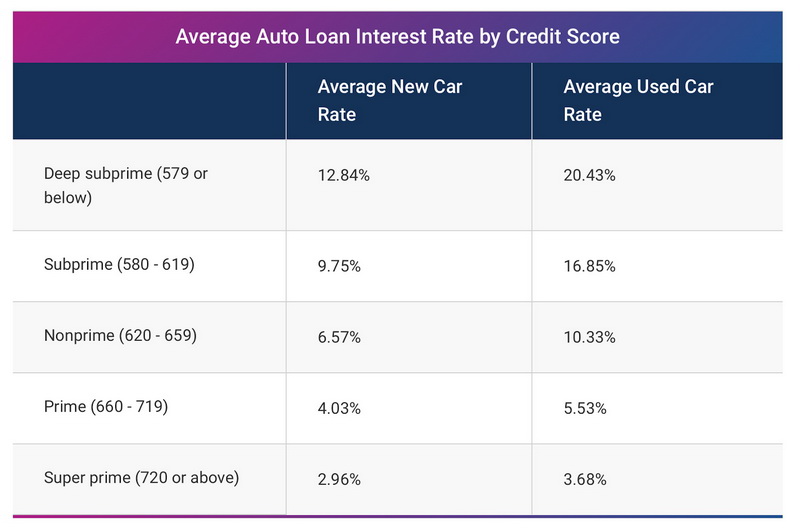
Your credit score is the most significant individual factor in the interest rate equation. Lenders typically categorize borrowers into tiers:
-
Super Prime (780–850): These borrowers receive the most competitive rates, often several percentage points below the national average. They are viewed as the lowest risk.
-
Prime (660–779): Most American car buyers fall into this category. They still receive favorable terms, though they may not qualify for the absolute lowest promotional rates offered by manufacturers.
-
Nonprime (600–659): Borrowers in this range begin to see a sharp increase in interest rates as they are considered moderate risk.
-
Subprime and Deep Subprime (Below 600): These borrowers face the highest rates, sometimes exceeding 15% to 20%. In this tier, the interest paid over the life of the loan can sometimes equal or exceed the value of the car itself.
Loan-to-Value (LTV) Ratio and Down Payments
The LTV ratio represents the amount of the loan compared to the value of the vehicle. If you make a significant down payment, your LTV ratio is lower, which reduces the lender’s risk. If you default, the lender is more likely to recover the full loan amount by selling the car. Consequently, borrowers who put 20% or more down often secure better interest rates than those seeking “zero-down” financing or those who are “underwater” (rolling negative equity from a previous car into a new loan).
Loan Term Length
The duration of the loan also impacts the interest rate. Historically, 36-month and 48-month loans were the standard. However, as car prices have risen, 72-month and even 84-month loans have become common. While longer terms lower the monthly payment, they almost always come with higher interest rates. Lenders charge more for longer terms because their money is at risk for a longer period, and there is a greater chance that the vehicle’s value will depreciate faster than the loan balance is paid down.
Comparing Rates Across Different Lenders
Where you choose to finance your vehicle can be just as important as when you buy it. Different financial institutions have different overhead costs, risk tolerances, and profit targets.
Credit Unions vs. National Banks
Credit unions are member-owned, non-profit cooperatives. Because they do not have to answer to shareholders, they often return their “profits” to members in the form of lower interest rates and lower fees. On average, auto loan rates at credit unions are 1% to 2% lower than those at large commercial banks. National banks, however, may offer more robust digital tools and a more seamless integration with your existing accounts.
Captive Financing and Dealership Incentives
Captive lenders are the financing arms of the car manufacturers themselves (e.g., Ford Credit, Toyota Financial Services). These lenders often offer “subvented” or promotional rates to move inventory. This is where you will find the elusive 0% or 1.9% APR offers. It is important to note, however, that these rates are usually reserved for Super Prime borrowers and may be offered in lieu of a cash rebate. A savvy borrower must calculate whether the interest savings of a low APR outweigh the immediate benefit of a price reduction.
Online Lenders and Fintechs
The rise of digital finance has introduced a new wave of online-only lenders and aggregators. These platforms often provide quick pre-approvals and competitive rates due to their lower physical overhead. They are particularly useful for used car financing and refinancing, where traditional banks may be less aggressive.
Strategies to Secure a Lower Interest Rate
Securing the best possible rate is not just about having a good credit score; it is about preparation and leverage.
Get Pre-Approved Before Visiting the Dealership
One of the most common mistakes car buyers make is relying solely on the dealership for financing. Dealerships often act as intermediaries, mark up the interest rates provided by lenders, and pocket the difference as “reserve” profit. By obtaining a pre-approval from a credit union or bank beforehand, you establish a “ceiling” for your interest rate. You can then challenge the dealership to beat your pre-approved rate, effectively forcing them to offer their most competitive terms.
Optimize Your Credit Profile
If you are not in an immediate rush to buy, taking six months to optimize your credit profile can save you thousands of dollars in interest. This includes paying down high-interest credit card balances to lower your credit utilization ratio and ensuring that no late payments are reported. Even a 30-point jump in your credit score can move you into a higher tier, significantly lowering your offered APR.
Consider the Vehicle Age and Mileage
Lenders generally offer lower interest rates on new cars than on used cars. This is because new cars have more predictable resale values and are less likely to experience mechanical failures that might cause a borrower to stop making payments. If you are looking at used vehicles, cars that are less than three years old or are “Certified Pre-Owned” (CPO) often qualify for better financing terms than older high-mileage vehicles.

The Long-Term Financial Impact of Interest Rates
It is easy to focus on the monthly payment, but the interest rate determines the total cost of ownership. On a $35,000, five-year loan, the difference between a 4% interest rate and an 8% interest rate is approximately $3,800 in total interest paid. That is money that could otherwise be directed toward retirement savings, an emergency fund, or other investments.
Furthermore, high interest rates increase the risk of becoming “upside down” on a loan. Since cars are depreciating assets, a high-interest loan with a long term can result in the borrower owing more than the car is worth for a significant portion of the loan’s life. This makes it difficult to sell the car or trade it in later.
Understanding the current state of car loan interest rates is essential for any modern consumer. By monitoring the Federal Reserve’s actions, maintaining a strong credit profile, and shopping across different lender types, you can navigate the current high-rate environment and secure a deal that aligns with your broader financial goals. In the world of personal finance, the interest rate is not just a number; it is the price of time and risk, and managing it effectively is the hallmark of a sophisticated borrower.
aViewFromTheCave is a participant in the Amazon Services LLC Associates Program, an affiliate advertising program designed to provide a means for sites to earn advertising fees by advertising and linking to Amazon.com. Amazon, the Amazon logo, AmazonSupply, and the AmazonSupply logo are trademarks of Amazon.com, Inc. or its affiliates. As an Amazon Associate we earn affiliate commissions from qualifying purchases.