
Navigating the world of personal finance often feels like deciphering a complex code, yet most financial journeys begin with a single, practical question: “How much will my payments be?” Whether you are eyeing a new home, considering a vehicle purchase, or looking to consolidate high-interest credit card debt, the monthly payment is the fundamental unit of your financial life. It is the number that determines your monthly cash flow, your ability to save, and your overall financial stress levels.
Understanding the components that make up a payment—and how to manipulate them to your advantage—is more than just a budgeting exercise; it is a critical skill for building long-term wealth. To answer the question of “how much,” one must look beyond the sticker price and delve into the mechanics of interest rates, loan terms, and the hidden costs that often accompany borrowing.

The Mechanics of Monthly Payments: Principal, Interest, and Beyond
At its core, a loan payment is composed of two primary elements: the principal and the interest. The principal is the original amount of money you borrowed, while the interest is the cost of borrowing that money, typically expressed as an annual percentage rate (APR). However, how these two components interact over time is governed by a process known as amortization.
Understanding Amortization
Amortization is the process of spreading out a loan into a series of fixed installments over time. While your total monthly payment might remain the same, the ratio of interest to principal shifts with every payment. In the early stages of a loan—particularly long-term loans like a 30-year mortgage—the vast majority of your payment goes toward interest. As the principal balance slowly decreases, the amount of interest charged each month also drops, allowing a larger portion of your payment to be applied to the principal.
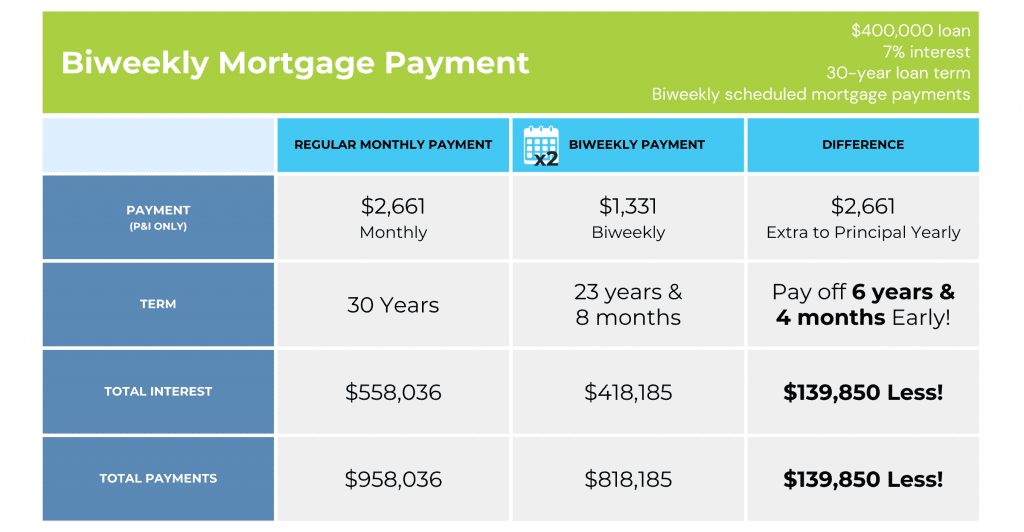
Understanding your amortization schedule is vital because it highlights the true cost of the loan. It also reveals why making extra payments toward the principal early in the loan term can have a disproportionately large impact on reducing the total interest paid and shortening the life of the loan.
The Impact of Interest Rates and Compounding
The interest rate is the most significant variable in determining your payment. Even a fractional difference in an APR can result in thousands of dollars of difference over the life of a loan. This is due to compounding, where interest is calculated on the remaining principal balance. In the context of monthly payments, most loans use “simple” interest calculated monthly, but the cumulative effect over five, ten, or thirty years is staggering. When you ask “how much will my payments be,” you are essentially asking how much the market—and your creditworthiness—has priced the risk of lending to you.
Calculating Payments Across Different Loan Types
Not all loans are structured the same way. The math behind a mortgage payment differs significantly from that of a credit card or a short-term personal loan. To get an accurate estimate, you must categorize the type of debt you are considering.
Mortgages: The PITI Breakdown
For most homeowners, the monthly payment is not just “principal and interest.” It is commonly referred to by the acronym PITI: Principal, Interest, Taxes, and Insurance.
-
Principal and Interest: The base cost of the loan.
-
Taxes: Property taxes are usually calculated annually and divided by twelve, then held in an escrow account by the lender to be paid on your behalf.
-
Insurance: Homeowners insurance is a requirement for any mortgaged property. Like taxes, this is often escrowed.
-
PMI (Private Mortgage Insurance): If your down payment is less than 20%, you will likely have to pay PMI, which protects the lender in case of default. This adds a monthly premium to your payment until you reach a certain equity threshold.
When calculating mortgage payments, failing to account for taxes and insurance can lead to a 20% to 30% underestimation of your actual monthly obligation.
Auto Loans: Balancing Term and Monthly Cost
Auto loans are typically shorter than mortgages, ranging from 36 to 84 months. While a longer term reduces the monthly payment, it significantly increases the total interest paid. Furthermore, vehicles are depreciating assets. If you opt for a payment that is too low by extending the term to 72 or 84 months, you run the risk of being “underwater”—owing more on the car than it is actually worth.
When asking about auto payments, it is crucial to focus on the “out-the-door” price, including sales tax, registration fees, and dealer fees, rather than just the MSRP. These additions are often rolled into the loan, increasing the principal and, consequently, the monthly payment.
Personal Loans and Credit Cards
Personal loans are usually fixed-rate, fixed-term installments, making the payment calculation straightforward. Credit cards, however, are revolving debt. The “minimum payment” on a credit card is designed to keep you in debt for as long as possible, usually covering the interest plus a tiny fraction (1-2%) of the principal. To truly manage your finances, your “payment” for revolving debt should be based on a strategy to clear the balance, not just the minimum amount requested by the bank.
Factors That Influence Your Payment Amount
Two individuals borrowing the exact same amount for the same purpose can end up with vastly different monthly payments. This variance is driven by several key factors that lenders use to assess risk and profitability.
Credit Scores and Risk Premiums
Your credit score is the single most influential factor in determining your interest rate. Lenders view a high credit score as an indicator of low risk, rewarding the borrower with a lower APR. Conversely, a lower score triggers a “risk premium,” where the lender charges a higher interest rate to compensate for the higher probability of default.
For example, on a $300,000 mortgage, the difference between a 760 credit score and a 620 credit score could result in a monthly payment difference of several hundred dollars. Over 30 years, this equates to over $100,000 in additional interest.
Loan Term Length: The Monthly vs. Total Cost Trade-off
The length of the loan (the term) is a lever you can pull to adjust your payment. A shorter term (e.g., a 15-year mortgage vs. a 30-year mortgage) will always result in a higher monthly payment but a much lower total interest cost. A longer term provides breathing room in your monthly budget but can double or triple the total amount you pay for the asset. When deciding “how much your payment should be,” you must balance the need for monthly cash flow with the goal of long-term interest savings.
Tools and Strategies for Managing Your Monthly Obligations
Once you have a handle on the numbers, the focus shifts from calculation to management. Understanding how much your payments will be allows you to integrate them into a broader financial strategy.
Using Financial Calculators Effectively
While you can use complex algebraic formulas to calculate payments, online financial calculators and spreadsheet functions (like the =PMT formula in Excel) are far more efficient. However, these tools are only as good as the data you input. Always include:
-
The full purchase price minus the down payment.
-
The most realistic interest rate based on your current credit score.
-
Additional costs like origination fees, closing costs, or monthly service fees.
The Role of the Debt-to-Income (DTI) Ratio
Lenders use the Debt-to-Income ratio to decide how much you can afford. This is calculated by dividing your total monthly debt payments by your gross monthly income. Most lenders prefer a DTI of 36% or less, with no more than 28% of that going toward housing. Before committing to a new payment, calculate your own DTI. If a new payment pushes you above these thresholds, you may find yourself “house poor”—having a great asset but no liquid cash for emergencies, travel, or retirement savings.
Refinancing and Consolidation
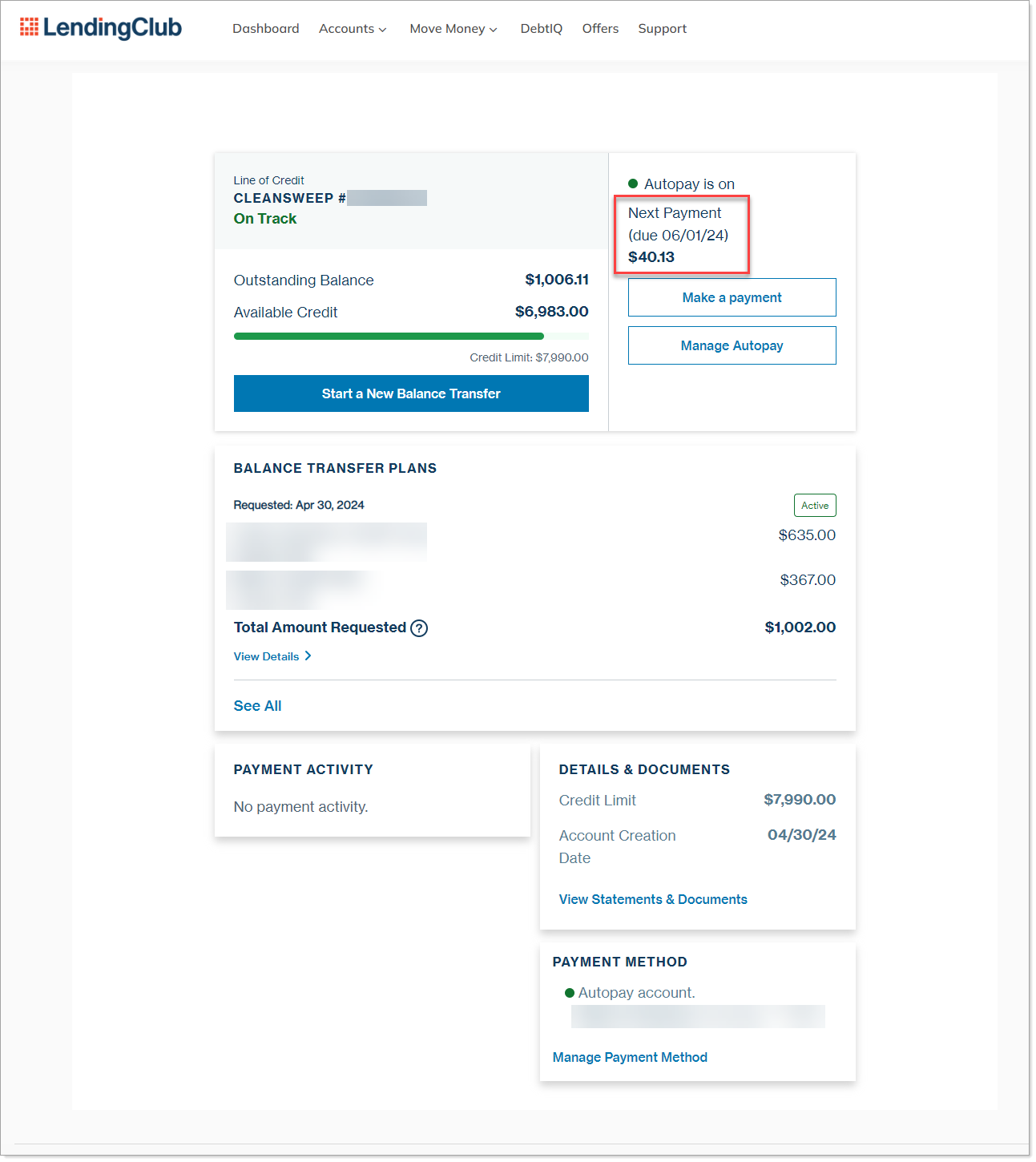
If your current payments are too high, or if market interest rates have dropped since you took out a loan, refinancing is a powerful tool. By taking out a new loan at a lower interest rate to pay off the old one, you can effectively lower your monthly payment or shorten the loan term. Similarly, debt consolidation involves taking multiple high-interest payments (like credit cards) and combining them into a single, lower-interest personal loan. This simplifies your monthly obligations and usually reduces the total amount leaving your bank account each month.
Strategic Borrowing for Long-Term Health
The question “how much will my payments be” should always be followed by “and how does this fit into my wealth-building plan?” Debt is a tool that, when used correctly, allows for the acquisition of appreciating assets like real estate or education. When used incorrectly—for lifestyle inflation or depreciating consumer goods—it becomes an anchor that drags down your financial progress.
To master your monthly payments, adopt a proactive stance. Instead of letting a lender tell you what your payment will be, determine what payment fits within your budget first. Work backward from that number to find the loan amount, interest rate, and term that align with your goals. By controlling the payment, you control your cash flow; by controlling your cash flow, you control your financial future.
Ultimately, the goal of understanding your payments is to ensure that your money is working for you, rather than you working solely to pay off the interest on your past decisions. Whether through aggressive principal repayment, careful credit management, or strategic refinancing, keeping your monthly payments optimized is a hallmark of financial literacy and a prerequisite for lasting economic stability.
aViewFromTheCave is a participant in the Amazon Services LLC Associates Program, an affiliate advertising program designed to provide a means for sites to earn advertising fees by advertising and linking to Amazon.com. Amazon, the Amazon logo, AmazonSupply, and the AmazonSupply logo are trademarks of Amazon.com, Inc. or its affiliates. As an Amazon Associate we earn affiliate commissions from qualifying purchases.