
The retail landscape of the late 1990s was a period of transition, marked by the dominance of big-box retailers and the burgeoning influence of e-commerce. Amidst this backdrop, a revolutionary concept emerged that would shift the focus from what customers were buying to how they were buying it. When Build-A-Bear Workshop was started in 1997, it did more than just sell plush toys; it pioneered a sector of the market now known as “experiential retail.” By transforming a static product into a personalized journey, the brand created a blueprint for corporate identity that has sustained itself for over a quarter of a century.

The 1997 Genesis: Reimagining the Retail Experience
Build-A-Bear Workshop was officially founded on October 27, 1997. The first store opened its doors in the Saint Louis Galleria in St. Louis, Missouri. The brainchild of Maxine Clark, a seasoned retail executive who had previously served as the president of Payless ShoeSource, the concept was born from a simple but profound observation of consumer behavior.
The Spark of Innovation
The inspiration for the brand famously came during a shopping trip with 10-year-old Katie Kern. When they couldn’t find the specific stuffed animal Katie wanted, she remarked that they could simply “make” one. While Katie was thinking about a craft project, Clark saw a massive gap in the retail market. At the time, the toy industry was focused on mass production and distribution. Clark envisioned a “workshop” where the consumer became the creator. This shift from a passive shopper to an active participant was the cornerstone of the Build-A-Bear brand strategy.
Defying the Retail Status Quo
In 1997, industry experts were skeptical. The idea of a retail space dedicated to “making” a toy seemed labor-intensive and difficult to scale. However, the first store’s success was immediate. By the end of its first year, the St. Louis location had exceeded all sales projections, proving that consumers were willing to pay a premium for an experience and a memory, rather than just a physical item. This success allowed Clark to expand rapidly, turning a single boutique into a global brand that would eventually go public on the New York Stock Exchange in 2004.
The Core Brand Identity: Moving Beyond Product to Process
To understand why Build-A-Bear has remained relevant while other 90s-era retailers have faded, one must examine its brand architecture. The company does not just sell teddy bears; it sells a multi-sensory process. Every element of the store design is engineered to reinforce a specific brand narrative of creativity, affection, and ownership.
The Eight-Step Experience
The brand’s corporate identity is built around a standardized “Bear-Builder” process. This journey—Choose Me, Hear Me, Stuff Me, Stitch Me, Fluff Me, Dress Me, Name Me, and Take Me Home—is a masterclass in psychological branding.
-
Emotional Anchoring: The “Heart Ceremony” is perhaps the most critical component of the brand identity. By asking a child to make a wish on a small fabric heart before it is sewn inside the bear, the brand creates an emotional anchor. The toy is no longer a commodity; it is a “living” companion with a “heart.”
-
Personalization as Value: In a world of mass production, Build-A-Bear offers hyper-personalization. Customers can choose sounds, scents, and an endless array of clothing. This strategy increases the “sunk cost” and emotional investment of the consumer, leading to higher brand loyalty and a higher average transaction value.
Sensory Branding and Store Design
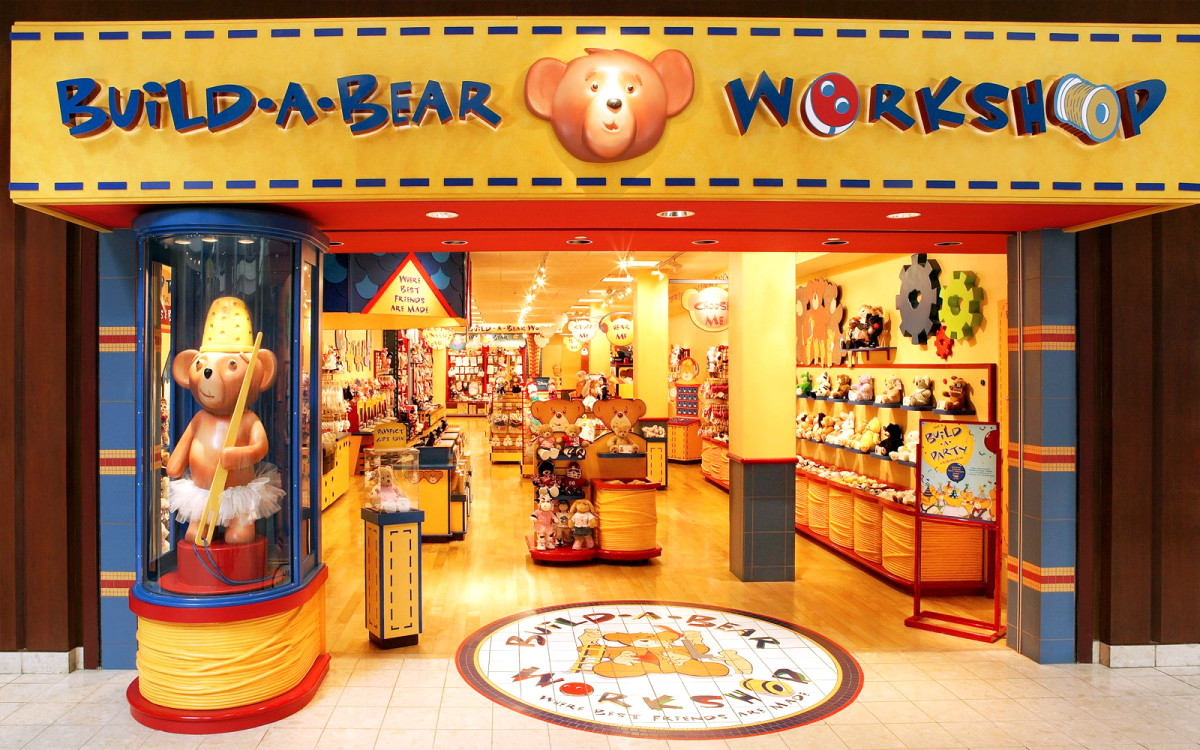
The physical environment of a Build-A-Bear Workshop is a deliberate branding tool. The bright colors, the tactile nature of the stuffing station, and the “fluffing” station (which uses air blowers to groom the bear) engage multiple senses simultaneously. This sensory branding ensures that the memory of the visit is deeply encoded, encouraging repeat visits for “wardrobe updates” or new “friends” for the initial bear.
Strategic Diversification: Licensing and the “Kidult” Market
As the brand matured, its strategy evolved to address changing demographics and the rise of digital entertainment. One of the most significant shifts in Build-A-Bear’s branding strategy has been its aggressive pursuit of intellectual property (IP) partnerships and the cultivation of the adult collector market, often referred to as “kidults.”

The Power of IP Partnerships
Recognizing that consumer affinity is often tied to popular culture, Build-A-Bear transitioned from selling generic plush animals to becoming a hub for licensed characters. By partnering with giants like Disney, Marvel, Star Wars, Nintendo, and Pokémon, the brand positioned itself as a destination for fans of all ages.
-
Targeting New Demographics: These partnerships allowed the brand to transcend the “children’s toy” category. A Star Wars fan in their 30s is just as likely to purchase a limited-edition Grogu (Baby Yoda) plush as a child is to buy a traditional bear.
-
Scarcity and Collectability: By releasing limited-run licensed products, Build-A-Bear tapped into the “hype” culture used by fashion brands like Supreme. This creates a sense of urgency and exclusivity that drives both foot traffic and online sales.
The “Kidult” Phenomenon
In recent years, adults have become a significant portion of Build-A-Bear’s revenue stream. The brand lean-into this via “The Bear Cave,” an online section of their website specifically marketed toward adults, featuring more sophisticated designs and pop-culture icons. This pivot demonstrates a highly sophisticated understanding of brand lifecycle management; the children who visited the first stores in 1997 are now parents themselves or adult collectors with disposable income.
Operational Resilience: Adapting for a Digital-First World
The “retail apocalypse” of the 2010s saw the downfall of many mall-based staples, including Toys “R” Us. Build-A-Bear, however, survived by modernizing its operational brand and embracing an omnichannel strategy.
The Bear Builder 3D Workshop
While the brand was founded on the physical “touch and feel” of a mall, it has successfully translated that experience to the digital realm. The “Bear Builder 3D Workshop” allows customers to go through the same eight-step process online. While it lacks the physical Heart Ceremony, the digital interface uses animation and interactive elements to replicate the emotional engagement of the store.
Data-Driven Marketing and the “Pay Your Age” Strategy
Build-A-Bear’s marketing strategy is heavily reliant on its “Bonus Club” loyalty program. By capturing data on birthdays and preferences, the brand can execute highly targeted email and SMS campaigns.
One of the most famous (and infamous) marketing events was the 2018 “Pay Your Age” day. While the overwhelming demand caused logistical challenges, the event was a branding masterstroke. It generated unprecedented global media coverage and led to a massive increase in loyalty program sign-ups. It reinforced the brand’s image as a provider of accessible family memories.
Lessons in Brand Longevity: What Modern Marketers Can Learn
The story of Build-A-Bear, from its start in 1997 to its current status as a global powerhouse, offers several key takeaways for brand strategists and corporate leaders.
1. Sell the Feeling, Not the Feature
Build-A-Bear’s core product is a plush toy, which can be bought cheaper elsewhere. However, people pay more because they are buying the “feeling” of creation and the “memory” of the visit. In any industry, focusing on the emotional outcome for the consumer is a more sustainable strategy than competing on price or specs.
2. The Importance of Rituals
The Heart Ceremony is a brand ritual. Rituals create consistency and a sense of belonging. For a brand to have staying power, it needs to develop these unique touchpoints that competitors cannot easily replicate. These rituals become synonymous with the brand identity itself.
3. Agility in Consumer Trends
Maxine Clark’s ability to see that children wanted to be creators was the first step. The brand’s subsequent shift toward licensing and adult collectors shows an ongoing commitment to agility. A brand that stays stagnant in its target demographic will eventually age out of the market. Build-A-Bear has successfully aged with its customers.
When Build-A-Bear was started in 1997, it was a bold experiment in the power of the consumer experience. Today, it stands as a testament to the fact that even in an increasingly digital world, the human desire for personalization, emotional connection, and physical ritual remains a potent force in brand building. By maintaining the integrity of its founding vision while embracing the complexities of modern commerce, Build-A-Bear has secured its place as a quintessential case study in branding excellence.
aViewFromTheCave is a participant in the Amazon Services LLC Associates Program, an affiliate advertising program designed to provide a means for sites to earn advertising fees by advertising and linking to Amazon.com. Amazon, the Amazon logo, AmazonSupply, and the AmazonSupply logo are trademarks of Amazon.com, Inc. or its affiliates. As an Amazon Associate we earn affiliate commissions from qualifying purchases.