
When investors ask, “What is the return on a Roth IRA?” they are often met with a nuanced answer: A Roth IRA is not an investment in itself, but rather a tax-advantaged container for investments. Therefore, the return on a Roth IRA is entirely dependent on the underlying assets—stocks, bonds, mutual funds, or ETFs—held within the account. However, when evaluating the performance of a Roth IRA, one must look beyond simple percentage gains and consider the profound impact of tax-free growth and the historical benchmarks of the broader financial markets.
Defining the Roth IRA Return: Performance vs. Account Type
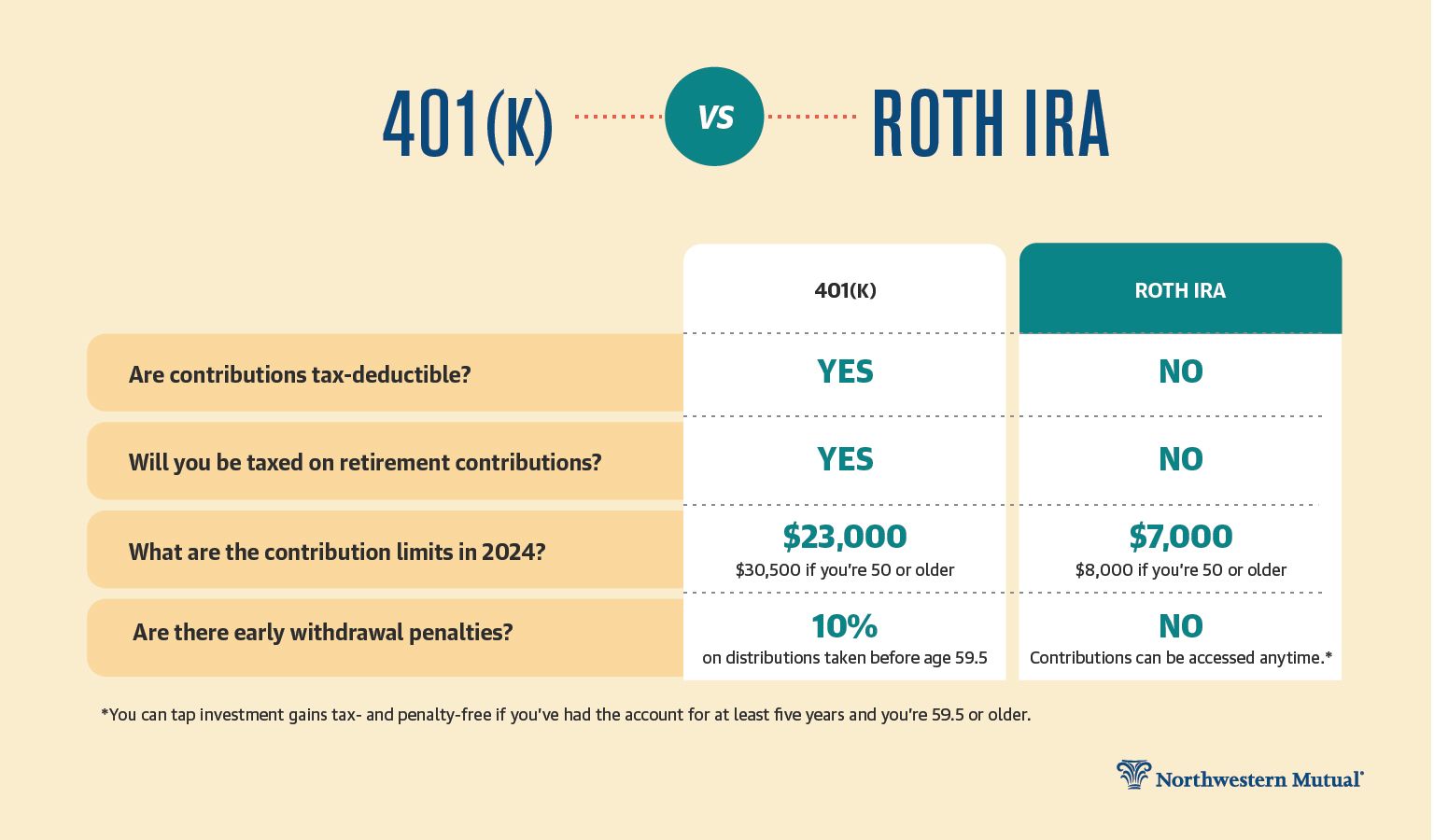
To understand the return on a Roth IRA, it is essential to distinguish between the financial vehicle and the fuel that moves it. A Roth IRA is a specialized retirement account that allows you to contribute after-tax dollars. In exchange for paying taxes upfront, your money grows tax-free, and qualified withdrawals in retirement are also tax-free. This structural advantage fundamentally changes the “net” return compared to other investment accounts.
The Difference Between a Vehicle and an Investment
Think of a Roth IRA as a bucket. If you fill that bucket with cash (a high-yield savings or money market fund), your return will be low, likely hovering between 1% and 5% depending on the interest rate environment. If you fill that bucket with a diversified portfolio of blue-chip stocks or an S&P 500 index fund, your historical return could average significantly higher. Because the Roth IRA is merely the “wrapper,” the return is a direct reflection of your asset allocation strategy.
Historical Benchmarks for Roth IRA Portfolios
Most long-term investors use the Roth IRA to hold equities because the tax-free growth is most valuable on high-growth assets. Historically, the S&P 500 has provided an average annual return of approximately 10% before inflation (or roughly 7% after adjusting for inflation) over long periods.
If an investor maintains a balanced portfolio of 60% stocks and 40% bonds within their Roth IRA, they might expect a more conservative average return of 6% to 8%. The “return” is thus a variable figure that fluctuates with market cycles, economic shifts, and the specific risk tolerance of the account holder.
The Tax-Free Advantage: How Saving on Taxes Boosts Your Net Return
The true brilliance of the Roth IRA lies not in the gross return of the assets, but in the “alpha” created by its tax treatment. In a standard brokerage account, you are subject to capital gains taxes on your profits. In a Traditional IRA or 401(k), you pay ordinary income tax on your withdrawals. The Roth IRA eliminates these liabilities, which effectively increases your realized return.
Roth IRA vs. Traditional IRA: The After-Tax Comparison
Consider two investors who both earn a 7% average annual return over 30 years. Investor A uses a Traditional IRA, and Investor B uses a Roth IRA. While their portfolios show the same numerical balance at retirement, Investor B’s “real” return is significantly higher.
If Investor A has $1 million in their Traditional IRA and sits in a 25% tax bracket during retirement, they only actually “own” $750,000. Investor B, with $1 million in a Roth IRA, keeps the entire $1 million. When you calculate the return on a Roth IRA, you must factor in the 15% to 35% in taxes you are not paying, which provides a massive boost to the purchasing power of your savings.
The Power of Compound Interest in a Tax-Sheltered Environment
Compounding is the process where your investment earnings are reinvested to generate their own earnings. In a taxable account, “tax drag”—the yearly bite taken out by taxes on dividends and capital gains—slows this process down. In a Roth IRA, every penny of growth remains in the account. Over several decades, this lack of tax drag can result in a final balance that is 20% to 40% larger than a taxable account with identical investments. This is the “hidden” return of the Roth IRA.
Factors That Determine Your Specific Rate of Return

While market averages provide a baseline, individual returns vary wildly based on personal choices and economic conditions. Understanding these factors is crucial for setting realistic expectations for your retirement trajectory.
Asset Allocation and Risk Profile
Your asset allocation—the mix of stocks, bonds, and other assets—is the primary driver of your Roth IRA return. Younger investors often lean heavily toward 100% equities to maximize the high growth potential of the tax-free shield. As retirement approaches, many shift toward bonds or fixed-income assets to protect their principal. While this shift reduces volatility, it also lowers the expected annual return. The “return” is a trade-off between the desire for growth and the need for stability.
The Impact of Expense Ratios and Management Fees
Returns are often quoted “gross,” but investors live on “net” returns. Within a Roth IRA, internal fees can silently erode your gains. For example, an actively managed mutual fund might charge a 1% expense ratio, while a passive index fund might charge 0.03%. If the market returns 8%, your net return is 7% in the first scenario and 7.97% in the second. Over 30 years, that 1% difference can cost an investor hundreds of thousands of dollars, making fee management a critical component of maximizing Roth IRA performance.
The Time Horizon Factor
The Roth IRA rewards patience. Because of the way compounding math works, the most significant growth happens in the final decade of a multi-decade investment period. An investor who starts a Roth IRA at age 25 and contributes until age 65 will see a much higher total return on their initial dollars than someone who starts at age 45. Time is the multiplier that allows the tax-free benefits of the Roth IRA to reach their full potential.
Strategies to Maximize Your Roth IRA Growth
To achieve the best possible return on a Roth IRA, investors should move beyond passive contribution and toward intentional portfolio management. High returns are rarely the result of luck; they are the result of disciplined strategy.
Diversification Through ETFs and Index Funds
For the majority of investors, the most reliable way to capture the market’s return is through low-cost index funds or Exchange-Traded Funds (ETFs). These instruments provide exposure to hundreds or thousands of companies, mitigating the risk of a single stock’s failure. By tracking indices like the S&P 500 or the Total Stock Market Index, investors can ensure their Roth IRA return mirrors the growth of the broader economy.
The Role of Rebalancing
As different assets perform differently over time, your portfolio can become “tilted.” If stocks perform exceptionally well, they may grow from 70% of your portfolio to 80%, increasing your risk. Rebalancing—selling some winners and buying underperformers to return to your target allocation—is a proven way to lock in gains and maintain a consistent risk-adjusted return.
Behavioral Finance and Consistency
The greatest threat to a Roth IRA’s return is often the investor themselves. “Market timing”—attempting to jump in and out of the market to avoid downturns—historically leads to lower returns. Data shows that investors who stay the course through market volatility consistently outperform those who try to time the bottom. Consistency in contributions, regardless of market sentiment, allows for dollar-cost averaging, which can lower your average cost per share and improve long-term returns.
Managing Expectations and Planning for the Future
When projecting the future value of a Roth IRA, it is important to remain grounded in realistic financial principles. While double-digit returns are possible in some years, they are rarely sustainable over forty-year cycles.
Adjusting for Inflation
While your Roth IRA might show an 8% average return, inflation typically erodes the purchasing power of that money by 2% to 3% annually. Smart investors calculate their “real” rate of return by subtracting the inflation rate. This provides a more accurate picture of what your Roth IRA balance will actually be able to buy in the future.

Withdrawal Rules and Long-term Sustainability
The final component of your Roth IRA return is the “withdrawal phase.” Because Roth IRAs do not have Required Minimum Distributions (RMDs), you can allow the money to continue growing tax-free for your entire life, or even pass it on to heirs tax-free. This flexibility allows the Roth IRA to serve as a powerful estate planning tool, extending the “return” of the account across generations.
In conclusion, the return on a Roth IRA is a composite of the performance of your chosen investments and the unique tax advantages the account provides. By selecting low-cost, high-growth assets and maintaining a long-term perspective, you can leverage the Roth IRA to achieve a net return that significantly outperforms taxable alternatives, securing a more robust and flexible financial future.
aViewFromTheCave is a participant in the Amazon Services LLC Associates Program, an affiliate advertising program designed to provide a means for sites to earn advertising fees by advertising and linking to Amazon.com. Amazon, the Amazon logo, AmazonSupply, and the AmazonSupply logo are trademarks of Amazon.com, Inc. or its affiliates. As an Amazon Associate we earn affiliate commissions from qualifying purchases.