
Navigating the sprawling landscape of modern cable television can often feel like a digital labyrinth. For subscribers of Comcast’s Xfinity service, the primary goal is often simple: accessing high-quality content with minimal friction. AMC, home to some of the most critically acclaimed dramas in television history—from Mad Men and Breaking Bad to the expansive The Walking Dead universe—remains a top priority for viewers. However, finding “what channel is AMC on Comcast” is rarely a matter of a single universal number. Instead, it involves understanding the technical architecture of the Xfinity X1 platform, the regional distribution of digital signals, and the ongoing convergence of linear broadcasting with streaming technology.
Locating AMC on the Xfinity Platform: Technical Parameters
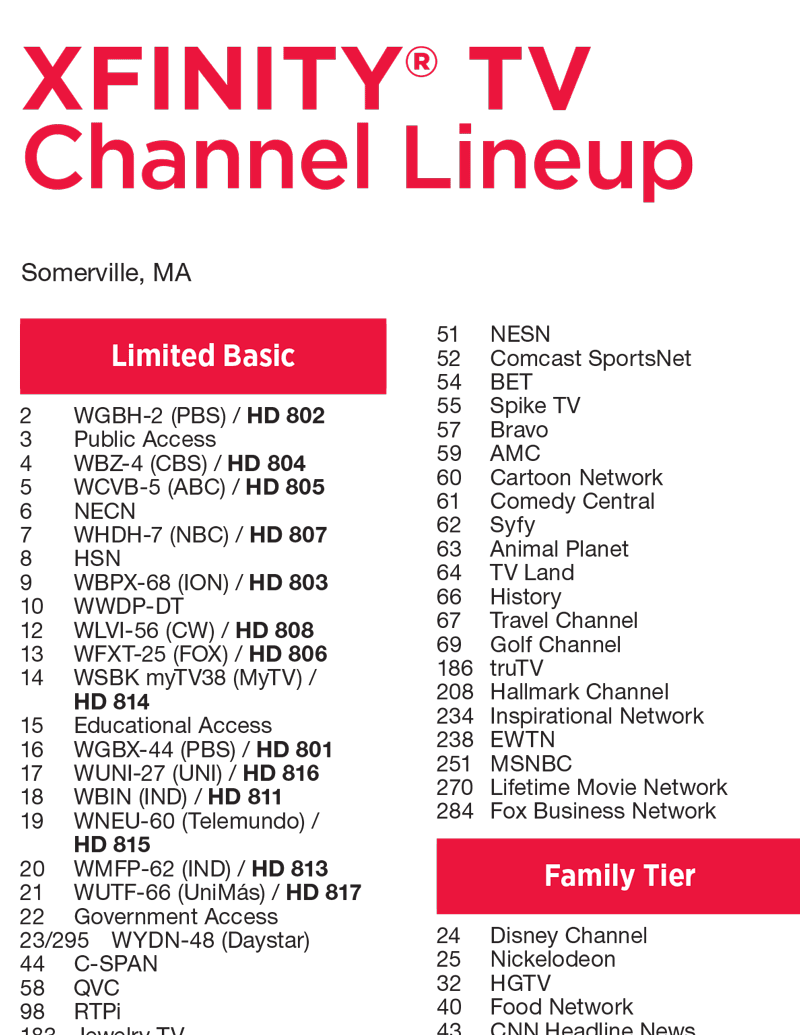
The question of channel placement on a Comcast lineup is dictated by the regional “headend”—the local facility that receives television signals and distributes them over the fiber-optic and coaxial lines to individual homes. Because Comcast operates across dozens of states, the specific channel number for AMC varies significantly by geography. In many major metropolitan markets, AMC is often found on channel 71 or 171 for Standard Definition (SD), while High Definition (HD) broadcasts are frequently mapped to the 800s or 1400s (specifically 1405 in many Xfinity “neighborhood” lineups).
The Logic of Digital Channel Mapping
Modern cable systems use a technology known as Virtual Channel Mapping. Unlike the analog era where a specific frequency strictly corresponded to a physical dial position, digital systems decouple the frequency from the user-facing channel number. This allows Xfinity to organize channels into logical “neighborhoods.” For instance, most HD channels are grouped together to provide a seamless transition for the user, regardless of where the actual data resides on the bandwidth spectrum. To find AMC instantly, users are encouraged to utilize the “Xfinity Stream” app or the on-screen electronic programming guide (EPG), which synchronizes with the local headend to display the correct numerical assignment for their specific ZIP code.
Utilizing the X1 Voice Remote for Instant Access
One of the most significant technological advancements in the Comcast ecosystem is the X1 Voice Remote. This device utilizes Natural Language Processing (NLP) to bypass the need for memorizing channel numbers. By pressing the microphone button and stating “AMC,” the X1 software architecture identifies the request, queries the local channel map, and tunes the tuner to the appropriate frequency in milliseconds. This interface layer removes the technical burden from the consumer, effectively making the specific channel number irrelevant in the context of modern UI/UX design.
The Evolution of the X1 Operating System and Content Delivery
Finding AMC is only the first step; understanding how the X1 operating system delivers that content provides insight into the current state of consumer technology. The X1 is not merely a cable box; it is a cloud-based computing platform. When you navigate to AMC, you are interacting with a sophisticated software stack that manages digital rights, resolution scaling, and interactive metadata.
Integrated Search and Metadata
The Xfinity X1 platform uses a robust metadata engine to enhance the viewing experience. When you land on AMC, the software doesn’t just show a video stream. It pulls in data regarding the current episode, cast information, and even “extra” content available via the “C” button on the remote. This integration is powered by cloud servers that track real-time broadcast schedules and cross-reference them with On-Demand libraries. For a viewer looking for Better Call Saul or Interview with the Vampire, the system seamlessly blends the linear broadcast with available past episodes stored in the cloud.
Cloud DVR Technology
For many users, watching AMC on its “live” channel is secondary to the convenience of the Digital Video Recorder (DVR). Comcast has largely transitioned from local hard drive storage to Cloud DVR technology. When a user schedules a recording on AMC, the “recording” does not necessarily happen on the physical box in their living room. Instead, a digital flag is set on Comcast’s servers. This allows for multi-screen viewing; you can start watching an AMC show on your living room TV and resume it on a tablet via the Xfinity Stream app. This highlights the shift from hardware-centric viewing to a software-as-a-service (SaaS) model within the home entertainment sector.
Streaming Integration: The Rise of AMC+ and App Convergence
In the current tech landscape, the boundary between “cable channels” and “streaming apps” has blurred. Comcast has positioned its X1 and Flex platforms as aggregators of these disparate services. This is particularly relevant for AMC, which has aggressively marketed its standalone streaming service, AMC+.
The Architecture of App Integration
On the Comcast interface, AMC+ exists as an integrated application rather than a traditional linear channel. This requires a different set of technical protocols. While the standard AMC channel is delivered via Quadrature Amplitude Modulation (QAM) signals—the traditional method for cable TV—the AMC+ app is delivered via Internet Protocol Television (IPTV).
When a user switches from the AMC linear channel to the AMC+ app, the hardware switches its data retrieval method from the cable tuner to the built-in DOCSIS modem. This transition is designed to be invisible to the user, providing a unified search experience where “AMC” content appears in search results regardless of whether it is hosted on a live channel, an On-Demand server, or within the subscription app.
Bandwidth and Resolution Management
Streaming AMC content via the Xfinity Flex or X1 box places specific demands on a home’s digital infrastructure. High-definition streams typically require a stable 5-10 Mbps connection, while 4K content (where available) demands 25 Mbps or more. Comcast’s gateway devices (the XB6, XB7, and XB8 models) use intelligent Wi-Fi management to prioritize video traffic, ensuring that the AMC stream remains stable even if other devices on the network are consuming bandwidth. This “Quality of Service” (QoS) tuning is a critical behind-the-scenes technical process that maintains the “lean-back” experience of traditional TV in an internet-dependent environment.
Troubleshooting Digital Signal and Access Issues
Technological friction is inevitable in complex systems. When a user cannot find AMC or encounters an error message, it is usually a result of a breakdown in the digital handshake between the Xfinity hardware and the network servers.
Common Error Codes and Their Meanings
Users may occasionally see error codes such as XRE-03059 or RDK-03004 when trying to tune to AMC. From a technical standpoint, these codes indicate different failure points:
-
XRE Codes: These generally refer to “Xfinity Runtime Experience” errors, often linked to account permissions or localized outages where the box cannot verify that the user has AMC in their subscription package.
-
RDK Codes: The “Reference Design Kit” is the open-source software stack Comcast uses. RDK errors usually point to hardware or connectivity issues, such as a poor signal-to-noise ratio on the coaxial cable or a failure in the box’s internal tuner.
The Role of Firmware Updates
Comcast frequently pushes firmware updates to its X1 boxes during the early morning hours (typically between 2:00 AM and 4:00 AM). These updates ensure that the channel maps are accurate and that the security protocols for high-value content like AMC remain current. If a channel suddenly “disappears” or changes its location, a system refresh—triggered through the Xfinity My Account app—can force the hardware to download the latest channel lineup and re-sync with the regional headend.
The Future of Content Delivery: Linear vs. On-Demand
As we analyze the placement of AMC on Comcast, we are witnessing a transition in the very definition of a “channel.” The industry is moving toward a “content-first” rather than “channel-first” architecture.
The Decline of the Channel Number
In the next generation of digital interfaces, the numerical channel may disappear entirely. We are already seeing this with Xfinity Flex, a streaming-centric device for internet-only customers. On Flex, there are no channel numbers. Users navigate to “AMC” as a brand entity. The technical backend handles whether the content is a live feed or a recorded file. This “de-linearization” of media is the primary trend in current software development for media companies.
Security and Digital Rights Management (DRM)
The delivery of AMC’s premium content requires rigorous Digital Rights Management. Comcast utilizes advanced encryption standards to ensure that the signal sent to your X1 box cannot be intercepted or pirated. This involves a continuous digital “handshake” between the cable box and the television via the HDMI cable, utilizing HDCP (High-bandwidth Digital Content Protection). If this handshake fails, users may see a black screen or a “resolution not supported” error, another technical hurdle that modern software seeks to automate and solve without user intervention.

Conclusion: A Technologically Seamless Experience
While the answer to “what channel is AMC on Comcast” varies by location, the underlying technology of the Xfinity platform is designed to make that variation irrelevant. Through the use of NLP-powered voice remotes, cloud-based operating systems, and the integration of IPTV streaming, the modern viewer accesses AMC through a sophisticated layer of software and hardware. The shift from searching for a number to simply stating a name reflects the broader trend in technology: the move toward invisible interfaces where the complexity of the network is hidden behind a seamless, user-centric experience. Whether you are watching a live premiere on a QAM channel or binge-watching a series via an integrated app, the technical prowess of the Comcast-AMC partnership ensures that high-quality storytelling remains just a voice command away.
aViewFromTheCave is a participant in the Amazon Services LLC Associates Program, an affiliate advertising program designed to provide a means for sites to earn advertising fees by advertising and linking to Amazon.com. Amazon, the Amazon logo, AmazonSupply, and the AmazonSupply logo are trademarks of Amazon.com, Inc. or its affiliates. As an Amazon Associate we earn affiliate commissions from qualifying purchases.