
Budgeting is often perceived as a restrictive practice, a digital or paper shackle that prevents individuals from enjoying their hard-earned money. However, in the realm of personal finance, a well-constructed budget is actually a tool for liberation. It provides the clarity needed to make informed decisions, reach long-term goals, and eliminate the pervasive anxiety that comes with financial uncertainty. The cornerstone of any functional budget is the identification and recording of fixed expenses. By logging these non-negotiable costs first, you establish a realistic baseline for your financial life, allowing the rest of your economic strategy to fall into place with precision.

Understanding the Role of Fixed Expenses in Your Financial Framework
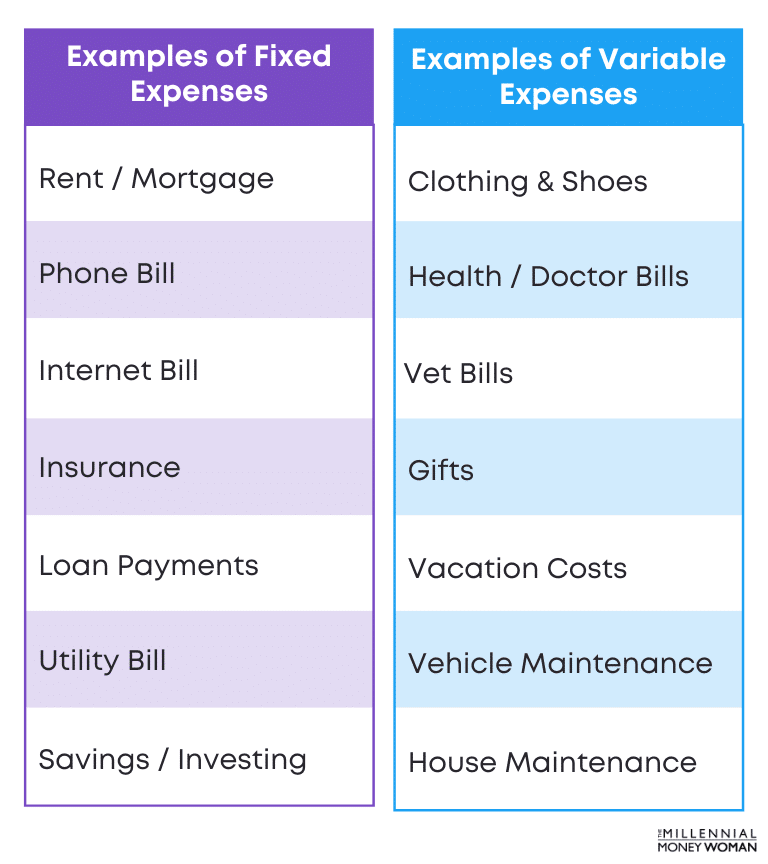
To build a resilient budget, one must first distinguish between the various types of cash outflows. Fixed expenses are those costs that remain constant in amount and frequency. They are the “predictables” of your financial existence. Unlike variable expenses, which fluctuate based on your behavior or immediate needs, fixed expenses are often bound by contracts, legal obligations, or essential survival requirements.
Defining Fixed vs. Variable Costs
A fixed expense is characterized by its consistency. Common examples include mortgage or rent payments, car loans, insurance premiums, and subscription services like internet or streaming platforms. Because these amounts rarely change from month to month, they represent the “skeleton” of your budget.
In contrast, variable expenses—such as groceries, fuel, dining out, and entertainment—are the “flesh.” They are more flexible and subject to your discretion. While you must eat, the amount you spend on food can vary wildly depending on whether you cook at home or eat at a high-end restaurant. By logging fixed expenses first, you determine exactly how much “room” is left for these variable choices.
Why Predictability is the Anchor of a Budget
The primary reason to prioritize fixed expenses is the psychological and mathematical certainty they provide. When you know that $2,500 of your $4,000 monthly income is already spoken for by fixed obligations, you are immediately grounded in reality. This prevents the common trap of overspending early in the month only to find that there is insufficient capital to cover the rent or the car insurance when they fall due.
Predictability allows for better long-term forecasting. If you know your fixed costs today, you can project your financial health six months or a year into the future. This foresight is the difference between living paycheck-to-paycheck and building a sustainable path toward wealth.
The Strategic Advantage of Logging Fixed Expenses Early
When you sit down to create a budget, the order in which you input data matters. Starting with fixed expenses is a strategic move that simplifies the rest of the process. It clarifies your “burn rate”—the minimum amount of money required to keep your life functioning as it currently stands.
Determining Your Baseline Cost of Living
Your baseline cost of living is the sum of all fixed expenses required to maintain your current lifestyle. This figure is vital for several reasons. First, it dictates the size of the emergency fund you need. Most financial experts recommend saving three to six months of essential expenses. Without a clear log of fixed costs, you are merely guessing at what that number should be.
Second, knowing your baseline helps in career negotiations and transitions. If you know your fixed costs are $3,000 a month, you know that any job offer below a certain net threshold is mathematically unviable. It provides a hard floor for your financial decisions, ensuring you never inadvertently commit to a lifestyle you cannot afford.
Reducing Decision Fatigue in Monthly Planning
One of the greatest enemies of successful budgeting is decision fatigue. If every single dollar of your income requires a new decision every month, you are likely to experience burnout and eventually abandon the budget altogether.
By logging fixed expenses first, you effectively “automate” a large portion of your decision-making. Since these costs are set, they don’t require debate. Once the mortgage, the insurance, and the student loan payments are logged, the “problem space” of your budget shrinks. You are left with a smaller, more manageable pool of funds to allocate toward variable expenses and savings. This narrow focus makes the act of budgeting feel less like a chore and more like a tactical exercise.
A Step-by-Step Guide to Identifying and Categorizing Fixed Costs
To log fixed expenses accurately, you must conduct a thorough audit of your financial history. Many people overlook smaller fixed costs, which can lead to a “leak” in the budget where money disappears without a clear explanation.
Housing, Utilities, and Transportation
Housing is typically the largest fixed expense for any household. Whether it is a mortgage payment (including escrow for taxes and insurance) or rent, this should be the first item on your list.

While utilities like electricity and water can fluctuate slightly, many providers offer “budget billing” or “levelized billing” plans that turn these into fixed monthly amounts based on annual averages. Even if they fluctuate, they are often treated as “quasi-fixed” because they are essential. Transportation costs, specifically car payments and scheduled maintenance funds, also fall into this category. If you use public transit, a monthly pass is a classic fixed expense.
Debt Obligations and Subscriptions
Any recurring debt payment—student loans, personal loans, or credit card minimums—must be logged as a fixed expense. Even if your goal is to pay them off aggressively, the minimum required payment is a fixed obligation that must be met to protect your credit score.
Subscriptions are the silent killers of many modern budgets. From software-as-a-service (SaaS) tools and gym memberships to streaming giants and monthly curated boxes, these small amounts add up. Because they are automatically deducted, they are often forgotten. A comprehensive budget log captures every single one of these, no matter how small.
Annual and Semi-Annual Fixed Costs
A common mistake in budgeting is focusing only on monthly outflows. True financial mastery involves accounting for fixed expenses that occur less frequently. Car registration, professional licensure fees, annual Amazon Prime subscriptions, and semi-annual car insurance premiums are all fixed costs.
The most effective way to log these is to break them down into monthly installments. If your annual car insurance is $1,200, log it as a $100 monthly fixed expense and move that money into a dedicated savings account each month. This prevents “budget shocks” when the bill finally arrives.
Advanced Strategies for Optimizing Your Fixed Expenses
Once you have logged your fixed expenses, you gain a unique vantage point: the ability to optimize. While these costs are “fixed” in the short term, they are often negotiable or adjustable in the long term.
The “Negotiation Audit”
Logging your fixed expenses allows you to see them all in one place, which should trigger an annual “negotiation audit.” This involves calling service providers—internet, cell phone, insurance—and asking for better rates or searching for competitors. Because these are recurring costs, a $20 reduction in a monthly bill results in $240 of annual savings. When applied across five or six categories, the impact on your net worth is significant.
Refinancing and Consolidation
For larger fixed expenses like mortgages or high-interest loans, seeing the total monthly impact in your budget log can be the catalyst for refinancing. If interest rates have dropped or your credit score has improved, refinancing a fixed-rate loan can permanently lower your monthly baseline. This increases your monthly cash flow without requiring any change in your daily spending habits, which is the most painless way to “give yourself a raise.”
Integrating Fixed Expenses into a Modern Budgeting Workflow
In the digital age, logging fixed expenses is easier than ever, but it still requires a disciplined workflow. The goal is to move from manual tracking to a system that provides real-time insights.
Automation and the “Pay Yourself First” Model
Once your fixed expenses are logged and understood, you can align your banking structure with your budget. Many successful savers use “split direct deposit,” where a portion of their paycheck goes directly into a “Bills Account” specifically designed to cover the fixed expenses logged in their budget.
This creates a physical separation between “money that is already spent” (fixed costs) and “money available for life” (variable costs). By automating the transfer of funds for fixed expenses, you ensure that your most important obligations are always met first.
Maintaining the “Fixed-First” Mindset
The “fixed-first” approach is more than just a data-entry technique; it is a philosophy of financial control. It acknowledges that while we cannot control everything in the economy, we can control our awareness of our obligations.
As your income grows, there is a natural tendency toward “lifestyle creep,” where fixed expenses slowly rise to meet your new income level. By strictly logging and monitoring your fixed expenses, you can spot this trend before it compromises your financial goals. You can consciously decide whether that new subscription or more expensive car is worth the increase in your baseline cost of living.
In conclusion, creating a budget is the first step toward financial independence, and logging fixed expenses is the most critical part of that step. It provides the structure upon which all other financial decisions are built. By identifying these costs, accounting for their frequency, and looking for ways to optimize them, you transform your budget from a static document into a dynamic engine for wealth creation. When you know your fixed costs, you know your floor—and once you know your floor, you can finally start building your ceiling.
aViewFromTheCave is a participant in the Amazon Services LLC Associates Program, an affiliate advertising program designed to provide a means for sites to earn advertising fees by advertising and linking to Amazon.com. Amazon, the Amazon logo, AmazonSupply, and the AmazonSupply logo are trademarks of Amazon.com, Inc. or its affiliates. As an Amazon Associate we earn affiliate commissions from qualifying purchases.