
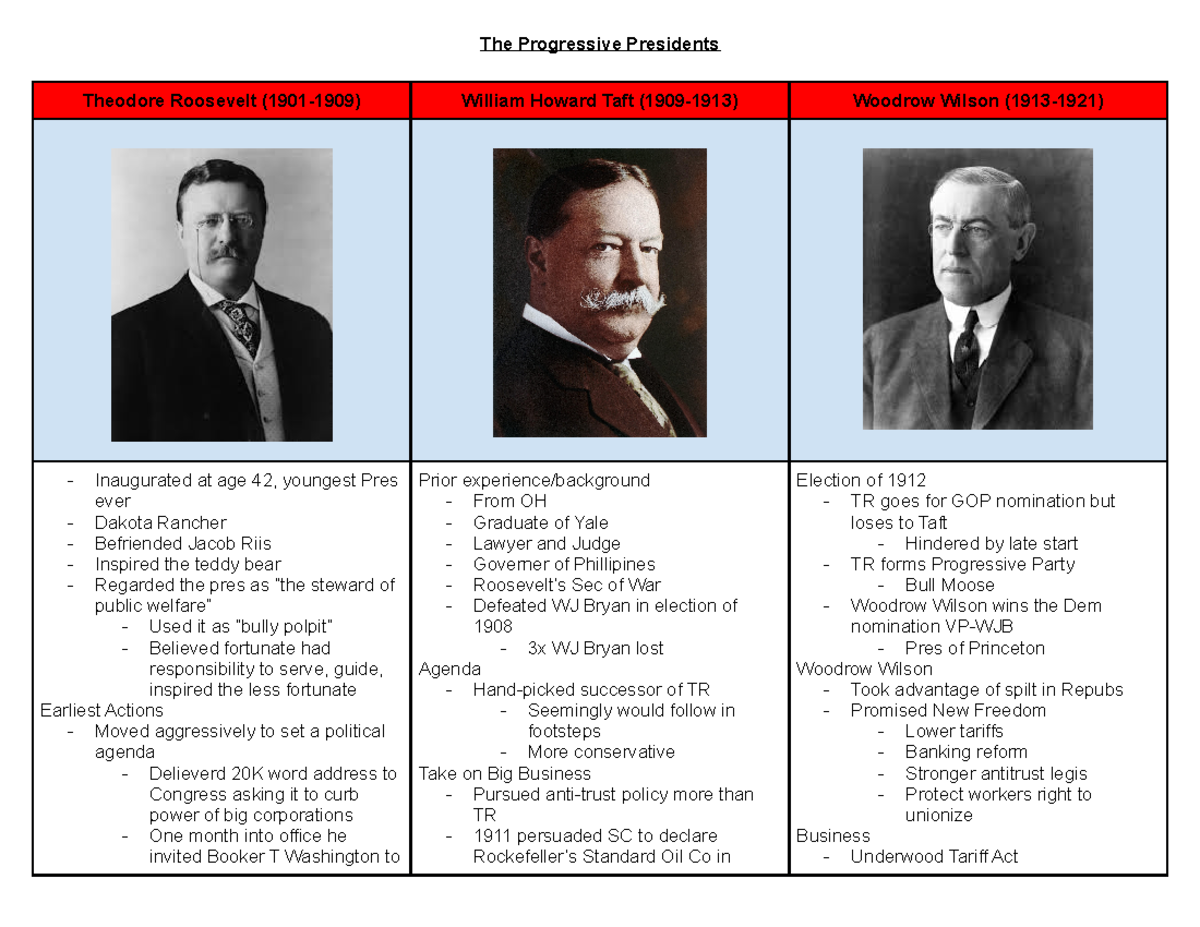
The landscape of modern American finance, corporate regulation, and monetary policy did not emerge in a vacuum. It was forged during a period of intense societal and economic upheaval known as the Progressive Era. Between 1901 and 1921, the United States moved away from the “laissez-faire” excesses of the Gilded Age toward a more regulated, structured, and fiscally complex system. At the heart of this transformation were three men: Theodore Roosevelt, William Howard Taft, and Woodrow Wilson.
While history often remembers them for their foreign policies or social reforms, their impact on the “Money” niche—specifically business finance, taxation, and market stability—remains their most enduring legacy. These three presidents dismantled monopolies, established the Federal Reserve, and introduced the federal income tax, creating the framework within which every modern investor and business owner operates today.

Theodore Roosevelt: The Architect of Market Competition
Theodore Roosevelt, ascending to the presidency in 1901, was the first to challenge the “Money Trust”—the small group of powerful bankers and industrialists who controlled the American economy. His “Square Deal” was not just a social slogan; it was a blueprint for a balanced economy where capital, labor, and the public interest were held in equilibrium.
The Trust Buster and the Sherman Act
Before Roosevelt, the Sherman Antitrust Act of 1890 was largely a dormant piece of legislation. Roosevelt transformed it into a potent financial tool. His landmark case against the Northern Securities Company, a massive railroad holding company controlled by J.P. Morgan and James J. Hill, sent shockwaves through Wall Street. By successfully suing to dissolve the company, Roosevelt established a precedent: the government had the authority to prevent corporate consolidations that stifled competition.
For the modern investor, Roosevelt’s “trust-busting” is the ideological ancestor of today’s antitrust scrutiny of Big Tech and pharmaceutical giants. He understood that for a market to be healthy, it must be competitive. Monopolies might provide short-term stability for shareholders, but they stifle innovation and lead to systemic fragility—concepts that remain central to business finance today.
Regulation as a Market Stabilizer
Roosevelt’s influence extended to the very quality of goods being traded. The passage of the Pure Food and Drug Act and the Meat Inspection Act in 1906 might seem like public health initiatives, but from a financial perspective, they were essential market regulations. By enforcing transparency and standardization, the government reduced “information asymmetry”—the gap between what a seller knows and what a buyer knows. This increased consumer confidence, which in turn stabilized the retail and agricultural sectors, providing a more predictable environment for capital investment.
William Howard Taft: The Enforcer of Fiscal Infrastructure
Often overshadowed by his predecessor and successor, William Howard Taft was arguably the most active of the three progressive presidents in terms of legal enforcement and structural fiscal reform. While Roosevelt was the “Trust Buster” in spirit, Taft was the “Trust Buster” in practice, initiating twice as many antitrust suits in four years as Roosevelt had in nearly eight.
The Expansion of the ICC and Corporate Oversight
Taft significantly empowered the Interstate Commerce Commission (ICC) through the Mann-Elkins Act of 1910. This allowed the government to regulate railroad rates and expanded oversight to include telecommunications (telegraph and telephone companies). In the context of business finance, this was a move toward “utility regulation,” ensuring that the foundational infrastructure of commerce remained accessible and fairly priced for all businesses, not just those with the deepest pockets.
The 16th Amendment: A New Revenue Model
Perhaps Taft’s most significant contribution to the world of personal and corporate finance was his support for the 16th Amendment. Before this, the federal government relied primarily on tariffs (taxes on imported goods) for revenue. Tariffs were volatile and often placed an unfair burden on consumers while protecting inefficient domestic industries.
The 16th Amendment authorized a federal income tax. This shifted the fiscal burden toward those with the greatest ability to pay—high earners and profitable corporations. For modern financial planning, the income tax is the single most important variable in calculating ROI and net worth. Taft’s push for this amendment allowed for a more stable and scalable federal budget, which in turn supported the massive infrastructure and defense spending that would characterize the 20th-century American economy.

Woodrow Wilson: The Founder of Modern Monetary Policy
If Roosevelt was the regulator and Taft was the enforcer, Woodrow Wilson was the systemic reformer. His presidency saw the creation of the institutions that define the “Money” niche today, from the way currency is issued to how international trade is taxed.
The Federal Reserve Act of 1913
The most consequential piece of financial legislation in American history is arguably the Federal Reserve Act. Before 1913, the U.S. suffered from frequent “panics” and bank runs because there was no central authority to manage the money supply or act as a lender of last resort.
Wilson’s creation of the Federal Reserve System decentralized the nation’s financial power, moving it away from a few private bankers in New York and into a structured, public-private system. The “Fed” was tasked with providing an elastic currency—expanding and contracting the money supply based on economic need. For every business owner and investor today, the Federal Reserve’s decisions on interest rates and quantitative easing are the most watched signals in the financial world. Wilson’s legacy is the very existence of the monetary policy tools used to combat inflation and recession.
The Clayton Antitrust Act and the FTC
Wilson deepened Roosevelt’s antitrust legacy by passing the Clayton Antitrust Act of 1914. This law closed loopholes in the Sherman Act, specifically banning price discrimination and “interlocking directorates,” where the same individuals sat on the boards of competing companies.
To enforce these rules, Wilson established the Federal Trade Commission (FTC). This created a permanent regulatory body dedicated to maintaining “fair competition.” For modern corporate strategy, the FTC is a constant factor in merger and acquisition (M&A) activities. Wilson’s reforms ensured that the rules of the game were clearly defined, allowing for a more professionalized and transparent corporate environment.
The Underwood-Simmons Act and Tariff Reform
Wilson also fundamentally altered the cost of doing business internationally. The Underwood-Simmons Act of 1913 significantly lowered tariffs for the first time since the Civil War. By reducing protectionist barriers, Wilson forced American companies to become more efficient and competitive on a global scale. To compensate for the lost tariff revenue, the government implemented the first graduated federal income tax under the newly ratified 16th Amendment. This transition from trade-based revenue to income-based revenue is the cornerstone of modern fiscal policy.
The Progressive Legacy in Today’s Financial Landscape
The work of Roosevelt, Taft, and Wilson created the “rules of the road” for the American economy. Their influence is felt every time an investor checks an interest rate, a business files its taxes, or a startup competes against an established incumbent.
Impact on Modern Investing
The Progressive Era established the idea that the government has a role in ensuring market transparency. This philosophy evolved into the creation of the SEC in the 1930s and the rigorous disclosure requirements that govern modern stock exchanges. Investors today benefit from the precedent that corporate “books” should be subject to public scrutiny and that market manipulation is a punishable offense.
Business Finance and Corporate Social Responsibility
The “Progressive Presidents” were the first to argue that corporations have a responsibility to the public interest. This idea has matured into the modern “Environmental, Social, and Governance” (ESG) movement. While the metrics have changed, the fundamental question remains: how does a corporation’s pursuit of profit interact with the health of the broader economy? Roosevelt’s “Square Deal” was the first official acknowledgement that corporate success and public welfare are inextricably linked.
The Centrality of the Federal Reserve
In any discussion of online income, side hustles, or business finance, the Federal Reserve is the “elephant in the room.” The system Wilson built manages the value of the dollar and the cost of borrowing. Whether you are a real estate investor looking at mortgage rates or a tech founder seeking venture capital, you are operating within a monetary ecosystem designed by the Progressive presidents.
By understanding who these three presidents were and what they achieved, we gain a deeper insight into the mechanics of the modern financial world. They recognized that a “free market” requires a strong framework of rules to prevent it from collapsing under the weight of its own excesses. Their reforms didn’t just change history; they built the stage upon which all modern financial activity is performed.
aViewFromTheCave is a participant in the Amazon Services LLC Associates Program, an affiliate advertising program designed to provide a means for sites to earn advertising fees by advertising and linking to Amazon.com. Amazon, the Amazon logo, AmazonSupply, and the AmazonSupply logo are trademarks of Amazon.com, Inc. or its affiliates. As an Amazon Associate we earn affiliate commissions from qualifying purchases.