
Moving can be one of life’s most exhilarating yet demanding experiences. Amidst the chaos of packing, unpacking, and settling into a new environment, a crucial financial task often gets overlooked or postponed: updating your address with your bank. For Chase Bank customers, this seemingly simple administrative change holds significant implications for personal finance, security, and the uninterrupted management of your money. This comprehensive guide will walk you through the process of updating your address with Chase, delve into why this step is paramount for your financial well-being, and provide insights into related financial considerations during a relocation.

Why Your Address Matters to Your Finances (Beyond Mail)
Updating your address with Chase Bank is far more than just ensuring your statements arrive at the right mailbox. It’s a foundational step in maintaining financial security, regulatory compliance, and seamless access to your funds. Neglecting this crucial update can lead to a cascade of problems that compromise your personal finance management.
Maintaining Financial Security and Fraud Prevention
Your mailing address is a cornerstone of your identity verification. When your bank has an outdated address, it creates a vulnerability. Fraudsters often exploit discrepancies in personal information. If an unauthorized individual attempts to open an account or make changes using an old address, the mismatch might not trigger immediate red flags if your bank hasn’t been properly informed of your move. Furthermore, sensitive documents like new credit cards, debit cards, or important account notices could be sent to an old address, potentially falling into the wrong hands. Promptly updating your address is a proactive measure against identity theft and unauthorized account access, safeguarding your financial assets.
Ensuring Timely Receipt of Important Documents
Banks communicate critical information through mail. This includes monthly statements, annual tax documents (like 1099 forms for interest earned), new card replacements, overdraft notices, and vital updates regarding your account terms and conditions. Missing a statement could mean overlooking fraudulent activity, failing to track your spending effectively, or incurring late fees on linked accounts. More critically, not receiving tax documents can complicate your annual tax filing, potentially leading to penalties or missed deductions. An accurate address ensures you receive all necessary paperwork promptly, enabling informed financial decisions and compliance.
Compliance and Regulatory Requirements
Financial institutions operate under strict regulatory frameworks designed to combat money laundering and terrorist financing, among other illicit activities. These “Know Your Customer” (KYC) regulations require banks to maintain accurate and up-to-date information about their account holders. Your address is a key piece of this puzzle. Failing to provide current information could, in extreme cases, lead to account restrictions or even temporary suspension if the bank cannot verify your identity or current residency. For example, some financial products or services might be geographically restricted, and an incorrect address could impact your eligibility or access. Keeping your information current helps Chase meet its regulatory obligations and ensures your accounts remain in good standing.
Impact on Credit Score and Identity Verification
While your address doesn’t directly influence your credit score, it plays an indirect but significant role in credit reporting and identity verification. Credit bureaus often use your current and past addresses to verify your identity when you apply for new credit. Inconsistent information across your bank accounts, credit cards, and credit reports can raise red flags, potentially delaying or complicating credit applications. Furthermore, if you miss payments on linked accounts because bills were sent to an old address, that could negatively impact your credit score. An updated address across all your financial institutions ensures a consistent financial profile, smoothing future credit endeavors and protecting your financial reputation.
Navigating the Process: How to Update Your Address with Chase Bank
Chase Bank, like most major financial institutions, offers multiple convenient channels for customers to update their personal information, including their mailing address. Understanding these options and what information you’ll need will streamline the process and minimize hassle during your move.
The Digital Path: Online Banking and Mobile App
For many, the quickest and most convenient method is through Chase’s digital platforms.
-
Chase Online Banking:
-
Log in to your Chase.com account.
-
Navigate to the “Profile & Settings” or “Customer Service” section (exact wording may vary).
-
Look for an option like “Update Contact Information” or “Change Address.”
-
You will likely be prompted to verify your identity through a security code sent to your registered phone number or email.
-
Enter your new address details and confirm the changes.
-
-
Chase Mobile App:
-
Open the Chase Mobile App on your smartphone or tablet.
-
Log in securely using your credentials or biometric authentication.
-
Tap on the “Profile” or “Settings” icon (often represented by a person icon or gear).
-
Find the “Contact Information” or “Address” section.
-
Follow the prompts, which will likely include identity verification, to update your address.
-
This digital approach is typically the fastest, with changes often taking effect immediately or within a business day.
The Personal Touch: Visiting a Chase Branch
If you prefer in-person assistance, have complex account structures, or need to update other information simultaneously, visiting a local Chase branch is an excellent option.
-
Locate a Branch: Use the Chase website or app to find the nearest branch.
-
Prepare Documents: Bring a valid government-issued photo ID (e.g., driver’s license, passport) and proof of your new address (e.g., utility bill, lease agreement, or another official document showing your name and new address).
-
Speak with a Representative: Inform the bank teller or personal banker that you need to update your address. They will guide you through the necessary paperwork and identity verification steps. This method provides direct confirmation that your request has been processed correctly.
The Traditional Route: Phone or Mail
While less common now, you can also update your address via phone or mail.
-
By Phone:
-
Call Chase customer service at the number listed on the back of your debit card, credit card, or on the official Chase website.
-
Be prepared to go through a rigorous identity verification process, which may include providing personal details, answering security questions, and potentially receiving a verification code.
-
Clearly state your new address to the representative.
-
This method is suitable if you encounter issues with online access or prefer speaking directly with a human but cannot visit a branch.
-
-
By Mail:
-
Though rarely used for address changes anymore, it is technically possible. You would typically need to send a signed written request, including your old and new addresses, account numbers, and contact information, along with a copy of your valid ID and proof of new address.
-
Caution: This is the slowest and least secure method. It’s generally not recommended due to mail delivery times and the risk of sending sensitive documents through postal services. Always verify the correct mailing address for such requests with Chase customer service if you choose this route.
-
Essential Information You’ll Need
Regardless of the method you choose, be prepared to provide the following:
-
Your full name
-
Your previous address
-
Your new mailing address
-
Your date of birth
-
Social Security Number (SSN) or Tax Identification Number (TIN) for verification
-
Account numbers for all relevant Chase accounts (checking, savings, credit cards, investments)
-
A valid government-issued photo ID (for in-person or potentially mail requests)
-
Proof of new address (for in-person or potentially mail requests), such as a utility bill or lease agreement.
Common Pitfalls and Best Practices for Address Changes
Even with clear instructions, address changes can sometimes lead to complications if not handled meticulously. Adopting best practices can prevent financial disruptions and ensure a smooth transition.
The Importance of Timeliness
The golden rule for address changes is to do it as soon as possible after your move, ideally even before or on the moving day. Procrastination can lead to critical mail being sent to your old address, potential security risks, and the hassle of redirecting mail. Aim to update your address with Chase and all other financial institutions within a week of your move. Early action minimizes the window of vulnerability and ensures continuity of financial communication.
Verifying the Change and Updating Other Institutions
Once you’ve submitted your address change to Chase, don’t assume it’s done.
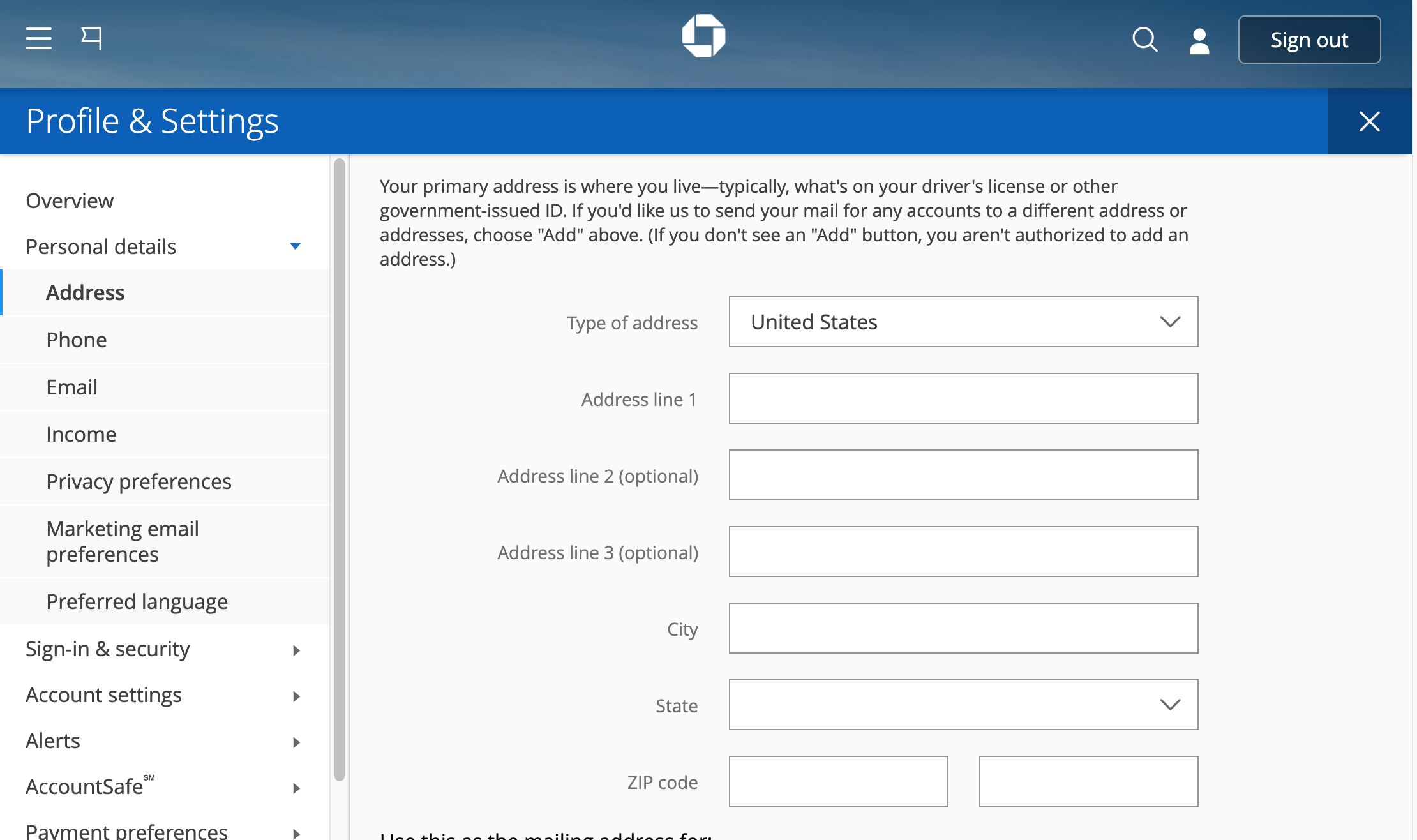
-
Verify: Log back into your online banking or app a few days later to confirm the new address is reflected in your profile. You can also call customer service to verify.
-
Check all accounts: If you have multiple accounts with Chase (e.g., checking, savings, credit cards, investment accounts through Chase Private Client or J.P. Morgan Wealth Management), confirm that the address has been updated across all of them. Sometimes, an update in one section might not automatically propagate to others.
-
Wider Financial Ecosystem: Remember, Chase is just one piece of your financial puzzle. You must also update your address with:
-
All other banks and credit unions
-
Credit card companies (non-Chase)
-
Investment firms (brokerages, 401k providers)
-
Insurance providers (auto, home, life, health)
-
Utility companies
-
Employer (for payroll and tax documents)
-
Social Security Administration, IRS, and state tax agencies
-
Subscription services and online retailers
-
Your credit reporting agencies (Equifax, Experian, TransUnion)
-
This holistic approach prevents gaps in your financial profile and ensures all your financial relationships are up to date.
Understanding Potential Delays and Solutions
While online changes are often instant, other methods might have processing times. Allow a few business days for changes made via phone or branch to reflect across all systems. If you don’t see the update after a reasonable period, follow up with Chase customer service. Keep a record of when you made the request, the method used, and any confirmation numbers received. If you’re expecting a new card or checkbook, inquire about estimated delivery times.
What to Do If You’ve Moved Internationally
Moving overseas presents additional complexities. Chase may have specific requirements for international address changes, often tied to country-specific regulations and tax implications.
-
Contact Chase Directly: It’s imperative to contact Chase customer service before or immediately after an international move. Online updates might not be sufficient or even available for international addresses.
-
Residency and Tax Status: Your new country of residence might affect your eligibility for certain Chase products or require specific tax reporting (e.g., FATCA regulations for U.S. citizens abroad). Be prepared to discuss your new residency status.
-
Proof of Address: You’ll likely need to provide robust proof of your international address.
-
Mail Forwarding: Understand how mail forwarding works internationally, if at all, from your previous domestic address.
The Broader Financial Implications of a New Address
A change of address isn’t just an administrative chore; it’s a trigger for a broader financial review. A move often signifies a shift in lifestyle, expenses, and opportunities, making it an opportune moment to reassess your overall financial strategy.
Updating Your Entire Financial Ecosystem
As mentioned, Chase is one of many entities needing your new address. Think of your move as a prompt to conduct a thorough financial audit. Create a checklist of every institution, service, and account linked to your old address. This includes:
-
Credit Cards: All non-Chase cards.
-
Investment Accounts: Brokerage, IRA, 401(k), 529 plans.
-
Insurance Policies: Homeowner’s/Renter’s, auto, life, health.
-
Loan Providers: Mortgage, auto, student, personal loans.
-
Government Agencies: IRS, state tax departments, DMV, Social Security Administration.
-
Medical Providers: Doctors, dentists, specialists.
-
Online Services: E-commerce sites (Amazon, eBay), subscription services (Netflix, Spotify), utility accounts.
A complete update ensures you receive all bills, statements, and important notifications, preventing late fees, service interruptions, or missed opportunities.
Reviewing Your Budget and New Location Costs
Moving to a new area almost invariably changes your cost of living. This is a prime time to revisit and adjust your personal budget.
-
Housing Costs: Rent or mortgage payments, property taxes, home insurance.
-
Utilities: Are energy costs higher or lower? What about water, internet, and trash services?
-
Transportation: New commute costs (gas, public transit, tolls).
-
Food and Groceries: Local pricing variations.
-
Taxes: State and local income taxes, sales tax rates.
-
Lifestyle Expenses: New local entertainment, gym memberships, dining out.
Analyze your new income versus expenses. You may need to cut back in certain areas or find new ways to boost income if the cost of living has increased significantly. Use financial tools or budgeting apps to track your spending and make informed adjustments.
Exploring New Banking and Financial Service Options
While you’re a Chase customer, a move might prompt you to evaluate if Chase still best serves your needs in your new location.
-
Branch Proximity: Is there a convenient Chase branch?
-
Local Credit Unions: Explore local credit unions, which often offer competitive rates and personalized service.
-
Regional Banks: Are there regional banks that might have better services or lower fees for your specific needs?
-
ATM Access: Check the ATM network availability in your new neighborhood.
This doesn’t necessarily mean leaving Chase, but it’s a chance to ensure your financial services align with your current geographical and financial situation.
Estate Planning and Beneficiary Reviews
A significant life event like moving is an ideal time to review your estate plan. Your will, trusts, and beneficiary designations for life insurance, retirement accounts, and investment accounts (including those held with Chase) should all be current.
-
Legal Changes: State laws regarding wills and estates can vary.
-
Beneficiary Updates: Have there been changes in your family structure (marriage, divorce, birth of children) that warrant updating beneficiaries?
-
Power of Attorney: Is your power of attorney still appropriate and current for your new location?
Ensuring these documents are up-to-date safeguards your assets and ensures your wishes are honored, providing peace of mind for you and your loved ones.
Safeguarding Your Financial Information During a Move
Moving can be a period of increased vulnerability to fraud and identity theft. Taking extra precautions to protect your financial information is critical.
Updating USPS Mail Forwarding
While updating your address with Chase is essential, also setting up mail forwarding with the United States Postal Service (USPS) is a vital temporary measure. This acts as a safety net, catching any mail that still gets sent to your old address, even after you’ve updated your information directly with senders. Be aware that USPS forwarding is typically for a limited time (6-12 months) and not all mail qualifies, so it’s a supplement, not a replacement, for direct address updates.
Being Wary of Phishing Scams
Movers are frequently targeted by scammers who send fake “change of address” notifications or “account verification” emails. Be extremely cautious of unsolicited emails or calls claiming to be from Chase or other financial institutions asking for personal information, account numbers, or passwords to “confirm” your address change. Always navigate directly to Chase’s official website or use their mobile app to make changes or verify information. Never click on suspicious links or provide personal data in response to unverified communications.
Securing Physical Documents and New Mail
During the move itself, keep all sensitive financial documents (bank statements, tax records, insurance policies) secure and preferably transport them yourself rather than entrusting them to movers. Once you’re in your new home, ensure your mailbox is secure. If you have a shared mailbox or community mailbox, consider a locking mailbox. Regularly retrieve your mail to prevent theft. If you notice expected mail missing, contact the sender immediately.

Regularly Monitoring Accounts Post-Move
For several months after your move, make it a habit to diligently monitor all your Chase accounts (and others) for any unusual activity. Review your bank statements, credit card statements, and credit reports carefully. Online banking and mobile apps make this easy, allowing you to check transactions frequently. This vigilance helps catch any potential fraud or errors stemming from the address change or the moving process itself.
In conclusion, changing your address on Chase Bank is a fundamental, non-negotiable step in maintaining healthy personal finances during a relocation. By understanding its profound impact on security, compliance, and document delivery, and by executing the update meticulously across your entire financial life, you can ensure a smooth transition and protect your financial well-being in your new home.
aViewFromTheCave is a participant in the Amazon Services LLC Associates Program, an affiliate advertising program designed to provide a means for sites to earn advertising fees by advertising and linking to Amazon.com. Amazon, the Amazon logo, AmazonSupply, and the AmazonSupply logo are trademarks of Amazon.com, Inc. or its affiliates. As an Amazon Associate we earn affiliate commissions from qualifying purchases.