
Navigating the landscape of mortgage rates can feel like attempting to solve a complex puzzle where the pieces are constantly shifting. For the average homebuyer or homeowner looking to refinance, the interest rate is the single most influential factor determining the long-term cost of debt. A difference of just one percentage point can translate into tens of thousands of dollars over the life of a loan. Understanding how to figure out mortgage rates requires a dual-lens approach: analyzing the macroeconomic forces that set the baseline and evaluating the personal financial metrics that determine your specific quote.
By mastering the mechanics of how these rates are derived, you position yourself to make informed decisions, optimize your financial profile, and time your entry into the market with precision.
The Macroeconomic Engine: What Drives National Averages
Before a lender looks at your credit score, the baseline for mortgage rates is established by global and national economic conditions. No single entity “sets” mortgage rates; rather, they are the result of a complex interplay between investor demand, government policy, and inflationary expectations.
The Role of the Federal Reserve and the Federal Funds Rate
A common misconception is that the Federal Reserve directly sets mortgage rates. In reality, the Fed sets the “federal funds rate,” which is the interest rate at which commercial banks borrow and lend to one another overnight. While this does not dictate mortgage rates, it creates a ripple effect. When the Fed raises rates to combat inflation, the cost of borrowing increases across the board. Lenders must increase their mortgage rates to maintain profit margins and reflect the increased cost of capital. Conversely, when the Fed lowers rates to stimulate the economy, mortgage rates often follow a downward trajectory.
The 10-Year Treasury Yield and Investor Sentiment
Mortgages are frequently packaged into Mortgage-Backed Securities (MBS) and sold to investors on the secondary market. Because mortgages are long-term investments, their yields are closely tied to the 10-year U.S. Treasury note. Investors view Treasury notes as “risk-free” assets. If the yield on a 10-year Treasury rises, mortgage rates must rise even higher to remain attractive to investors, as mortgages carry more risk (such as the risk of default or prepayment) than government debt. Monitoring the 10-year Treasury yield is often a more accurate daily indicator of mortgage rate movement than the Federal Reserve’s periodic announcements.
Inflation and Purchasing Power
Inflation is the primary enemy of fixed-income investments. If an investor buys a mortgage bond with a 4% interest rate, but inflation rises to 5%, the investor is effectively losing purchasing power. To compensate for this risk, lenders and investors demand higher interest rates during periods of high inflation. Consequently, the Consumer Price Index (CPI) and other inflation markers are critical data points for anyone trying to figure out where mortgage rates are headed.
Decoding Your Personal Financial Profile
While the market determines the “par rate” (the baseline rate without adjustments), your personal financial health determines the “add-ons” or “adjustments” a lender applies to your specific quote. This process is known as Loan-Level Price Adjustment (LLPA).
Credit Score Tiers and Pricing Adjustments
Your credit score is the most significant personal factor in the mortgage rate equation. Lenders categorize borrowers into tiers, typically in 20-point increments. A borrower with a 780 score may receive the lowest possible market rate, while someone with a 660 might be charged an additional 0.5% to 1.0% in interest. This is because a lower credit score represents a higher statistical risk of default. To figure out your rate, you must first know your FICO score and understand that even a small improvement—moving from a 695 to a 705—can result in a significant rate reduction.
The Loan-to-Value (LTV) Ratio
The amount of equity you have in a property directly influences your rate. The Loan-to-Value (LTV) ratio is calculated by dividing the loan amount by the property’s appraised value. A lower LTV (meaning a larger down payment) reduces the lender’s risk. For example, a borrower putting down 20% (80% LTV) will almost always receive a better rate than a borrower putting down only 3.5%. If your LTV is above 80%, you will also likely be required to pay Private Mortgage Insurance (PMI), which increases your effective monthly cost even if the base interest rate remains unchanged.
Debt-to-Income (DTI) and Risk Assessment
While DTI primarily affects your ability to qualify for a loan, it can also influence the rate offered by certain lenders or for specific loan products. A high DTI suggests that a large portion of your monthly income is already committed to debt obligations, making you a riskier prospect. Lenders prefer a DTI of 36% or lower, though some programs allow for higher ratios at the cost of higher interest rates or stricter underwriting requirements.
Navigating Loan Types and Terms
The structure of the loan you choose is a major variable in the interest rate calculation. Different “products” carry different levels of risk and duration, which are reflected in the price.

Fixed-Rate vs. Adjustable-Rate Mortgages (ARMs)
Fixed-rate mortgages offer stability, with the interest rate remaining constant for the entire life of the loan (usually 15 or 30 years). Because the lender is taking on the risk that inflation might rise over those three decades, the rate is typically higher than that of an Adjustable-Rate Mortgage (ARM).
An ARM usually offers a lower “teaser” rate for an initial period (such as 5, 7, or 10 years). After that, the rate adjusts based on a market index. To figure out if an ARM is right for you, you must calculate the “worst-case scenario” of how high the rate could go after the adjustment period and compare that to the immediate savings of the lower initial rate.
The Impact of Loan Duration
The length of the loan significantly impacts the rate. A 15-year fixed-rate mortgage almost always carries a lower interest rate than a 30-year fixed-rate mortgage. This is because the lender is exposed to interest rate risk for a shorter period, and the borrower is building equity much faster. However, the monthly payments on a 15-year loan are substantially higher because the principal is being amortized over half the time.
Government-Backed vs. Conventional Loans
Different loan programs have different rate structures. FHA loans, backed by the Federal Housing Administration, often have lower base interest rates than conventional loans, making them attractive for those with lower credit scores. However, FHA loans require mortgage insurance premiums (MIP) that persist for the life of the loan in many cases, which can make the “effective” rate higher than a conventional loan once all costs are factored in. VA loans (for veterans) and USDA loans (for rural properties) also offer competitive rates that are subsidized or guaranteed by the government.
The Math of Mortgage Comparison: APR and Points
When comparing quotes from different lenders, looking at the “interest rate” alone is insufficient. You must understand how to calculate the total cost of the credit.
Understanding the Annual Percentage Rate (APR)
The APR is a broader measure of the cost of borrowing. It includes the interest rate plus other costs such as lender fees, origination charges, and mortgage insurance. When you are figuring out mortgage rates, the APR is the “truth-teller.” If one lender offers a 6.5% rate with a 7.2% APR, and another offers a 6.7% rate with a 6.8% APR, the second lender is actually offering a cheaper loan despite the higher base interest rate, because their fees are significantly lower.
The Economics of Discount Points
Lenders often give you the option to “buy down” your interest rate by paying “points” at closing. One point is equal to 1% of the loan amount. For example, on a $400,000 loan, one point costs $4,000. In exchange, the lender might lower your interest rate by 0.25%.
To figure out if this is a good deal, you must calculate the “break-even point.” If paying $4,000 saves you $100 a month on your mortgage payment, it will take you 40 months to break even. If you plan to stay in the home for ten years, paying points is a wise financial move. If you plan to sell or refinance in two years, you should avoid paying points and opt for a higher rate with lower closing costs.
Practical Steps to Project Your Monthly Commitment
Once you understand the factors involved, the final step is to synthesize this information into a workable budget.
Utilizing Mortgage Calculators Effectively
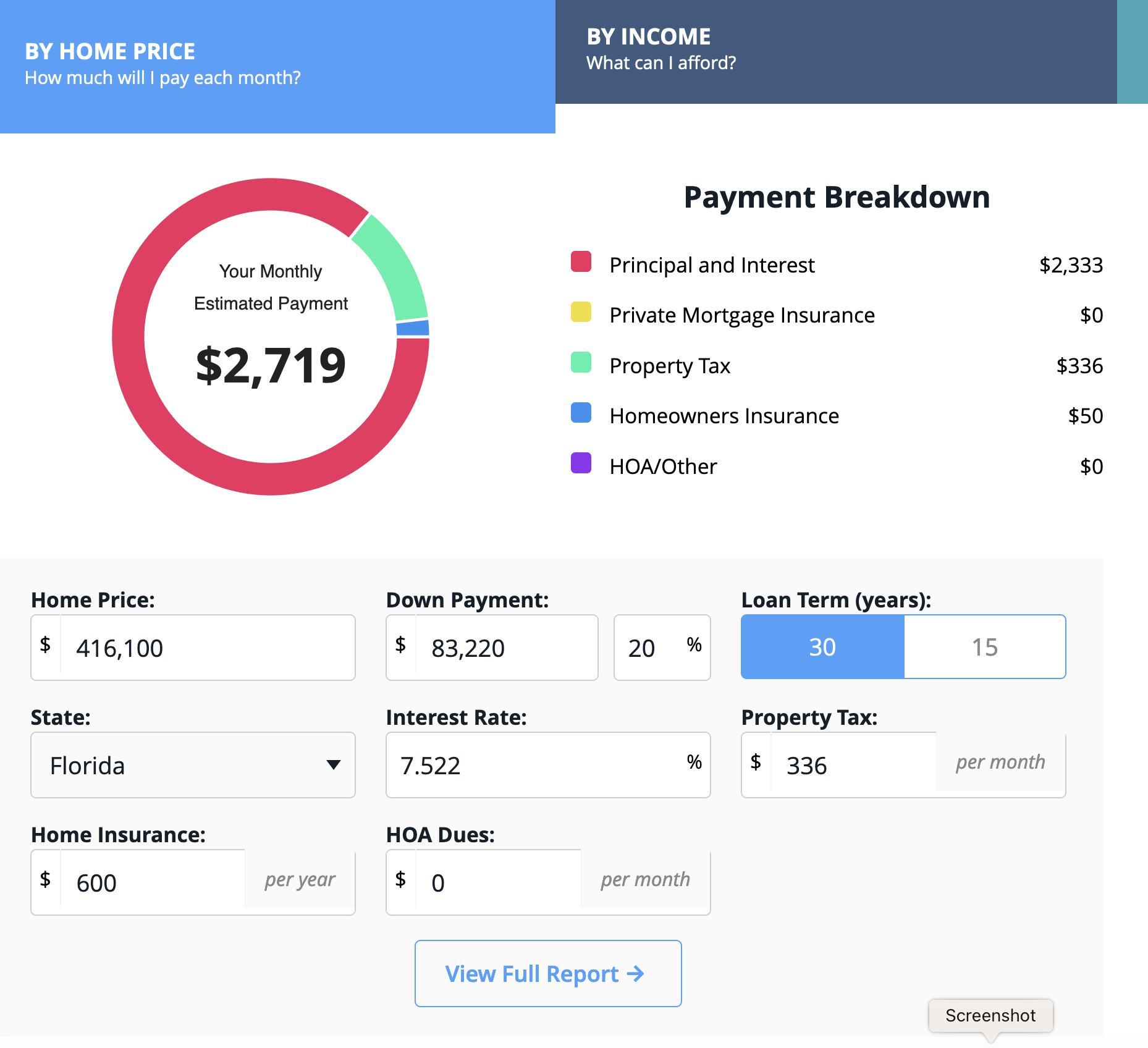
A standard mortgage calculator is an essential tool, but it is only as good as the data you input. To get an accurate figure, you should not only input the projected interest rate and loan amount but also estimate property taxes, homeowners insurance, and HOA fees. This is known as PITI (Principal, Interest, Taxes, and Insurance). In many states, taxes and insurance can add 20% to 30% to your monthly interest and principal payment.
The Strategy of Shopping Around
The most effective way to figure out the best mortgage rate is to obtain a Loan Estimate (LE) from at least three different types of lenders: a large national bank, a local credit union, and an independent mortgage broker. Research by Freddie Mac suggests that borrowers who get at least two quotes save an average of $1,500 over the life of the loan, while those who get five quotes save about $3,000.

Timing and the Rate Lock
Mortgage rates change daily, and sometimes hourly. Once you have found a rate and a lender you are comfortable with, you must decide when to “lock” the rate. A rate lock guarantees the interest rate for a specific period (usually 30, 45, or 60 days) while your loan is being processed. If rates rise during that time, you are protected. However, if rates fall, you may be stuck with the higher locked rate unless your agreement includes a “float-down” provision.
Figuring out mortgage rates is a blend of scientific calculation and strategic timing. By understanding the broad economic climate and meticulously managing your personal financial health, you can demystify the numbers and secure a mortgage that serves your long-term wealth-building goals.
aViewFromTheCave is a participant in the Amazon Services LLC Associates Program, an affiliate advertising program designed to provide a means for sites to earn advertising fees by advertising and linking to Amazon.com. Amazon, the Amazon logo, AmazonSupply, and the AmazonSupply logo are trademarks of Amazon.com, Inc. or its affiliates. As an Amazon Associate we earn affiliate commissions from qualifying purchases.