
Deciding when to claim Social Security is one of the most critical financial decisions a person will make in their lifetime. It is not merely a matter of filling out a form; it is a complex calculation involving life expectancy, tax strategy, and portfolio management. While the technical answer to “what age can I start receiving Social Security” is as early as 62, the strategic answer depends entirely on your unique financial ecosystem.
For many Americans, Social Security represents the only source of inflation-adjusted, guaranteed income that lasts for life. Understanding the nuances of filing ages—and the permanent financial consequences of each—is paramount to a successful retirement plan. This guide explores the timeline, the mathematical trade-offs, and the strategic considerations necessary to maximize your lifetime benefits.
The Spectrum of Choice: From Age 62 to 70
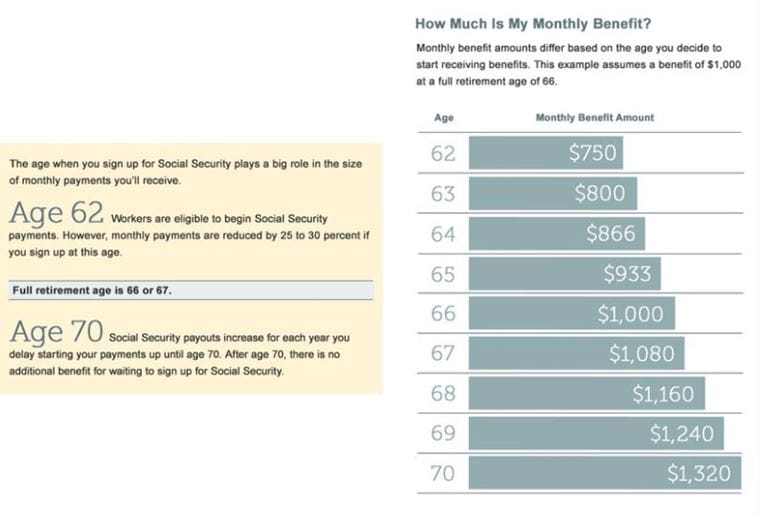
The Social Security Administration (SSA) provides a flexible window for claiming retirement benefits. This window opens at age 62 and stays open indefinitely, though there is no financial incentive to delay past age 70. Within this eight-year span, your monthly benefit amount can vary by as much as 77%, depending on when you choose to pull the trigger.
The Earliest Option: Age 62
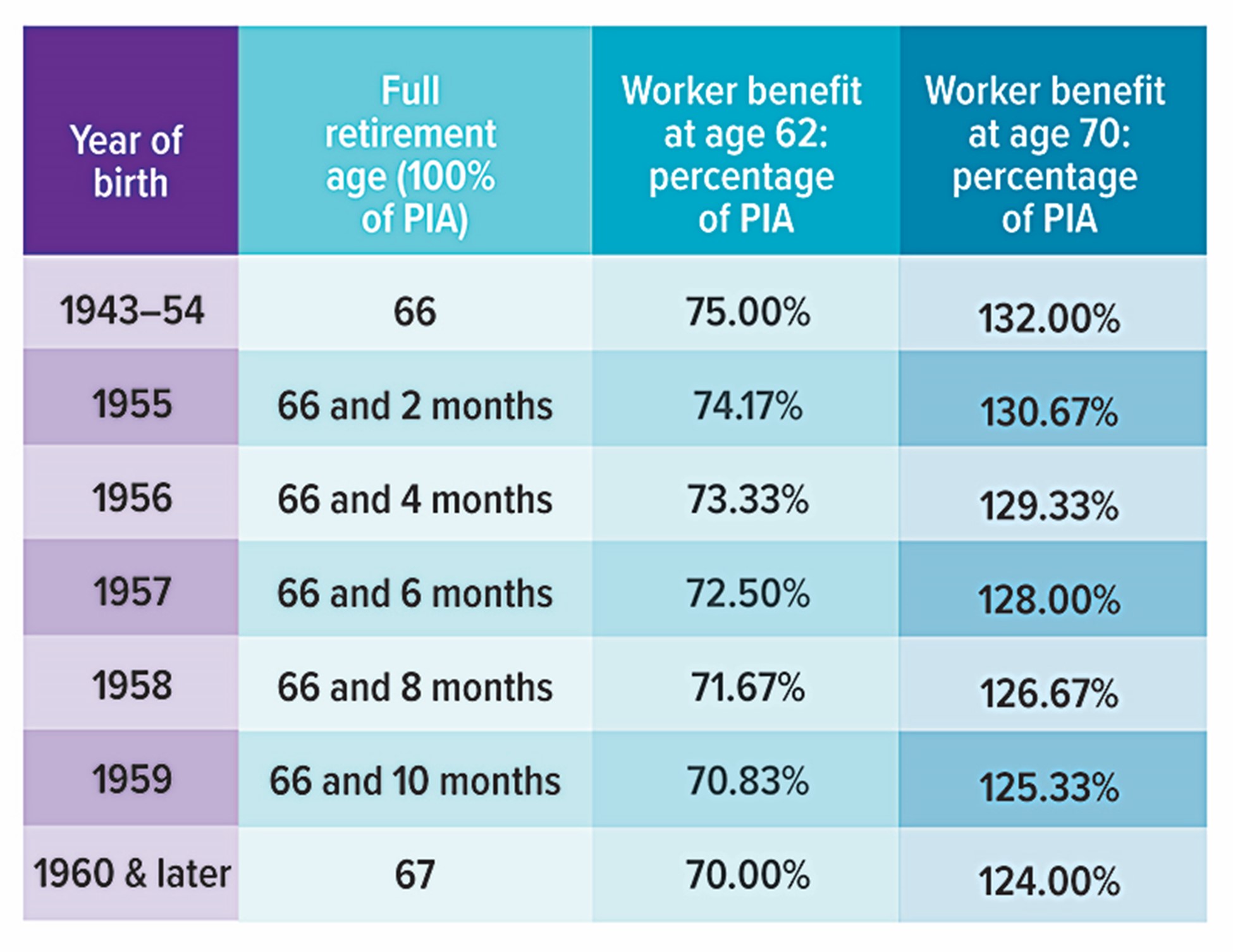
You can begin receiving Social Security retirement benefits as early as age 62. However, doing so comes with a permanent penalty. If you claim at 62, your monthly check will be significantly lower than if you had waited until your Full Retirement Age (FRA). For those born in 1960 or later, claiming at 62 results in a 30% reduction in monthly benefits.
The primary reason individuals claim at 62 is immediate cash flow. Whether due to health issues, job loss, or a lack of other retirement assets, some find that the immediate check outweighs the long-term growth. However, from a wealth-building perspective, claiming at 62 is often the least efficient path unless there are significant health concerns that suggest a shorter-than-average lifespan.
Full Retirement Age (FRA)
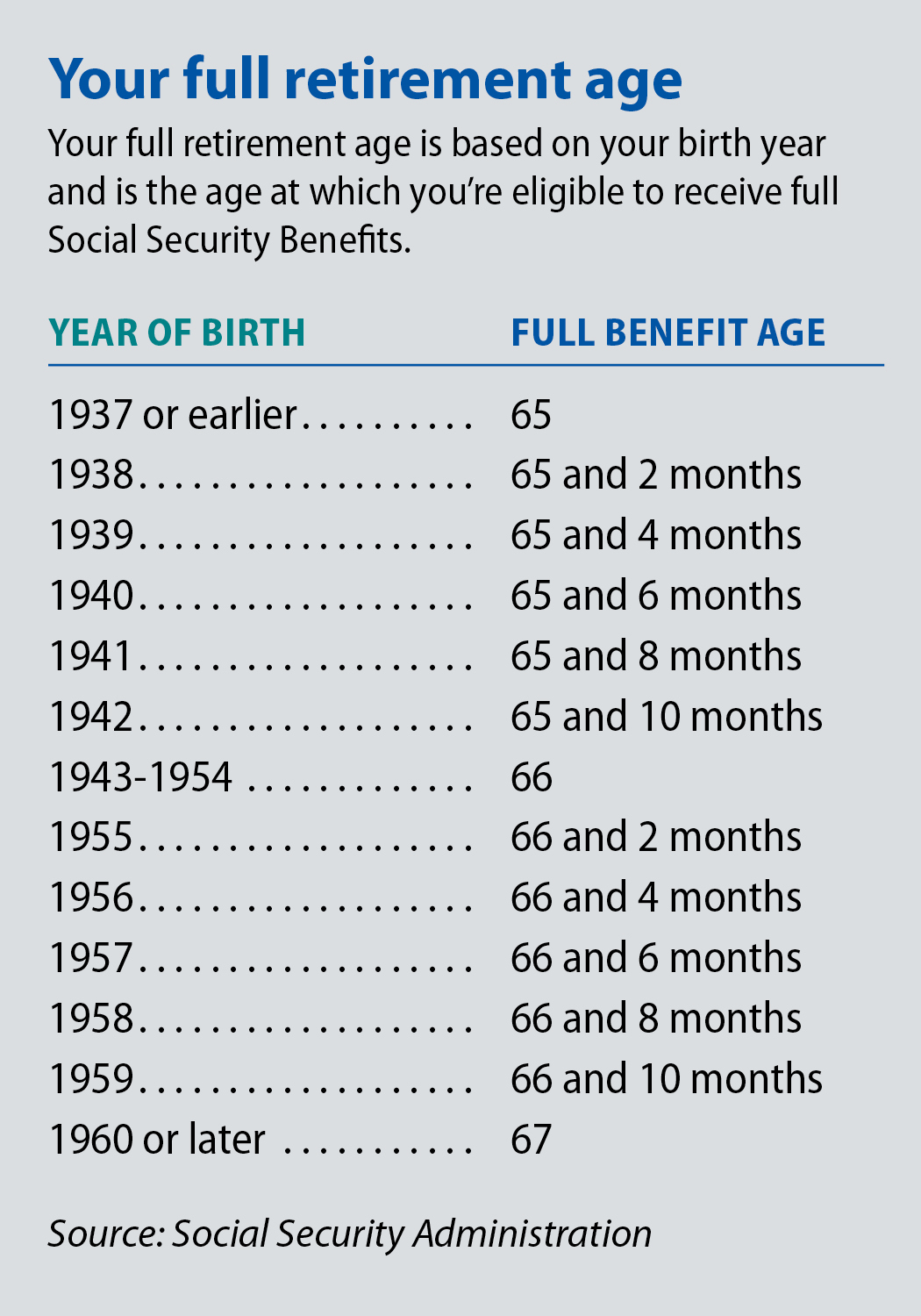
Your Full Retirement Age is the point at which you are entitled to 100% of your primary insurance amount (PIA). For decades, the FRA was 65. However, due to legislative changes designed to preserve the program’s solvency, the FRA has gradually increased. For anyone born between 1943 and 1954, the FRA is 66. For those born between 1955 and 1959, the FRA increases by two months for every birth year. For everyone born in 1960 or later, the FRA is 67.
Reaching your FRA is a significant milestone because it eliminates the “Earnings Test” (discussed later) and sets the baseline for all other benefit calculations, including those for your spouse or survivors.
The Maximum Delay: Age 70
If you choose to delay benefits past your FRA, you earn “Delayed Retirement Credits.” For every year you wait beyond your FRA, up until age 70, your benefit increases by 8% per year in simple interest. This is a guaranteed, government-backed return that is virtually impossible to find in any other fixed-income instrument.
By waiting until 70, someone with an FRA of 67 would receive 124% of their baseline benefit. When combined with annual Cost of Living Adjustments (COLAs), the difference between a check at age 62 and a check at age 70 can be staggering. While you can wait until after 70 to file, there is no further increase in the benefit amount, making age 70 the logical “ceiling” for any claiming strategy.
The Financial Mathematics of Your Decision
To make an informed choice, you must move beyond the monthly check amount and look at the “break-even point.” This is the age at which the total cumulative benefits received by waiting for a larger check exceed the total cumulative benefits received by starting earlier with a smaller check.
Calculating the Reduction and Credits
The SSA uses a specific formula to reduce benefits for early filers. For the first 36 months before your FRA, your benefit is reduced by 5/9 of 1% for each month. If you file even earlier, any months beyond the initial 36 are reduced by 5/12 of 1% per month.
Conversely, the 8% annual increase for delaying past FRA is applied monthly at a rate of 2/3 of 1%. When you factor in that these increases are applied to a baseline that is also being adjusted for inflation, the compounding effect over twenty or thirty years of retirement is substantial.
The Break-Even Analysis
For most retirees, the break-even age for waiting until 70 (compared to age 62) is typically between 78 and 82. If you believe you will live past age 80, the math almost always favors waiting.
However, this analysis should not be done in a vacuum. You must consider the “opportunity cost” of the money. If claiming at 62 allows you to keep your 401(k) or IRA invested in the stock market for an extra eight years, the growth of those private assets might outweigh the loss in Social Security benefits. This requires a sophisticated look at expected market returns versus the guaranteed 8% “return” of delaying Social Security.
Longevity Risk and Insurance
Many financial planners view Social Security not just as an investment, but as longevity insurance. The greatest risk to a retirement plan is “outliving your money.” Because Social Security is guaranteed for life and adjusted for inflation, a larger monthly check at age 85 or 90 provides a powerful hedge against the exhaustion of personal savings. From this perspective, delaying to age 70 is often the most conservative and prudent move for those in good health.
Impact of Earnings and Taxes on Social Security
The age at which you claim Social Security is also heavily influenced by whether you plan to continue working. The SSA imposes rules that can temporarily claw back benefits if you earn too much income before reaching your Full Retirement Age.
The Retirement Earnings Test
If you are under your FRA and continue to work while receiving benefits, the SSA applies an earnings limit. For 2024, the limit is $22,320. If you earn more than this, the SSA will withhold $1 in benefits for every $2 you earn above the limit. In the year you reach your FRA, the limit is higher ($59,520 in 2024), and the withholding is $1 for every $3 over the limit.
It is important to note that these withheld benefits are not “lost” forever. Once you reach FRA, the SSA recalculates your monthly benefit upward to account for the months where benefits were withheld. However, the immediate impact is a reduced cash flow, which often makes claiming before FRA while still working a counterproductive strategy.
The “Tax Torpedo”
Social Security benefits are not always tax-free. Depending on your “combined income” (Adjusted Gross Income + Non-taxable Interest + 1/2 of your Social Security benefits), you may owe federal income tax on up to 85% of your benefits.
-
If your combined income is between $25,000 and $34,000 (individual) or $32,000 and $44,000 (joint), you may pay tax on up to 50% of your benefits.
-
If your income exceeds those thresholds, up to 85% of your benefits may be taxable.
Strategic timing of Social Security can help manage these tax brackets. For instance, some retirees choose to live off Roth IRA distributions or taxable brokerage accounts in their 60s to keep their income low, allowing them to delay Social Security to 70 and minimize the “tax torpedo” effect on their benefits later.
Strategic Considerations for Spouses and Survivors
The question of when to start Social Security becomes even more complex for married couples. Your decision affects not only your own lifetime income but also the potential benefits available to your spouse.
Spousal Benefits
A spouse is entitled to either their own retirement benefit or 50% of their partner’s FRA benefit, whichever is higher. If a lower-earning spouse claims their benefit before their own FRA, their spousal portion is permanently reduced. Furthermore, the higher-earning spouse must have already filed for their own benefits for the other spouse to claim a spousal benefit.
Strategic “sequencing” is often used here. The lower-earning spouse might claim early at 62 to provide some household income, while the higher-earning spouse waits until 70 to maximize the future survivor benefit.
Survivor Benefits
This is perhaps the most overlooked aspect of the claiming age decision. When one spouse passes away, the surviving spouse is entitled to the higher of the two checks the couple was receiving. By waiting until age 70 to claim, the higher-earning spouse is effectively locking in a larger “life insurance policy” for the survivor. If the higher earner claims at 62 and dies at 75, the surviving spouse is stuck with that reduced benefit for the rest of their life. For couples with a large age gap or a disparity in health, the age of the higher earner’s filing is the most critical variable in the plan.
Integrating Social Security into Your Broader Portfolio
Social Security should not be viewed as an isolated check, but as a component of your overall asset allocation. In the world of personal finance, it is often referred to as a “bond-like” asset because of its stability.
Sequencing of Returns
By delaying Social Security, you may need to draw more heavily from your investment accounts (401(k)s, IRAs) in your 60s. This introduces “sequencing risk”—the danger that a market downturn early in retirement will disproportionately deplete your portfolio. However, the trade-off is that you are exchanging a volatile asset (stocks/bonds) for a guaranteed, inflation-protected income stream.
Cash Flow Modeling
When deciding on an age, create a cash flow model that projects your income needs through age 95. Many retirees find that their expenses are highest in the “Go-Go” years (60s and early 70s) due to travel and lifestyle, and lower in the “Slow-Go” years. Paradoxically, the “No-Go” years (late 80s and 90s) can see expenses spike again due to healthcare. A maximized Social Security benefit at age 70 provides the best defense against those late-life healthcare costs.
Conclusion
So, at what age can you start receiving Social Security? While 62 is the entry point, it is rarely the optimal one for those looking to maximize their long-term financial security. The decision requires a balance of health assessments, tax planning, and an understanding of spousal protections.
If you have a short life expectancy or an urgent need for cash, 62 may be your only choice. If you are in average health and have other assets to draw upon, waiting until your Full Retirement Age or even age 70 is frequently the superior financial move. By viewing Social Security as a strategic asset rather than a simple government benefit, you can ensure that your retirement is built on a foundation of maximum efficiency and minimal risk.
aViewFromTheCave is a participant in the Amazon Services LLC Associates Program, an affiliate advertising program designed to provide a means for sites to earn advertising fees by advertising and linking to Amazon.com. Amazon, the Amazon logo, AmazonSupply, and the AmazonSupply logo are trademarks of Amazon.com, Inc. or its affiliates. As an Amazon Associate we earn affiliate commissions from qualifying purchases.