
The question “how much will we need to retire?” is arguably one of the most critical and perplexing financial queries faced by individuals today. It’s a question without a universal answer, as the ideal retirement figure is as unique as the individual asking it. Far from being a static sum, your retirement nest egg is a dynamic target influenced by a myriad of personal circumstances, economic realities, and future aspirations. Navigating this landscape requires more than just guesswork; it demands a strategic approach rooted in understanding, planning, and continuous adjustment. This article will delve into the core components of retirement planning, helping you demystify the process and arrive at a more personalized and achievable financial goal.
Understanding the Retirement Landscape
The concept of retirement has evolved dramatically over the past few decades. No longer is it a fixed point at age 65, followed by a brief period of leisure. Today, people are living longer, healthier lives, and the traditional pillars of retirement funding are shifting. Grasping these fundamental changes is the first step toward building a robust retirement plan.
The Shifting Sands of Retirement
For generations, retirement often meant a predictable pension, Social Security, and a relatively short post-work period. However, that paradigm has largely dissolved. Defined benefit pensions are increasingly rare in the private sector, placing the onus of retirement savings squarely on the individual through defined contribution plans like 401(k)s and IRAs. Furthermore, advancements in medicine and lifestyle mean that a retirement period of 20, 30, or even 40 years is no longer uncommon. This extended longevity, while a blessing, necessitates a significantly larger savings pool and a more strategic approach to ensure those funds last. The global economic landscape also plays a role, with fluctuating interest rates, market volatility, and geopolitical events all impacting investment returns and the cost of living.
The Illusion of a Single “Number”
Many aspire to find a magic retirement number – a single, definitive figure that, once reached, signals financial freedom. The reality is far more nuanced. While financial planners often use heuristics or rules of thumb (like the 4% rule or saving 10-12 times your final salary), these are merely starting points. Your personal “number” is a moving target, influenced by factors unique to your life stage, risk tolerance, desired lifestyle, and external economic forces. Chasing an abstract, universal number can be misleading and may either lead to unnecessary anxiety or a false sense of security. Instead, the focus should be on understanding the variables that shape your specific needs and developing a flexible plan that can adapt over time.
Key Factors Influencing Your Retirement Number
To calculate your personal retirement number, you must first identify and honestly assess the core elements that will dictate your financial needs in your golden years. These factors often reveal themselves through thoughtful introspection and realistic projections.
Lifestyle Expectations: Current vs. Future
Perhaps the most significant determinant of your retirement savings goal is the lifestyle you envision. Will you maintain your current spending habits, or do you anticipate a more modest existence? Or, conversely, do you dream of extensive travel, expensive hobbies, or supporting grandchildren? It’s crucial to distinguish between your “needs” (housing, food, healthcare, utilities) and your “wants” (travel, entertainment, dining out). A common mistake is underestimating future expenses, especially as discretionary spending can sometimes increase in early retirement when people have more free time. Creating a detailed retirement budget, accounting for both fixed and variable costs, is an indispensable exercise. This involves examining your current spending and adjusting it for anticipated changes, such as paid-off mortgages or reduced commuting costs, but also increased healthcare or leisure expenses.
Longevity Risk: How Long Will Your Money Last?
Living longer is a wonderful prospect, but it presents a financial challenge: ensuring your savings outlast you. This is known as longevity risk. If you retire at 65 and live to 95, you’ll need 30 years of income from your savings. The longer your anticipated lifespan, the larger your nest egg needs to be, or the more conservative your withdrawal strategy must become. While it’s impossible to predict your exact lifespan, using actuarial tables and considering your family’s health history can help you make a reasonable projection for planning purposes. Overestimating your lifespan slightly is often a safer approach than underestimating it.
Inflation: The Silent Wealth Eroder
Inflation is a relentless force that erodes purchasing power over time. A dollar today will buy less in 20 or 30 years. If your retirement plan doesn’t account for inflation, your carefully calculated savings could fall significantly short of your needs. For instance, if you project needing $50,000 per year in today’s dollars, and inflation averages 3% annually, in 20 years you would need approximately $90,300 per year to maintain the same purchasing power. Therefore, your investment growth must outpace inflation to preserve the real value of your savings. This is why investing in assets that offer the potential for growth beyond inflation, such as stocks, is crucial for long-term retirement planning.
Healthcare Costs: A Growing Concern
Healthcare expenses are one of the most unpredictable and potentially largest costs in retirement. Even with Medicare, out-of-pocket costs for premiums, deductibles, co-pays, prescription drugs, and long-term care can be substantial. Fidelity estimates that a couple retiring at 65 in 2023 may need approximately $315,000 just for healthcare expenses throughout retirement, and this figure doesn’t include potential long-term care needs. Planning for these costs requires dedicated savings, potentially through Health Savings Accounts (HSAs) if eligible, and a clear understanding of what Medicare covers and what it doesn’t. Ignoring this category can derail even the best-laid retirement plans.
Social Security and Other Income Sources
While the focus is often on personal savings, it’s vital to incorporate other potential income streams into your retirement calculation. Social Security will likely form a foundational component for most individuals, though its future solvency and benefit levels are subjects of ongoing debate. Understanding your estimated Social Security benefits, and strategizing when to claim them (e.g., waiting until age 70 for maximum benefits), can significantly impact your overall financial picture. Furthermore, consider any pensions, part-time work income, rental property income, or other assets that will generate cash flow in retirement. These income sources reduce the amount you need to generate from your investment portfolio.
Calculating Your Retirement Nest Egg
Once you have a clear picture of your anticipated expenses and income sources, you can begin to quantify your retirement savings target. Several methods and tools can help you arrive at this critical figure.
The 4% Rule: A Common Starting Point
The “4% Rule” is a widely discussed guideline for retirement withdrawals. It suggests that you can safely withdraw 4% of your initial retirement portfolio value in your first year of retirement, and then adjust that dollar amount annually for inflation, with a high probability of your money lasting for at least 30 years. To find your target nest egg using this rule, simply multiply your desired annual retirement income by 25. For example, if you aim for $100,000 in annual income, you’d need $2.5 million ($100,000 x 25). While popular, it’s important to remember that the 4% rule originated from specific market conditions and assumptions (e.g., a 50/50 stock/bond portfolio) and may need adjustment based on current market valuations, interest rates, and your personal risk tolerance and projected retirement length.
Beyond the 4% Rule: A More Personalized Approach

While the 4% rule provides a good baseline, a more personalized approach might involve modeling different withdrawal rates, considering variable spending in retirement, or using Monte Carlo simulations. These simulations assess the probability of your money lasting by running thousands of scenarios with varying market returns and inflation rates. A financial advisor can often help you conduct such analyses. Some strategies also advocate for dynamic spending rules, where you adjust your withdrawals based on market performance, taking less in down years and more in up years, to increase the longevity of your portfolio.
The “Multiplier” Method
Another straightforward approach is the “multiplier” method, which suggests saving a certain multiple of your pre-retirement salary by specific ages. For example, Fidelity suggests having 1x your salary saved by age 30, 3x by 40, 6x by 50, 8x by 60, and 10x by retirement (age 67). While a simplification, it provides actionable benchmarks throughout your working life, helping you track progress and make timely adjustments. This method is particularly useful for younger savers looking for tangible goals.
Utilizing Retirement Calculators
Numerous online retirement calculators, offered by financial institutions, investment firms, and independent financial planning websites, can be invaluable tools. These calculators allow you to input various personal details—current age, retirement age, desired retirement income, current savings, contribution rates, and expected investment returns—to estimate your shortfall or surplus. While they provide estimates, they offer a powerful way to visualize the impact of different variables (e.g., saving an extra $100 a month, retiring two years later, or increasing your investment return by 1%). Use several different calculators to get a range of perspectives, as each may use slightly different assumptions.
Strategies to Reach Your Retirement Goal
Once you have an estimated target number, the focus shifts to actionable strategies to accumulate the necessary funds. This involves a combination of consistent saving, smart investing, and periodic review.
Start Early, Invest Consistently
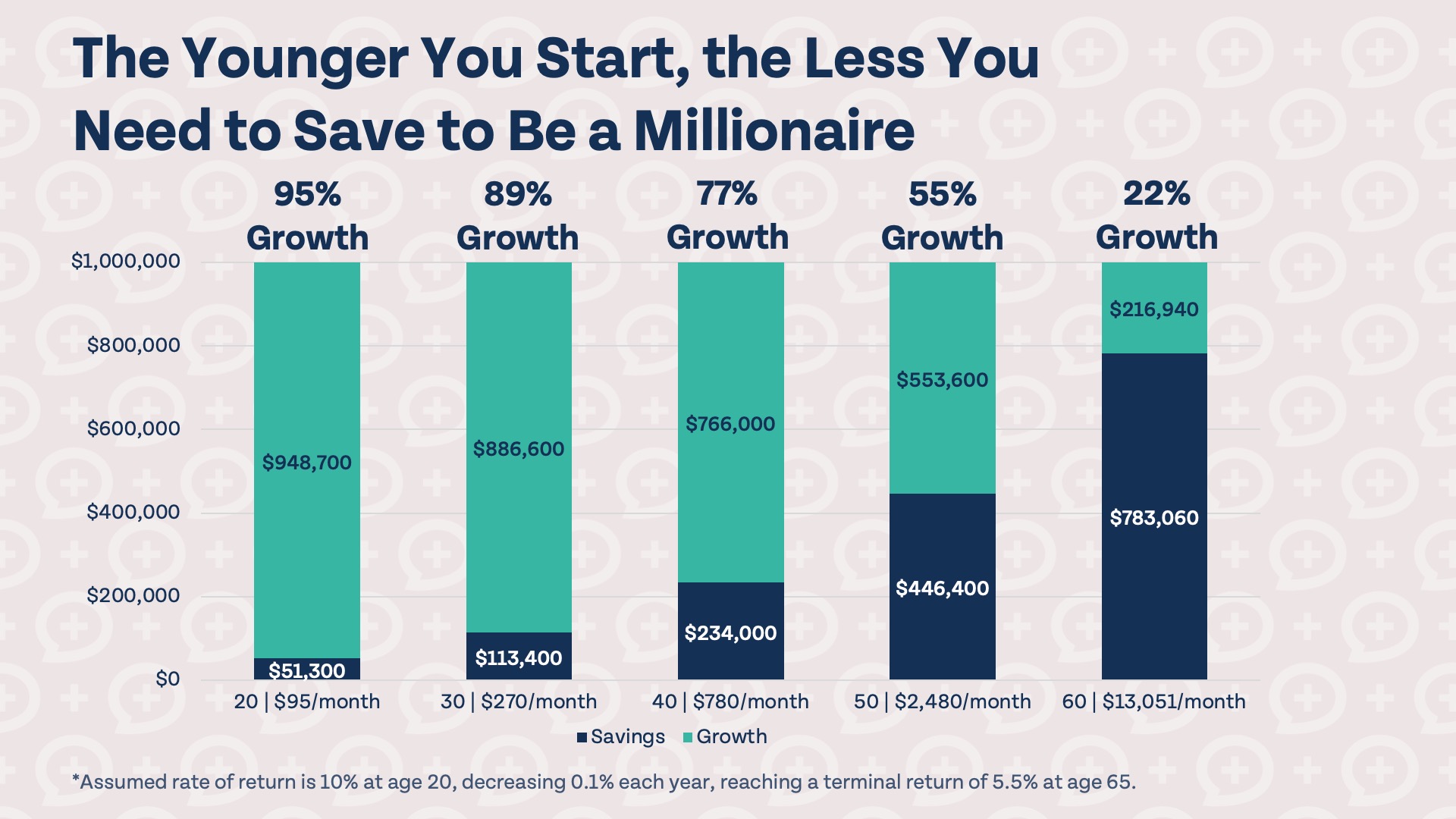
The power of compounding is the most potent force in wealth building. Starting to save and invest early gives your money more time to grow exponentially. Even small, consistent contributions made over decades can accumulate into substantial sums due to the compounding effect where your earnings also start earning returns. Delaying even a few years can dramatically increase the amount you need to save later to catch up. Automating your savings by setting up regular transfers from your checking to your investment accounts is a simple yet highly effective way to ensure consistency.
Maximize Tax-Advantaged Accounts (401(k)s, IRAs)
Utilize every tax advantage available to you. Employer-sponsored plans like 401(k)s, 403(b)s, and 457s allow you to contribute pre-tax dollars (reducing your current taxable income) or post-tax dollars (Roth options, allowing tax-free withdrawals in retirement). Crucially, many employers offer a matching contribution, which is essentially free money and should always be maximized. Individual Retirement Accounts (IRAs), both Traditional and Roth, offer similar tax benefits and provide additional flexibility for saving. HSAs, if you have a high-deductible health plan, offer a triple tax advantage (tax-deductible contributions, tax-free growth, and tax-free withdrawals for qualified medical expenses), making them an excellent retirement savings vehicle, especially for healthcare costs.
Diversify Your Investments
A well-diversified investment portfolio is crucial for long-term growth and risk management. Don’t put all your eggs in one basket. This typically means spreading your investments across different asset classes (stocks, bonds, real estate), different geographies, and various industries. While stocks offer higher growth potential, bonds provide stability and income. Your asset allocation should generally align with your time horizon and risk tolerance, usually shifting towards more conservative investments as you approach retirement. Regular rebalancing ensures your portfolio stays aligned with your desired allocation.
Consider Downsizing or Relocation
For some, their retirement number can be reduced by making strategic lifestyle changes. Downsizing your home after children have moved out can free up significant equity and reduce ongoing expenses like property taxes, insurance, and maintenance. Relocating to a lower cost-of-living area, whether within your country or internationally, can also stretch your retirement dollars considerably further. These decisions are highly personal but can offer substantial financial leverage.
Explore Part-Time Work in Retirement
Retirement doesn’t have to mean a complete cessation of work. Many retirees find fulfillment and financial benefit from working part-time, freelancing, or pursuing a passion project that generates income. This “semi-retirement” approach can provide extra income to cover discretionary expenses, allow your savings to last longer, and even delay the need to draw heavily from your investment portfolio, giving it more time to grow. It also offers social engagement and a sense of purpose.
Reassessing and Adapting Your Plan
Retirement planning is not a one-time event; it’s an ongoing process that requires regular review and adaptation. Life is full of unexpected twists, and your financial plan must be agile enough to respond to them.
Regular Financial Check-ups
Just as you have annual physicals, your financial plan needs regular check-ups. At least once a year, review your progress towards your retirement goals. Assess your savings rate, investment performance, and any changes in your anticipated expenses or income. Are you still on track? Do your assumptions about inflation or market returns still hold true? These check-ups are opportunities to course-correct and ensure your plan remains aligned with your objectives.
Adjusting to Life Changes
Life events such as marriage, divorce, having children, career changes, unexpected inheritances, or health issues can all have a significant impact on your retirement trajectory. Each of these events necessitates a review of your financial plan and potentially an adjustment to your savings rate, investment strategy, or even your target retirement age. Proactively addressing these changes rather than ignoring them is crucial for maintaining financial stability.

Seeking Professional Guidance
While self-education is vital, there’s immense value in seeking guidance from a qualified financial advisor. A fee-only fiduciary advisor can help you clarify your goals, create a personalized financial plan, optimize your investment strategy, navigate complex tax implications, and provide objective advice. They can offer insights into scenarios you might not have considered, help you quantify your specific retirement number, and keep you accountable to your long-term objectives, providing peace of mind as you work towards your financial independence.
Ultimately, the question of “how much will we need to retire?” is an invitation to embark on a journey of self-reflection, strategic planning, and consistent action. There’s no single answer, but by diligently assessing your unique circumstances, understanding the forces at play, utilizing available tools, and adhering to sound financial principles, you can build a robust plan that ensures a secure and fulfilling retirement.
aViewFromTheCave is a participant in the Amazon Services LLC Associates Program, an affiliate advertising program designed to provide a means for sites to earn advertising fees by advertising and linking to Amazon.com. Amazon, the Amazon logo, AmazonSupply, and the AmazonSupply logo are trademarks of Amazon.com, Inc. or its affiliates. As an Amazon Associate we earn affiliate commissions from qualifying purchases.