
For millions of Americans, Social Security represents a cornerstone of their financial well-being, particularly in retirement. Far from a mere handout, it’s an earned benefit, a testament to decades of contributions through payroll taxes. However, the exact amount one can expect to receive is often shrouded in complexity, leading to questions and, at times, considerable anxiety about future financial security. Understanding “how much you can make” on Social Security isn’t just about a single number; it’s about grasping the intricate formula that determines your benefit, identifying strategies to optimize your payout, and integrating this vital income stream into your broader retirement plan.

This guide aims to demystify the Social Security benefit calculation, explore the various factors that influence your monthly check, and provide actionable insights into maximizing this crucial component of your retirement income. By understanding the system, you can make informed decisions that could significantly impact your financial comfort in your later years.
Understanding the Pillars of Your Social Security Benefit
To comprehend how your Social Security benefit is determined, it’s essential to unpack the primary components that contribute to its calculation. The system is designed to provide a foundational level of income, weighted towards those with lower lifetime earnings, but still significantly impacted by individual work history and claiming decisions.
Earning History and the Average Indexed Monthly Earnings (AIME)
Your Social Security benefit is primarily based on your lifetime earnings. Specifically, the Social Security Administration (SSA) considers your 35 highest-earning years. If you have fewer than 35 years of work, the non-earning years are recorded as zero, which will naturally lower your overall average. A crucial step in this process is “indexing” your earnings. This means your past wages are adjusted to reflect the general increase in wages that has occurred since the year you earned them. This indexing ensures that your earlier earnings are valued in terms of current wage levels, providing a fairer representation of your lifetime contributions. Once indexed, the total of your 35 highest-earning years is divided by 420 (35 years x 12 months) to arrive at your Average Indexed Monthly Earnings (AIME). This AIME is the foundation upon which your Primary Insurance Amount is built.
The Primary Insurance Amount (PIA) and Bend Points
The AIME is not the amount you receive directly. Instead, it’s used to calculate your Primary Insurance Amount (PIA), which is the benefit you would receive if you start collecting at your Full Retirement Age (FRA). The PIA is determined by applying a progressive formula using “bend points.” These bend points are specific dollar amounts for AIME that define the segments where different percentages of your AIME are counted. For instance, a high percentage (e.g., 90%) of your AIME up to the first bend point is used, a lower percentage (e.g., 32%) for the AIME between the first and second bend points, and an even lower percentage (e.g., 15%) for the AIME above the second bend point. This progressive structure ensures that individuals with lower lifetime earnings receive a higher proportion of their earnings back compared to those with higher earnings, reflecting Social Security’s goal of providing a safety net.
Full Retirement Age (FRA): Your Crucial Milestone
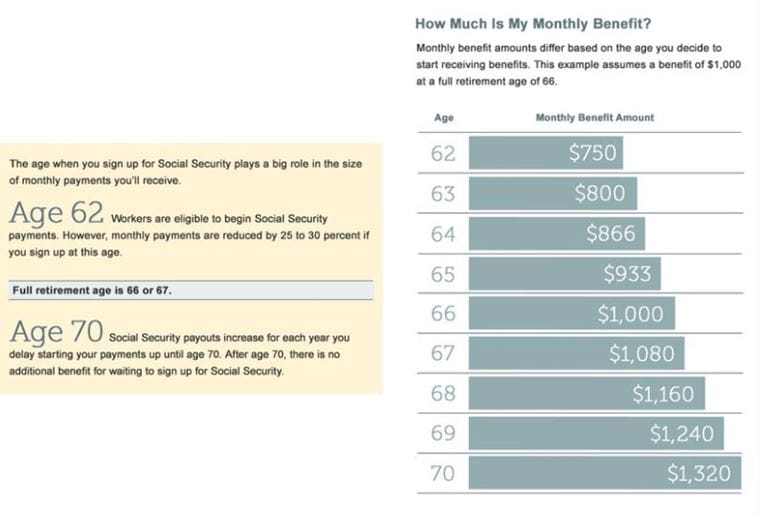
Your Full Retirement Age (FRA) is a critical concept in Social Security planning. It’s the age at which you are entitled to receive 100% of your Primary Insurance Amount (PIA). Your FRA depends on your birth year. For those born between 1943 and 1954, FRA is 66. For those born in 1960 or later, it is 67. For birth years in between, it gradually increases from 66 to 67. Understanding your FRA is paramount because claiming benefits before it will result in a permanent reduction in your monthly payment, while delaying benefits past your FRA will lead to a significant increase. It’s the benchmark against which all claiming decisions are measured, directly impacting the “how much” you ultimately receive.
Strategies to Maximize Your Social Security Payouts
While your earning history is a fixed component, you have significant control over when and how you claim your benefits, which can dramatically alter your total Social Security income over your lifetime. Strategic planning is key to optimizing your payout.
The Power of Delayed Claiming
One of the most effective strategies to increase your monthly Social Security benefit is to delay claiming past your Full Retirement Age (FRA). For every year you delay claiming benefits beyond your FRA, up to age 70, your monthly payment increases by approximately 8%. These are known as Delayed Retirement Credits (DRCs). For example, if your FRA is 67 and your PIA is $2,000, delaying until age 70 could boost your monthly benefit to around $2,480 (a 24% increase). This growth is guaranteed and inflation-adjusted, making it an incredibly valuable “return” on your decision to wait. For many healthy individuals who can afford to delay, this strategy offers a compelling way to secure a significantly higher, lifelong income stream.
Working Longer and Higher Earnings
Since your benefit is calculated based on your 35 highest-earning years, working longer, especially into your peak earning years, can often boost your AIME. If your current earnings are higher than some of your earlier indexed earnings from your initial 35-year calculation, those new, higher earning years will replace the lower ones. This substitution will increase your overall AIME, and consequently, your PIA. Even a few extra years of high earnings can have a positive ripple effect on your benefit calculation, particularly if you have years with zero or very low earnings from early in your career that could be replaced.
Coordinating with Your Spouse for Optimal Combined Income
Married couples have unique opportunities to maximize their combined Social Security benefits through strategic coordination. One common strategy involves the higher-earning spouse delaying benefits until age 70 to maximize their individual payment, which will also provide a higher survivor benefit for the spouse should they pass away first. The lower-earning spouse might claim their own reduced benefit earlier, or claim a spousal benefit (up to 50% of the higher-earning spouse’s PIA) if it’s greater than their own benefit. There are various claiming permutations, and the optimal strategy often depends on age differences, health status, and other income sources. Careful planning and potentially consulting with a financial advisor specializing in Social Security can help couples achieve the highest possible joint income.
Understanding Earnings Limits While Receiving Benefits
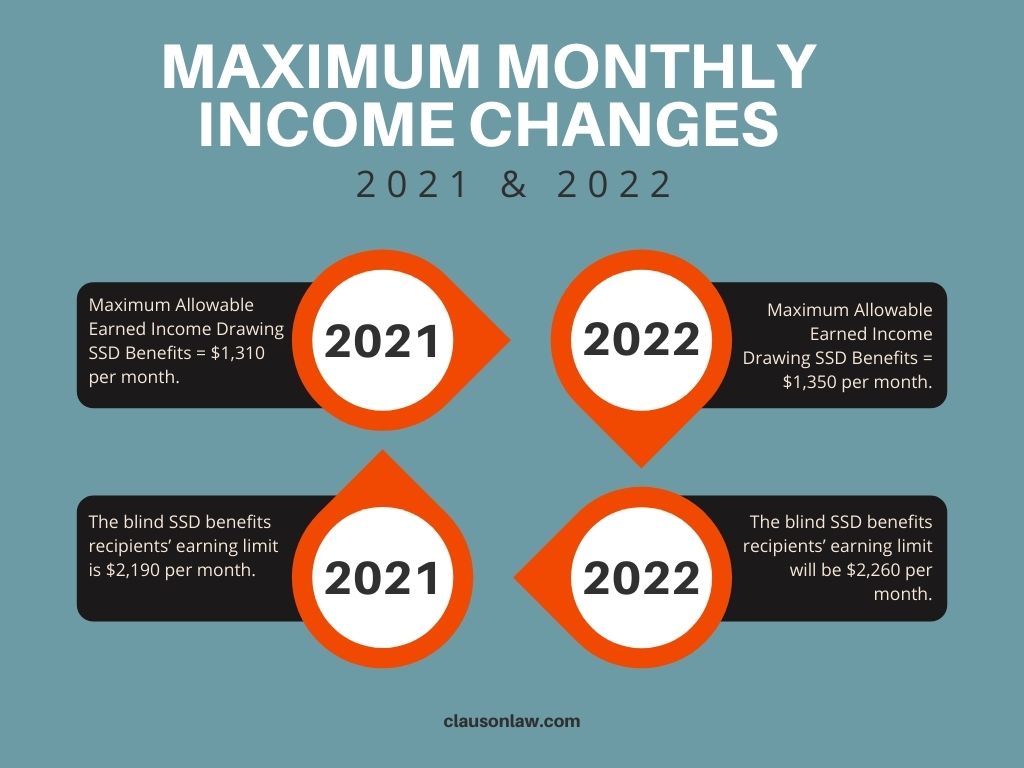
If you claim Social Security benefits before your Full Retirement Age (FRA) and continue to work, your benefits may be reduced if your earnings exceed certain annual limits. For instance, in 2024, for every $2 you earn above a specific threshold ($22,320), $1 is deducted from your benefits. In the year you reach FRA, the reduction is less severe: $1 is deducted for every $3 you earn above a higher threshold ($59,520) up to the month you reach FRA. Importantly, once you reach your FRA, there are no longer any earnings limits, and you can earn as much as you like without impacting your Social Security benefits. Any benefits withheld due to these limits are not permanently lost; your future benefits are recalculated at your FRA to account for them, potentially increasing your monthly payment later on.
Beyond Your Own Record: Other Types of Social Security Benefits
Social Security isn’t solely about your individual retirement benefit. The program also provides a safety net for families through various auxiliary benefits based on a worker’s earnings record. These can be crucial for dependents and survivors.
Spousal and Divorced Spousal Benefits
If you are married or were previously married, you might be eligible for spousal benefits based on your spouse’s (or ex-spouse’s) earnings record. A spousal benefit can be up to 50% of the primary earner’s Primary Insurance Amount (PIA) at their Full Retirement Age (FRA). To qualify for a spousal benefit while your spouse is still alive, you must be at least 62, or any age if caring for a child under 16 or disabled. You can claim a spousal benefit even if you are divorced, provided your marriage lasted at least 10 years, you are currently unmarried, and you are at least 62 years old. This can be a significant source of income, especially for a spouse with a limited or non-existent work history.
Survivor Benefits
Should a worker pass away, certain family members may be eligible for survivor benefits based on the deceased’s earnings record. This includes widows, widowers, and in some cases, divorced spouses. Children under age 18 (or 19 if still in high school) or children of any age who were disabled before age 22 may also qualify. The amount of the survivor benefit typically ranges from 75% to 100% of the deceased worker’s basic benefit amount, depending on the survivor’s age and relationship. These benefits provide vital financial support during a difficult time, ensuring that families don’t lose all income when a wage earner passes.
Disability Benefits (SSDI)
Social Security also administers the Social Security Disability Insurance (SSDI) program, which provides benefits to individuals who have worked long enough and recently enough under Social Security and have a medical condition that meets the SSA’s definition of disability. Unlike Supplemental Security Income (SSI), which is needs-based, SSDI is an earned benefit. If approved, the monthly benefit amount is calculated similarly to retirement benefits, based on the worker’s average lifetime earnings. This program offers a critical financial lifeline for those who become unable to work due to a severe, long-term disability, protecting them and their families.
The Financial Reality: Taxation and Future Outlook
While Social Security provides a reliable income stream, it’s important to understand how these benefits fit into your overall financial picture, including potential tax implications and the program’s long-term sustainability.
Taxation of Social Security Benefits
It’s a common misconception that Social Security benefits are entirely tax-free. Depending on your “combined income” (your Adjusted Gross Income + tax-exempt interest + one-half of your Social Security benefits), a portion of your Social Security benefits may be subject to federal income tax. Up to 50% of your benefits may be taxable if your combined income is between $25,000 and $34,000 for an individual, or between $32,000 and $44,000 for a married couple filing jointly. If your combined income exceeds these higher thresholds, up to 85% of your benefits could be taxable. Additionally, some states also tax Social Security benefits, though many do not. Understanding these thresholds is crucial for retirement tax planning.
Cost-of-Living Adjustments (COLAs)
To help Social Security benefits maintain their purchasing power in the face of inflation, the Social Security Administration implements an annual Cost-of-Living Adjustment (COLA). This adjustment typically increases benefit amounts based on changes in the Consumer Price Index for Urban Wage Earners and Clerical Workers (CPI-W). While COLAs aren’t guaranteed to be large every year, they provide a vital mechanism for ensuring that your monthly Social Security check doesn’t erode significantly over time due to rising costs, offering a degree of financial predictability and stability in retirement.
The Future Solvency of Social Security
Concerns about the long-term solvency of the Social Security program are frequently discussed. While the program is not in danger of disappearing entirely, projections from the Social Security Trustees indicate that without legislative changes, the trust funds may only be able to pay a reduced percentage of scheduled benefits in the future (e.g., around 80% after 2033-2035). It’s important to note that even in this scenario, Social Security would still be able to pay a significant portion of benefits based on ongoing payroll tax contributions. While potential reforms (such as raising the full retirement age, adjusting the payroll tax rate, or changing the COLA formula) are debated, for current retirees and those nearing retirement, benefits are secure. However, future generations may face some adjustments, making diversified retirement planning even more critical.
Integrating Social Security into Your Broader Retirement Plan
Social Security is a foundational element, but rarely sufficient on its own. For a truly secure retirement, it must be viewed as one piece of a larger financial puzzle.
Social Security as a Foundation, Not the Sole Pillar
While Social Security provides a dependable income floor, it’s generally designed to replace only about 40% of an average worker’s pre-retirement income. For many, this is insufficient to maintain their desired lifestyle in retirement. Therefore, it’s imperative to view Social Security as a crucial component that needs to be supplemented by other savings and investment vehicles. This includes 401(k)s, IRAs, personal investment accounts, pensions (if applicable), and other assets. A robust retirement plan is a diversified one, with Social Security serving as a stable, inflation-adjusted annuity, but not the only source of funds.
Utilizing Financial Tools and Professional Advice
The Social Security Administration offers powerful online tools, such as the “my Social Security” account, which allows you to view your earnings history, get personalized benefit estimates, and explore various claiming scenarios. These tools are invaluable for understanding your potential benefits. However, for complex situations, especially for couples coordinating benefits or those with unique financial circumstances, consulting a qualified financial advisor specializing in retirement planning can be highly beneficial. They can help you model different claiming strategies, integrate Social Security into your overall financial plan, and make decisions that optimize your “how much” in the context of your entire financial landscape.
Conclusion
Understanding “how much can you make on Social Security” is a critical step towards a secure and confident retirement. It involves more than just knowing a number; it demands an appreciation for your earning history, the intricate calculation process, and the strategic choices available to you. By grasping the impact of your Full Retirement Age, the power of delayed claiming, and the various benefits available, you can actively shape your financial future.
Social Security is a powerful, guaranteed income stream, but it works best when integrated thoughtfully into a comprehensive retirement strategy. Start by familiarizing yourself with your personal earnings record and benefit estimates, then explore how different claiming decisions align with your broader financial goals. With informed planning, you can maximize your Social Security benefits and ensure they serve as the strong foundation they were intended to be for your retirement years.
aViewFromTheCave is a participant in the Amazon Services LLC Associates Program, an affiliate advertising program designed to provide a means for sites to earn advertising fees by advertising and linking to Amazon.com. Amazon, the Amazon logo, AmazonSupply, and the AmazonSupply logo are trademarks of Amazon.com, Inc. or its affiliates. As an Amazon Associate we earn affiliate commissions from qualifying purchases.