
In the dynamic world of finance, few terms are as frequently used interchangeably, and yet subtly distinct, as “stocks” and “shares.” For anyone venturing into personal finance, investing, or even merely consuming financial news, understanding the nuances between these two fundamental concepts is crucial. While often referring to the same underlying asset – a slice of ownership in a company – their precise usage can vary based on context, geography, and the specificity of discussion. This article aims to demystify these terms, clarify their distinctions, and equip you with the knowledge to navigate investment discussions with greater precision and confidence, ultimately enhancing your journey in the realm of money and investing.
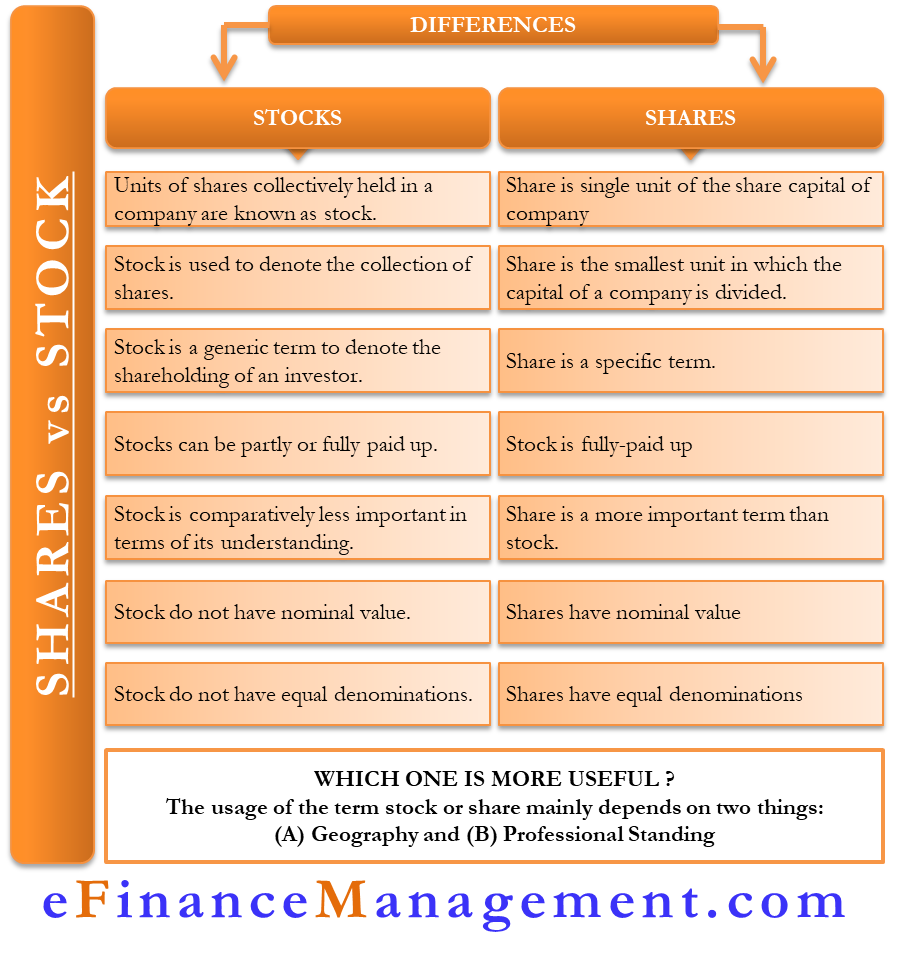
Demystifying the Terminology: Stocks vs. Shares
At first glance, the terms “stocks” and “shares” appear to be perfect synonyms. And for many practical purposes, especially in casual conversation, they are treated as such. However, delving deeper reveals subtle differences that, while not always impactful on an investment’s performance, are vital for a comprehensive understanding of financial markets. The distinction often lies in whether one is referring to ownership in a general sense or to specific, quantifiable units of that ownership.
Stocks: A Broader Perspective
The term “stocks” often functions as a more general or collective noun. When an investor talks about their “stock portfolio,” they are referring to the entire collection of equity investments they hold, potentially across multiple companies. “Stock” in this context signifies ownership in a company, or even a collection of companies, without specifying the individual units. It encompasses the aggregate capital raised by a corporation through the issuance of equity.
Furthermore, “stock” can refer to a company’s total capital divided into transferable shares. For instance, a company might declare that its “authorized stock” is 10 million shares. It’s a broader term that suggests the overall concept of equity ownership in a business. Different types of stock exist, primarily common stock (which typically carries voting rights and fluctuating dividends) and preferred stock (which often offers fixed dividends and no voting rights, but a higher claim on assets in liquidation). When someone says they “own stock,” they are typically indicating that they possess equity in a company, rather than specifying how many individual units they hold.
Shares: The Specific Units of Ownership
In contrast to “stocks,” the term “shares” refers to the individual units of ownership that make up a company’s stock. If a company issues 1,000,000 units of ownership, each one of those units is a “share.” An investor doesn’t own “a stock” in the same way they own “a share.” They own a certain number of shares. When you purchase 100 units of Apple, you are buying 100 “shares” of Apple. These individual shares are the tangible, tradable instruments of ownership in the financial markets.
“Shares” are the precise, quantifiable components that collectively form a company’s total equity. Each share represents a proportionate claim on the company’s assets and earnings, and typically carries specific rights, such as voting power at shareholder meetings or the right to receive dividends. The price quoted on a stock exchange is almost always the price per share. Therefore, when you are engaging in the buying and selling of equity on an exchange, you are specifically trading in “shares.”
The Interplay: When Are They Used Interchangeably?
Despite these definitions, it’s undeniable that “stocks” and “shares” are frequently used interchangeably in everyday conversation and even in much of the financial media. It’s common to hear someone say, “I’m investing in stocks” or “I bought some shares today,” with both statements conveying the same core idea of acquiring equity ownership. This interchangeability stems from the fact that both terms ultimately refer to the same underlying reality: fractional ownership in a company.
The context often dictates which term feels more natural. If you’re discussing your investment strategy generally, “stocks” might be used. If you’re talking about a specific transaction or holding, “shares” is more likely. For example, “I diversified my stock portfolio by adding shares of a pharmaceutical company.” In the grand scheme of investing, focusing too much on this semantic overlap can obscure the more important aspects of understanding the underlying business and market dynamics. However, appreciating the subtle distinctions can improve clarity, especially when engaging in formal financial discussions or navigating different global markets.
Legal and Contextual Distinctions
Beyond the general usage, the terms “stocks” and “shares” carry different weights and preferred usages in legal documents, corporate communications, and across different geographic financial markets. These distinctions, though subtle, highlight the importance of understanding the precise language used in various contexts.
Legal Frameworks and Corporate Language
In legal and corporate governance documents, “shares” is almost exclusively the preferred term. A company’s Articles of Association or Incorporation will specify the number and types of “shares” it is authorized to issue. When a company undergoes an Initial Public Offering (IPO), it is offering “shares” to the public. Corporate actions like “share splits” or “share buybacks” directly refer to these individual units. Similarly, the owners of a company’s equity are officially called “shareholders,” not “stockholders” (though the latter is understood, particularly in the US).
Financial prospectuses, annual reports, and regulatory filings consistently refer to “shares” when detailing the capital structure, ownership, voting rights, and dividend distributions. This precision is critical because each “share” carries specific legal entitlements and obligations, which must be clearly defined and accounted for. This formal usage underscores “shares” as the fundamental legal unit of ownership.
Geographic Nuances: US vs. UK Terminology
One of the most significant practical differences in the usage of “stocks” and “shares” is geographic. In the United States, both terms are widely used, but “stock” often serves as the overarching term for equity ownership. For example, you would typically hear about the “New York Stock Exchange” and the “Dow Jones Industrial Average stocks.” “Shares” is used to refer to individual units within that broader concept, as in “I bought 100 shares of Microsoft stock.”
Conversely, in the United Kingdom and many Commonwealth countries (like Canada, Australia, and India), “shares” is almost exclusively the term used for equity ownership. The primary market is often called a “stock exchange,” but investors buy and sell “shares.” You would refer to “FTSE 100 shares” or investing in “company shares.” In the UK, the term “stock” often has a different connotation, frequently referring to government bonds or other fixed-income securities (e.g., “gilt-edged stock” refers to UK government bonds), or even inventory. This regional preference is a key factor in understanding financial discussions across international borders.

Other Forms of “Stock” (Debt vs. Equity)
It is also important to note that the word “stock” has several meanings outside the context of equity ownership, some of which can cause confusion. For example, a business’s inventory might be referred to as “stock.” More pertinent to finance, as mentioned, in the UK, “government stock” refers to bonds issued by the government, which are debt instruments, not equity. These bonds represent a loan to the government, where the investor receives interest payments and repayment of the principal, without any ownership stake.
This distinction is crucial because it highlights that while “stock” can sometimes refer to debt instruments (especially in non-US contexts), when discussing equity ownership in the US, “stock” implies fractional ownership of a company. Clarifying this helps prevent misinterpretations and ensures that one understands whether they are discussing an ownership stake (equity) or a loan (debt).
Why Does the Distinction Matter for Investors?
While the core concept of fractional ownership remains the same whether you say “stocks” or “shares,” understanding their nuanced differences can improve clarity, aid in global market navigation, and deepen one’s comprehension of financial mechanics. For an astute investor, precision in language can lead to precision in understanding and execution.
Clarity in Communication
Using precise terminology can significantly enhance clarity in financial discussions. When an investor says, “I own shares of Company X,” it explicitly states that they hold individual units of ownership. If they say, “I own stock in Company X,” it’s understood, but “shares” provides an exact quantity (even if not stated) that “stock” does not. This distinction becomes particularly important when discussing specific transactions, portfolio allocations, or corporate actions. For example, a “share dividend” refers to new individual shares being issued to existing shareholders, whereas a “stock dividend” might be used in the US to mean the same thing, but could also be interpreted more broadly. Avoiding ambiguity is always beneficial in the world of finance, where misinterpretations can have real consequences.
Understanding Market Mechanics
The concept of “shares” is central to understanding various market mechanics. A company’s “market capitalization” is calculated by multiplying its share price by the number of “shares outstanding.” Dividends are typically declared “per share.” When a company announces a “share buyback,” it’s repurchasing individual units from the market. Similarly, “earnings per share” (EPS) is a critical metric for evaluating a company’s profitability.
Understanding “shares” as the fundamental units helps investors grasp how these calculations are made and what they signify. Without this understanding, metrics like stock splits (where one share is divided into multiple shares) or reverse stock splits (where multiple shares are consolidated into fewer shares) might seem confusing. Knowing that you’re always dealing with specific “shares” makes these corporate actions easier to comprehend and plan for.
Navigating Global Markets
For investors with an international outlook, awareness of the US vs. UK (and Commonwealth) usage is not just academic; it’s a practical necessity. When reading financial news from London, an article about “company shares” refers to equity, whereas an article mentioning “government stock” would typically refer to bonds. Conversely, in the US, “stock” often implies equity, and bonds would be specifically called “bonds” or “fixed-income securities.”
This geographic linguistic difference means that an investor researching opportunities in different regions must adapt their understanding of the terminology to avoid misinterpreting financial reports, investment advice, or market commentary. Failing to do so could lead to confusion about the nature of an investment or misunderstanding the context of market news, potentially impacting investment decisions.
Beyond Terminology: The Essence of Equity Ownership
While distinguishing between stocks and shares is valuable for precision, it’s even more crucial for investors to look beyond the semantics and focus on the fundamental reality these terms represent: fractional ownership in a company. This core concept holds true regardless of whether you refer to it as “stock” or “shares.”
Rights and Responsibilities of an Owner
When you acquire stocks or shares, you become a part-owner of the company. This ownership comes with certain rights and, implicitly, responsibilities. For common stock, these rights typically include the ability to vote on company matters (such as electing the board of directors, approving mergers, or other significant corporate actions) at annual general meetings. Shareholders also have a claim on the company’s earnings, which may be distributed as dividends, and a residual claim on the company’s assets in the event of liquidation, after creditors have been paid.
Understanding these fundamental rights ensures that investors appreciate the power and influence that come with equity ownership. It shifts the focus from merely buying a number to investing in a business and becoming a stakeholder in its success or failure.
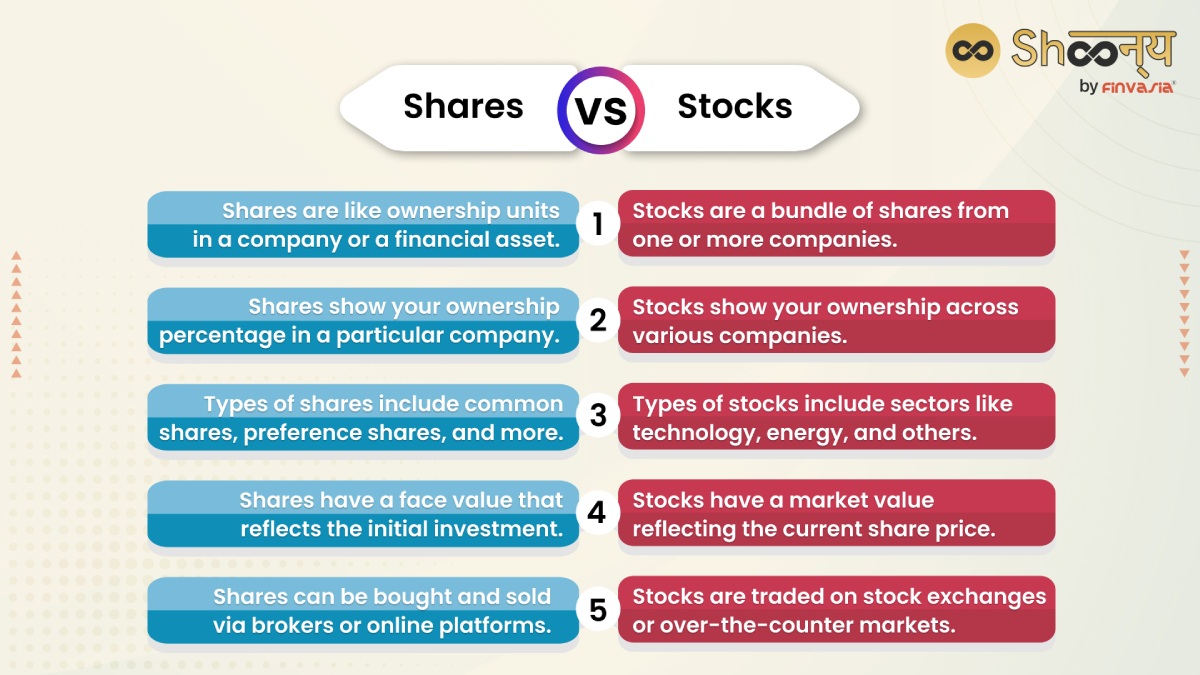
The Power of Investing in Equity
Investing in equity, whether through stocks or shares, is a cornerstone of wealth creation. It allows individuals to participate in the growth and profitability of businesses, leveraging the power of capital appreciation and income generation through dividends. Equity markets play a vital role in the broader economy by providing companies with the capital they need to grow, innovate, and create jobs.
The true power of investing lies not in the terminology used, but in diligently researching companies, understanding their business models, evaluating their financial health, and aligning investments with personal financial goals and risk tolerance. Whether you buy “stocks” or “shares,” you are engaging in the potent act of capital allocation, contributing to economic development, and potentially building substantial personal wealth over time. Therefore, while appreciating the distinction, investors should always prioritize understanding the underlying asset and the company it represents.
In conclusion, while “stocks” often serves as a general term for equity ownership and “shares” refers to the individual units of that ownership, their usage frequently overlaps. The most pronounced practical distinction lies in geographic preferences, particularly between the US and the UK. For investors, the takeaway isn’t to get bogged down in semantic debates, but to understand the subtle differences to enhance clarity in communication, navigate global markets effectively, and ultimately, to deeply grasp the profound implications of fractional ownership in the companies they choose to invest in. Your focus should always be on the quality of the investment, the health of the underlying business, and how it aligns with your financial aspirations.
aViewFromTheCave is a participant in the Amazon Services LLC Associates Program, an affiliate advertising program designed to provide a means for sites to earn advertising fees by advertising and linking to Amazon.com. Amazon, the Amazon logo, AmazonSupply, and the AmazonSupply logo are trademarks of Amazon.com, Inc. or its affiliates. As an Amazon Associate we earn affiliate commissions from qualifying purchases.