
In the rapidly evolving landscape of technology, the ability to analyze relationships between different factors is the cornerstone of innovation. Whether you are developing a new software application, training a machine learning model, or conducting A/B testing for a user interface, you are constantly manipulating and measuring variables. At the heart of these analytical processes lie two fundamental concepts: the independent variable and the dependent variable.
Understanding the distinction between these two is not merely an academic exercise; it is a critical skill for developers, data scientists, and tech architects. These variables form the basis of the “cause-and-effect” logic that governs everything from simple lines of code to complex neural networks. By identifying which factors are the drivers (independent) and which are the outcomes (dependent), tech professionals can build more robust systems and derive more accurate insights from their data.
The Logical Framework: Defining Variables in a Tech Context
In any technological experiment or system analysis, a variable is any factor, trait, or condition that can exist in differing amounts or types. To build a functional system, we must categorize these variables based on their relationship to one another.
The Independent Variable: The Catalyst of Change
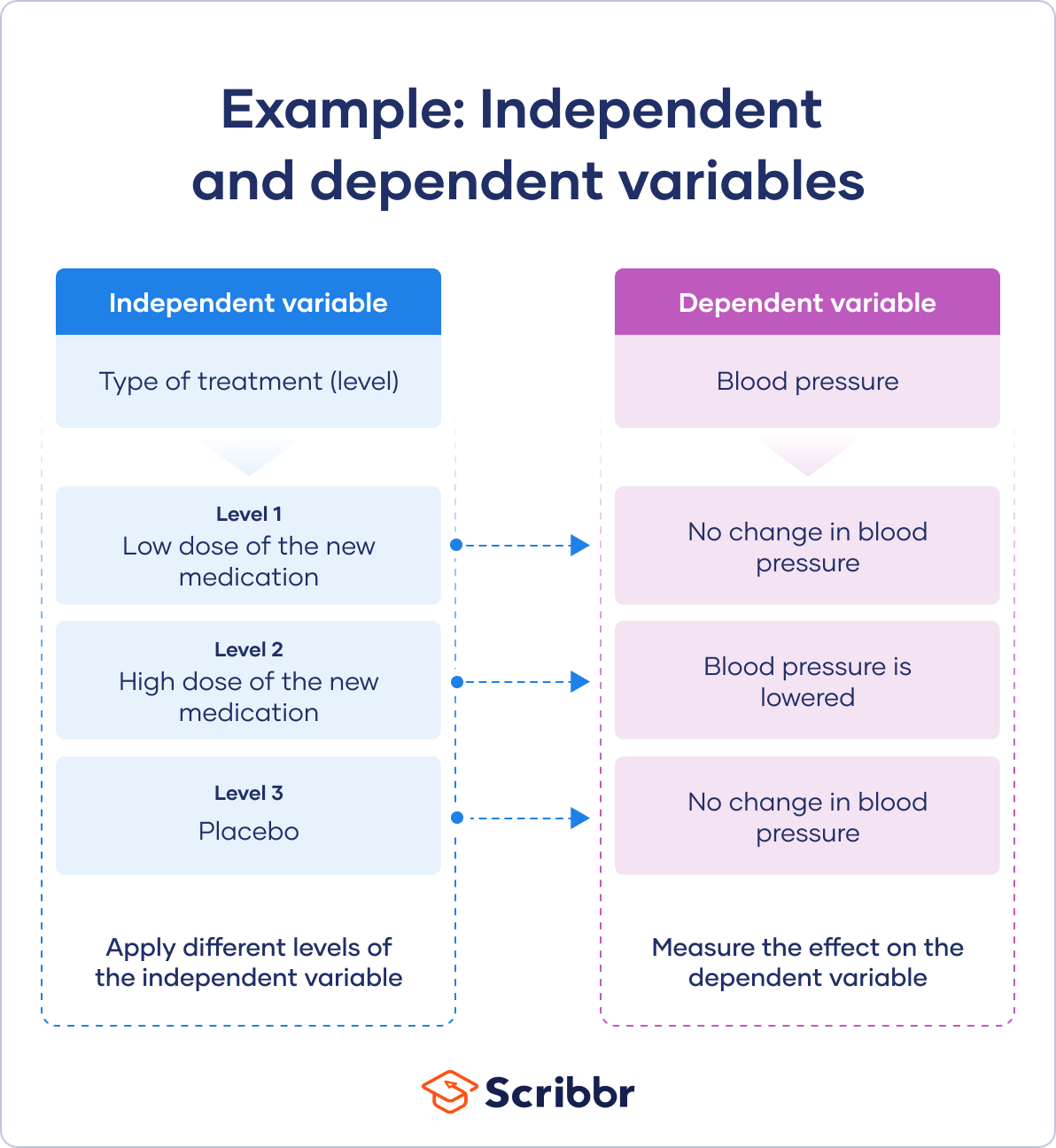
In the realm of technology, the independent variable is the “input” or the “driver.” It is the factor that is intentionally changed or controlled in a scientific experiment or a software test to observe its effects. In a programming environment, you might think of the independent variable as the argument passed into a function or the user input provided to a system. It is “independent” because its value does not rely on other variables within the specific scope of the test; rather, it is the variable that we manipulate to see how the system responds.
The Dependent Variable: The Observable Outcome
The dependent variable is the “output” or the “result.” It is the factor being tested and measured. In technology, this is the performance metric, the return value of a function, or the behavior of a system after a change has been implemented. It is “dependent” because its value changes based on the fluctuations of the independent variable. If the independent variable is the “cause,” the dependent variable is the “effect.”
The Functional Relationship
To visualize this, consider a cloud computing scenario. If you increase the amount of RAM allocated to a server (independent variable), you observe how the processing speed (dependent variable) changes. The RAM is what you control; the speed is what you measure as a result of that control.
Variables in Software Development and System Architecture
Software engineering is essentially the management of variables across different layers of abstraction. From low-level memory management to high-level application logic, the interaction between independent and dependent variables determines the stability and efficiency of the software.
Function Parameters and Return Values
At the most basic level of coding, functions are the primary vessels for variable interaction. When a developer writes a function, the parameters (or arguments) serve as the independent variables. The logic inside the function processes these inputs to produce a return value, which serves as the dependent variable.
For example, in a fintech application calculating interest, the “Principal Amount” and “Interest Rate” are the independent variables. The “Total Accrued Interest” is the dependent variable. The developer’s job is to ensure that for any given set of independent variables, the dependent variable is calculated accurately and predictably.
State Management and Reactive Programming
In modern front-end frameworks like React or Vue.js, the concept of “state” is a complex web of independent and dependent variables. When a user clicks a button (an independent action), the application state changes. This change in state then triggers a re-render of the User Interface (UI). Here, the UI components are the dependent variables that rely on the state (the independent variable) to determine what is displayed to the user. Understanding this flow is essential for debugging “side effects,” which occur when a change in an independent variable causes unexpected or unintended changes in dependent variables elsewhere in the system.
System Scalability and Load Testing
Architects use these variables to determine system limits. During load testing, engineers manipulate the number of concurrent users (independent variable) to measure the system’s latency and error rate (dependent variables). By plotting these on a graph, teams can identify the “breaking point” where the dependent variable (latency) begins to degrade exponentially due to the independent variable (load).
Data Science and Machine Learning: Training the Predictive Engine

The field of Artificial Intelligence (AI) and Machine Learning (ML) is perhaps where the distinction between independent and dependent variables is most prominent. In this niche, these variables are often referred to as “features” and “labels.”
Feature Engineering: The Independent Variables
In machine learning, the independent variables are known as features. If you are building a model to predict the price of a house, features might include square footage, number of bedrooms, and geographic location. These are the data points the model uses to learn. Data scientists spend a significant amount of time on “feature engineering”—the process of selecting and refining the independent variables that have the most significant impact on the final outcome. Choosing the wrong independent variables can lead to “noise,” where the model learns irrelevant patterns that do not actually affect the result.
Target Variables: The Dependent Variables
The dependent variable in machine learning is often called the “target variable” or the “label.” This is the value the model is trying to predict. In the house price example, the price itself is the dependent variable. The goal of the algorithm is to map the mathematical relationship between the independent features and the dependent target.
Correlation vs. Causation in Algorithm Design
A common pitfall in tech analysis is confusing correlation with causation. Just because two variables move together doesn’t mean one causes the other. In a data-driven environment, a tech professional must determine if the independent variable actually causes the change in the dependent variable. For instance, an increase in app downloads (IV) might correlate with an increase in server crashes (DV), but the actual cause might be a memory leak in a new update, not the downloads themselves. Discerning these relationships is vital for building AI that is not only accurate but also explainable.
User Experience (UX) Research and A/B Testing
In the world of product development and digital marketing technology, independent and dependent variables are used to optimize the user journey. This is most frequently seen in A/B testing, a method of comparing two versions of a webpage or app against each other.
Controlled Manipulation in UX
In an A/B test, the independent variable is the specific element being changed. This could be the color of a “Sign Up” button, the wording of a headline, or the placement of an image. To ensure the test is valid, researchers typically change only one independent variable at a time. If they changed both the color and the placement, they wouldn’t know which change caused the resulting shift in user behavior.
Measuring User Engagement Metrics
The dependent variables in these tests are the Key Performance Indicators (KPIs) or engagement metrics. Common dependent variables include:
-
Click-Through Rate (CTR): Does the new button color result in more clicks?
-
Conversion Rate: Does the new headline lead to more purchases?
-
Bounce Rate: Does a faster loading time decrease the number of users leaving the site immediately?
By isolating the independent variable (the UI change) and measuring the dependent variable (the user response), tech companies can make data-backed decisions that significantly improve the profitability and usability of their digital products.
Cybersecurity: Vulnerability Vectors and Impact Analysis
Even in digital security, the logic of variables applies. Security analysts use this framework to understand threat models and mitigate risks.
Vulnerability as the Independent Variable
In a security simulation, the independent variable might be the type of cyber-attack or the specific vulnerability being exploited (e.g., an unpatched software version or a weak password policy). By introducing these “threat variables” into a controlled environment, security teams can observe how the system’s defenses hold up.
System Integrity as the Dependent Variable
The dependent variable in this scenario is the security posture or the extent of the data breach. Analysts measure how much data was compromised, how long the system was offline, or whether unauthorized access was achieved. By understanding how different attack vectors (independent variables) affect system integrity (dependent variables), organizations can prioritize their security spending to address the most “impactful” independent variables.

Conclusion: The Strategic Value of Variable Identification
Mastering the difference between independent and dependent variables is a foundational requirement for anyone operating in the high-tech sector. It provides a structured way of thinking that moves beyond guesswork and into the realm of empirical evidence and logical design.
In software development, it allows for cleaner code and better state management. In data science, it is the key to building predictive models that actually work. In UX and product management, it provides the roadmap for optimization and growth. By consistently asking, “What am I changing?” (the independent variable) and “What am I measuring?” (the dependent variable), tech professionals can build smarter, more efficient, and more secure digital solutions. In an era defined by big data and automation, the ability to decode these relationships is the ultimate competitive advantage.
aViewFromTheCave is a participant in the Amazon Services LLC Associates Program, an affiliate advertising program designed to provide a means for sites to earn advertising fees by advertising and linking to Amazon.com. Amazon, the Amazon logo, AmazonSupply, and the AmazonSupply logo are trademarks of Amazon.com, Inc. or its affiliates. As an Amazon Associate we earn affiliate commissions from qualifying purchases.