
In the grand architecture of biological systems, proteins are the fundamental workers, the structural beams, and the sophisticated messengers that allow life to exist. For decades, the question “what do proteins in a cell do?” was confined to the realm of biochemistry and traditional laboratory observation. However, in the contemporary era, this question has shifted into the domain of high-performance computing, artificial intelligence, and synthetic biology. We are no longer merely observing protein function; we are simulating, predicting, and engineering it using a sophisticated technological stack.
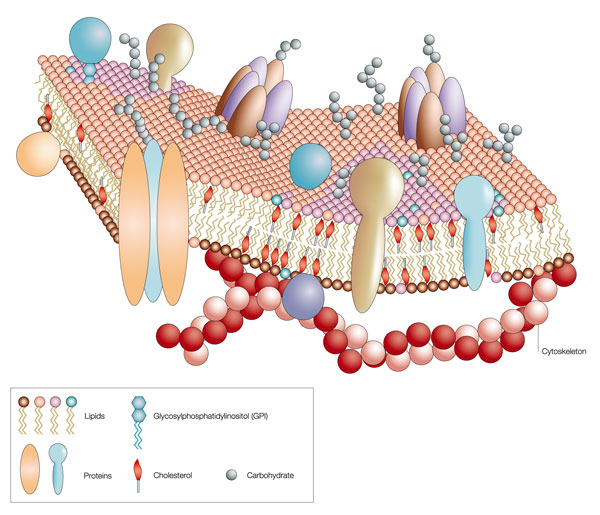
Understanding the role of proteins is no longer just a biological pursuit—it is the ultimate “tech challenge.” By treating the cell as a biological computer and proteins as the specialized hardware and software components, the tech industry is unlocking new frontiers in medicine, materials science, and environmental sustainability.
1. The Computational Simulation of Biological Hardware
At their core, proteins are biological machines. They provide the structural integrity of cells, catalyze chemical reactions as enzymes, and transport molecules across membranes. To understand these functions, tech pioneers are utilizing molecular dynamics (MD) simulations to visualize protein behavior at the atomic level.
The Rise of Molecular Dynamics Software
Standard microscopy can only capture static images or low-resolution movements. To truly see “what proteins do,” scientists rely on high-end software packages like GROMACS, AMBER, and NAMD. These tools use physics-based algorithms to simulate the movement of every atom within a protein over time. This requires massive computational power, often distributed across thousands of GPUs, to model even a few microseconds of a protein’s life. Through these simulations, researchers can identify “druggable” pockets in proteins that were previously invisible, effectively turning drug discovery into a software optimization problem.
Cryo-Electron Microscopy and Digital Reconstruction
Hardware is just as vital as software in this journey. Cryo-Electron Microscopy (Cryo-EM) has revolutionized our ability to see proteins in their native states. Modern Cryo-EM setups are integrated with sophisticated image-processing pipelines that use machine learning to reconstruct 3D models from millions of 2D grainy images. This tech allows us to see the “moving parts” of a protein, such as how a viral spike protein changes shape to latch onto a human cell, providing a digital blueprint for therapeutic intervention.
2. AlphaFold and the AI Revolution in Protein Folding
For half a century, the “protein folding problem” was one of the greatest challenges in science. We knew that the sequence of amino acids (the code) determined the protein’s 3D shape, and the shape determined its function. However, predicting that shape from the code was computationally impossible—until the advent of DeepMind’s AlphaFold.
How Deep Learning Deciphered the Protein Code
AlphaFold represents a landmark achievement in AI. By training neural networks on the Protein Data Bank (a repository of known structures), the AI learned to predict the spatial distances between amino acids with incredible accuracy. This tech tool has essentially “indexed” the protein universe. Where a PhD student might have spent years determining the structure of a single protein, AlphaFold can now provide a highly accurate prediction in minutes. This shift from manual labor to AI-driven prediction has accelerated the study of protein function by several orders of magnitude.
Beyond Static Structures: Predicting Dynamics with AI
The next iteration of this technology is moving beyond static snapshots. New AI models are being developed to predict how proteins interact with other molecules—a field known as protein-ligand docking. This is the digital equivalent of testing millions of keys in a lock to see which one fits perfectly. By using AI to predict these interactions, the tech industry is streamlining the creation of new enzymes for industrial use and identifying side effects of medications before they ever reach a clinical trial.

3. Synthetic Biology: Programming Proteins as Biological Software
If natural proteins are the existing hardware of the cell, synthetic biology is the field of writing “custom software” for that hardware. We are no longer limited to what nature provides; we are now designing proteins from scratch to perform tasks that have never existed in the natural world.
De Novo Protein Design and CAD Tools
“De novo” design involves creating proteins that do not exist in nature. This is facilitated by specialized software like Rosetta and newer generative AI models similar to those used in image generation. Engineers can now specify a desired function—such as “capture a CO2 molecule” or “break down plastic”—and the software will reverse-engineer the amino acid sequence required to create a protein with that specific geometric shape. This “Computer-Aided Design” (CAD) for biology is transforming how we approach environmental and industrial challenges.
The Cell as a Programmable Factory
Once a new protein is designed in a digital environment, the code (DNA) is synthesized and inserted into “chassis” organisms like yeast or E. coli. These cells then act as biological 3D printers, churning out the custom-designed proteins. This technology is being used to create sustainable lab-grown meats, high-performance bio-fabrics (like synthetic spider silk), and targeted “smart” therapeutics that only activate in the presence of specific cancer markers.
4. The Data Infrastructure and Security of Proteomics
As our understanding of protein function becomes increasingly digital, the infrastructure required to manage this data has become a significant tech niche. The sheer volume of proteomic data being generated daily requires robust cloud architecture and advanced cybersecurity measures.
Cloud Computing and Large-Scale Proteomics
The shift toward “Big Data” in biology means that a single research project can generate terabytes of protein sequence and structural data. Platforms like AWS and Google Cloud have created dedicated biological computing verticals to handle this load. These platforms offer specialized instances optimized for the heavy matrix mathematics required for protein simulations. Furthermore, decentralized computing (using blockchain or distributed networks) is being explored to allow researchers worldwide to contribute their idle GPU power to massive protein-folding simulations.
Digital Security and Bio-Data Privacy
The digitization of protein structures and their functions brings new risks. In the wrong hands, the same tech used to design a life-saving protein could be used to design a harmful one. Consequently, digital security in proteomics is becoming a critical field. This involves securing the “Bio-IP” (Intellectual Property) of designed proteins and ensuring that the databases of protein sequences are protected from cyber-attacks. We are seeing the emergence of “Biosecurity 2.0,” where AI is used to monitor DNA synthesis orders for potentially dangerous protein sequences, effectively acting as a firewall for biological code.
5. The Future: Digital Twins of the Cellular Environment
The ultimate goal of the intersection between tech and protein biology is the creation of a “Digital Twin” of an entire cell. This would be a comprehensive, real-time simulation where every protein, lipid, and strand of DNA is modeled in a cohesive digital environment.
Integrating Multi-Omics Data
To build a digital twin, tech platforms must integrate data from various “omics”—genomics (DNA), transcriptomics (RNA), and proteomics (proteins). This requires advanced data integration tools and machine learning algorithms that can find patterns across different layers of biological information. By simulating how proteins behave within the context of a whole cell, we can predict how a specific person might respond to a drug or how a genetic mutation will ripple through the entire biological system.

From Discovery to Deployment
The journey from asking “what do proteins do?” to “what can we make proteins do?” marks a transition from discovery to deployment. As we continue to refine the software and hardware used to decode protein function, we are moving toward a future where biology is as programmable as a computer. The tech tools of today—AI, cloud computing, and high-resolution imaging—are the keys to unlocking the potential of these molecular machines, paving the way for a bio-industrial revolution that will redefine health, sustainability, and the very limits of human ingenuity.
aViewFromTheCave is a participant in the Amazon Services LLC Associates Program, an affiliate advertising program designed to provide a means for sites to earn advertising fees by advertising and linking to Amazon.com. Amazon, the Amazon logo, AmazonSupply, and the AmazonSupply logo are trademarks of Amazon.com, Inc. or its affiliates. As an Amazon Associate we earn affiliate commissions from qualifying purchases.