
In the rapidly evolving landscape of automotive technology, Active Cruise Control (ACC) stands out as a pivotal innovation, bridging the gap between conventional driving and the promise of fully autonomous vehicles. More than just a convenience feature, ACC represents a sophisticated confluence of sensors, software, and vehicle control systems designed to enhance safety, reduce driver fatigue, and optimize traffic flow. At its core, ACC is an advanced driver-assistance system (ADAS) that not only maintains a set speed but also dynamically adjusts that speed to keep a safe following distance from the vehicle ahead. This intelligent capability has transformed the highway driving experience, making journeys smoother, safer, and less stressful. Understanding ACC is not just about appreciating a modern car feature; it’s about recognizing a crucial step in the ongoing technological revolution of personal mobility.

The Evolution of Cruise Control Technology
The journey to Active Cruise Control began long before the advent of digital sensors and complex algorithms. Its roots lie in a simpler, yet revolutionary, concept: the ability to maintain a constant speed without continuous driver input. Tracing this evolution helps us appreciate the sophistication ACC brings to the table.
From Simple Speed Holding to Adaptive Systems
The original cruise control system, invented in 1948 by Ralph Teetor and commercialized in the 1950s, was a mechanical marvel. It allowed drivers to set a desired speed, and the vehicle would maintain it, primarily by adjusting the throttle. This innovation significantly reduced driver fatigue on long, open stretches of road by eliminating the need to constantly monitor the accelerator pedal. However, its limitations were apparent: it was a “dumb” system. If a slower vehicle appeared ahead, the driver was still responsible for manually braking, disengaging cruise control, and then re-engaging it once the path was clear. This required constant vigilance and intervention.
The paradigm shifted dramatically with the introduction of adaptive capabilities. Early adaptive cruise control systems, which began appearing in premium vehicles in the late 1990s and early 2000s, were the first to address this core limitation. These systems incorporated a radar sensor, typically mounted in the front grille, to detect the presence and speed of vehicles directly ahead. When a slower vehicle was detected, the system would automatically reduce the car’s speed – initially through engine braking or coasting, and later through more sophisticated braking inputs – to maintain a pre-set following distance. Once the obstruction moved or the lane cleared, the system would accelerate the vehicle back to the driver’s set speed. This “adaptive” aspect was a monumental leap, transforming a static speed-holding function into a dynamic, context-aware driving assistant.
The Leap Towards Autonomous Driving
Active Cruise Control represents a critical stepping stone on the path to fully autonomous driving. While traditional cruise control relieved the driver of constant acceleration input, ACC began to take over aspects of speed and distance management, directly impacting safety and driver effort. This shift from merely maintaining speed to actively managing traffic flow laid the groundwork for more advanced ADAS features. The integration of braking and acceleration control, coupled with the ability to perceive the immediate environment, directly informed the development of features like lane-keeping assist, automatic emergency braking, and eventually, hands-free driving systems. ACC’s sensor fusion (combining radar with cameras and sometimes lidar) and its reliance on real-time data processing are fundamental technologies that are now being scaled up and refined for higher levels of driving automation. It taught engineers how to reliably interpret road conditions and other vehicles’ behaviors, paving the way for systems that can make more complex driving decisions.
How Active Cruise Control Works: A Deep Dive into its Mechanics
Understanding the inner workings of Active Cruise Control reveals a fascinating interplay of sophisticated hardware and intelligent software, all orchestrated to provide a seamless and safe driving experience. It’s a prime example of real-time sensor fusion and control systems in action.
Sensor Systems: Radar, Lidar, and Cameras
At the heart of any ACC system are its perception capabilities, primarily delivered through a combination of sensors. The most common and fundamental sensor is radar. Typically mounted in the front bumper or grille, radar emits electromagnetic waves and measures the time it takes for them to return after reflecting off objects. This allows the system to accurately determine the distance, speed, and angle of vehicles ahead, even in adverse weather conditions like rain or fog, due to radar waves’ ability to penetrate these elements. Modern radar units are often “millimeter-wave” radar, operating at frequencies that provide high resolution and range.
In addition to radar, many advanced ACC systems integrate cameras. Mounted usually behind the windshield, cameras provide visual information, allowing the system to identify lane markings, traffic signs, and the type of vehicle ahead (car, truck, motorcycle). This visual data enhances the system’s ability to differentiate objects and provides crucial context that radar alone cannot. For instance, a camera can help confirm that a radar blip is indeed a vehicle in the same lane, rather than a stationary object on the shoulder. Some high-end systems also incorporate lidar (Light Detection and Ranging), which uses pulsed laser light to measure distances. Lidar offers extremely high-resolution 3D mapping of the environment, making it excellent for object detection and precise distance measurement, especially at closer ranges. The combination of these sensors, known as sensor fusion, provides a more robust and reliable understanding of the driving environment than any single sensor could achieve on its own, mitigating the weaknesses of one sensor with the strengths of another.
Data Processing and Decision Making
The raw data streamed from radar, cameras, and potentially lidar sensors is immense and requires powerful computing to be meaningful. This data is fed into a dedicated electronic control unit (ECU) within the vehicle, often referred to as the ADAS ECU. This computer is equipped with specialized processors and algorithms designed to interpret the sensor inputs in real-time.
The processing involves several critical steps:
-
Object Detection and Tracking: The system identifies and continuously tracks multiple objects in the vehicle’s path, filtering out irrelevant noise.
-
Lane and Road Boundary Detection: Camera data is used to identify lane markings and predict the vehicle’s trajectory within its lane.
-
Relative Speed and Distance Calculation: Algorithms determine the precise speed and distance of the lead vehicle relative to the ACC-equipped car.
-
Driver Intent Analysis (Indirect): While not explicitly “driver intent,” the system considers the driver’s set speed and desired following distance as primary parameters.
-
Risk Assessment: Based on all the gathered data, the system assesses the potential for collision or the need for speed adjustment.
Once the data is processed, the ECU makes real-time decisions regarding vehicle speed. If a slower vehicle is detected ahead, the decision is made to decelerate. If the path clears, the decision is to accelerate back to the set speed. These decisions are made hundreds, if not thousands, of times per second, ensuring dynamic and responsive control.
Actuators: Engine, Brakes, and Steering Integration
After the decision-making unit determines the necessary action, it sends commands to the vehicle’s various actuator systems to execute those actions. This is where ACC integrates deeply with the car’s fundamental control mechanisms:
-
Engine Control (Acceleration): To increase speed, the ACC system communicates with the engine management system to adjust throttle input, increasing engine RPM and power output.
-
Brake Control (Deceleration): For reducing speed, the system can engage the vehicle’s brakes, often utilizing the existing electronic stability control (ESC) or anti-lock braking system (ABS) hardware. This allows for precise and smooth braking without direct driver input. The system can apply varying degrees of brake pressure, from gentle slowing to significant deceleration.
-
Transmission Control: The transmission system is also integrated to ensure smooth gear changes that complement the acceleration and deceleration demands of the ACC.
-
Steering Integration (Optional/Advanced): While core ACC primarily controls longitudinal movement (speed and distance), many modern systems integrate with lane-keeping assist (LKA) or lane centering assist (LCA). These systems use camera data to provide subtle steering inputs, helping the vehicle stay centered in its lane. When ACC and LKA/LCA work together, they create a more comprehensive “traffic jam assist” or “highway assist” feature, offering partial automation where the vehicle can manage both speed and steering within certain operational limits.
This sophisticated integration ensures that the vehicle responds smoothly and safely to changing road conditions, providing a cohesive driving experience that balances convenience with crucial safety features.
Key Features and Benefits of Active Cruise Control
Active Cruise Control is far more than a simple convenience; it’s a powerful ADAS that offers tangible benefits in terms of safety, driver comfort, and overall driving efficiency. Its features address common challenges of modern driving, particularly on highways and in congested traffic.
Enhanced Safety and Collision Avoidance
Perhaps the most critical benefit of ACC is its contribution to road safety. Human drivers can become distracted, fatigued, or simply misjudge distances and speeds, leading to rear-end collisions. ACC systems, with their precise sensor data and rapid processing capabilities, consistently maintain a pre-set safe following distance. If the lead vehicle suddenly brakes, the ACC system reacts significantly faster than a human driver, initiating deceleration or braking to prevent or mitigate a collision. Many systems are integrated with Forward Collision Warning (FCW) and Automatic Emergency Braking (AEB), which can take over with full braking force if the driver fails to react to an imminent threat, even when ACC is not engaged. By reducing the likelihood of rear-end accidents, ACC directly contributes to fewer injuries and fatalities on the road. It acts as an omnipresent co-pilot, constantly scanning the road ahead and intervening when necessary.
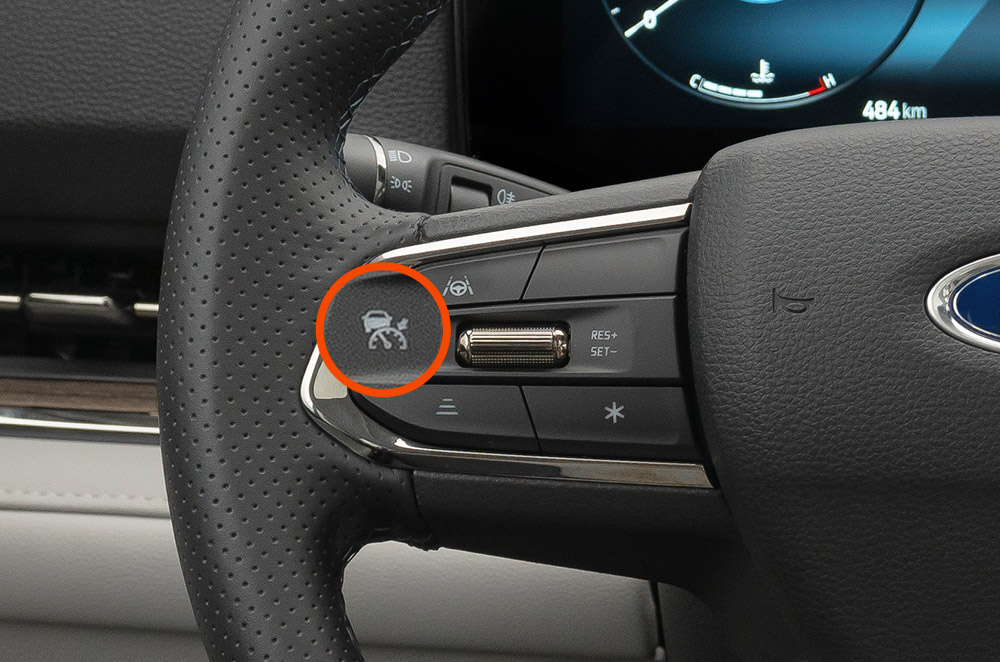
Reduced Driver Fatigue and Improved Comfort
Driving, especially on long journeys or in stop-and-go traffic, can be physically and mentally draining. The constant need to accelerate, brake, and maintain speed takes a toll. ACC significantly alleviates this burden. By automatically managing speed and distance, it reduces the need for the driver to constantly adjust the accelerator and brake pedals. This leads to a substantial reduction in driver fatigue, allowing drivers to remain more alert and focused on steering and the overall road environment. For commuters, particularly in areas prone to congestion, the “stop-and-go” or “traffic jam assist” functionality of full-speed range ACC is a game-changer. It allows the vehicle to automatically come to a complete stop and then resume driving when traffic moves, making tedious commutes far more bearable and comfortable. This enhanced comfort can also indirectly improve safety by reducing the likelihood of fatigue-induced errors.
Traffic Jam Assist and Stop-and-Go Functionality
One of the most appreciated advancements in ACC is its ability to function effectively in low-speed, stop-and-go traffic conditions. Older adaptive cruise control systems typically deactivated below a certain speed threshold (e.g., 20-30 mph), requiring driver intervention in slow traffic. Modern, full-speed range ACC systems, often marketed as “Traffic Jam Assist,” can operate down to 0 mph. This means the vehicle can autonomously bring itself to a complete stop behind a leading car and then, once traffic resumes, automatically accelerate back up to speed. In many systems, if the stop is brief (e.g., a few seconds), the car will automatically proceed. For longer stops, a gentle tap of the accelerator or a button press might be required to signal readiness to resume. This functionality transforms the experience of sitting in traffic, taking away much of the frustration and physical effort, and allowing the driver to relax more while still being attentive to the road. It’s a significant leap in convenience, proving invaluable for daily commuters navigating urban congestion.
Different Types and Implementations of ACC
The term “Active Cruise Control” is often used broadly, but within its definition, there are various levels of sophistication and specific features that differentiate implementations across manufacturers and vehicle segments.
Full-Speed Range ACC
Full-Speed Range ACC represents the most advanced form of the technology currently widely available. As discussed, its defining characteristic is the ability to operate across the entire speed spectrum, from highway speeds down to a complete stop (0 mph). This makes it particularly effective in traffic jams and urban congestion, allowing the vehicle to autonomously stop and resume motion. This capability typically requires more sophisticated sensor arrays, often integrating radar with cameras, and robust braking systems capable of smooth, controlled stops and starts. The advantage of full-speed range ACC is its versatility; it’s useful in almost any driving scenario where maintaining a set speed or following distance is desirable, from open highway cruising to dense urban crawls. This is the gold standard for modern ACC systems.
Predictive ACC and Lane-Keeping Assist Integration
Moving beyond reactive distance keeping, Predictive ACC takes the system a step further by integrating navigation data and sometimes even real-time traffic information to anticipate road conditions. For example, a predictive ACC system might automatically reduce the vehicle’s speed in anticipation of a sharp curve, a roundabout, or a changing speed limit based on map data, even before the vehicle’s sensors directly detect the new condition. This proactive approach enhances comfort by providing smoother transitions and improves efficiency by optimizing acceleration and deceleration.
Furthermore, ACC is increasingly integrated with Lane-Keeping Assist (LKA) and Lane Centering Assist (LCA) systems. While ACC handles longitudinal control (speed and distance), LKA/LCA provide lateral control (steering). LKA typically provides corrective steering input or alerts if the vehicle drifts out of its lane without a turn signal. LCA, a more advanced version, actively works to keep the vehicle centered within its lane. When ACC is paired with LCA, it creates a more comprehensive “Highway Assist” or “Traffic Jam Pilot” system, where the car can manage both acceleration/braking and subtle steering adjustments. This combination offers a significant step towards Level 2 semi-autonomous driving, where the driver is still ultimately responsible but receives substantial assistance for both speed and steering.
Manufacturer-Specific Adaptations and Naming Conventions
While the core functionality of Active Cruise Control remains consistent, automotive manufacturers often brand their specific implementations with unique names and integrate additional proprietary features. For example:
-
Mercedes-Benz: Distronic Plus
-
BMW: Active Cruise Control with Stop & Go Function
-
Audi: Adaptive Cruise Assist
-
Volvo: Adaptive Cruise Control with Pilot Assist (when combined with steering assist)
-
Tesla: Traffic-Aware Cruise Control (part of Autopilot)
-
Honda: Adaptive Cruise Control with Low-Speed Follow
-
Subaru: Adaptive Cruise Control (part of EyeSight)
These variations often reflect slight differences in sensor technology, control algorithms, the level of integration with other ADAS features, and the specific operational limits or driver interaction requirements. For instance, some systems might offer more aggressive acceleration profiles, while others prioritize smoothness and fuel economy. Some might require driver confirmation to resume after a stop, while others automatically proceed within a short time frame. Understanding these nuances is important for consumers when comparing different vehicles and their ADAS capabilities.
The Future of Active Cruise Control and Autonomous Driving
Active Cruise Control, while impressive in its current form, is merely a foundation for the truly transformative changes anticipated in automotive technology. Its evolution is intrinsically linked to the broader progression towards fully autonomous vehicles.
Integration with V2X Communication
A significant leap for ACC and autonomous driving lies in the integration with Vehicle-to-Everything (V2X) communication. Currently, ACC relies primarily on its onboard sensors to perceive the immediate environment. V2X technology, however, allows vehicles to communicate with each other (V2V), with infrastructure (V2I) like traffic lights and road sensors, and even with pedestrians (V2P) via their devices.
Imagine an ACC system that not only sees the car directly in front but also receives real-time data from vehicles several cars ahead about braking events or sudden lane changes. Or an ACC system that knows exactly when a traffic light will turn green, allowing for incredibly smooth and efficient acceleration. V2X could enable “platooning,” where multiple vehicles could travel in very close formation at high speeds, improving aerodynamic efficiency and road capacity. By augmenting sensor data with shared, external information, V2X will make ACC systems far more predictive, robust, and capable of handling complex traffic scenarios, reducing reaction times and enhancing safety beyond what purely onboard sensors can achieve.
Challenges and Ethical Considerations
Despite its promise, the widespread adoption and further development of ACC and autonomous driving face several challenges. Technical challenges include ensuring robust performance in all weather conditions (heavy snow, extreme fog), dealing with unpredictable human behavior, and safeguarding against cyber threats. The complexity of software and hardware integration is immense, and rigorous testing is paramount.
Ethical considerations are also at the forefront. The “trolley problem” is a classic thought experiment: In an unavoidable accident, how should an autonomous vehicle be programmed to prioritize between occupants and external road users? Who is legally liable in the event of an accident involving an ACC-equipped or autonomous vehicle? How will autonomous vehicles interact with human-driven cars on the road? Establishing clear legal frameworks, universal safety standards, and societal acceptance for these complex decisions is crucial for public trust and effective deployment. These questions require careful consideration and broad societal consensus.

Towards Fully Autonomous Vehicles
Active Cruise Control, especially with its advanced features like lane centering and traffic jam assist, represents Level 2 automation (partial automation). The ultimate goal is Level 5 — full automation, where the vehicle handles all driving tasks under all conditions, with no human intervention required. The advancements made in ACC, particularly in sensor fusion, real-time data processing, and actuator control, are directly transferable and scalable to higher levels of autonomy.
Future iterations will see ACC seamlessly integrate with sophisticated AI algorithms that learn from driving patterns, predict human behavior more accurately, and navigate increasingly complex environments. As the technology matures, ACC will evolve from a driver-assistance system to an integral component of a fully self-driving brain, progressively taking over more driving responsibilities until the human driver becomes merely an occupant. The journey from rudimentary cruise control to a fully autonomous vehicle is long and complex, but ACC stands as a testament to the remarkable progress already achieved, continuously pushing the boundaries of what’s possible in personal transportation.
In conclusion, Active Cruise Control is a sophisticated and indispensable technology that has redefined the driving experience. By intelligently managing speed and distance, it offers significant improvements in safety, comfort, and efficiency, while also serving as a crucial stepping stone towards the fully autonomous future of mobility. Its ongoing evolution continues to shape how we interact with our vehicles and envision the roads of tomorrow.
aViewFromTheCave is a participant in the Amazon Services LLC Associates Program, an affiliate advertising program designed to provide a means for sites to earn advertising fees by advertising and linking to Amazon.com. Amazon, the Amazon logo, AmazonSupply, and the AmazonSupply logo are trademarks of Amazon.com, Inc. or its affiliates. As an Amazon Associate we earn affiliate commissions from qualifying purchases.