
Navigating the complexities of the tax season can be a daunting endeavor for even the most financially savvy individuals. While the world has largely shifted toward digital solutions, a significant portion of the population still relies on traditional paper filing for various reasons—ranging from complex attachments to personal preference or specific legal requirements. One of the most critical, yet frequently confusing, questions a taxpayer faces is: “What address do I send my taxes to?”
Sending your return to the wrong processing center can result in significant delays, missed deadlines, and potential penalties. Because the Internal Revenue Service (IRS) utilizes multiple regional centers to manage the massive influx of documentation, the correct address is not a “one size fits all” answer. It depends on your geographic location, the specific form you are filing, and whether or not you are enclosing a payment. This guide provides a deep dive into the logistics of mailing your tax returns, ensuring your financial documentation reaches its destination securely and on time.

Understanding the Importance of Mailing Locations
The IRS is one of the world’s largest financial processing entities. To handle the millions of returns submitted annually, the agency distributes the workload across several processing centers located throughout the United States. Understanding the logic behind these locations is the first step in ensuring your personal finances remain in good standing.
Why the Address Varies by State
The IRS divides the United States into several regions. Depending on your state of residence, your tax return is routed to a specific service center designed to handle the volume from that area. For example, a taxpayer in Florida will likely send their return to a different facility than a taxpayer in California. This regional distribution allows the IRS to balance its processing power and prevents any single facility from becoming overwhelmed. It is vital to use the address designated for your current residence at the time of filing, as using an outdated address from a previous year’s instructions can lead to your return being rerouted, which can add weeks to your processing time.
The Distinction Between Payment and No-Payment Returns
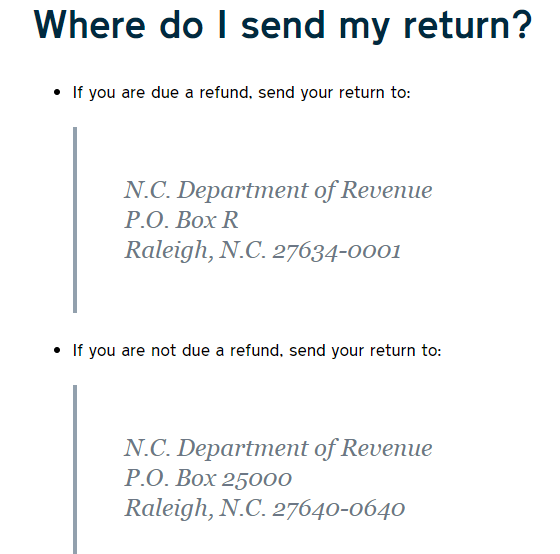
Perhaps the most important distinction in the mailing process is whether you are sending a check or money order along with your return. The IRS utilizes different post office boxes for returns with payments versus those without payments.
When you include a payment, your return is often routed to a “lockbox” facility. These facilities are specifically designed to process payments quickly so the funds can be deposited into the U.S. Treasury. If you are not enclosing a payment—perhaps because you are due a refund or have already paid online—your return goes directly to a processing center that focuses on data entry and audit verification. Interchanging these addresses can delay the cashing of your check or the processing of your refund, leading to unnecessary financial anxiety.
How to Find Your Specific IRS Mailing Address
Once you understand that addresses are variable, the next step is identifying the exact coordinates for your specific filing year. The IRS updates these addresses periodically, so relying on memory or old documents is a risk you should not take with your business or personal finance.
Navigating the Official IRS Geographic Charts
The most reliable way to find the correct address is to consult the instruction booklet for the specific form you are filing (e.g., Form 1040 or 1040-SR). Within these instructions, the IRS provides a table titled “Where Do You File?” This table is organized by state and split into two columns: “And you ARE NOT enclosing a payment” and “And you ARE enclosing a payment.”
For residents of high-population states like Texas or New York, the addresses are usually fixed for several years, but they can change due to facility closures or restructuring. Always ensure you are looking at the instructions for the current tax year. For instance, if you are filing your 2023 taxes in 2024, ensure the “Where Do You File” chart is from the 2023 instruction manual.
Specialized Addresses for Private Delivery Services (PDS)
It is a common misconception that all tax returns must be sent via the United States Postal Service (USPS). Many taxpayers prefer using private carriers like FedEx, UPS, or DHL for their tracking capabilities and speed. However, these private delivery services cannot deliver to a standard IRS Post Office Box.
The IRS maintains specific “street addresses” for these private carriers. If you attempt to send a FedEx package to a P.O. Box address listed in the standard instruction table, the package will likely be returned to you as undeliverable. To avoid this, you must look for the “Submission Processing Center Street Address” on the IRS website. These facilities are located in cities like Austin, TX; Kansas City, MO; and Ogden, UT. Using the correct street address ensures that your private courier can obtain a signature or proof of delivery, which is a vital component of your financial record-keeping.

Best Practices for Mailing Your Tax Returns
Mailing a tax return is more than just putting paper in an envelope; it is the transmission of sensitive financial data. Taking a professional approach to this task can protect you from identity theft and ensure your compliance with federal law.
Choosing the Right Postal Service Options
When using the USPS, the IRS considers a return to be filed on time if it is postmarked by the due date. However, standard First-Class mail provides no proof of mailing or delivery. For significant financial documents like a tax return, it is highly recommended to use Certified Mail, Return Receipt Requested.
This service provides you with a mailing receipt that serves as legal proof of the date you sent your return. If the IRS ever claims your return was late or lost, this receipt is your “get out of jail free” card. In the world of personal finance, documentation is king. The small additional fee for certified mail is a wise investment in your peace of mind and financial security.
Essential Documentation and Assembly Checklist
Before sealing the envelope, you must ensure the contents are organized according to IRS standards to avoid processing hiccups.
-
Sign and Date: The most frequent reason for returned mail is a missing signature. If filing a joint return, both spouses must sign.
-
Attach W-2s: Securely attach all W-2 forms and any 1099s that show federal tax withholding to the front of your return.
-
Payment Protocol: If you are paying by check or money order, make it payable to the “United States Treasury.” Include your name, address, Social Security number, daytime phone number, and the tax year/form number (e.g., “2023 Form 1040”) on the memo line. Do not staple the check to the return; instead, use a paperclip or place it inside the payment voucher (Form 1040-V).
-
Order of Documents: Place your forms in order of the “Sequence Number” located in the upper right-hand corner of the pages.
The Benefits of Transitioning to Electronic Filing
While this guide focuses on the “where” and “how” of physical mailing, it is important to consider the modern financial tools that make mailing obsolete. For most taxpayers, electronic filing (e-filing) is the superior choice for managing annual tax obligations.
Speed, Accuracy, and Confirmation
E-filing eliminates the geographic confusion of mailing addresses entirely. When you file electronically, the software automatically routes your return to the correct digital destination. Furthermore, e-filed returns have a significantly lower error rate—roughly 0.5% compared to 20% for paper returns. The software performs real-time calculations, ensuring your math is accurate before you hit submit. Perhaps most importantly, you receive an electronic acknowledgment within 24 to 48 hours, confirming the IRS has accepted your return. This eliminates the weeks of wondering if your paper envelope arrived safely.
Modern Financial Tools for Seamless Submission
There are numerous financial tools and platforms available today that cater to every income level. The IRS Free File program allows taxpayers under a certain income threshold to use professional-grade software at no cost. For business owners and high-net-worth individuals, sophisticated accounting software integrates directly with tax preparation tools, allowing for a seamless flow of data from your ledgers to the tax forms. Transitioning to these digital tools not only saves time but also provides a more robust digital audit trail, which is a cornerstone of modern financial management.
Common Pitfalls and How to Avoid Them
Even with the correct address in hand, small administrative errors can derail your filing. Being aware of these common pitfalls can save you from future correspondence with the IRS.
Missing Signatures and Incorrect Postage
It sounds elementary, but a significant percentage of paper returns are rejected because they are unsigned or have insufficient postage. A tax return is usually heavier than a standard letter; if you do not apply enough stamps, the post office may return it to you, potentially causing you to miss the filing deadline. Always have your tax envelope weighed at the post office to ensure the correct postage is applied.
Handling Extensions and Late Filings
If you find that you cannot determine the correct address or gather your documents by the April deadline, it is better to file for an extension (Form 4868) than to send an incomplete return to the wrong address. Note that an extension to file is not an extension to pay. You must still estimate your tax liability and send any owed funds to the appropriate “payment” address to avoid interest and late-payment penalties.
In conclusion, while the question “what address do I send my taxes to” seems simple, the answer requires careful attention to detail. By identifying your regional center, distinguishing between payment and no-payment addresses, and utilizing secure mailing methods like Certified Mail, you protect your financial health and ensure your obligations to the state are met with professional precision. Whether you continue to file by paper or eventually transition to e-filing, maintaining a disciplined approach to your tax correspondence is a vital aspect of successful personal finance management.
aViewFromTheCave is a participant in the Amazon Services LLC Associates Program, an affiliate advertising program designed to provide a means for sites to earn advertising fees by advertising and linking to Amazon.com. Amazon, the Amazon logo, AmazonSupply, and the AmazonSupply logo are trademarks of Amazon.com, Inc. or its affiliates. As an Amazon Associate we earn affiliate commissions from qualifying purchases.