
In the landscape of interactive entertainment, few titles have redefined the technical benchmarks of their respective eras as profoundly as the original God of War. Released in March 2005 for the PlayStation 2, this title was not merely a breakthrough in narrative design; it was a masterclass in software engineering and hardware optimization. Developed by Santa Monica Studio, the first God of War pushed the aging PlayStation 2 architecture to its absolute limits, demonstrating what was possible when sophisticated coding met a deep understanding of console-specific hardware. To understand the first God of War is to understand a pivotal moment in the history of game development technology.

The PlayStation 2 Era and the Birth of a Technical Marvel
By 2005, the PlayStation 2 was entering the twilight of its lifecycle. Competitors like the Xbox and GameCube offered technically superior specifications in terms of raw processing power and texture memory. However, the release of the first God of War proved that software optimization could bridge the gap between hardware generations.
Hardware Constraints as a Catalyst for Innovation
The PlayStation 2 was powered by the “Emotion Engine,” a central processing unit that was notoriously difficult for developers to master due to its unique architecture. It featured two Vector Units (VU0 and VU1) that required low-level Assembly programming to achieve maximum efficiency. The developers of God of War leveraged these units to handle the game’s complex geometry and physics calculations. By offloading vertex processing to the VUs, the team freed up the main CPU to handle game logic and AI, allowing for a level of on-screen carnage that was previously thought impossible on 294 MHz hardware.
The Kinetica Engine: Powering Seamless Combat
Interestingly, the foundation of the first God of War was built upon the Kinetica engine, a proprietary toolset originally developed for the futuristic racing game Kinetica. Santa Monica Studio heavily modified this engine to transition from high-speed racing to high-intensity action. The tech behind this transition was focused on throughput—ensuring that the game could stream assets from the DVD drive in real-time. This led to one of the game’s most celebrated technical achievements: the near-total absence of visible loading screens. This seamless integration was achieved through sophisticated data-streaming algorithms that anticipated player movement and pre-loaded assets into the limited 32MB of System RAM.
Software Engineering and Level Design Paradigms
Beyond the raw processing, the first God of War utilized clever software engineering to create the illusion of a much larger, more detailed world. This required a synergy between the art department and the technical directors to ensure that every polygon served a dual purpose of aesthetic beauty and functional performance.
Fixed Camera Angles: Aesthetic Choice or Technical Necessity?
One of the most defining technical features of the first God of War was its use of cinematic, fixed camera angles. While often praised for its “movie-like” presentation, this was a brilliant technical solution to hardware limitations. By controlling exactly what the player could see, the developers could implement “frustum culling” with extreme precision. The engine only rendered the objects within the camera’s view, allowing the team to push higher polygon counts and more detailed textures onto the visible screen. This selective rendering meant that the Hydra boss battle, for instance, could look significantly more detailed than contemporaneous titles that allowed for a 360-degree free-moving camera.
Optimization Techniques for Massive-Scale Boss Encounters
The opening sequence of the first God of War, featuring the battle against the Hydra, remains a touchstone for technical execution. To manage the scale of the sea monster alongside the player character, the developers utilized a technique known as “Level of Detail” (LOD) swapping. As the camera moved closer to the Hydra, the engine would swap out low-polygon models for high-detail versions. Furthermore, the game utilized sophisticated skeletal animation systems that allowed for fluid, multi-jointed movements of massive enemies without causing the frame rate to dip below its target of 60 fields per second (equivalent to a perceived 60fps on CRT televisions).
Graphics and Real-Time Rendering Breakthroughs
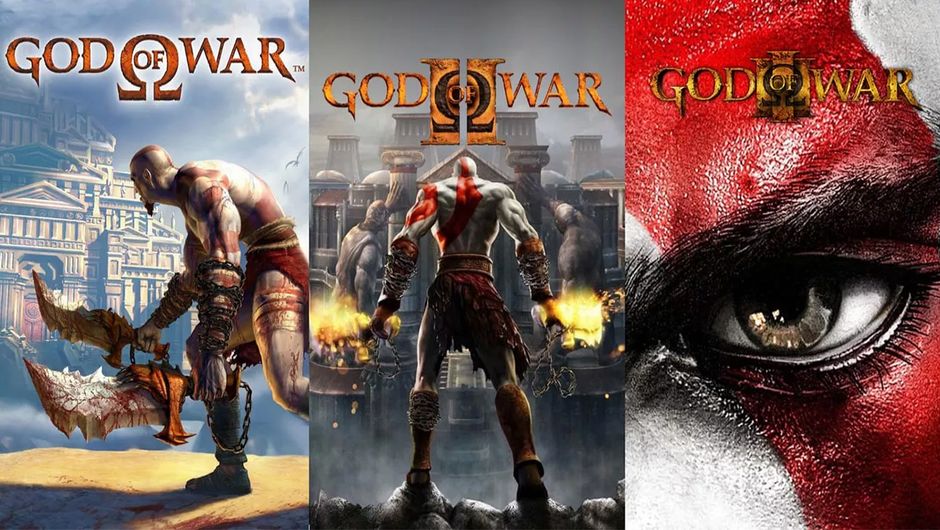
In 2005, the concept of high-definition gaming was still in its infancy. Yet, the first God of War featured visual fidelity that rivaled early titles on the subsequent PlayStation 3. This was achieved through a combination of lighting effects, texture filtering, and creative use of the Graphics Synthesizer (GS).
Pushing Pixels: Texture Filtering and Lighting
The PlayStation 2 lacked a dedicated hardware-based lighting engine comparable to modern standards. To compensate, the tech team at Santa Monica Studio used “pre-baked” lighting and vertex coloring to simulate depth and shadow. By calculating light maps before the game was even shipped, they could create the atmosphere of ancient Greece without taxing the console’s real-time processors. Additionally, the game made extensive use of multi-pass rendering. By drawing an object multiple times in a single frame, they could layer effects like “bloom” and specular highlights, giving Kratos’s skin and armor a realistic sheen that was rare for the mid-2000s.
Animation Systems and the Fluidity of the “Blades of Chaos”
The technical implementation of Kratos’s primary weapons, the Blades of Chaos, required a bespoke physics and animation system. The “chains” were not merely static animations; they used a blend of inverse kinematics and procedural animation to ensure that the blades behaved realistically as they swung through the air. This required high-precision collision detection software to ensure that the blades registered hits across multiple enemies simultaneously. The result was a combat system that felt responsive and “weighty,” setting a new standard for the hack-and-slash genre.
From Legacy Code to Modern Remasters: The Porting Process
The technical brilliance of the first God of War is perhaps most evident in its longevity. The original code has been ported to the PlayStation 3 (God of War Collection) and made available via cloud streaming on modern hardware. These transitions highlight the robustness of the original software architecture.
Scaling the Original Code for High Definition
When Bluepoint Games handled the remastering of the first God of War for the PS3, they discovered that the original PS2 code was so well-optimized that it could be scaled to 720p resolution and a locked 60 frames per second with relatively little overhead. The primary technical challenge was the UI and FMV (Full Motion Video) cutscenes. Since the original game was designed for 4:3 aspect ratio CRT monitors, the team had to use advanced upscaling filters to prevent the pre-rendered videos from looking pixelated on modern LCD screens.
The Transition to Emulation and Cloud Gaming
Today, the first God of War is often experienced through Sony’s PlayStation Plus Premium service via emulation. This presents a new set of technical challenges, specifically regarding input latency and “Emotion Engine” emulation. Because the original game relied on specific timing bugs and hardware quirks of the PS2 to achieve its speed, modern emulators must be highly sophisticated to replicate those behaviors on x86-based architectures (PS4/PS5). The fact that the game remains playable and visually striking today is a testament to the clean, efficient code written by the original development team.
The Technical Legacy: How the First Installment Informed Modern Software Architecture
The first God of War did more than just launch a franchise; it established a technical blueprint for the action-adventure genre. The innovations developed for this title paved the way for future iterations, including the technically staggering 2018 “no-cut” reboot.
Foundational Mechanics in Modern Action-Adventure Titles
Many of the technical “tricks” used in the first God of War have become industry standards. The concept of “hidden loading”—where a player squeezes through a tight gap or crawls through a tunnel to allow the game to load the next area—is a direct evolution of the background streaming tech first perfected in the 2005 original. Furthermore, the integration of Quick Time Events (QTEs) required a highly responsive input-buffer system, ensuring that player commands were registered with millisecond precision, a requirement that remains vital in modern competitive and action gaming.

Lessons in Hardware Optimization for the Modern Era
In an era where developers often rely on the sheer power of modern GPUs and high-speed SSDs, the first God of War serves as a reminder of the power of optimization. It teaches a lesson in “coding to the metal”—writing software that respects the specific strengths and weaknesses of the hardware it runs on. As we move toward 8K resolutions and real-time ray tracing, the principles of efficient asset management and selective rendering established by Santa Monica Studio in 2005 remain more relevant than ever.
The first God of War was not just a game about a vengeful Spartan; it was a technological triumph that proved the PlayStation 2 could punch far above its weight class. By blending innovative engine design with clever visual shortcuts and robust software engineering, it created an experience that remains a benchmark for technical excellence in the gaming industry.
aViewFromTheCave is a participant in the Amazon Services LLC Associates Program, an affiliate advertising program designed to provide a means for sites to earn advertising fees by advertising and linking to Amazon.com. Amazon, the Amazon logo, AmazonSupply, and the AmazonSupply logo are trademarks of Amazon.com, Inc. or its affiliates. As an Amazon Associate we earn affiliate commissions from qualifying purchases.