
In the landscape of American business finance and economic history, few events carry as much weight as the 1824 Supreme Court decision in Gibbons v. Ogden. While it may appear at first glance to be a dusty historical footnote about steamboats, it is, in fact, the foundational legal cornerstone upon which the modern American marketplace—and by extension, your ability to conduct business across state lines—was built. For investors, entrepreneurs, and financial strategists, understanding Gibbons v. Ogden is essential to understanding the mechanics of the national economy and the limits of state-level market intervention.
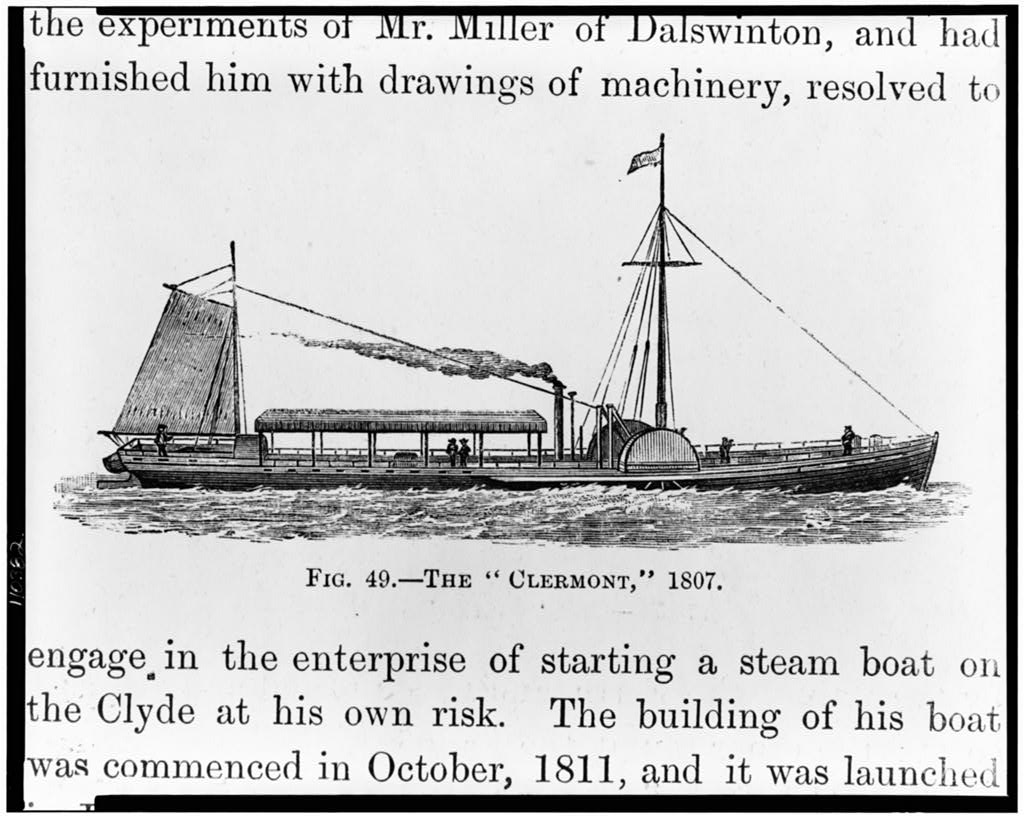
Understanding the Economic Context: Monopolies and Steamboat Commerce
To appreciate the financial magnitude of Gibbons v. Ogden, one must first understand the era of “protectionist capitalism” that preceded it. In the early 19th century, the United States was not a single, unified market. Instead, it was a collection of fragmented state economies, each vying for dominance through restrictive licenses and local monopolies.
The Conflict Between State and Federal Power
At the heart of the dispute was a fundamental question of business finance: who has the right to grant a license to operate a commercial enterprise? The State of New York had granted Robert Fulton and Robert Livingston an exclusive monopoly to operate steamboats in New York waters. This meant that any other entrepreneur wishing to enter the lucrative transport market between New York and New Jersey had to pay exorbitant fees or face legal seizure of their assets.
Aaron Ogden, who purchased a license from the Fulton-Livingston group, represented the “old money” approach—reliance on state-sanctioned monopolies to ensure profit margins. Thomas Gibbons, his former partner, chose to operate under a federal coasting license instead, challenging the state’s right to block his business. This wasn’t just a petty squabble; it was a battle over whether the American economy would be a series of “pay-to-play” state silos or a fluid, national engine of wealth.
The Rise of the Fulton-Livingston Monopoly
The financial implications of the New York monopoly were staggering. By controlling the Hudson River, Fulton and Livingston could dictate prices for goods and passengers, effectively taxing every transaction that moved through the nation’s busiest port. For early investors, this created a high-risk environment. If you invested in a shipping company in New Jersey, your assets could be rendered worthless the moment they crossed the invisible line into New York waters. This legal uncertainty stifled capital investment and kept transportation costs artificially high, hampering the growth of the young nation’s GDP.
The Verdict: Redefining “Commerce” for Business Finance
When the case reached the Supreme Court, Chief Justice John Marshall issued a ruling that would forever change the trajectory of American business. His interpretation of the “Commerce Clause” in the Constitution didn’t just settle a dispute over steamboats; it redefined the very nature of economic activity.
Chief Justice Marshall’s Expansive Definition
The defense argued that “commerce” referred only to the physical exchange of goods. Marshall disagreed, famously stating that commerce is “intercourse”—a broad term that includes navigation, the movement of people, and the exchange of services. From a financial perspective, this was a revolutionary leap. It meant that the federal government, not individual states, had the final say in any business activity that crossed a border.
For the modern investor, this is the reason why a bank in North Carolina can process a mortgage for a property in California without navigating 50 different sets of foundational trade laws. Marshall’s ruling ensured that the United States would function as a single free-trade zone, arguably the most significant “pro-growth” policy in the history of the republic.
The End of Local Protectionism
The ruling effectively struck down the New York monopoly, declaring that federal law trumped state law in matters of interstate commerce. This was a massive blow to state-level protectionism. It signaled to entrepreneurs that the federal government would protect their right to compete in any market within the union. By removing these “toll booths” between states, the Court paved the way for a more efficient allocation of capital. Businesses could finally scale based on their operational efficiency rather than their political connections in a state capital.

Financial Implications: Competition as a Driver of Growth
The immediate aftermath of Gibbons v. Ogden was an explosion of economic activity. By breaking the monopoly, the Court unleashed the forces of the free market, leading to rapid deflation in transportation costs and a surge in national infrastructure investment.
Lowering Barriers to Entry in Early Markets
The day after the ruling, the number of steamboats operating in New York waters skyrocketed. With the monopoly broken, competition drove down the cost of travel and freight. This is a classic lesson in business finance: reducing barriers to entry increases supply and lowers consumer costs. Lower shipping costs meant that goods from the interior of the country could reach global markets more cheaply, increasing the profit margins for farmers and manufacturers alike. The “multiplier effect” of this decision was felt across every sector of the economy.
The Ripple Effect on National Infrastructure Investing
Because the ruling guaranteed that interstate commerce would be protected from state interference, it gave investors the confidence to fund massive infrastructure projects. The era of the “Great Canal” and the subsequent railroad boom was fueled by the legal certainty provided by Gibbons. Investors knew that a railroad crossing five states wouldn’t be held hostage by a single state’s demand for a monopoly license. This certainty is what allowed for the massive accumulation of private capital necessary to build the industrial backbone of America.
Modern Parallels: Interstate Commerce in the Digital and Financial Age
While Gibbons v. Ogden dealt with steam-powered ships, its logic is more relevant today than ever, particularly in the realms of fintech, cryptocurrency, and national banking.
Regulating Fintech and Cross-Border Payments
In the modern economy, “intercourse” involves the movement of digital bits rather than wooden hulls. We see the ghost of Gibbons v. Ogden in every debate over the regulation of fintech companies. When a company like PayPal or Stripe operates across state lines, they rely on the Commerce Clause to protect them from a patchwork of 50 different state financial regulations that might contradict one another. The federal government’s ability to standardize the “rules of the road” for digital payments is a direct descendant of Marshall’s 1824 ruling.
The Commerce Clause and the SEC
The Securities and Exchange Commission (SEC) and other federal financial regulators derive much of their authority from the expansive view of the Commerce Clause established in Gibbons. The ability to regulate the stock market—a quintessentially interstate activity—ensures that an investor in Maine is playing by the same rules as a broker in Florida. Without this federal oversight, the American capital markets would likely be fragmented, less liquid, and far more susceptible to localized fraud and manipulation.
Lessons for Modern Entrepreneurs and Investors
The story of Gibbons v. Ogden offers several timeless insights for those looking to build wealth or manage business finances in the 21st century.
Assessing Regulatory Risk in Business Ventures
One of the key takeaways for any business strategist is the importance of “regulatory risk.” Aaron Ogden invested heavily in a monopoly that he believed was secure, only to have his entire business model invalidated by a court ruling. Modern investors face similar risks when they bet on “regulatory moats”—businesses that thrive only because of specific government protections or loopholes. As Gibbons proves, these moats can be drained by a single legal decision, favoring companies that can compete in an open, national market.

Leveraging the Open Market for Scaling
Finally, Gibbons v. Ogden reminds us that the greatest financial opportunities lie in the ability to scale. The ruling transformed the U.S. from a collection of small, protected ponds into a vast, competitive ocean. For a business to achieve true “unicorn” status or for an investor to see exponential returns, the company must be able to move across borders—physical or digital—without friction.
In conclusion, Gibbons v. Ogden was not just a win for a steamboat captain; it was a win for the principle of the open market. It established the financial framework that allows the U.S. to remain the world’s largest and most integrated economy. By ensuring that “commerce” would be protected from the whims of local protectionism, the Supreme Court laid the tracks for the industrial revolution, the rise of the digital economy, and the global financial dominance of the United States. For anyone interested in the intersection of law and money, Gibbons v. Ogden remains the ultimate case study in how legal clarity creates economic prosperity.
aViewFromTheCave is a participant in the Amazon Services LLC Associates Program, an affiliate advertising program designed to provide a means for sites to earn advertising fees by advertising and linking to Amazon.com. Amazon, the Amazon logo, AmazonSupply, and the AmazonSupply logo are trademarks of Amazon.com, Inc. or its affiliates. As an Amazon Associate we earn affiliate commissions from qualifying purchases.