
The intersection of international diplomacy and high-stakes finance is nowhere more evident than in the defense sector. For decades, the United States has maintained a robust financial and military partnership with Israel, a relationship that translates into billions of dollars in annual revenue for the world’s largest defense contractors. While the geopolitical implications are often the focus of headlines, the underlying story is one of complex business finance, massive government contracts, and the investment performance of the “Defense Primes.”
From a “Money” perspective, the sale of advanced weaponry is not just about hardware; it is about long-term service agreements, multi-year procurement cycles, and the stability of the U.S. industrial base. This article explores the financial architecture of these sales, identifying which U.S. weapons makers dominate the market and what they sell most to one of their most significant international clients.
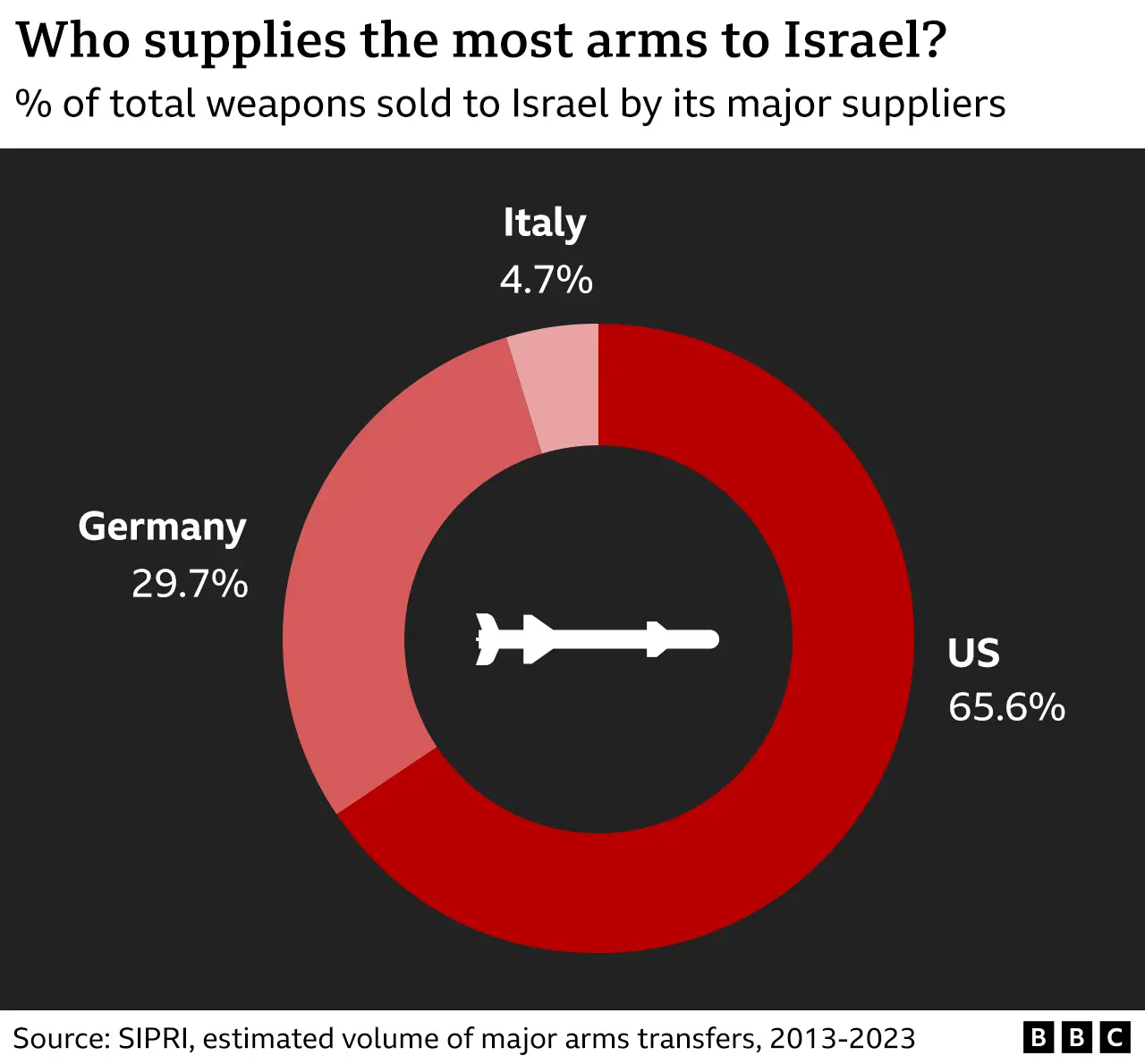
The Fiscal Landscape of Foreign Military Sales
To understand what U.S. weapons makers sell to Israel, one must first understand the financial mechanism that facilitates these transactions. Unlike typical commercial exports, defense sales to Israel are largely structured through the Foreign Military Financing (FMF) program.
The Role of Foreign Military Financing (FMF)
The FMF is a program managed by the U.S. State Department that provides grants to foreign governments for the purchase of U.S. defense equipment and services. In the case of Israel, a 10-year Memorandum of Understanding (MOU) currently mandates an annual $3.8 billion in military aid. From an investor’s perspective, this creates a “circular economy”: the U.S. government appropriates funds that are then directed back into the coffers of American corporations like Lockheed Martin, Boeing, and RTX (formerly Raytheon).
Top-Line Revenue Streams for Prime Contractors
For major defense contractors, Israel represents a stable and high-value revenue stream. These companies, often referred to as “Prime Contractors,” bid on massive contracts that span decades. The financial predictability of these MOUs allows defense firms to forecast earnings with a high degree of accuracy, a factor that is highly prized by Wall Street analysts. The revenue is not merely derived from the initial sale of a fighter jet or a missile system but from the “tail” of the contract—the maintenance, repair, and overhaul (MRO) services that continue for the life of the asset.
High-Value Assets: Aerospace and Advanced Systems
The largest portion of the financial outflow from the U.S. to Israel in the defense sector is concentrated in aerospace. Fixed-wing aircraft and rotorcraft represent the highest “per-unit” cost in the inventory, making them the crown jewels of the defense export business.
Lockheed Martin and the F-35 Program
Lockheed Martin stands at the pinnacle of this financial relationship. The F-35 Lightning II, the world’s most advanced stealth fighter, is a primary export. Israel was the first country outside the initial development group to select the F-35, and it has committed to purchasing at least 75 of these aircraft.
At a cost of approximately $80 million to $100 million per unit (depending on the variant and lot), the total contract value is astronomical. However, for Lockheed Martin, the real profit lies in the sustainment contracts. The F-35 program is expected to have a total lifecycle cost of over $1.7 trillion globally, and Israel’s fleet contributes significantly to the international sustainment revenue that drives Lockheed’s long-term stock value.
Boeing’s Multi-Billion Dollar Aerospace Portfolio
While Lockheed Martin dominates the stealth market, Boeing remains a titan in heavy lift and tactical aircraft. Boeing’s sales to Israel include the F-15 Eagle—specifically the new F-15IA variant—and the KC-46A Pegasus aerial refueling tankers. The F-15 program alone represents billions of dollars in potential sales as Israel seeks to modernize its aging fleet.
Furthermore, Boeing’s Apache attack helicopters are a staple of the Israeli Air Force. For Boeing investors, these sales provide a necessary counterbalance to the volatility of the commercial aviation sector. The “Defense, Space & Security” (BDS) segment of Boeing relies on these international military sales to maintain cash flow during downturns in the civilian airline market.
Precision Munitions and Missile Defense Economics

Beyond the high-profile aircraft, a significant portion of the “recurring revenue” for U.S. weapons makers comes from precision-guided munitions (PGMs) and air defense systems. These are consumable or “expendable” assets, meaning they must be replaced frequently, creating a consistent demand cycle.
RTX (Raytheon) and the Business of Air Defense
RTX, particularly through its Missiles & Defense business unit, is a critical player in the Israeli market. One of the most financially significant partnerships is the co-production of the Iron Dome’s Tamir interceptors. While the Iron Dome is an Israeli-developed system (Rafael Advanced Defense Systems), a significant portion of the interceptor production happens in the United States in partnership with RTX.
Additionally, RTX provides the Patriot missile system and components for the David’s Sling medium-range interceptor. For RTX, the financial appeal lies in the high volume of sales. While a fighter jet is a one-time purchase every few decades, interceptors and missiles are purchased by the hundreds or thousands, providing a steady “razor and blade” business model.
General Dynamics: The Market for Conventional Munitions
General Dynamics plays a vital role in providing the foundational elements of defense: artillery shells and bombs. In times of increased conflict, the demand for 155mm artillery shells and Joint Direct Attack Munition (JDAM) guidance kits skyrockets. General Dynamics, as a leader in combat systems and munitions, sees direct financial benefits from the replenishment of Israeli stockpiles. This segment of the business is characterized by high-volume manufacturing and long-term supply agreements that ensure factory floors remain at full capacity.
Investor Perspectives on the Defense Sector
For the individual investor or the institutional fund manager, the sale of weapons to Israel is a component of a larger investment thesis regarding the “Aerospace & Defense” (A&D) sector.
Stock Volatility and Geopolitical Catalysts
Defense stocks often behave differently than the broader S&P 500. They are frequently viewed as “defensive” plays—not just in the military sense, but in the financial sense. During times of global instability, the stock prices of companies like Northrop Grumman, Lockheed Martin, and RTX often see upward movement. Investors anticipate that increased geopolitical tension will lead to higher defense appropriations and, consequently, more international sales.
Long-term Contract Backlogs and Dividend Growth
One of the most important metrics for evaluating a defense company is its “backlog”—the total value of signed contracts that have not yet been executed. The multi-year procurement deals between the U.S. and Israel contribute to these massive backlogs, which often stretch into the hundreds of billions of dollars. This backlog provides a “margin of safety” for investors, ensuring that even in a recession, the company has a guaranteed customer base. This stability allows defense giants to maintain a history of consistent dividend growth, making them favorites for income-oriented portfolios.
The Economic Ripple Effects of Defense Exports
The financial story of U.S. weapon sales to Israel extends beyond the balance sheets of the major corporations. It has a profound impact on the American domestic economy and the broader industrial base.
Domestic Job Creation and Industrial Base Stability
The “Buy American” provisions within the FMF program ensure that the majority of the $3.8 billion annual aid is spent within the United States. This supports tens of thousands of high-skilled manufacturing jobs across nearly every state. For example, the F-35 program involves a supply chain of over 1,500 suppliers. When Israel signs a contract for more jets, it isn’t just Lockheed Martin that wins; it is the hundreds of small and medium-sized businesses that provide the sensors, wiring, and specialized materials. This creates a powerful economic incentive for the continued support of these export programs.
Regulatory Compliance and Future Financial Outlook
The business of selling weapons is also a business of navigating complex regulatory environments. The International Traffic in Arms Regulations (ITAR) and the “Qualitative Military Edge” (QME) policy dictate what can be sold and to whom. For the financial departments of these defense firms, compliance is a significant cost center. However, the ability to successfully navigate these regulations is a “moat” that protects these companies from new competitors.
Looking forward, the financial outlook for U.S. weapons makers in the Israeli market remains strong. As warfare shifts toward electronic systems, AI-driven targeting, and unmanned aerial vehicles (UAVs), we can expect to see a shift in the type of assets sold. Companies that lead in “Defense Tech”—such as those integrating software-defined networking into traditional hardware—will likely capture the next wave of capital.

Conclusion
The relationship between U.S. weapons makers and Israel is a cornerstone of the global defense economy. From the multi-billion dollar aerospace contracts held by Lockheed Martin and Boeing to the high-volume munition sales of RTX and General Dynamics, the financial stakes are immense. For the companies involved, these sales represent more than just a contribution to national security; they are a vital component of their corporate strategy, driving shareholder value, sustaining high-tech employment, and ensuring long-term fiscal stability. As long as the financial architecture of the FMF remains in place, the “Business of Defense” will continue to be a primary driver of the American industrial and financial landscape.
aViewFromTheCave is a participant in the Amazon Services LLC Associates Program, an affiliate advertising program designed to provide a means for sites to earn advertising fees by advertising and linking to Amazon.com. Amazon, the Amazon logo, AmazonSupply, and the AmazonSupply logo are trademarks of Amazon.com, Inc. or its affiliates. As an Amazon Associate we earn affiliate commissions from qualifying purchases.