
In the landscape of modern software engineering and global telecommunications, time is not merely a measurement; it is a critical data coordinate. For developers, systems architects, and IT professionals, the question of “what states have Eastern Time” is the starting point for complex discussions regarding database synchronization, API latency, and the intricate logic of Daylight Saving Time (DST).
While a casual observer might look at a map to see which regions fall under the Eastern Standard Time (EST) or Eastern Daylight Time (EDT) umbrella, a technology professional sees a patchwork of legal jurisdictions, server clusters, and synchronization protocols. Understanding the technical footprint of the Eastern Time Zone is essential for building robust, scalable applications that serve the economic and political heart of North America.

Mapping the Digital Infrastructure of the Eastern Time Zone
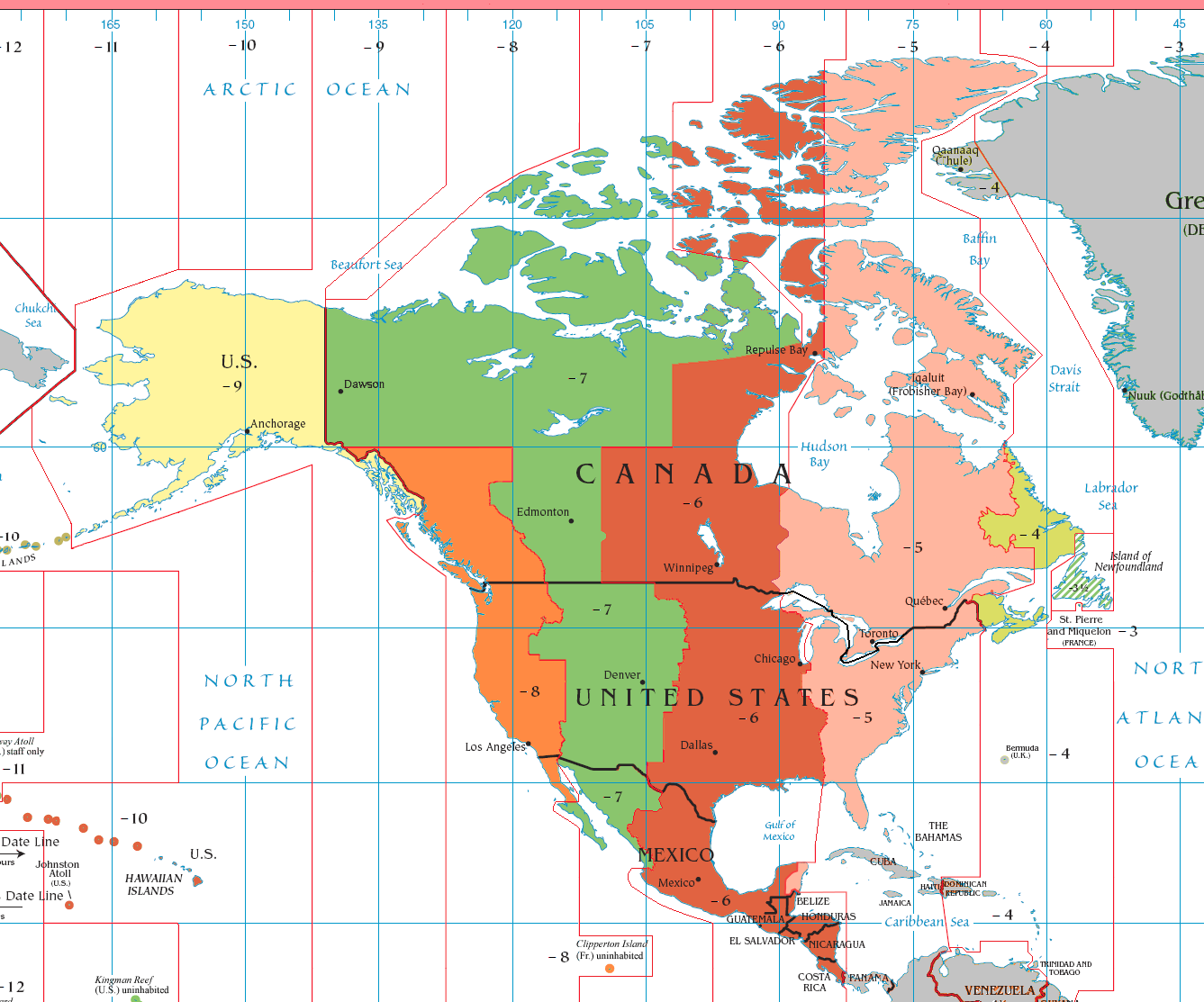
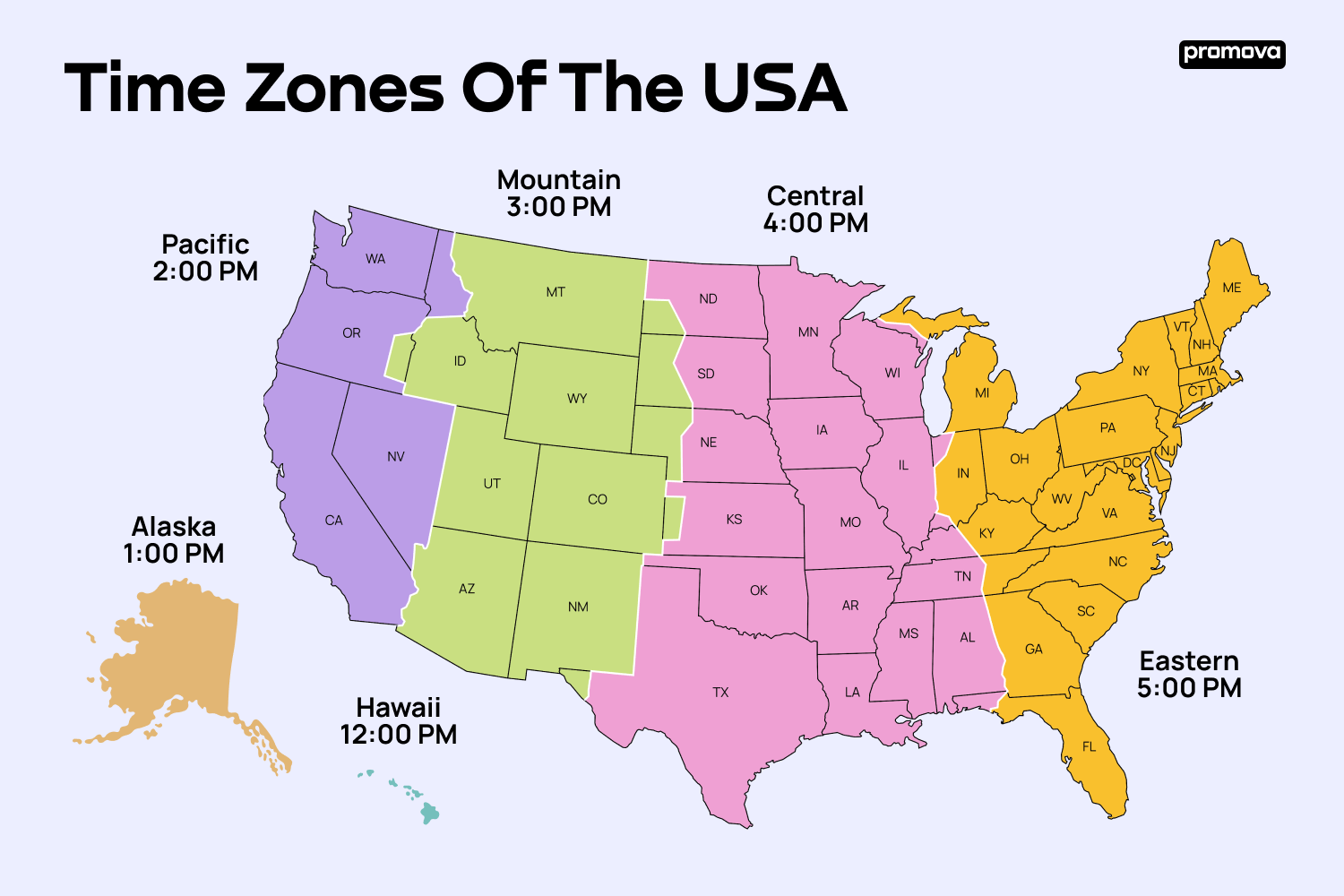
The Eastern Time Zone (ET) encompasses 23 states in the Eastern United States, though the application of this time is not always uniform across state lines. For a software system to accurately reflect local time for a user, it must account for “split states”—regions where a single state is divided between two different time zones.
The Geographic Data Set: Identifying Eastern Time States
From a data entry and geolocation perspective, the following states are entirely or partially within the Eastern Time Zone:
-
Entirely in Eastern Time: Connecticut, Delaware, Georgia, Maine, Maryland, Massachusetts, New Hampshire, New Jersey, New York, North Carolina, Ohio, Pennsylvania, Rhode Island, South Carolina, Vermont, Virginia, and West Virginia.
-
Split States (Partial ET):
-
Florida: Most of the state is in ET, but the western panhandle (west of the Apalachicola River) follows Central Time.
-
Indiana: The majority of the state follows ET, but six counties near Chicago and six counties in the southwest follow Central Time.
-
Kentucky: The eastern half is in ET, while the western half is in Central Time.
-
Michigan: Almost the entire state is in ET, except for four counties in the Upper Peninsula that border Wisconsin.
-
Tennessee: Eastern Tennessee (including Knoxville and Chattanooga) is in ET, while the rest of the state is in Central Time.
-
The Challenge of Geofencing and Time-Aware Logic
For developers building location-based services (LBS) or fintech applications, relying solely on state-level data is insufficient. A mobile app must use precise GPS coordinates or IP-based geolocation to determine if a user in a “split state” like Kentucky is currently operating under Eastern or Central time. This requires integrating with high-quality time zone APIs (such as the Google Maps Time Zone API or the Azure Maps Time Zone service) to ensure that time-stamped transactions and scheduled notifications occur at the correct millisecond.
Engineering Challenges: Time Zone Logic in Modern Software
In the realm of backend development, “local time” is often treated as a secondary concern to Coordinated Universal Time (UTC). However, the transition from UTC to the Eastern Time Zone presents several classic engineering hurdles, particularly regarding the IANA Time Zone Database.
The IANA Database and “America/New_York”
In computing, we rarely refer to “Eastern Time.” Instead, we use the IANA (Internet Assigned Numbers Authority) designation, typically America/New_York. This database entry contains the historical records of all time zone changes and DST transitions for the region. When a programmer sets a server to America/New_York, the system automatically handles the shift between EST (UTC-5) and EDT (UTC-4).
The complexity arises when a system must interact with legacy databases that do not store time zone offsets. If a server in Virginia (ET) receives data from a client in Illinois (CT) without a specified offset, the risk of “clock drift” or data corruption increases. This is why the industry standard remains: Store in UTC, Display in Local.
Handling Daylight Saving Time (DST) Transitions
Perhaps the most notorious “bug” in time-sensitive software is the DST transition. In the Eastern Time Zone, the “Spring Forward” and “Fall Back” events create a “missing hour” and a “duplicate hour,” respectively.
-
The Spring Gap: When the clock jumps from 1:59 AM to 3:00 AM, scheduled tasks (cron jobs) set for 2:30 AM may fail to trigger.
-
The Fall Overlap: When the clock jumps back from 1:59 AM to 1:00 AM, a task scheduled for 1:30 AM might run twice.
Resilient software architecture mitigates this by using Unix timestamps (the number of seconds since January 1, 1970) which are linear and unaffected by local time shifts. The Eastern Time conversion is only applied at the “Presentation Layer” of the application.
Cloud Infrastructure and the Dominance of US-East-1
The Eastern Time Zone isn’t just a place where users live; it is where the “brains” of the internet reside. For anyone working in Cloud Computing (AWS, Azure, or GCP), the Eastern Time Zone is synonymous with the world’s most critical data centers.
US-East-1: The Northern Virginia Powerhouse
Amazon Web Services (AWS) identifies its primary region as us-east-1, located in Northern Virginia. Because this region falls within the Eastern Time Zone, a massive percentage of global internet traffic is processed according to the power grid and environmental conditions of the Eastern Seaboard.
When developers deploy resources in us-east-1, they are often optimizing for latency for the dense population centers in New York, Washington D.C., and Boston. However, from a DevOps perspective, managing a global fleet of servers means that “server time” and “user time” are rarely the same. A system administrator in California might be monitoring a server in Virginia that is logging events in UTC, while the end-user in Florida is seeing those events reflected in Eastern Daylight Time.
Latency and Geolocation in Time-Sensitive Apps
In high-frequency trading or real-time multiplayer gaming, the physical distance to the Eastern Time Zone data centers matters. The “speed of light in fiber” dictates that a user in New York will have lower latency to an Eastern Time server than a user in Texas. Tech companies often use “Edge Computing” to move the logic closer to the user, but the primary source of truth for many North American databases remains rooted in the Eastern Time infrastructure.
Best Practices for Developers and System Administrators
To build software that accurately navigates the complexities of the Eastern Time Zone and its multi-state reach, engineers should adhere to a strict set of architectural principles.
1. The “UTC Everywhere” Rule
The most fundamental rule in modern tech is to never use local time in the backend. Whether your server is in a state that is 100% Eastern Time or a split state, the system clock should always be set to UTC. This ensures that log files from different regions can be interleaved and analyzed chronologically without having to calculate offsets manually.
2. ISO 8601 Standardization
When transmitting time data between a client in Michigan and a server in New York, always use the ISO 8601 format: YYYY-MM-DDThh:mm:ssZ. The “Z” denotes Zulu time (UTC). If you must include the Eastern Time offset, it should be expressed as -05:00 or -04:00. This allows the receiving API to parse the string accurately regardless of the programming language used.
3. Leveraging Modern Libraries
Manual time calculation is a recipe for disaster. Developers should utilize battle-tested libraries designed to handle the idiosyncrasies of the Eastern Time Zone:
-
JavaScript: Use
LuxonorDay.jsinstead of the nativeDateobject for better time zone support. -
Python: The
pytzorzoneinfo(in Python 3.9+) modules provide accurate IANA data. -
Java: The
java.timepackage (JSR-310) is the gold standard for handling ZonedDateTime.
4. Testing for Time Edge Cases
Quality Assurance (QA) teams must specifically test for “time-wrap” scenarios. This involves “mocking” the system time to simulate the exact moment of an Eastern Time DST transition. If your software manages medical appointments in Florida or financial trades in New York, failing to account for that “missing” or “extra” hour could result in significant data loss or legal liability.
Conclusion: The Future of Time in the Digital Landscape
As we move toward a more decentralized and automated world, the way we treat the Eastern Time Zone is evolving. With the rise of remote work, tech teams are increasingly distributed, yet the “Eastern Time” states remain a central hub for financial and technological decision-making.
From the server farms of Northern Virginia to the fintech hubs of Wall Street, the Eastern Time Zone is more than just a list of states—it is a synchronized digital ecosystem. For the technologist, mastering the nuances of this zone is not just about knowing “what states” are involved, but about understanding how to bridge the gap between human geography and machine precision. By prioritizing UTC, leveraging IANA databases, and understanding the physical infrastructure of the Eastern Seaboard, we can build systems that are as timeless as they are timely.
aViewFromTheCave is a participant in the Amazon Services LLC Associates Program, an affiliate advertising program designed to provide a means for sites to earn advertising fees by advertising and linking to Amazon.com. Amazon, the Amazon logo, AmazonSupply, and the AmazonSupply logo are trademarks of Amazon.com, Inc. or its affiliates. As an Amazon Associate we earn affiliate commissions from qualifying purchases.