
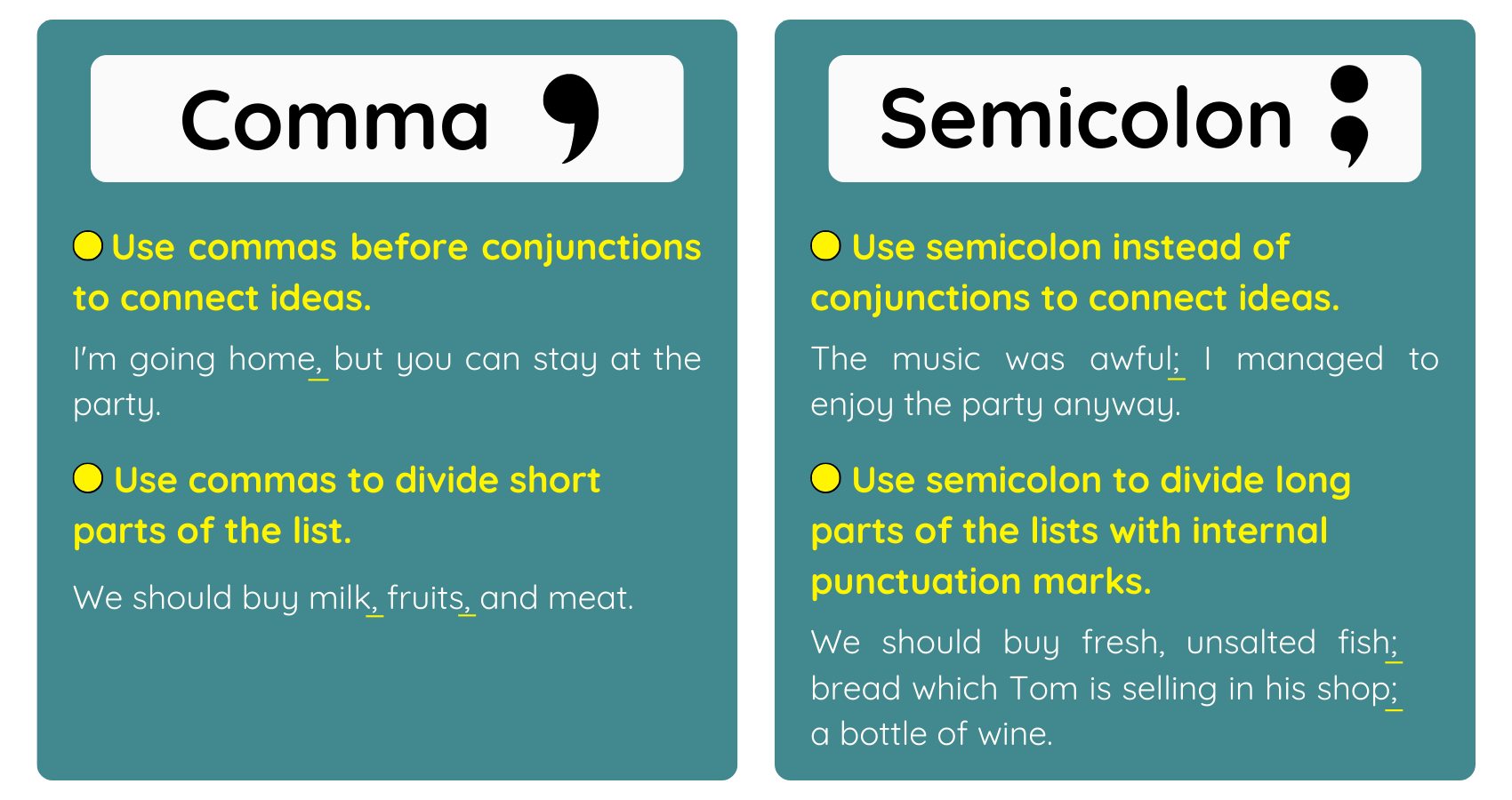
In the realm of literature, the semicolon is a sophisticated tool used to bridge two closely related independent clauses. It is a pause—longer than a comma but shorter than a period. However, in the high-stakes world of technology and software development, the semicolon is far more than a stylistic choice. It is a foundational pillar of syntax, a directive to the compiler, and a symbol that has sparked decades of debate among engineers.
For a software developer, a semicolon is a “statement terminator.” It tells the computer where one instruction ends and the next begins. Without it, the logic of some of the world’s most powerful systems would crumble into an unreadable mess of characters. Understanding what a semicolon is used for in the context of technology requires an exploration of programming history, the mechanics of compilers, and the modern shift toward “clean code” philosophies.

The Syntax of Logic: Why Programming Languages Need the Semicolon
The origin of the semicolon in computing dates back to the early days of high-level programming languages. As we moved away from assembly language and machine code toward languages that humans could more easily read, computer scientists needed a way to tell the machine how to parse instructions.
Delimiting Statements in C, C++, and Java
In languages like C, C++, and Java—which form the backbone of modern operating systems and enterprise software—the semicolon is non-negotiable. These languages are “free-form,” meaning that white space (spaces, tabs, and newlines) is largely ignored by the compiler. Because a developer could technically write an entire program on a single horizontal line, the semicolon serves as the essential boundary.
For example, in C++, the semicolon acts as a “Statement Terminator.” When the compiler sees a semicolon, it knows that the preceding expression is complete and can be converted into machine code. This allows for complex nesting and the grouping of logic without the machine getting “confused” by where a command concludes.
The Concept of the “End of Instruction”
Beyond just being a separator, the semicolon represents the “End of Instruction” (EOI). In the logic of a CPU, instructions are executed sequentially. The semicolon in source code is the high-level representation of this sequential flow. It ensures that the computer doesn’t attempt to execute a “print” command at the same time it is still calculating a mathematical variable. It provides a logical heartbeat to the rhythm of the software.
To Semicolon or Not to Semicolon? The Great Debate in Modern Scripting
As technology evolved, a new generation of programming languages emerged, questioning the necessity of the semicolon. This led to one of the most persistent “holy wars” in the tech community: should a language require explicit terminators, or should it infer them?
JavaScript’s Automatic Semicolon Insertion (ASI)
JavaScript is perhaps the most famous example of a language caught between two worlds. While JavaScript uses semicolons, it also features a mechanism called Automatic Semicolon Insertion (ASI). If a developer forgets a semicolon, the JavaScript engine attempts to “guess” where it should have been.
While this makes the language more accessible to beginners, it creates significant risks for professional software architecture. There are “edge cases” where ASI can break code logic. For instance, if a developer places a return keyword on one line and the object being returned on the next, ASI might insert a semicolon immediately after return, resulting in the function returning undefined instead of the intended data. This nuance is why many tech companies’ internal style guides (like Google’s or Airbnb’s) still mandate the use of explicit semicolons to ensure digital security and code reliability.
The Minimalism of Python and Swift
On the other side of the spectrum are languages like Python, Swift, and Kotlin. These languages represent a shift toward “syntactic sugar”—making the code look more like natural language. In Python, the semicolon is almost entirely replaced by the “newline” character and indentation.
The move away from the semicolon in these languages isn’t just about saving a keystroke; it’s about readability. By removing “visual noise,” these languages allow developers to focus on the logic rather than the punctuation. However, even in Python, the semicolon lives on as a niche tool: it can be used to pack multiple statements onto one line, though this is generally discouraged in professional “Pythonic” environments.
Beyond the Code: The Semicolon in Data and Tooling
While the semicolon is most famous in the context of writing code, its utility extends into data management and the tools that developers use to maintain high-quality software.
Semicolons in Data Formatting and CSVs
In the world of data science and backend engineering, the semicolon is a vital “delimiter.” While “Comma Separated Values” (CSV) files are the standard, many regions (especially in Europe) use the semicolon as a delimiter because the comma is used as a decimal point in their currency and numbering systems.
When a tech professional is importing a massive database of financial transactions, the semicolon acts as the wall between data points. A single misplaced semicolon in a CSV or a configuration file can lead to massive data corruption, proving that even outside of executable code, this character is a guardian of structural integrity.
Coding Conventions and the Role of “Linters”
In modern software development, teams rarely leave the “semicolon debate” to individual preference. Instead, they use “Linters” and “Formatters” like Prettier or ESLint. These are AI-adjacent tools that automatically scan code and apply formatting rules.
If a tech lead decides that the project should use semicolons for better clarity, the linter will automatically insert them across thousands of files in seconds. This highlights a shift in the tech industry: the semicolon is no longer just a manual punctuation mark; it is a parameter in an automated workflow designed to maintain “Code Quality.”
Debugging the “Missing Semicolon”: A Rite of Passage for Engineers
Every software engineer has a story about a “missing semicolon.” In the early days of programming, a single omitted semicolon could produce a list of a hundred errors, none of which explicitly told you where the mistake was.
Compiler Errors and the Cost of Imprecision
In strictly typed languages, the semicolon is a requirement for “compilation.” If it is missing, the program simply will not run. This teaches junior developers a fundamental lesson about technology: computers do not understand “intent,” they only understand “instructions.” The semicolon is the ultimate exercise in precision.
In the context of digital security, a missing semicolon in a script that handles authentication or data encryption could—in rare, catastrophic cases—lead to vulnerabilities if the logic “bleeds” into the next line in an unintended way.
How Modern IDEs are Changing the Game
Fortunately, the “Missing Semicolon” nightmare is becoming a thing of the past thanks to Integrated Development Environments (IDEs) like VS Code or IntelliJ. These tools use real-time static analysis to highlight missing semicolons with “red squiggly lines” before the code is ever run. This evolution in developer tools (DevTools) has shifted the semicolon from a source of frustration to a simple, automated formality.

Conclusion: The Lasting Legacy of the Semicolon in Tech
What is a semicolon used for? In the world of technology, it is the silent conductor of an orchestra. It manages the flow of logic, separates data, and defines the very structure of the languages that power our digital lives.
While newer languages are moving toward a semicolon-free existence in the name of minimalism, the semicolon remains an indelible part of the tech landscape. It represents the transition from human thought to machine execution. Whether it is terminating a line of Java, acting as a delimiter in a European data set, or being debated in a JavaScript forum, the semicolon is a symbol of the precision and structure that defines the modern technological era. As long as we require a way to tell machines where one thought ends and the next begins, the semicolon will have a place in the developer’s toolkit.
aViewFromTheCave is a participant in the Amazon Services LLC Associates Program, an affiliate advertising program designed to provide a means for sites to earn advertising fees by advertising and linking to Amazon.com. Amazon, the Amazon logo, AmazonSupply, and the AmazonSupply logo are trademarks of Amazon.com, Inc. or its affiliates. As an Amazon Associate we earn affiliate commissions from qualifying purchases.