
At its core, the question “what percentage of a number is a number?” seems like a straightforward mathematical inquiry, a remnant from elementary school arithmetic. It’s a fundamental concept, a simple relationship between a part and a whole, expressed as a fraction of 100. Yet, for anyone navigating the intricate landscape of personal finance, investing, or business, this seemingly basic principle transforms into the very bedrock of financial literacy. Percentages are not just abstract mathematical symbols; they are the universal language of money, dictating everything from the interest you pay on a loan to the returns on your investments, the taxes you owe, and the profits your business generates.

Understanding how percentages work, how to calculate them, and—most importantly—how to interpret their implications, is not merely a useful skill; it is an indispensable tool for financial empowerment. Without a firm grasp of percentages, individuals and businesses are left vulnerable to misunderstanding financial products, miscalculating risks, and ultimately making suboptimal decisions that can have far-reaching consequences. This article will delve into why mastering the concept of “what percentage of a number is a number” is crucial in the world of money, exploring its pervasive presence across personal finance, investing, and business operations, and offering insights into how to leverage this knowledge for greater financial success.
The Ubiquity of Percentages in Personal Finance
From the moment we earn our first paycheck to planning for retirement, percentages are woven into the fabric of our personal financial lives. They provide a standardized way to compare different financial scenarios and make informed decisions, translating complex financial data into easily digestible figures.
Budgeting and Expense Management
Effective budgeting is the cornerstone of personal financial health, and percentages offer the most intuitive way to manage income and expenses. Rules like the “50/30/20 rule” (50% for needs, 30% for wants, 20% for savings/debt repayment) are entirely percentage-based, providing a simple framework for allocating your income. Without understanding percentages, it would be difficult to assess whether your housing costs consume an appropriate share of your income or if your discretionary spending is spiraling out of control.
Consider a scenario: you earn $4,000 per month after taxes. Your rent is $1,200, and you spend $600 on groceries.
-
Rent: ($1,200 / $4,000) * 100 = 30% of your income.
-
Groceries: ($600 / $4,000) * 100 = 15% of your income.
By expressing these figures as percentages, you gain immediate insight into your spending habits relative to your overall income, allowing for easier comparison and adjustment to meet financial goals. It empowers you to ask, “Is 30% for rent reasonable for my area?” or “Can I cut my grocery spending by 5 percentage points?”
Debt Management and Interest Rates
Perhaps nowhere are percentages more critical than in managing debt. Every loan, from a mortgage to a student loan or a credit card, comes with an interest rate expressed as an Annual Percentage Rate (APR). A seemingly small percentage difference in APR can translate into thousands of dollars in extra interest paid over the life of a loan. Understanding compound interest, where interest is charged not only on the principal but also on the accumulated interest, becomes clearer when viewed through the lens of percentages.
For example, a credit card with a 20% APR will accumulate debt much faster than one with a 15% APR, especially if only minimum payments are made. Calculating the total interest paid on a car loan or mortgage requires a solid grasp of percentage calculations to truly comprehend the cost of borrowing. Recognizing that a 25% interest rate means you’re effectively paying an extra quarter of your outstanding balance each year (or a fraction thereof if compounded more frequently) is a powerful motivator for debt repayment.
Savings and Financial Goals
On the flip side, percentages are equally vital for building wealth through savings and investments. Financial advisors often recommend saving a certain percentage of each paycheck, a strategy that automatically adjusts as your income changes. When setting goals, such as saving a down payment for a house, tracking your progress by percentage (e.g., “we’ve saved 40% of our goal”) provides a clear, motivating metric. Furthermore, the magic of compound interest, a cornerstone of long-term wealth accumulation, is fundamentally a percentage game. Your savings grow by a certain percentage each year, and then that new, larger sum grows by the same percentage, creating an exponential effect. Understanding this growth mechanism—how a 7% annual return can double your money in roughly ten years (Rule of 72)—is a pivotal insight for financial planning.
Investing and Wealth Building: The Percentage Game
In the world of investing, percentages move beyond simple calculations to become the primary language for evaluating performance, assessing risk, and making strategic decisions. Without this framework, comparing investment opportunities or understanding portfolio health would be nearly impossible.
Returns on Investment (ROI)
The most direct application of percentages in investing is in calculating Return on Investment (ROI). Whether you’re investing in stocks, bonds, mutual funds, or real estate, ROI, expressed as a percentage, tells you how much profit or loss you’ve made relative to your initial investment. An investment that yielded a 15% return last year is generally considered better than one that yielded 5%, providing a universal metric for comparison, irrespective of the initial capital invested.
-
If you invested $10,000 and it grew to $11,500, your gain is $1,500.
-
ROI = ($1,500 / $10,000) * 100 = 15%.
This allows for an “apples-to-apples” comparison of diverse investments, facilitating informed choices about where to allocate capital to maximize percentage returns.
Risk Assessment and Diversification
Percentages also play a crucial role in managing investment risk. Diversification, the strategy of spreading investments across various asset classes, industries, and geographies, is often expressed in percentage terms. An investor might allocate “60% to stocks, 30% to bonds, and 10% to real estate” based on their risk tolerance and financial goals. Understanding the percentage breakdown of your portfolio helps you monitor your risk exposure and rebalance as market conditions or personal circumstances change. Market fluctuations are constantly reported as percentage gains or losses, helping investors quickly gauge the impact on their portfolio’s value. A “correction” might be defined as a 10% drop, while a “bear market” is often a 20% decline, providing clear benchmarks for market sentiment.
Fees and Their Impact
One of the most insidious ways percentages can erode wealth is through investment fees. Management fees, expense ratios on mutual funds or ETFs, and advisory fees are almost always expressed as percentages of assets under management. While a 0.5% or 1% annual fee might seem negligible, the compounding effect over decades can subtract a significant portion of your potential returns. Understanding that a 1% fee on a $100,000 portfolio costs $1,000 annually, and how that sum would have compounded if left invested, highlights the importance of minimizing these percentage-based costs. Investors who are fluent in percentage calculations are better equipped to scrutinize fee structures and make cost-effective choices.
Business Finance and Economic Indicators
For businesses, percentages are not just a reporting tool but a critical compass for strategic decision-making, performance evaluation, and market analysis. They allow companies to benchmark against competitors, set targets, and understand broader economic forces.
Profit Margins and Revenue Growth
In business, success is often measured in percentages. Gross profit margin, operating profit margin, and net profit margin are all percentage metrics that reveal a company’s efficiency in converting revenue into profit. A gross profit margin of 40% means that for every dollar of sales, 40 cents remain after the cost of goods sold. Tracking these percentages over time and comparing them to industry averages helps businesses identify strengths, weaknesses, and areas for improvement. Similarly, revenue growth is almost universally reported as a percentage increase, providing a concise measure of a company’s expansion. A company touting “25% year-over-year revenue growth” paints a clear picture of its market performance.
Pricing Strategies and Discounts
Setting prices, applying discounts, and calculating markups are daily tasks in business that rely heavily on percentages. Understanding how a 20% discount affects the profit margin, or how much to mark up a product to achieve a desired profit percentage, is crucial for profitability. Businesses must accurately calculate the percentage cost of sales and marketing efforts to determine their effectiveness. Furthermore, promotions like “Buy one, get the second 50% off” require a quick mental calculation of the overall percentage discount to assess their impact on sales volume and profitability.
Macroeconomic Trends
Beyond individual businesses, percentages are the language of macroeconomic analysis. Inflation rates, unemployment rates, Gross Domestic Product (GDP) growth, and interest rate changes are all reported as percentages.
-
An inflation rate of 3% means consumer prices, on average, are 3% higher than a year ago, impacting purchasing power.
-
A 5% unemployment rate indicates that 5% of the labor force is actively seeking but unable to find work.
-
A 2% GDP growth rate signifies the percentage increase in a country’s total economic output.
These percentage-based indicators guide central bank policies, government spending, and inform investment decisions across entire economies. A keen understanding of how these percentages fluctuate and what they signify allows businesses to anticipate economic shifts and adapt their strategies accordingly.
Mastering Percentage Calculations: Practical Approaches
While the applications of percentages are vast, the underlying calculations are surprisingly straightforward. Mastering these basics is key to unlocking financial clarity.
The Basic Formula: Part / Whole = Percentage / 100
The core of any percentage calculation can be boiled down to a simple relationship:
-
To find a percentage of a number: Multiply the number by the percentage (expressed as a decimal).
- Example: What is 25% of $200? 0.25 * $200 = $50.
-
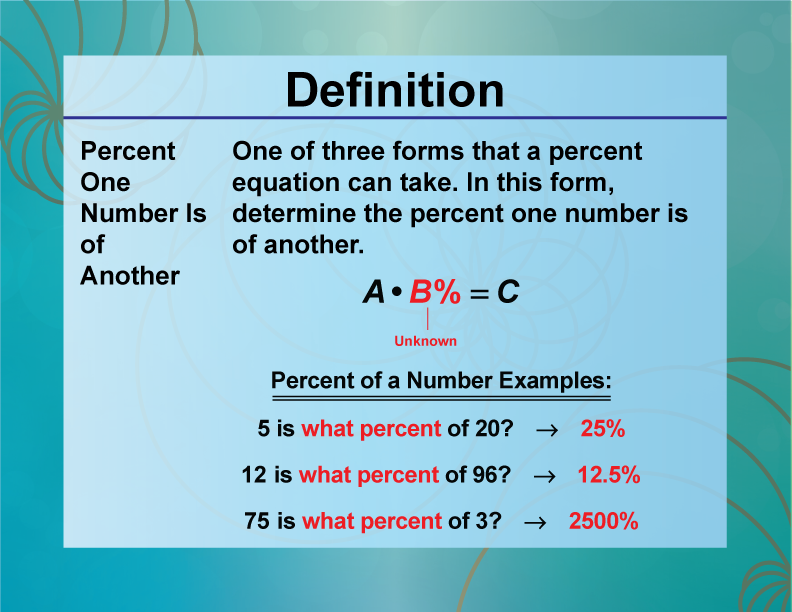
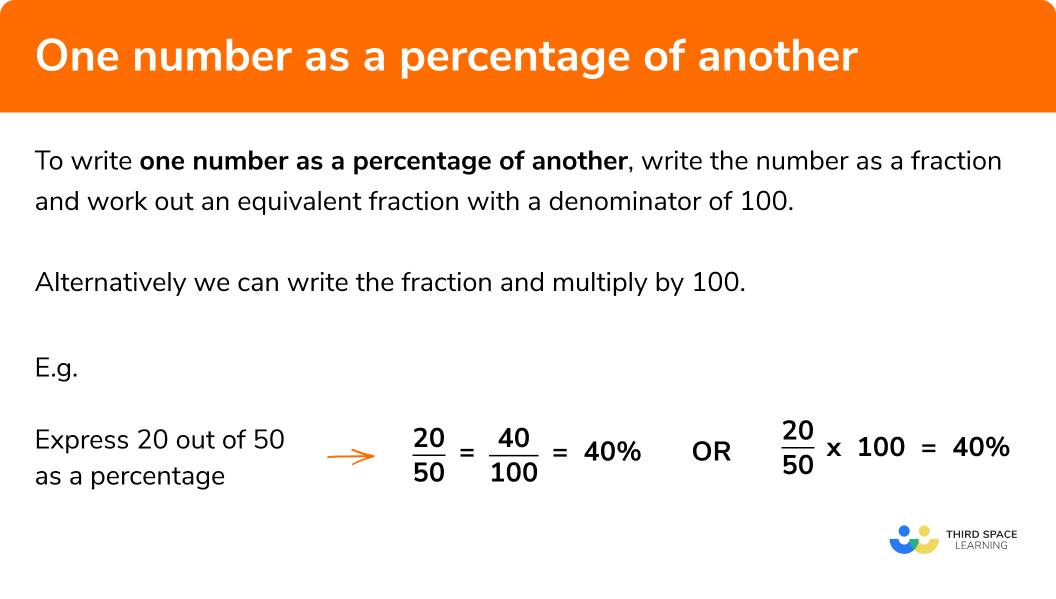
To find what percentage one number is of another: Divide the ‘part’ by the ‘whole’ and multiply by 100.
- Example: What percentage is $50 of $200? ($50 / $200) * 100 = 25%.
-
To find the whole when a percentage is known: Divide the ‘part’ by the percentage (expressed as a decimal).
- Example: If $50 is 25% of a number, what is the number? $50 / 0.25 = $200.
These three variations cover the vast majority of percentage problems encountered in personal and business finance.
Tools and Techniques
While mental math can handle simple calculations, for more complex scenarios, leveraging tools is essential:
-
Calculators: Basic calculators have a ‘%’ button, but understanding how it works (or if it works as expected) is important.
-
Spreadsheets (Excel, Google Sheets): These are invaluable. You can input formulas (e.g.,
=A1/B1*100) and instantly see results, making budgeting, financial modeling, and investment tracking highly efficient. -
Online Percentage Calculators: Many websites offer free tools for specific percentage problems.
Developing the habit of using these tools effectively for financial planning and analysis will significantly enhance your financial literacy.
Avoiding Common Pitfalls
Even with the right tools, misinterpreting percentages can lead to costly errors:
-
Percentage Points vs. Percentage Change: A common error is confusing a change in “percentage points” with a “percentage change.” If an interest rate goes from 5% to 7%, that’s a 2 percentage point increase. However, it’s a (7-5)/5 * 100 = 40% increase in the interest rate itself. This distinction is crucial in financial reporting.
-
The Base Value Trap: Be mindful of the base number against which a percentage is calculated. If an asset drops by 50% and then rises by 50%, it does not return to its original value. A $100 asset drops to $50 (50% down), then rises by 50% of $50, which is $25, bringing it to $75. The base for the second calculation changed, leading to a different outcome.
The Psychological Edge of Percentage Literacy
Beyond the cold hard numbers, a strong understanding of percentages offers a significant psychological advantage in financial matters.
Informed Decision-Making
When you grasp percentages, you’re empowered to critically evaluate financial products, marketing claims, and economic news. You can discern whether a “limited time 30% off” offer is truly a good deal given your needs and budget, or if a promised “10% average annual return” aligns with realistic expectations and associated risks. This literacy reduces susceptibility to misleading statistics and overly aggressive sales tactics, fostering a sense of control and confidence in financial negotiations.
Building Financial Confidence
The ability to confidently interpret and apply percentage calculations alleviates the anxiety often associated with complex financial topics. It transforms daunting figures into manageable insights, making personal budgeting less intimidating, investment strategies more comprehensible, and economic news more relevant. This confidence translates into a proactive approach to financial planning, debt management, and wealth accumulation, ultimately leading to a more secure and prosperous financial future.
Conclusion
The seemingly simple question, “what percentage of a number is a number?”, underpins nearly every facet of the financial world. From managing daily expenses and tackling debt to building wealth through astute investments and steering a successful business, percentages are the indispensable tools that provide clarity, facilitate comparison, and enable informed decision-making. They translate raw data into actionable insights, revealing the true cost of borrowing, the real growth of an investment, and the genuine profitability of an enterprise.
In an increasingly complex financial landscape, a deep understanding of percentage mechanics is no longer just a mathematical nicety; it is a fundamental requirement for financial literacy and empowerment. By embracing this core concept, individuals and businesses can navigate financial challenges with greater confidence, seize opportunities more effectively, and ultimately secure their economic well-being. Financial literacy, rooted in mastering percentages, is not merely knowledge; it is power.
aViewFromTheCave is a participant in the Amazon Services LLC Associates Program, an affiliate advertising program designed to provide a means for sites to earn advertising fees by advertising and linking to Amazon.com. Amazon, the Amazon logo, AmazonSupply, and the AmazonSupply logo are trademarks of Amazon.com, Inc. or its affiliates. As an Amazon Associate we earn affiliate commissions from qualifying purchases.