
In the dynamic world of finance, numbers tell a story. Whether you’re tracking your personal investments, analyzing business performance, or simply monitoring the growth of your side hustle, understanding how to quantify change is paramount. One of the most fundamental and universally applied metrics for this is the “percentage of increase.” It transforms raw numerical shifts into a relatable and comparable metric, allowing you to gauge growth, assess performance, and make informed financial decisions.
Beyond a simple curiosity, calculating the percentage of increase is a critical skill for anyone managing money. It helps you answer questions like: “How much did my stock portfolio grow this quarter?” “By what percentage did my online income increase last month?” or “How much have my business revenues expanded year-over-year?” Without this insight, you’re merely looking at figures without understanding their true significance in the broader financial landscape.
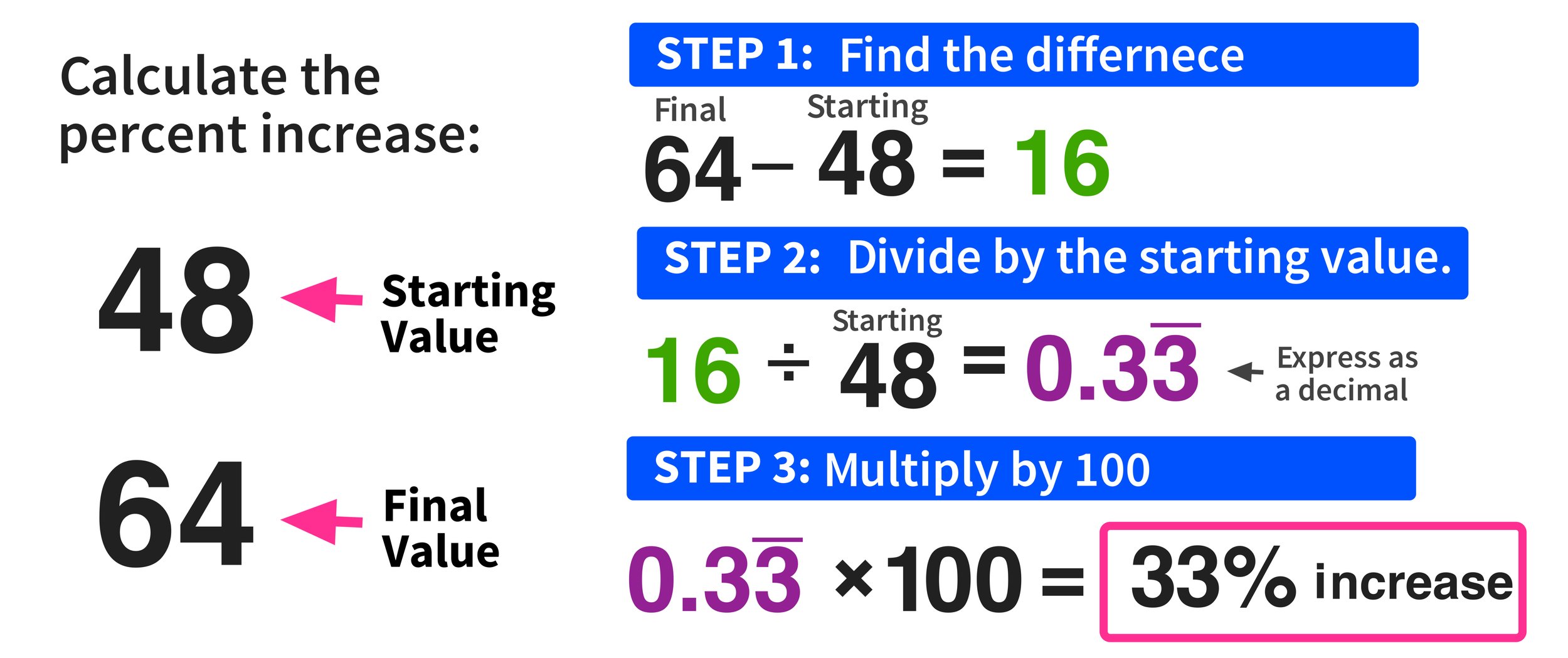
This guide will demystify the process, providing a clear, step-by-step approach to calculating percentage increase, alongside practical applications within personal finance, investing, and business.
Understanding Percentage Increase: A Financial Imperative
Before diving into the mechanics, it’s crucial to grasp what percentage increase represents and why it holds such weight in financial analysis. It’s more than just arithmetic; it’s a window into growth, efficiency, and future potential.
What is Percentage Increase?
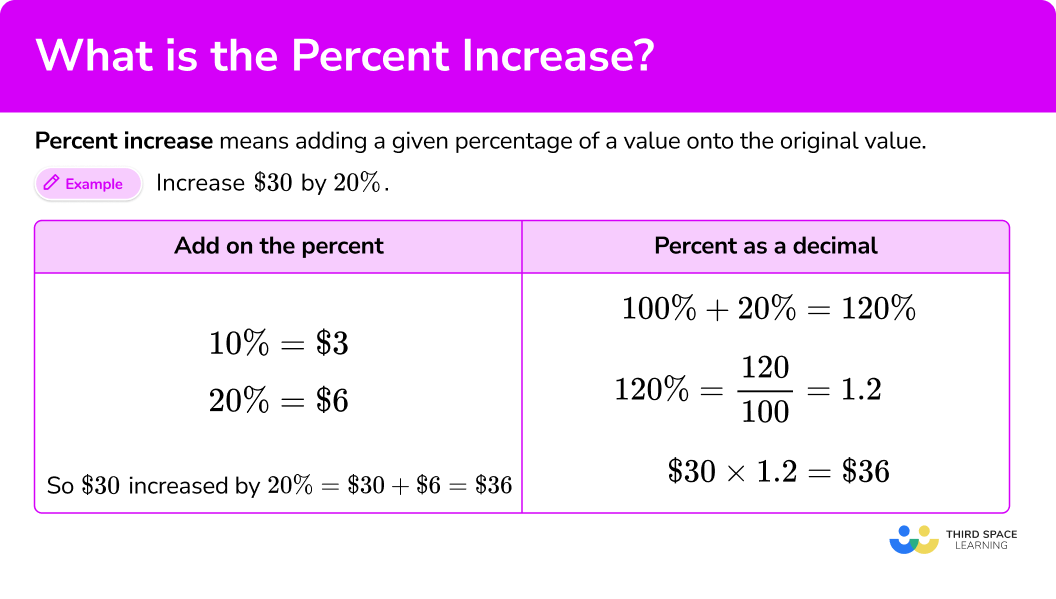
At its core, a percentage increase measures the proportional change between an initial value and a final value when the final value is greater than the initial value. It expresses this change as a fraction of the original amount, multiplied by 100 to convert it into a percentage. This standardization allows for easy comparison across different scales and timeframes, making it an invaluable tool for financial literacy. For instance, knowing your income increased by 5% tells you more about your purchasing power growth than just knowing it went up by $2,000, especially if you want to compare it to inflation or another person’s income growth.
Why It Matters in Personal Finance
For individuals, understanding percentage increase is foundational to building financial security and achieving monetary goals. It allows you to:
-
Track Wealth Growth: Monitor the performance of your savings accounts, investment portfolios, or real estate assets over time. A 7% annual increase in your investment portfolio can significantly outperform inflation, helping your money grow in real terms.
-
Evaluate Income Growth: Assess salary raises or the growth of your freelance income against inflation or cost of living increases. A 3% raise might sound good, but if inflation is 5%, your real income has actually decreased.
-
Monitor Expense Creep: Identify how much certain expenditures have risen year-over-year. Noticing that your utility bill increased by 15% might prompt you to investigate energy-saving measures.
-
Measure Debt Reduction Progress: If you’re tackling credit card debt, seeing a 20% reduction in your principal balance provides a powerful psychological boost and validates your repayment strategy.
Why It Matters in Business and Investing
In the realms of business and investing, percentage increase transcends mere tracking to become a strategic tool for decision-making and performance evaluation.
-
Business Growth Analysis: Businesses constantly monitor revenue growth, profit margin increases, customer acquisition rates, and market share expansion. A 10% increase in quarterly sales can signal strong market demand or effective marketing strategies.
-
Investment Performance: Investors rely heavily on percentage increase to gauge the returns on their stocks, bonds, mutual funds, or other assets. A 12% return on a stock portfolio versus a 5% return on a bond fund clearly indicates which asset class has performed better in a given period.
-
Economic Indicators: Macroeconomic analysis frequently uses percentage increases for GDP growth, inflation rates, employment figures, and interest rate changes, all of which impact business and investment strategies.
-
Budgeting and Forecasting: Businesses use historical percentage increases to forecast future sales, expenses, and profits, informing budget allocations and strategic planning.
The Fundamental Formula: Step-by-Step Calculation
The good news is that calculating the percentage of increase is straightforward. It requires only two numbers: an original (or starting) value and a new (or ending) value.
Identifying Your Starting and Ending Values
This is the critical first step. Clearly define what your “original number” is and what your “new number” is. The original number is always the baseline from which the increase is measured. The new number is the value after the increase has occurred.
- Example: If your investment portfolio was worth $50,000 last year and is now worth $55,000, then $50,000 is your original number, and $55,000 is your new number.
Step 1: Calculate the Absolute Increase
Subtract the original number from the new number. This will give you the absolute amount of the increase.
-
Formula:
Absolute Increase = New Number - Original Number -
Using our example:
$55,000 (New) - $50,000 (Original) = $5,000
Step 2: Divide by the Original Number
Take the absolute increase you calculated in Step 1 and divide it by the original number. This will give you a decimal representing the proportional increase.
-
Formula:
Proportional Increase (Decimal) = Absolute Increase / Original Number -
Using our example:
$5,000 / $50,000 = 0.10
Step 3: Convert to a Percentage
Finally, multiply the decimal result from Step 2 by 100. This converts the decimal into a percentage.
-
Formula:
Percentage Increase = Proportional Increase (Decimal) * 100 -
Using our example:
0.10 * 100 = 10%
So, your investment portfolio increased by 10%.
Practical Example: Investment Growth
Let’s walk through another real-world scenario.
- Scenario: You started an online side hustle selling handmade crafts. In your first month (Original), you made $300. In your second month (New), you made $450. What is the percentage increase in your income?
-
Original Number: $300
-
New Number: $450
-
Step 1 (Absolute Increase):
$450 - $300 = $150 -
Step 2 (Divide by Original):
$150 / $300 = 0.5 -
Step 3 (Convert to Percentage):
0.5 * 100 = 50%
Your online income from handmade crafts increased by a remarkable 50% from the first month to the second!
Real-World Applications Across the Money Spectrum
The versatility of the percentage increase calculation makes it indispensable across various facets of personal and business finance.
Personal Finance: Tracking Your Wealth and Expenses
For individuals, regularly applying this calculation provides clarity and control over their financial standing.
-
Salary Increases: If your annual salary goes from $60,000 to $63,000, your percentage increase is ( ($63,000 – $60,000) / $60,000 ) * 100 = 5%. This helps you understand if your pay is keeping pace with inflation or exceeding it.
-
Investment Portfolio Growth: As demonstrated, tracking your portfolio’s growth allows you to assess the effectiveness of your investment strategy and compare it against benchmarks or other investments.
-
Expense Creep: Suppose your monthly grocery bill was $400 last year and is now $460. The increase is ( ($460 – $400) / $400 ) * 100 = 15%. This significant jump might prompt you to re-evaluate your shopping habits or look for more affordable alternatives.
-
Debt Reduction Progress: If you start with a credit card balance of $5,000 and reduce it to $4,000, you’ve reduced it by ( ($5,000 – $4,000) / $5,000 ) * 100 = 20% (if viewed as a percentage reduction from the original). However, if you’re tracking progress from $4,000 to $5,000, it’s a 25% increase in debt. It’s crucial to frame these numbers correctly depending on what you are measuring.
Investing: Gauging Returns and Performance
In investing, percentage increase is the lingua franca for performance measurement.
-
Stock Performance: A stock purchased at $100 per share that rises to $125 per share has seen a ( ($125 – $100) / $100 ) * 100 = 25% increase. This is the capital appreciation.
-
Mutual Fund Growth: Investment statements often present returns as percentage increases over various periods (e.g., 1-year, 5-year, inception). This helps investors compare funds and understand their compound growth.
-
Real Estate Appreciation: If you bought a property for $300,000 and it’s appraised at $345,000 five years later, its value has increased by ( ($345,000 – $300,000) / $300,000 ) * 100 = 15%.
Business Finance: Monitoring Growth and Profitability
Businesses, from small startups to multinational corporations, are acutely focused on growth metrics expressed as percentages.
-
Revenue Growth: A key indicator of a business’s health. If a business’s annual revenue grows from $1 million to $1.2 million, it’s a ( ($1.2M – $1M) / $1M ) * 100 = 20% increase.
-
Profit Margin Improvements: If net profit goes from $100,000 to $110,000, that’s a 10% increase, indicating improved operational efficiency or increased sales volume.
-
Customer Acquisition Increase: Tracking the percentage increase in new customers (e.g., from 500 to 750 new customers, a 50% increase) helps evaluate marketing and sales effectiveness.
-
Side Hustle Expansion: For online income generation, whether it’s through e-commerce, content creation, or consulting, monitoring monthly or quarterly percentage increases in earnings is vital for scaling and setting future targets. A side hustle that grows its income by 10% month-over-month shows strong potential.
Advanced Considerations and Common Pitfalls
While the calculation is simple, interpreting percentage increase in a financial context requires nuance.
The Impact of Compounding (for investments)
When dealing with investments over multiple periods, the concept of compounding comes into play. A 10% increase year over year isn’t just an additive process; it’s exponential. The gain from year one is added to the principal, and then year two’s 10% gain is calculated on this larger sum. Understanding this is crucial for long-term wealth building, as small percentage increases can lead to significant wealth accumulation over time.
Annualized Growth vs. Period-Specific Growth
Be mindful of the timeframe. A 5% increase in a single month is very different from a 5% increase over a year. To compare apples to apples, it’s often necessary to annualize monthly or quarterly growth rates. For example, a 1% monthly increase, if consistently compounded, translates to more than a 12% annual increase (roughly 12.68% due to compounding).
The Misleading Nature of Small Base Numbers
A common pitfall is misinterpreting percentage increases from very small base numbers. If your side hustle goes from $10 in revenue to $100, that’s a massive 900% increase! While impressive, it doesn’t represent the same absolute growth as a business going from $1 million to $10 million (which is still a 900% increase, but on a dramatically larger scale). Always consider the absolute numbers alongside the percentages for a complete picture.
Percentage Decrease vs. Percentage Increase
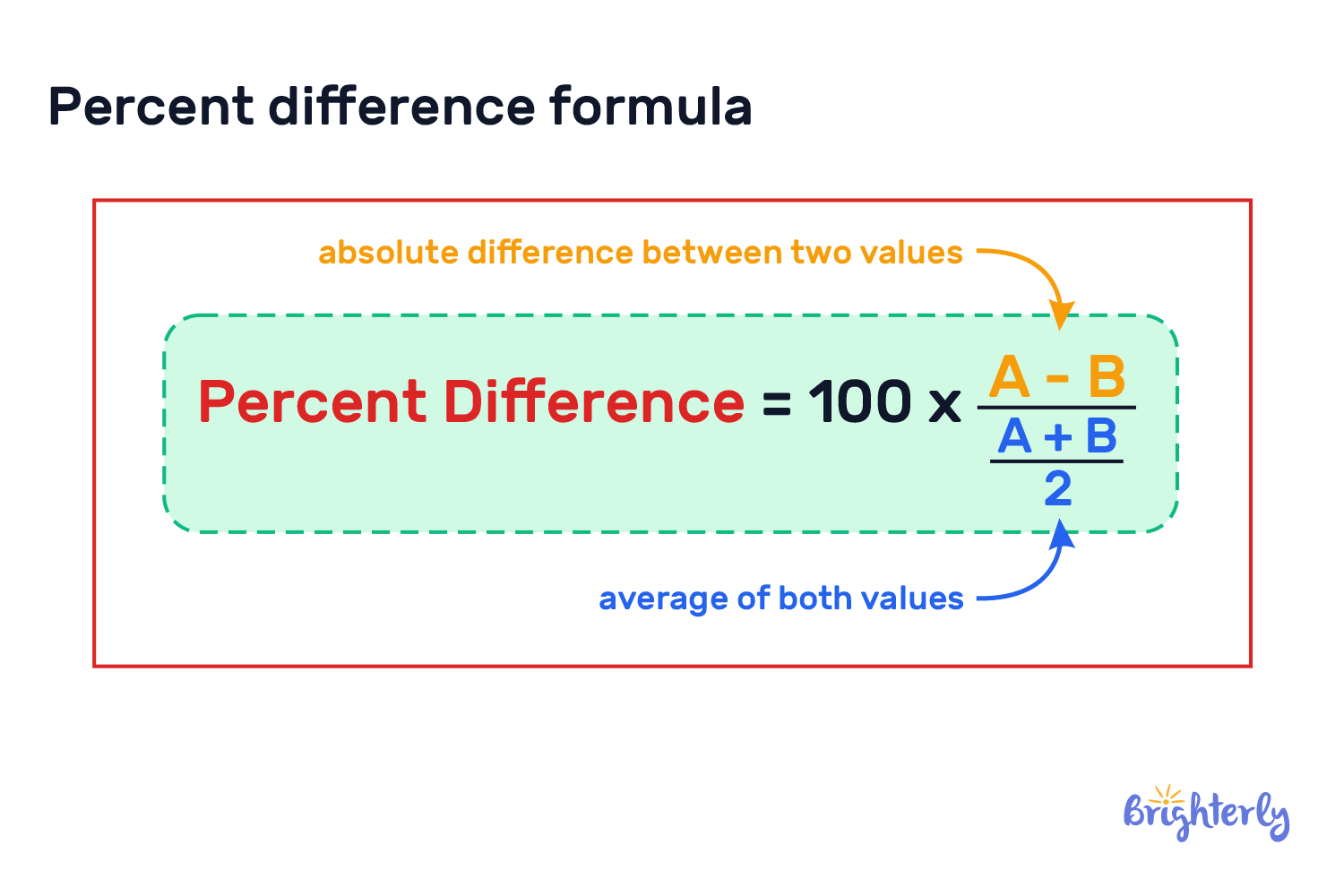
It’s important to distinguish between percentage increase and percentage decrease. If a number goes down, you’re calculating a percentage decrease. The formula is similar, but the “absolute change” will be Original Number - New Number, and the result is still divided by the original number. For instance, if your stock drops from $100 to $80, it’s a ( ($100 – $80) / $100 ) * 100 = 20% decrease. Note that an X% decrease followed by an X% increase does not bring you back to the original number. A 20% decrease from $100 takes you to $80. A 20% increase from $80 takes you to $96, not $100.
Leveraging Financial Tools for Seamless Calculations
While manual calculation is essential for understanding the concept, financial tools can automate the process, especially when dealing with large datasets or frequent analyses.
Spreadsheets (Excel, Google Sheets)
Spreadsheets are perhaps the most powerful and accessible tools for financial calculations. They allow you to set up formulas once and apply them to thousands of data points.
-
Example Formula: If your original number is in cell A2 and your new number is in cell B2, the formula for percentage increase would be
=(B2-A2)/A2(formatted as a percentage). This makes tracking monthly revenue growth or investment performance incredibly efficient. -
Scenario Analysis: Spreadsheets also enable “what-if” scenarios, where you can quickly see the percentage increase if variables change.
Online Calculators and Financial Software
Numerous online percentage increase calculators are available for quick, one-off calculations. Simply input your original and new numbers, and they instantly provide the percentage. Dedicated financial software, budgeting apps, and investment platforms often have built-in calculators or display percentage changes as part of their dashboards, streamlining financial analysis. These tools are invaluable for personal finance management, allowing users to effortlessly track their net worth growth, spending increases, or investment returns without manual computation.
The Value of Manual Checks
Even with advanced tools, understanding the underlying formula and occasionally performing a manual check is beneficial. It reinforces your financial literacy, helps you identify potential errors in data entry or software glitches, and builds confidence in your financial analyses. Being able to quickly estimate a percentage increase in your head or on paper gives you an intuitive grasp of your financial situation, empowering you to make faster and more confident decisions.
In conclusion, the ability to find the percentage of increase between two numbers is not just an academic exercise; it’s a fundamental financial superpower. It empowers individuals to take control of their personal finances, allows investors to evaluate performance with precision, and provides businesses with critical insights for growth and strategy. By mastering this simple yet profound calculation, you gain a clearer lens through which to view your financial journey, making every number tell a more meaningful story.
aViewFromTheCave is a participant in the Amazon Services LLC Associates Program, an affiliate advertising program designed to provide a means for sites to earn advertising fees by advertising and linking to Amazon.com. Amazon, the Amazon logo, AmazonSupply, and the AmazonSupply logo are trademarks of Amazon.com, Inc. or its affiliates. As an Amazon Associate we earn affiliate commissions from qualifying purchases.