
Understanding your savings percentage is more than just crunching numbers; it’s about gaining a profound insight into your financial habits, progress, and trajectory toward future goals. In an increasingly complex financial landscape, a clear grasp of this metric empowers individuals to make informed decisions, whether they’re planning for retirement, a down payment on a home, or simply building a robust emergency fund. This article will demystify the process of calculating your savings percentage, explore its significance, and provide practical strategies for both measuring and improving it. By the end, you’ll not only know how to calculate this vital figure but also how to leverage it as a cornerstone of your personal financial strategy.

The Core Concept: What is Your Savings Rate?
At its heart, your savings rate is a straightforward ratio that indicates how much of your income you are setting aside for future use, rather than spending. It’s a powerful indicator of your financial discipline and your capacity to build wealth over time. While the term might sound academic, its application is profoundly practical, offering a quantifiable measure of your financial health.
Defining Savings and Income
Before diving into calculations, it’s crucial to establish clear definitions for “savings” and “income.” Without a consistent understanding, your percentage can become skewed and less useful.
Income typically refers to your net income – the amount of money you actually receive after taxes, mandatory deductions (like health insurance premiums), and pre-tax retirement contributions (like 401(k) or 403(b) contributions, as these are often considered a form of saving). Some financial experts prefer to use gross income for a broader view, especially when including employer contributions or analyzing the impact of pre-tax deductions. However, for a personal, actionable savings rate, net income (take-home pay) is often the most practical starting point as it reflects the money you have available to spend or save each month.
Savings encompass any money you set aside that increases your net worth. This can include:
-
Contributions to a savings account (high-yield savings, money market).
-
Investments in retirement accounts (IRA, Roth IRA, 401(k) beyond pre-tax deductions if you’re using net income, 403(b)).
-
Contributions to taxable brokerage accounts.
-
Payments towards the principal of a mortgage (equity buildup, though this is sometimes debated as “liquid” savings).
-
Down payments for major purchases (home, car).
-
Contributions to health savings accounts (HSAs) or flexible spending accounts (FSAs) if they are truly saved and not immediately spent on medical expenses.
-
Paying down consumer debt (credit cards, personal loans) can also be considered a form of “savings” in the sense that it improves your net worth by reducing liabilities, though it’s distinct from accumulating liquid assets. For simplicity, most people focus on cash and investment contributions first.
Why the Savings Rate Matters
The savings rate is more than just a number; it’s a compass pointing towards your financial future. A higher savings rate generally correlates with a shorter path to financial independence and greater financial security. It provides:
-
A Measure of Progress: It allows you to track your financial health over time and see if you’re moving closer to your goals.
-
Clarity on Spending Habits: A low savings rate might highlight excessive spending, prompting a review of your budget.
-
Foundation for Goal Setting: Knowing your current rate helps you set realistic and ambitious financial goals, from retirement planning to major purchases.
-
Emergency Preparedness: A consistent savings rate builds your emergency fund, providing a crucial buffer against unforeseen expenses.
-
Financial Freedom Indicator: For those pursuing financial independence, the savings rate is often the most critical metric, directly influencing how quickly one can accumulate sufficient assets to live off investment returns.
Step-by-Step Guide to Calculating Your Savings Percentage
Calculating your savings percentage doesn’t require complex software or a finance degree. With a few pieces of information and a simple formula, you can pinpoint this crucial metric. The key is consistency and accuracy in gathering your data.
Gathering Your Financial Data
The first step is to collect all relevant financial information for the period you wish to analyze (e.g., a month, a quarter, or a year). This typically includes:
-
Income Statements: Pay stubs, bank statements showing direct deposits, or income reports if you’re self-employed. Make sure to differentiate between gross and net income.
-
Savings Contributions: Bank statements showing transfers to savings accounts, investment account statements detailing contributions to 401(k)s, IRAs, brokerage accounts, HSAs, etc.
-
Debt Repayments: Statements for credit cards, personal loans, or student loans, particularly noting any extra principal payments.
It’s often easiest to start with a monthly calculation, as most people receive their income and manage expenses on a monthly cycle.
The Basic Calculation Formula
Once you have your figures, the formula is straightforward:
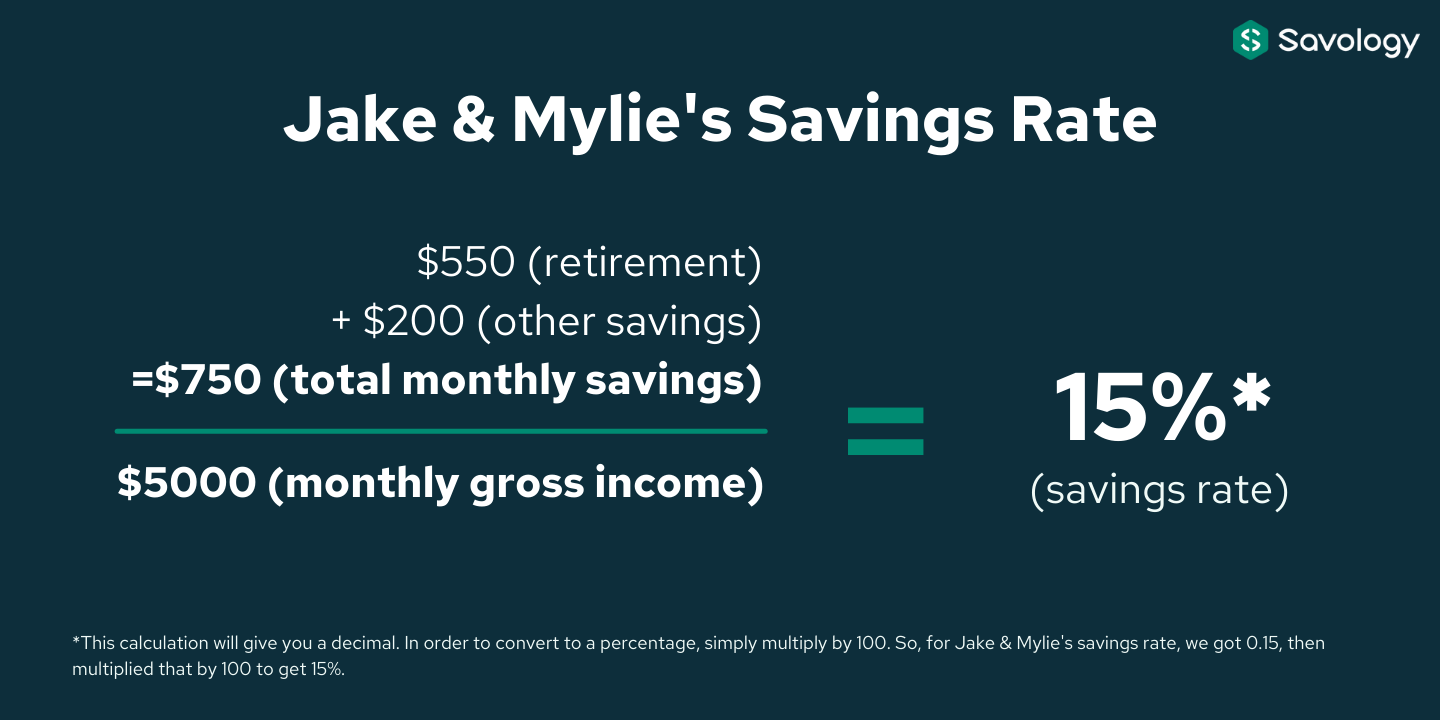
Savings Percentage = (Total Monthly Savings / Total Monthly Income) x 100
Let’s break it down with an example:
-
Total Monthly Income (Net): $4,000 (after taxes and pre-tax deductions)
-
Monthly Savings:
-
$300 to a high-yield savings account
-
$200 to an IRA
-
$100 extra principal payment on student loan
-
Total Monthly Savings = $300 + $200 + $100 = $600
-
Savings Percentage = ($600 / $4,000) x 100 = 15%
This means you are saving 15% of your net income each month.
Handling Irregular Income and Expenses
Many individuals don’t have a perfectly stable income or consistent monthly expenses. Freelancers, commission-based earners, or those with seasonal work might see their income fluctuate. Similarly, expenses like annual insurance premiums or quarterly tax payments can complicate a simple monthly calculation.
For irregular income, it’s often more accurate to calculate your savings rate over a longer period, such as a quarter or a year. This averages out the peaks and troughs. Alternatively, you can use an average monthly income based on the last several months. For irregular expenses, you might want to budget for these by setting aside money monthly, so they effectively become a consistent “saving” towards a future expense. The goal is to get a realistic, sustainable average that truly reflects your financial behavior.
What Counts as “Savings”? (Clarifying investments, debt repayment, etc.)
While the basic definition of savings is “money set aside that increases your net worth,” nuances exist.
-
Investments: Contributions to 401(k)s, IRAs, Roth IRAs, HSAs, and taxable brokerage accounts are unequivocally savings. They are assets accumulating for your future.
-
Emergency Fund Contributions: Money directly deposited into a dedicated emergency fund is also clear savings.
-
Down Payment Funds: Money saved specifically for a large purchase (house, car) is a form of goal-oriented saving.
-
Debt Repayment (Principal): This is where it gets a bit nuanced. Paying down high-interest consumer debt (credit cards, personal loans) is often considered a critical “saving” activity because it frees up future cash flow and significantly improves your net worth by reducing liabilities. For mortgage principal, it builds equity, which is a form of wealth. While it doesn’t immediately put cash in your pocket, it reduces your long-term obligations and frees up capital in the future. Many financial experts include extra principal payments as part of their savings rate calculation due to their direct impact on net worth. However, paying interest on debt is not saving.
The key is to be consistent with what you include. If you count principal debt payments as savings, always count them. If you focus purely on liquid assets, stick to that. The most important thing is that the definition serves your financial goals and provides an accurate picture of your progress.
Beyond the Basics: Advanced Considerations for Your Savings Rate
While the fundamental formula provides a solid starting point, a deeper dive into your savings percentage can yield even more powerful insights. Factors like whether to use net or gross income, the role of employer contributions, and the impact of debt repayment can significantly alter your perceived savings rate.
Net vs. Gross Income: Which to Use?
The choice between net and gross income largely depends on your objective.
-
Net Income (Take-Home Pay): This is generally preferred for a practical, actionable savings rate. It reflects the money you actually have available to spend or save. It’s excellent for assessing your current spending habits and how much you control your savings rate from your disposable income. Most people find this easier to track and relate to their monthly budget.
-
Gross Income (Before Taxes & Deductions): Using gross income offers a more holistic view of your entire compensation package. It’s particularly useful if you want to include pre-tax retirement contributions (like 401(k) deductions taken directly from your gross pay) as part of your savings calculation. It can provide a more impressive (and arguably more accurate) percentage if you have significant pre-tax savings. However, it can also be misleading if a large portion of your gross income goes to unavoidable taxes, which aren’t truly “available” for saving in the same way.
The best approach might be to calculate both, or to choose the method that best aligns with your financial philosophy. For most personal finance tracking, net income is simpler and more motivating.

Including Employer Contributions
Employer contributions to your retirement accounts (e.g., 401(k) match, profit-sharing) are a significant part of your compensation and an undeniable form of saving. However, they don’t come directly out of your paycheck and aren’t “chosen” by you in the same way your personal contributions are.
Should you include them?
-
Yes, for a comprehensive view of wealth building: If your goal is to understand your total wealth accumulation rate, including employer contributions makes sense. These are assets growing for your future.
-
No, for personal discipline tracking: If you want to strictly measure your personal effort and sacrifice, you might exclude them. This helps you focus on what you can directly control from your take-home pay.
If you choose to include them, add the employer contribution amount to your “Total Monthly Savings” figure, and if you’re using gross income, your “Total Monthly Income” would remain gross. If you’re using net income, you’d add the employer contribution to your “Total Monthly Savings” and simply use your net income as the denominator, which will result in a higher percentage, reflecting the “free money” you’re getting.
The Impact of Debt Repayment
As discussed, paying down principal on debt, especially high-interest consumer debt, is a powerful move that improves your net worth. But how you include it in your savings rate calculation can vary.
-
Prioritizing Debt: Some financial experts advocate for focusing exclusively on aggressive debt repayment before heavily investing in other areas, viewing debt elimination as a critical form of “saving” by reducing future interest payments.
-
Hybrid Approach: A common strategy is to include extra principal payments (beyond the minimum) as part of your savings. This provides a balanced view, acknowledging the benefit of debt reduction while still tracking asset accumulation.
-
Separation: Others prefer to track debt repayment separately from traditional savings and investments, arguing that while both are good, they represent different financial actions.
Again, consistency is key. Decide how you want to view debt repayment in the context of your savings rate and stick with it. The most important thing is that you are actively reducing debt.
Tracking Your Savings Rate Over Time
Calculating your savings rate once is a good start, but tracking it consistently over time is where its true power lies.
-
Monthly Review: Revisit your calculation monthly. This allows you to spot trends, identify periods of overspending, and see the immediate impact of changes to your income or expenses.
-
Annual Review: An annual review provides a broader perspective, smoothing out monthly fluctuations and giving you a clear picture of your year-on-year progress.
-
Tools and Automation: Utilize budgeting apps, spreadsheets, or financial tracking software (like Mint, YNAB, Personal Capital) that can often automate the aggregation of your income and savings, making consistent tracking much easier.
Consistent tracking transforms your savings rate from a static number into a dynamic tool for managing and improving your financial life.
Interpreting and Improving Your Savings Percentage
Once you’ve mastered the calculation, the next logical step is to understand what your savings percentage means and how you can work to improve it. This involves benchmarking, identifying actionable strategies, and avoiding common pitfalls.
What’s a Good Savings Rate? (Benchmarks and Personal Goals)
There’s no universally “perfect” savings rate, as it largely depends on individual circumstances, income levels, and financial goals. However, general benchmarks and rules of thumb can provide guidance:
-
The 10-15% Rule: Many financial planners suggest aiming for at least 10-15% of your gross income for retirement. If you’re using net income, this figure might be slightly higher to achieve similar results.
-
The “Financial Independence” Rate: For those aspiring to early retirement or financial independence, a much higher savings rate (25-50% or even more) is often recommended. This aggressive approach dramatically shortens the time required to accumulate sufficient investment capital.
-
Starting Small, Growing Big: If your current rate is low, don’t be discouraged. Even saving 1% more than you currently do is progress. The goal is continuous improvement.
Ultimately, a “good” savings rate is one that allows you to comfortably meet your financial goals within your desired timeframe. This might mean 5% if you’re just starting, or 30% if you’re catching up for retirement.
Strategies to Boost Your Savings Percentage
Improving your savings rate boils down to two core levers: increasing income and decreasing expenses.
-
Increase Income:
-
Negotiate a Raise: Regularly assess your market value and advocate for appropriate compensation.
-
Side Hustle: Explore part-time work, freelancing, or starting a small business to generate additional income.
-
Sell Unused Items: Decluttering can bring in a quick cash injection for savings.
-
-
Decrease Expenses:
-
Budgeting: Create a detailed budget to identify where your money is going and pinpoint areas for reduction.
-
Automate Savings: Set up automatic transfers from your checking to your savings or investment accounts immediately after payday. This “pay yourself first” strategy is incredibly effective.
-
Reduce Discretionary Spending: Cut back on non-essential items like dining out, entertainment, subscriptions, or impulse purchases.
-
Optimize Fixed Costs: Review major expenses like housing, transportation, and insurance. Can you refinance your mortgage, find a cheaper car insurance policy, or consider public transport?
-
Meal Prep: Cooking at home significantly reduces food expenses.
-
Shop Smart: Use coupons, sales, and loyalty programs; avoid emotional spending.
-
Even small adjustments can compound over time, making a significant difference to your savings rate.
Common Pitfalls and How to Avoid Them
Even with the best intentions, certain traps can derail your efforts to improve your savings rate.
-
Lifestyle Creep: As your income rises, so do your expenses. Avoid upgrading your lifestyle proportionally with every raise. Instead, save a significant portion of any new income.
-
Inconsistent Tracking: Forgetting to regularly calculate and review your savings rate means you lose sight of your progress and potential problems. Make it a habit.
-
Discouragement: Seeing a low savings rate or encountering setbacks can be discouraging. Remember that financial journeys are marathon, not a sprint. Celebrate small wins and learn from mistakes.
-
Lack of Clear Goals: Without specific financial goals (e.g., “save $10,000 for a down payment in 3 years”), saving can feel aimless. Define your goals to give your savings a purpose.
-
Ignoring High-Interest Debt: If you have high-interest credit card debt, every dollar you put into investments while carrying that debt is a missed opportunity to save more on interest payments. Prioritize high-interest debt repayment.
By being aware of these pitfalls, you can proactively build strategies to navigate them and stay on track with your savings goals.
Leveraging Your Savings Percentage for Financial Freedom
Calculating and improving your savings percentage isn’t an end in itself; it’s a powerful means to an even greater end: achieving financial freedom and security. This metric, when consistently applied, becomes a cornerstone of long-term wealth building.
Connecting Savings Rate to Financial Goals
Your savings percentage is a direct link to how quickly you can achieve your financial aspirations.
-
Retirement Planning: A higher savings rate means you’ll reach your desired retirement nest egg faster, or you can retire earlier. It directly impacts the “financial independence number” and the time horizon to reach it.
-
Major Purchases: Want to buy a house, a new car, or fund a child’s education? Your savings rate dictates how long it will take to accumulate the necessary down payment or investment capital.
-
Emergency Fund: Building a robust emergency fund (3-6 months of living expenses) is made possible and expedited by a consistent and healthy savings rate.
By understanding this connection, you transform saving from a chore into a purposeful act that directly moves you towards your dreams.
The Power of Compound Interest
A high savings rate, combined with disciplined investing, unlocks the unparalleled power of compound interest. Compound interest is “interest on interest”—the earnings on your initial investment plus the accumulated interest from previous periods. The more you save and invest, and the earlier you start, the more time your money has to grow exponentially.
-
Early Start: Even a modest savings rate started early can outperform a much higher rate started later, thanks to compounding.
-
Consistent Contributions: Regular, consistent contributions (fueled by your savings rate) ensure that more capital is put to work, allowing compound interest to work its magic on a larger base.
Your savings rate directly fuels the engine of compound interest, propelling your wealth growth far beyond what simple savings alone could achieve.
Adjusting Your Strategy as Life Changes
Life is dynamic, and so too should be your financial strategy. Your savings rate isn’t set in stone; it should evolve with your circumstances.
-
Life Events: Marriage, children, job changes, divorce, illness, or caring for aging parents can all impact your income and expenses, requiring adjustments to your savings plan.
-
Goal Re-evaluation: As you hit certain milestones or as your priorities shift, re-evaluate your financial goals and, consequently, your desired savings rate. Perhaps you want to accelerate retirement, or maybe you need to temporarily reduce savings to manage a significant expense.
-
Income Growth: As your income grows, strive to save a larger percentage of that increase rather than letting lifestyle creep consume it all. This is a prime opportunity to supercharge your savings rate.
Regularly reviewing and adapting your savings strategy ensures that your financial plan remains relevant, effective, and aligned with your evolving life and ambitions.
In conclusion, the ability to figure your savings percentage is more than a technical skill; it’s a foundational element of financial literacy and empowerment. By consistently tracking this vital metric, understanding its nuances, and actively working to improve it, you lay a solid groundwork for achieving your financial goals and securing a prosperous future.
aViewFromTheCave is a participant in the Amazon Services LLC Associates Program, an affiliate advertising program designed to provide a means for sites to earn advertising fees by advertising and linking to Amazon.com. Amazon, the Amazon logo, AmazonSupply, and the AmazonSupply logo are trademarks of Amazon.com, Inc. or its affiliates. As an Amazon Associate we earn affiliate commissions from qualifying purchases.