
Understanding how to compute interest earned is one of the most vital skills in personal finance and investment management. Whether you are tracking the growth of a basic savings account, evaluating a corporate bond, or projecting the future value of a retirement fund, interest is the engine that drives capital appreciation. At its core, interest is the compensation a borrower pays a lender for the use of money. When you deposit funds into a bank or purchase a debt security, you are the lender, and the interest earned is your profit.
To master your financial trajectory, you must look beyond the simple percentage rates advertised by financial institutions. You need to understand the mechanics of how those rates are applied, the frequency of calculation, and the variables that can either accelerate or erode your earnings over time.
The Fundamental Mechanics: Simple vs. Compound Interest
Before diving into complex financial instruments, it is essential to distinguish between the two primary methods of calculating interest: simple and compound. The difference between these two can result in a discrepancy of thousands, or even millions, of dollars over a long-term investment horizon.
The Simple Interest Formula
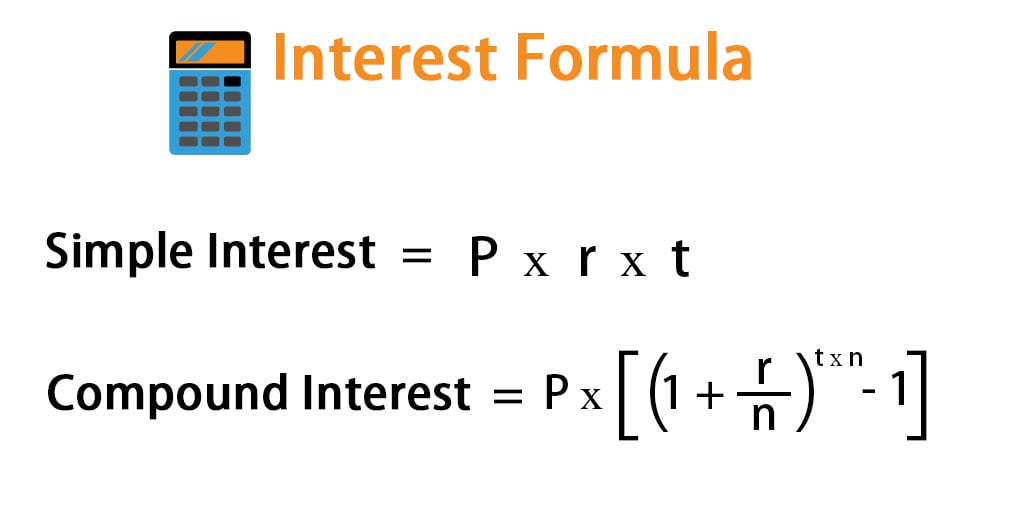
Simple interest is the most straightforward way to calculate earnings. It is calculated only on the principal amount—the original sum of money invested or deposited. It does not account for interest earned in previous periods. The formula for simple interest is:
I = P × r × t
-
I represents the total interest earned.
-
P represents the principal amount (the initial deposit).
-
r represents the annual interest rate (decimal form).
-
t represents the time the money is invested, expressed in years.
For example, if you invest $10,000 in a fixed-term vehicle that pays 5% simple interest per year for three years, the calculation would be:
$10,000 × 0.05 × 3 = $1,500.
At the end of the term, your total balance would be $11,500. Simple interest is most commonly found in short-term personal loans or specific types of bonds where the interest is paid out to the investor rather than reinvested.
The Power of Compounding
Compound interest is often referred to as the “eighth wonder of the world” because it allows your wealth to grow exponentially. Unlike simple interest, compound interest is calculated on the principal plus any interest that has already been accumulated. This means you are essentially earning interest on your interest.
The formula for compound interest is more complex:
A = P(1 + r/n)^{nt}
-
A is the final amount (principal + interest).
-
P is the principal balance.
-
r is the annual interest rate (decimal).
-
n is the number of times interest is compounded per year.
-
t is the number of years the money is invested.
If we take the same $10,000 at a 5% rate for three years but compound it annually (n=1), the result is $11,576.25. The extra $76.25 is the result of interest earning more interest in years two and three. While this may seem like a small difference initially, over 20 or 30 years, the gap between simple and compound interest becomes massive.
Frequency of Compounding
The variable “n” in the compound interest formula is a critical factor in how much you actually earn. Financial institutions may compound interest annually, semi-annually, quarterly, monthly, or even daily. The more frequently interest is compounded, the higher the total return.
For instance, if you have a high-yield savings account that compounds daily (n=365) rather than annually, your effective yield will be slightly higher because your balance grows every single day, and the next day’s interest is calculated on that new, larger balance. When comparing financial products, always look for the compounding frequency to ensure you are getting the most out of your capital.
Applying Interest Calculations to Real-World Financial Products
Knowing the formulas is the first step, but applying them to specific financial instruments requires an understanding of how different products handle interest distributions and maturity dates.
High-Yield Savings and Money Market Accounts
Savings accounts are the most common place where individuals earn interest. Most modern high-yield savings accounts use compound interest, typically compounded daily and credited to the account monthly. Because the rates on these accounts are variable, computing your interest earned over a long period requires tracking the rate changes.
To estimate your monthly earnings on a savings account, you can use a simplified version of the compound formula or divide your annual rate by 12 to get a monthly estimate. For example, if you have $20,000 in an account with a 4.5% APY, you can expect roughly $75 in interest during the first month ($20,000 × 0.045 / 12). If you leave that interest in the account, the next month’s calculation will be based on $20,075.
Certificates of Deposit (CDs)
A Certificate of Deposit is a type of savings account that holds a fixed amount of money for a fixed period of time, such as six months, one year, or five years. In exchange for “locking in” your money, the bank usually offers a higher interest rate than a standard savings account.
Computing interest on a CD is generally predictable because the rate (r) and the time (t) are fixed. However, many CDs offer the choice between having interest paid out periodically (simple interest) or allowing it to compound within the CD. If you choose the compounding option, you must ensure you use the compound interest formula to project your final payout. Additionally, be aware of “Early Withdrawal Penalties,” which can effectively reduce your earned interest to zero (or even eat into your principal) if you access the funds before the maturity date.
Bonds and Fixed-Income Securities
When you buy a bond, you are essentially providing a loan to a government or a corporation. Most bonds pay “coupon” interest, which is typically a fixed simple interest payment made semi-annually.
To compute the interest earned on a bond, you look at the “coupon rate.” If a bond has a par value of $1,000 and a coupon rate of 4%, it will pay $40 in interest per year, usually in two installments of $20. However, the calculation becomes more complex if you buy the bond at a discount or a premium on the secondary market. In these cases, investors look at the “Yield to Maturity” (YTM), which factors in the interest payments plus the capital gain or loss realized when the bond reaches its face value at maturity.
The Critical Distinction Between APR and APY
One of the most confusing aspects of computing interest is the difference between the Annual Percentage Rate (APR) and the Annual Percentage Yield (APY). Financial institutions often use these terms strategically in their marketing.

Understanding APR
APR represents the periodic interest rate multiplied by the number of periods in a year. It does not account for the effect of compounding within that year. APR is the standard for debt, such as credit cards and mortgages, where the lender wants to show a lower number. However, if you are looking at an investment, APR does not tell the whole story of your potential earnings.
The Superiority of APY for Savers
APY, on the other hand, reflects the real rate of return because it includes the impact of compound interest. The formula to convert an interest rate to APY is:
APY = (1 + r/n)^n – 1
If a bank offers a 5% interest rate compounded monthly, the APY is actually 5.116%. This means that for every $100 you deposit, you will earn $5.12 by the end of the year, not $5.00. When computing interest earned for the purpose of comparing different savings or investment options, always use the APY to ensure an “apples-to-apples” comparison. If one bank offers 5% compounded annually and another offers 4.95% compounded daily, the latter might actually be more profitable.
Factors That Impact Your “Net” Interest Earned
Computing the mathematical interest is only half the battle. To understand the true growth of your wealth, you must account for external factors that diminish the purchasing power and the actual liquidity of those earnings.
The Erosion of Inflation
Inflation is the silent killer of interest earnings. If you earn 5% interest on a savings account but inflation is running at 6%, your “real” interest rate is actually -1%. In this scenario, even though your bank balance is increasing, your ability to buy goods and services with that money is decreasing.
The formula for the Real Interest Rate is:
Real Interest Rate ≈ Nominal Interest Rate – Inflation Rate
When computing your long-term financial projections, always use a conservative inflation estimate to adjust your expected interest earnings. This ensures that you are building actual wealth rather than just keeping up with rising prices.
Taxation on Interest Income
In most jurisdictions, interest earned in a standard brokerage or savings account is considered taxable income. It is usually taxed at your marginal income tax rate, which can significantly reduce your take-home earnings.
For example, if you are in a 24% tax bracket and you earn $1,000 in interest, you will owe $240 to the government, leaving you with only $760. To maximize interest earned, many investors utilize tax-advantaged accounts like IRAs or 401(k)s, or invest in municipal bonds, which often offer tax-free interest at the federal (and sometimes state) level.
Fees and Maintenance Charges
Administrative fees can quickly negate the interest earned on small balances. Some accounts charge a monthly maintenance fee unless a minimum balance is maintained. If you have $1,000 in an account earning 1% interest ($10 per year) but you are charged a $5 monthly fee ($60 per year), you are losing money. Always subtract fees from your projected interest earnings to find your net yield.
Strategic Tools for Forecasting and Growth
To manage a portfolio effectively, you should move beyond manual calculations and utilize frameworks and tools that allow for rapid decision-making.
The Rule of 72
The Rule of 72 is a quick, useful shortcut to estimate how long it will take for your money to double at a given fixed annual interest rate. You simply divide 72 by the annual interest rate.
-
At a 6% interest rate, your money will double in 12 years (72 / 6).
-
At a 10% interest rate, your money will double in 7.2 years (72 / 10).
While this is an approximation and works best with compound interest, it is an invaluable mental tool for comparing the long-term impact of different interest rates without needing a calculator.
Leveraging Financial Technology
For more precise calculations, specialized software and spreadsheet functions are the industry standard. In applications like Microsoft Excel or Google Sheets, you can use specific functions to compute interest over complex timelines:
-
=FV(rate, nper, pmt, [pv]): Computes the Future Value of an investment based on periodic, constant payments and a constant interest rate.
-
=IPMT: Calculates the interest payment for a specific period of an investment or loan.
These tools are particularly helpful when you have a fluctuating principal, such as when you are making regular monthly contributions to a savings account or investment fund.
Laddering Strategies
A sophisticated way to manage interest earned is through “laddering.” This is commonly done with CDs or Bonds. Instead of putting all your money into one 5-year CD, you divide the money and buy 1-year, 2-year, 3-year, 4-year, and 5-year CDs.
As each CD matures, you reinvest the proceeds into a new 5-year CD. This strategy provides two benefits: it gives you regular access to liquidity every year, and it allows you to capture higher interest rates if market rates rise, rather than having all your capital locked into a lower-rate long-term vehicle.

Final Summary of Interest Computation
Computing interest earned is not merely an academic exercise; it is the foundation of strategic wealth accumulation. By understanding the nuances between simple and compound interest, recognizing the difference between APR and APY, and accounting for the “wealth-eroders” like taxes and inflation, you can make informed decisions about where to park your capital.
Whether you are using a basic calculator or complex financial modeling software, the goal remains the same: to maximize the “n” (compounding frequency) and the “r” (rate), while giving “t” (time) as much room as possible to work its magic. Financial independence is rarely the result of a single windfall; more often, it is the result of consistently and accurately computing—and capturing—the interest your money can earn for you.
aViewFromTheCave is a participant in the Amazon Services LLC Associates Program, an affiliate advertising program designed to provide a means for sites to earn advertising fees by advertising and linking to Amazon.com. Amazon, the Amazon logo, AmazonSupply, and the AmazonSupply logo are trademarks of Amazon.com, Inc. or its affiliates. As an Amazon Associate we earn affiliate commissions from qualifying purchases.