
One of the most common and critical questions for anyone planning for retirement is, “How much will my 401(k) grow?” This isn’t merely a speculative inquiry; it’s a foundational question that informs your financial planning, helps you gauge your progress towards retirement goals, and empowers you to make smarter investment decisions. Your 401(k) is often the cornerstone of your retirement savings, offering significant tax advantages and the potential for substantial growth over decades. Understanding the mechanics behind its growth, the factors that influence it, and how to estimate its future value can demystify the retirement planning process and provide a clear roadmap to financial security.

The growth of your 401(k) isn’t a fixed, predictable number; rather, it’s a dynamic outcome influenced by a confluence of personal choices, market forces, and the passage of time. While no one can predict the exact future value of your investments, a thorough understanding of the underlying principles allows for informed projections and strategic adjustments. This article will delve into the core components of 401(k) growth, explore the key factors that dictate its trajectory, provide methods for estimating its future value, and outline actionable strategies to maximize its potential, ensuring you’re well-prepared for a comfortable retirement.
The Core Mechanics of 401(k) Growth
At its heart, the growth of a 401(k) is a powerful interplay of consistent savings, strategic investing, and the marvel of compound interest. Each component plays a vital role, fueling your account’s expansion from humble beginnings to a potentially substantial nest egg.
Contributions: Your Fuel for Future Wealth
The most straightforward driver of 401(k) growth is the money you put into it. These contributions come in two primary forms:
-
Employee Contributions: These are the funds you elect to defer from your paycheck into your 401(k) account. You can typically choose between traditional pre-tax contributions (which lower your taxable income now, with taxes paid in retirement) or Roth contributions (where you pay taxes now, and qualified withdrawals in retirement are tax-free). The more you contribute, the larger your base for growth. Financial advisors often recommend contributing at least enough to get your employer match, and ideally, as much as you can comfortably afford, up to the annual IRS limits.
-
Employer Match: This is arguably “free money” and a non-negotiable benefit to take advantage of. Many employers offer to match a certain percentage of your contributions, often up to a specified limit (e.g., 50 cents on the dollar for the first 6% of your salary contributed). Failing to contribute enough to receive the full employer match means leaving guaranteed returns on the table, significantly hindering your 401(k)’s potential growth from day one.
Consistent and increasing contributions are paramount. As your income grows, consider increasing your contribution percentage, even by a small amount each year. This discipline ensures a steady stream of capital is flowing into your retirement account, ready to be put to work.
Investment Returns: The Engine of Compounding
Once your money is in your 401(k), it doesn’t just sit there; it’s invested in various financial instruments. The returns generated by these investments are the primary engine of your account’s growth.
-
Market Performance: The overall health and performance of the financial markets (stocks, bonds, real estate, etc.) directly impact your returns. Historically, diversified portfolios have yielded positive returns over long periods, despite short-term fluctuations.
-
Asset Allocation: This refers to how your investments are distributed across different asset classes (e.g., 70% stocks, 30% bonds). Your allocation should align with your risk tolerance and time horizon. Younger investors with a longer time horizon often opt for a higher percentage in equities, which offer greater growth potential but also higher volatility. As retirement approaches, many shift towards a more conservative allocation with a higher proportion of bonds to preserve capital.
-
Fund Selection: Within your 401(k) plan, you’ll typically choose from a menu of mutual funds, exchange-traded funds (ETFs), or target-date funds. The specific funds you select, their underlying investments, and their performance will directly influence your returns. Diversification across different types of investments within your chosen allocation helps mitigate risk.
The Power of Compounding: Time is Your Greatest Ally
Perhaps the most magical aspect of 401(k) growth is the power of compounding. Compounding occurs when the earnings from your investments are reinvested, generating their own earnings. This creates a snowball effect, where your money grows exponentially over time.
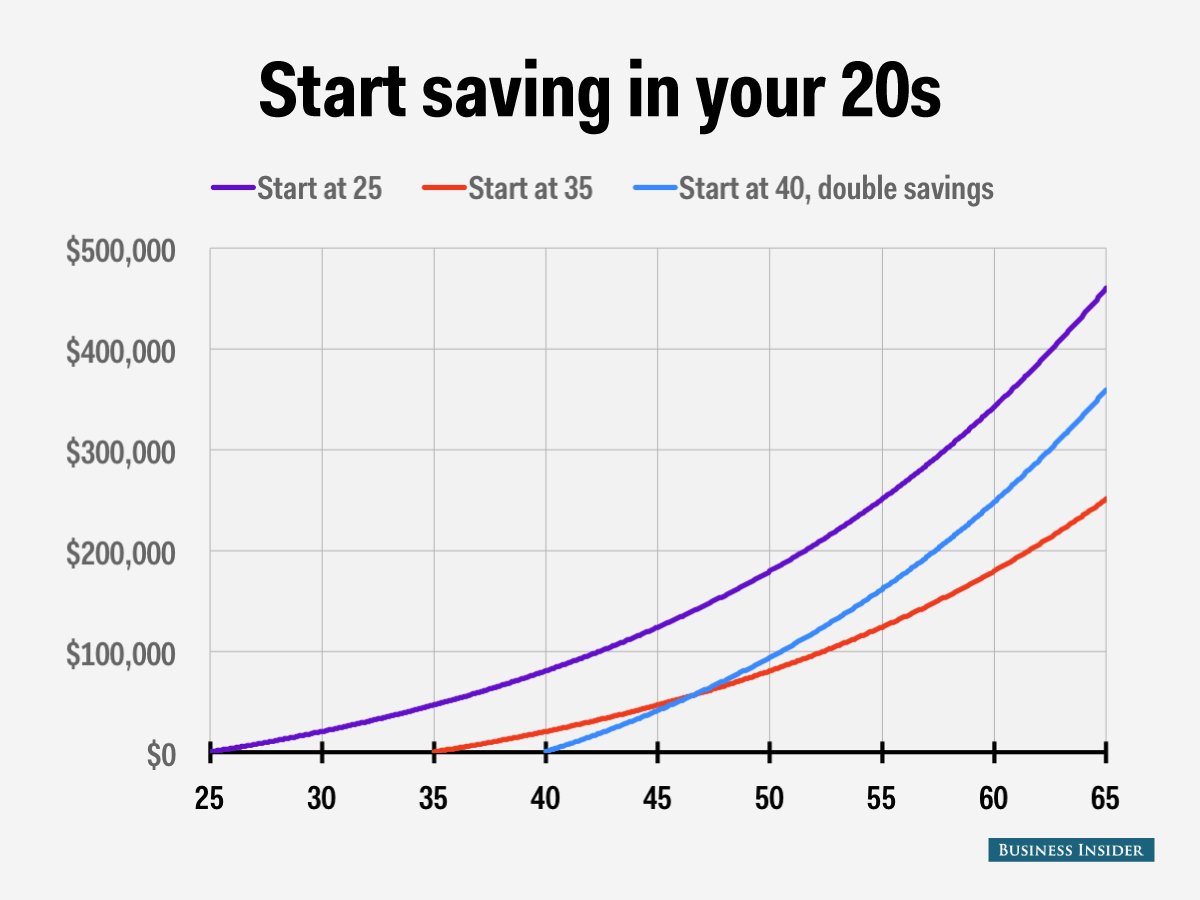
Imagine investing $10,000 at an average annual return of 7%. In the first year, you earn $700. In the second year, you earn 7% on $10,700, and so on. Over decades, this seemingly small difference creates a monumental impact. The earlier you start contributing to your 401(k), the more time your money has to compound, leading to significantly larger sums in retirement. Even small contributions made early in your career can far outpace larger contributions made later on, simply due to the extended period of compounding.
Key Factors Influencing Your 401(k) Trajectory
While the core mechanics provide the framework, several critical factors act as levers, capable of significantly altering the growth trajectory of your 401(k). Understanding and managing these factors is essential for optimizing your retirement savings.
Contribution Rate and Consistency
The amount you consistently contribute is perhaps the single most influential factor within your direct control. Contributing more means you have a larger principal base generating returns and benefiting from compounding. Conversely, inconsistent contributions or periods of stopping contributions can severely impede growth.
-
Maximizing Contributions: Aiming to contribute the maximum allowed by the IRS annually accelerates growth dramatically.
-
Meeting the Employer Match: As discussed, this is non-negotiable “free money” that instantly boosts your returns.
-
Dollar-Cost Averaging: Contributing a fixed amount regularly (e.g., every paycheck) smooths out the impact of market volatility. You buy more shares when prices are low and fewer when prices are high, often leading to a lower average cost per share over time.
Investment Choices and Risk Tolerance
The specific investments you select within your 401(k) plan, and how they align with your personal risk tolerance and time horizon, are crucial.
-
Asset Allocation: A younger investor with 30+ years until retirement can generally afford to take on more risk, often allocating a higher percentage to growth-oriented assets like stocks. As retirement nears, a more conservative approach might be appropriate to protect accumulated capital.
-
Fund Performance: While past performance doesn’t guarantee future results, choosing funds with a solid long-term track record, reasonable expense ratios, and diversification is vital.
-
Actively Managed vs. Index Funds: Many investors opt for low-cost index funds, which aim to replicate the performance of a market index (like the S&P 500) rather than trying to beat it. These often have lower fees and historically have outperformed many actively managed funds over the long term.
Fees and Expenses: The Silent Wealth Eroder
Often overlooked, the fees associated with your 401(k) plan and the funds you invest in can significantly erode your returns over decades.
-
Expense Ratios: This is the annual percentage of your investment that goes towards covering the fund’s operating expenses. A difference of even 0.5% or 1% in expense ratios can translate into tens or hundreds of thousands of dollars lost over a 30-year period.
-
Administrative Fees: These cover the costs of managing the 401(k) plan itself and can be paid by your employer, deducted from your account, or a combination of both.
-
Transaction Fees: Less common in 401(k)s, but some plans might charge fees for buying or selling certain funds.
It’s critical to understand your plan’s fee structure and choose funds with low expense ratios. Over time, seemingly small fees can have a compounding negative effect on your growth.
Market Performance and Economic Cycles
While outside of your direct control, the broader economic environment and market performance undeniably impact your 401(k) growth.
-
Bull and Bear Markets: Periods of sustained growth (bull markets) accelerate your 401(k)’s value, while downturns (bear markets) can see temporary declines.
-
Inflation: High inflation can erode the purchasing power of your retirement savings, even if the nominal value continues to grow. Investing in assets that historically outpace inflation is important for long-term real growth.
-
Interest Rates: These can influence bond returns and the broader economic environment.
It’s crucial to maintain a long-term perspective during market fluctuations. Panic selling during a downturn locks in losses and misses out on potential recoveries. Consistent contributions during these periods allow you to buy assets at lower prices, benefiting from the eventual rebound.
Estimating Your 401(k) Growth: Tools and Approaches

While precise predictions are impossible, you can make educated estimates about your 401(k)’s potential growth using various tools and approaches. These estimations are invaluable for setting realistic goals and adjusting your savings strategy.
Online Calculators and Projections
Numerous online 401(k) calculators and retirement planners are available from financial institutions, investment firms, and independent financial websites. These tools allow you to input key variables and generate projections.
-
Key Inputs: You’ll typically enter your current 401(k) balance, your annual contribution amount (or percentage of salary), your employer match, your desired annual rate of return (e.g., 6-8% as a historical average for diversified portfolios), and your time horizon (years until retirement).
-
Outputs: The calculators will then project your account balance at retirement, often showing the breakdown between your contributions and investment earnings. Many also offer scenario analysis, allowing you to see how increasing contributions or improving returns impacts the final sum.
-
Caveats: Remember that these are estimates based on assumed rates of return, which are never guaranteed. Market performance can vary significantly year to year. It’s often prudent to run scenarios with both conservative and optimistic return rates.
The “Rule of 72” and Other Quick Estimates
For a quick, back-of-the-envelope calculation, the “Rule of 72” is a simple mental math trick.
-
Rule of 72: Divide 72 by your expected annual rate of return to estimate how many years it will take for your investment to double. For example, if you anticipate an 8% annual return, your money will roughly double every 9 years (72 / 8 = 9). This helps you conceptualize the power of compounding over time.
-
Simple Projections: You can also use a simple future value formula (FV = PV * (1 + r)^n), where FV is future value, PV is present value (current balance + annual contributions), r is the annual return rate, and n is the number of years. This approach is more basic and doesn’t fully capture the impact of ongoing contributions, but it can provide a baseline understanding.
Professional Financial Advice
For personalized and comprehensive projections, consulting a qualified financial advisor is highly recommended.
-
Holistic Planning: An advisor can integrate your 401(k) projections with your overall financial picture, including other investments, debts, and life goals.
-
Personalized Assumptions: They can help you determine realistic rates of return based on your risk tolerance, time horizon, and specific investment choices.
-
Strategic Guidance: Advisors can help you optimize your asset allocation, identify areas for improvement (like high fees), and develop a strategy to stay on track even during market volatility. They can also assist with withdrawal strategies in retirement.
Strategies to Maximize Your 401(k) Growth
Understanding how your 401(k) grows is the first step; taking proactive measures to optimize its growth is where the real impact happens. Implementing these strategies can significantly enhance your retirement security.
Start Early and Contribute Consistently
This cannot be stressed enough. The earlier you begin contributing, the more time your money has to benefit from compounding. Even small contributions made in your 20s can accumulate into substantial wealth over 40 years. Once you start, make consistency a priority. Automate your contributions with each paycheck, and consider increasing your contribution percentage whenever you get a raise.
Maximize Employer Match
Always, always contribute at least enough to receive the full employer match. This is an immediate, guaranteed return on your investment that significantly boosts your 401(k)’s growth. Missing out on the match is akin to turning down a pay raise.
Optimize Your Asset Allocation
Periodically review your investment choices within your 401(k). Ensure your asset allocation aligns with your current risk tolerance and time horizon. As you age, you might gradually shift towards a more conservative portfolio.
-
Rebalancing: Occasionally, your portfolio might drift from your target allocation due to market performance. Rebalancing involves selling some assets that have grown significantly and buying more of those that have lagged, bringing your portfolio back into line. This helps manage risk.
-
Consider Target-Date Funds: If you prefer a hands-off approach, target-date funds automatically adjust their asset allocation to become more conservative as you approach a specific retirement year.
Minimize Fees
Be vigilant about the fees associated with your 401(k) plan and your chosen funds.
-
Review Plan Documents: Understand the administrative fees and expense ratios of the funds available to you.
-
Choose Low-Cost Index Funds: Opt for funds with low expense ratios, such as passively managed index funds or ETFs, which often have a significant long-term advantage over higher-cost alternatives.
Resist the Urge to Panic Sell
Market downturns are a normal part of investing. While it can be unnerving to see your account balance drop, panic selling locks in losses and prevents you from participating in the inevitable market recovery. Maintain a long-term perspective, continue your consistent contributions (benefiting from dollar-cost averaging by buying at lower prices), and trust in the historical resilience of diversified markets.
Beyond the Numbers: The Broader Impact of a Strong 401(k)
While focusing on the growth numbers is crucial, a robust 401(k) offers benefits that extend far beyond a mere balance sheet figure, profoundly impacting your overall financial well-being.
Retirement Security and Financial Freedom
A well-funded 401(k) provides the foundation for genuine retirement security. It offers the financial independence to retire on your terms, pursue your passions, or simply enjoy a comfortable lifestyle without the daily stress of work. This financial freedom translates into peace of mind, knowing you have the resources to cover your living expenses, healthcare costs, and discretionary spending throughout your golden years. It provides options – whether that’s early retirement, part-time work, or simply having the buffer to handle unforeseen circumstances.
Tax Advantages
Beyond investment growth, 401(k)s offer significant tax benefits that boost your effective returns.
-
Traditional 401(k) (Pre-tax): Contributions are tax-deductible in the year they are made, reducing your current taxable income. Your investments grow tax-deferred, meaning you don’t pay taxes on earnings until you withdraw the money in retirement. This deferral allows more of your money to compound over time.
-
Roth 401(k) (After-tax): Contributions are made with after-tax dollars, meaning they don’t lower your current taxable income. However, qualified withdrawals in retirement are entirely tax-free. This can be incredibly valuable, especially if you anticipate being in a higher tax bracket in retirement.
-
Tax-Deferred Growth: In both traditional and Roth 401(k)s, your investments grow without being subject to annual capital gains or dividend taxes, allowing for truly uninterrupted compounding.
Understanding how much your 401(k) can grow is more than an exercise in financial projection; it’s an empowering journey into securing your future. By understanding the interplay of contributions, investment returns, and compounding, alongside proactively managing factors like contribution rates, investment choices, and fees, you can significantly influence your retirement trajectory. While market performance introduces an element of unpredictability, a disciplined approach, an early start, and a long-term perspective are your most powerful allies. Utilize the available tools, seek professional advice when needed, and consistently apply smart strategies to ensure your 401(k) grows into the robust foundation for the retirement you envision. Your future self will thank you for the foresight and effort you invest today.
aViewFromTheCave is a participant in the Amazon Services LLC Associates Program, an affiliate advertising program designed to provide a means for sites to earn advertising fees by advertising and linking to Amazon.com. Amazon, the Amazon logo, AmazonSupply, and the AmazonSupply logo are trademarks of Amazon.com, Inc. or its affiliates. As an Amazon Associate we earn affiliate commissions from qualifying purchases.