
On the surface, “what is 1/3 of 4” appears to be a simple arithmetic problem, a basic exercise from elementary school mathematics. The answer, of course, is 4/3, or approximately 1.333. However, beneath this straightforward calculation lies a foundational principle that permeates nearly every aspect of personal and business finance. Understanding how to calculate and interpret fractions, proportions, and percentages is not just a mathematical skill; it is a critical component of financial literacy, empowering individuals and organizations to make informed decisions about their money.
From budgeting household expenses and allocating investment capital to understanding equity stakes in a business and distributing profits, the concept of taking a fraction of a whole is ubiquitous in the financial world. This seemingly simple query, “what is 1/3 of 4,” serves as a gateway to exploring complex financial scenarios, demonstrating why mastering fractional thinking is indispensable for cultivating financial prosperity and stability. In the subsequent sections, we will delve into the profound financial implications of this basic mathematical operation, illustrating its relevance across various financial disciplines.
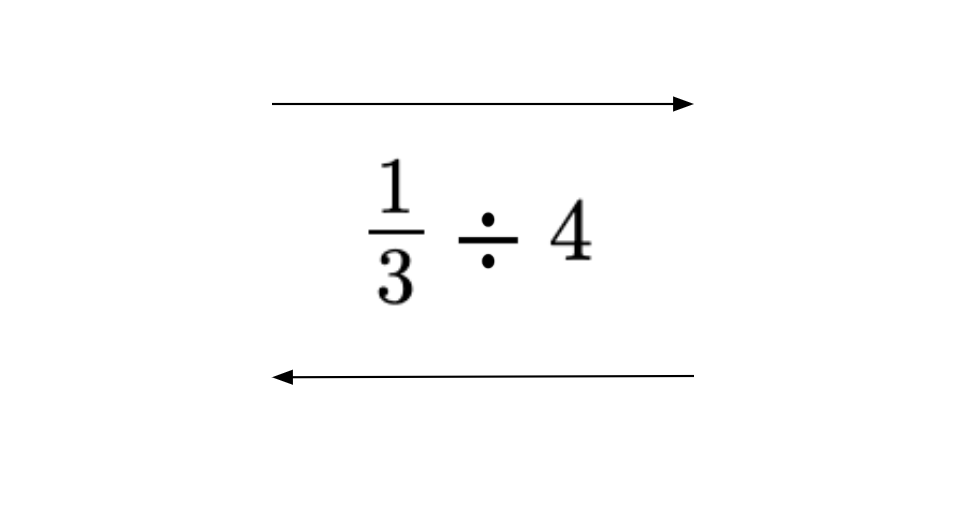
The Foundational Math: Deconstructing “1/3 of 4”
Before we immerse ourselves in the financial applications, it’s crucial to firmly grasp the underlying mathematical operation. The question “what is 1/3 of 4” is an instruction to multiply 4 by the fraction 1/3.
Basic Calculation Revisited
To calculate 1/3 of 4, you perform the multiplication:
1/3 * 4 = 4/3
As an improper fraction, 4/3 can also be expressed as a mixed number, 1 and 1/3, or as a decimal, approximately 1.333… (where the 3 repeats infinitely). While the exact fraction 4/3 is often preferred in formal mathematical contexts for precision, its decimal approximation is frequently used in financial calculations for practical application, especially when dealing with currency. For example, you wouldn’t divide a dollar into an infinite repeating decimal, but you might round to two decimal places for cents.
Why Simple Fractions Matter in Finance
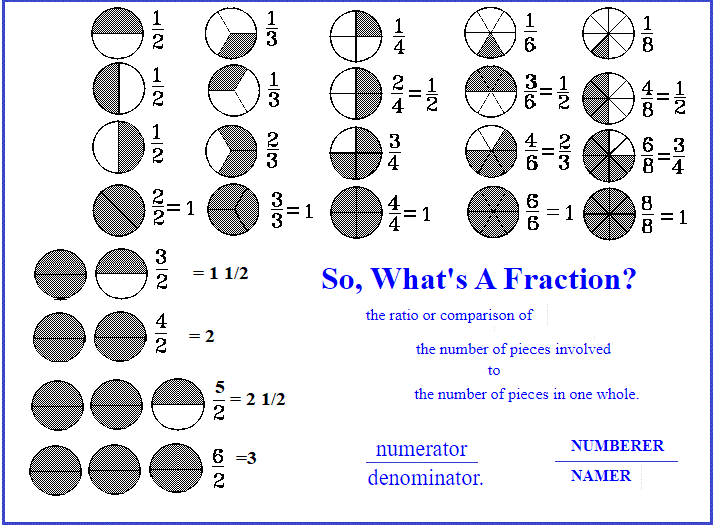
The ability to compute a fraction of a whole is far more than an academic exercise; it’s a bedrock skill in financial management. Fractions are the direct precursors to percentages and ratios, which are the lingua franca of financial analysis.
-
Percentages: When you say “1/3 of my income goes to rent,” you’re effectively dealing with a percentage (approximately 33.33%). Percentages are simply fractions out of 100.
-
Ratios: Financial ratios like debt-to-equity or current ratio are direct comparisons expressed as fractions, providing insights into a company’s health or an individual’s financial standing.
-
Budgeting: Every budget involves allocating portions of a total income or capital. Whether it’s 1/3, 1/2, or 1/10, understanding how to divide a whole into meaningful parts is fundamental.
Without a solid grasp of these basic fractional concepts, comprehending more sophisticated financial instruments, investment strategies, or even personal budgeting becomes significantly challenging. It’s the numerical foundation upon which sound financial decisions are built.
Personal Finance Applications: Dividing Your Financial Pie
For individuals, the concept of “1/3 of 4” translates into countless real-world financial scenarios, primarily centered around budgeting, saving, and debt management. Your total financial resources, whether it’s your monthly income or a one-time windfall, represent the “whole” (like the ‘4’ in our example), and you constantly make decisions about how to divide it into various “fractions.”
Budgeting and Expense Allocation
One of the most immediate and impactful applications of fractional thinking is in personal budgeting. Many popular budgeting methodologies are built upon allocating specific percentages (or fractions) of income to different categories.
-
The 50/30/20 Rule: This common guideline suggests allocating 50% of your income to needs, 30% to wants, and 20% to savings and debt repayment. Here, each percentage is a fraction of your total income. Imagine your income is $4,000; 1/3 of it (approx. $1,333) might represent a significant portion of your housing or food budget. Without understanding how to calculate these portions, effective budgeting is impossible.
-
Categorical Spending: Whether it’s 1/3 of your discretionary income for entertainment or 1/3 of your food budget for eating out, these calculations ensure you stay within your financial limits and achieve your spending goals.
Savings and Investment Contributions
Building wealth invariably involves setting aside a fraction of your current earnings for future growth.
-
Retirement Contributions: Financial advisors often recommend saving a certain percentage (e.g., 10-15%) of every paycheck for retirement. If you receive a bonus of $4,000, deciding to put “1/3 of that bonus” ($1,333.33) into a retirement account or a high-yield savings account is a concrete application of our fractional concept.
-
Goal-Based Savings: Saving for a down payment on a house, a child’s education, or a significant purchase requires consistently setting aside a fraction of your income or other funds over time. Understanding these fractions helps project how long it will take to reach your goals.
Debt Management and Repayment Strategies
Managing debt effectively also relies heavily on fractional understanding.
-
Minimum Payments vs. Accelerated Repayment: While lenders specify minimum payments (a small fraction of the outstanding balance), strategically accelerating debt repayment often involves dedicating a larger fraction of disposable income. For example, if you have $4,000 in credit card debt and decide to pay off an extra 1/3 of that balance in a specific month, you’re making a calculated financial move to reduce interest and pay it off faster.
-
Debt-to-Income Ratios: Lenders assess your creditworthiness partly based on your debt-to-income ratio, which is a fraction comparing your total monthly debt payments to your gross monthly income. A healthy ratio (often below 36%) means your debt payments are a manageable fraction of your earnings.
Business Finance and Investing: Shares, Stakes, and Returns
In the world of business and investment, fractions cease to be abstract mathematical concepts and transform into concrete measures of ownership, allocation, and return. The simple idea of taking “1/3 of 4” scales up to represent significant financial decisions for companies and investors alike.
Equity and Ownership Stakes
For entrepreneurs and investors, understanding fractional ownership is fundamental.
-
Startup Equity: When a new company is founded, ownership is typically divided into shares or percentages. If four co-founders each own an equal stake, each holds 1/4 of the company. If an early investor puts in capital for 1/3 of the ownership, they literally own “1/3 of the entire business.” Imagine a company valued at $4 million; 1/3 of that value would represent $1.33 million in equity.
-
Partnerships: In partnerships, profits and responsibilities are often divided fractionally. A 1/3 stake in a partnership implies not just a share of profits but also a corresponding share of liabilities and decision-making power.
Investment Portfolio Diversification
Strategic investing hinges on diversification, which is the act of allocating capital across different asset classes, industries, or geographies to mitigate risk. This is inherently a fractional exercise.
-
Asset Allocation: An investor might decide to allocate their $400,000 investment portfolio by putting 1/3 into stocks, 1/3 into bonds, and 1/3 into real estate. This is a direct application of our problem: 1/3 of $400,000 is approximately $133,333.33 for each category.
-
Sector-Specific Investments: Within a stock portfolio, an investor might choose to put 1/3 of their stock allocation into tech, 1/3 into healthcare, and 1/3 into consumer goods. These fractional decisions directly influence risk and potential returns.
Profit Sharing and Revenue Distribution
Businesses frequently use fractional calculations for distributing profits, paying royalties, or sharing revenue.
-
Employee Bonuses: Companies might allocate a fraction (e.g., 1/3) of their quarterly profits as a bonus pool for employees.
-
Royalties: Authors, artists, and inventors often receive royalties as a percentage (or fraction) of sales. If a book generates $40,000 in sales, and the author receives 1/3 in royalties, that’s a substantial $13,333.33.
-
Inter-company Agreements: In joint ventures or strategic alliances, revenue or costs might be split on a fractional basis, ensuring each party receives its agreed-upon share.
Advanced Financial Concepts: Beyond the Basics
While the calculation “1/3 of 4” is elementary, its principles are deeply embedded in more sophisticated financial analysis and planning, guiding decision-making in complex environments.
Understanding Financial Ratios
Financial ratios are quantitative measures used to gain insight into a company’s liquidity, operational efficiency, and profitability by comparing two or more items from a company’s financial statements. Many are expressed as fractions.
-
Debt-to-Equity Ratio: This crucial ratio compares a company’s total liabilities to its shareholder equity. A high ratio (e.g., 4:1 or 4/1) indicates that the company is largely financed by debt. Conversely, if equity is 1/3 of debt, it reveals a different financial structure.
-
Current Ratio: This measures a company’s ability to pay off its short-term liabilities with its short-term assets. A ratio of “current assets being 4 times current liabilities” (4/1) suggests strong liquidity, whereas “current assets being 1/3 of current liabilities” (1/3) would signal severe liquidity issues.
Risk Assessment and Management
Fractional thinking is vital in understanding and managing financial risk, particularly in investment portfolios.
-
Value at Risk (VaR): This is a widely used risk management technique that estimates the potential loss of an investment portfolio over a certain period. While complex, it often quantifies the fraction of a portfolio that could be at risk under specific market conditions.
-
Concentration Risk: An investor might assess the risk of having too much capital concentrated in one asset. If 1/3 of your entire net worth is tied up in a single stock, that represents a significant concentration risk, meaning that a 10% drop in that stock affects 1/3 of your overall wealth.
Estate Planning and Asset Division
When it comes to wealth transfer, precise fractional division is paramount to ensure the wishes of the deceased are honored and disputes among beneficiaries are minimized.
-
Will and Trusts: A will might explicitly state that a particular asset (e.g., a property worth $400,000) should be divided among four heirs, with one receiving 1/3, another 1/3, and the remaining two splitting the final 1/3. Without clear fractional understanding, this division could be contentious.
-
Succession Planning: In family businesses, succession planning involves determining how ownership and control will be fractionally divided among heirs or successors, impacting the business’s future and the family’s financial legacy.
The Value of Financial Literacy: Mastering Proportions for Prosperity
Ultimately, the humble question “what is 1/3 of 4” transcends basic mathematics to underscore the profound importance of financial literacy. It highlights that the ability to understand, calculate, and apply fractional concepts is not merely an academic exercise but a foundational skill that empowers individuals and businesses to navigate the complexities of the financial world with confidence and competence.
Avoiding Common Financial Pitfalls
A lack of understanding of fractions, percentages, and ratios is a common cause of financial missteps. Whether it’s miscalculating interest on a loan, misunderstanding investment returns, or misallocating funds in a budget, these errors can lead to missed opportunities, unnecessary debt, and stalled financial growth. By mastering these basic principles, individuals can avoid costly mistakes and make more astute financial decisions.
Empowering Informed Decision-Making
When you clearly understand that “1/3 of 4” means 1.333, you can apply this understanding to interpret financial statements, evaluate investment proposals, compare loan offers, or assess the impact of a tax rate change. This clarity removes ambiguity and replaces it with quantifiable insights, allowing for proactive and strategic financial planning. It moves decision-making from guesswork to calculated strategy.
Cultivating Long-Term Financial Health
From building an emergency fund by setting aside a fraction of each paycheck to diversifying a retirement portfolio with specific fractional allocations, consistent application of fractional thinking builds enduring financial health. It fosters discipline, promotes strategic planning, and ultimately contributes to achieving long-term financial goals, be it early retirement, purchasing a home, or leaving a significant legacy.
In conclusion, while “what is 1/3 of 4” might seem like a trivial mathematical problem, its roots run deep into the fertile ground of financial understanding. It represents the essential skill of breaking down a whole into meaningful parts, a skill indispensable for anyone seeking to manage their money effectively, grow their wealth, and secure their financial future in an increasingly complex economic landscape. Embrace the power of fractional thinking, and you embrace a clearer path to financial prosperity.
aViewFromTheCave is a participant in the Amazon Services LLC Associates Program, an affiliate advertising program designed to provide a means for sites to earn advertising fees by advertising and linking to Amazon.com. Amazon, the Amazon logo, AmazonSupply, and the AmazonSupply logo are trademarks of Amazon.com, Inc. or its affiliates. As an Amazon Associate we earn affiliate commissions from qualifying purchases.