
In the vast and often intricate world of finance, few concepts are as fundamental and omnipresent as the “percentage.” Far from being a mere mathematical curiosity, percentages are the lingua franca of personal finance, investing, business strategy, and economic analysis. To truly understand how to “make a percentage” is to unlock a deeper comprehension of how money works, how wealth is built, and how financial decisions shape our future. This isn’t just about crunching numbers; it’s about interpreting the story those numbers tell, whether you’re evaluating a discount, assessing investment returns, or strategizing business growth.

This article delves into the multi-faceted role of percentages in the financial realm, empowering you with the insights to not only calculate but strategically utilize this powerful metric. From the everyday decisions of budgeting and spending to the ambitious goals of investing and entrepreneurial ventures, percentages are the bedrock upon which sound financial management is built.
The Ubiquitous Nature of Percentages in Finance
Percentages are more than just a fraction out of a hundred; they are a universal scale that allows us to compare disparate figures, understand proportional relationships, and track change over time, all within a financial context. Without percentages, comparing the growth of a small business to a multinational corporation, or evaluating the impact of an interest rate hike on a large loan versus a small one, would be cumbersome and often misleading.
Beyond Simple Calculation: What Percentages Truly Represent
At its core, a percentage represents a part of a whole, scaled to 100. For instance, if you’ve saved $20 out of a $100 goal, you’ve saved 20%. But its significance in finance goes deeper. It normalizes figures, allowing for apples-to-apples comparisons regardless of the absolute values. A 5% return on an investment means the same proportional gain whether your principal was $1,000 or $1,000,000, providing clarity on performance. Similarly, understanding a 2% inflation rate helps you gauge the erosion of purchasing power, irrespective of your specific income level.
Moreover, percentages are inherently relational. They express change and growth—or contraction and loss—in a universally understood metric. When a financial advisor speaks of portfolio diversification, they often refer to percentages allocated to different asset classes. When economists discuss GDP growth, they use percentages to convey the pace of economic expansion. These are not just abstract numbers; they are powerful indicators that inform critical financial decisions.
Why Understanding Percentages is Crucial for Financial Literacy
A robust understanding of percentages is not merely beneficial; it is essential for modern financial literacy. Every day, individuals are bombarded with financial information presented in percentages: mortgage interest rates, credit card APRs, investment fund expense ratios, sales tax, discounts, and savings account yields. Without the ability to interpret these figures accurately, one is navigating a complex financial landscape blindfolded.
Misinterpreting a percentage can lead to significant financial missteps, from overpaying on a loan to missing out on substantial investment gains, or even misjudging the true cost of a product on sale. Financial literacy, therefore, necessitates a strong grasp of how percentages work, how they are calculated, and most importantly, what they imply for your personal wealth and future financial well-being. It empowers individuals to make informed choices, negotiate better terms, and identify genuine opportunities amidst financial noise.
Decoding Percentages in Personal Finance
In our daily lives, percentages dictate a surprising number of financial realities. From managing household budgets to understanding the true cost of borrowing, percentages are the key to unlocking smarter personal financial decisions.
Saving and Budgeting: Allocating Your Income
One of the most practical applications of percentages in personal finance is budgeting. Many financial experts recommend allocating specific percentages of your after-tax income to various categories. The popular “50/30/20 rule,” for example, suggests dedicating 50% to needs, 30% to wants, and 20% to savings and debt repayment. This percentage-based approach offers flexibility regardless of your income level, providing a scalable framework for financial discipline.
To “make a percentage” in this context means actively deciding what proportion of your earnings goes where. By tracking your spending and calculating the percentage of your income dedicated to housing, groceries, transportation, and entertainment, you gain invaluable insight into your financial habits. This allows you to identify areas for optimization, ensuring you’re not overspending in one category at the expense of another crucial one, like saving for retirement or an emergency fund.
Debt and Interest: The Cost of Borrowing
Percentages play a formidable role in the realm of debt. Interest rates, expressed as percentages, determine the actual cost of borrowing money. A mortgage with a 4% interest rate versus a 7% interest rate can mean tens, or even hundreds, of thousands of dollars difference over the life of the loan. Credit card annual percentage rates (APRs) can soar into double digits, quickly accumulating substantial interest charges if balances are not paid in full.
Understanding how interest percentages compound is crucial. A “make a percentage” moment here might involve calculating the effective interest rate on a loan after fees, or determining how much extra you’ll pay by carrying a credit card balance. Being able to assess these percentages allows you to make informed decisions about taking on debt, strategically paying it down, and negotiating for lower rates, thereby “making” your money work harder for you by minimizing outflows.
Discounts and Sales: Smart Spending Strategies
Sales, discounts, and promotional offers are all presented as percentages, and knowing how to evaluate them can lead to significant savings. Is a 20% discount on an already expensive item truly a better deal than 50% off a cheaper one? Is an extra 10% off a sale price calculated on the original price or the discounted price? These nuances, revealed through careful percentage calculations, can prevent buyer’s remorse and ensure you’re getting genuine value.
Moreover, understanding the opportunity cost in terms of percentages is vital. If you save 15% on a large purchase, what could that saved money, expressed as a percentage of your monthly income, be doing for you instead? By actively engaging with these percentages, you “make” better spending decisions, aligning your purchases with your broader financial goals.
Percentages in the World of Investing and Wealth Building
The investment landscape is saturated with percentages. From measuring performance to structuring portfolios, percentages are the indispensable tools for navigating markets and building long-term wealth.
Investment Returns: Gauging Performance
The primary way investors measure the success of their holdings is through percentage returns. A “return on investment” (ROI) is almost universally expressed as a percentage, indicating the gain or loss relative to the initial investment. Whether it’s a 7% annual return from an index fund, a 15% gain from a stock, or a -3% loss during a market downturn, these percentages provide a clear, standardized metric for performance.
To “make a percentage” in investing is to aim for positive returns. Understanding concepts like annualized returns, total returns, and average returns allows investors to accurately compare different investment vehicles and assess whether they are meeting their financial objectives. It helps distinguish between a fleeting gain and sustainable growth, guiding decisions on when to buy, hold, or sell.
Portfolio Allocation: Diversifying for Growth
A key principle of sound investing is diversification, which involves spreading investments across various asset classes (stocks, bonds, real estate, commodities) to manage risk. This diversification is almost exclusively defined by percentage allocations. For example, a common recommendation for a young investor might be an 80% allocation to stocks and 20% to bonds, while an older investor might opt for a more conservative 60% bonds and 40% stocks.
These percentage allocations are dynamic and should be rebalanced periodically. “Making a percentage” here means consciously designing a portfolio where different asset classes hold specific proportions, reflecting your risk tolerance, time horizon, and financial goals. It’s about strategically allocating capital to maximize potential returns while minimizing exposure to undue risk, all guided by thoughtful percentage distributions.
Compounding Interest: The Power of Percentage Growth
Perhaps the most potent concept in wealth building is compounding interest, often referred to as the “eighth wonder of the world.” Compounding is when the interest you earn on your initial investment also starts to earn interest. This exponential growth is entirely driven by percentages. A seemingly modest annual percentage return, consistently applied over many years, can lead to astonishing wealth accumulation.
To “make a percentage” through compounding is to understand that even small, consistent percentage gains can have a transformative effect over time. It underscores the importance of starting early, investing consistently, and letting time work its magic on your returns. The difference between a 5% and 7% annual compound return might seem small in the short term, but over decades, the cumulative percentage gain can be enormous.
Leveraging Percentages for Business and Online Income
For entrepreneurs, business owners, and those pursuing online income, percentages are indispensable for measuring profitability, assessing market position, and structuring compensation.
Profit Margins: Measuring Business Health
Businesses live and die by their profit margins, which are always expressed as percentages. Gross profit margin (gross profit as a percentage of revenue) and net profit margin (net profit as a percentage of revenue) are critical indicators of a company’s financial health and operational efficiency. A business that “makes a percentage” in terms of high profit margins is one that effectively manages its costs and pricing strategies.
Understanding and continuously working to improve these percentages is central to business success. It helps in pricing products or services correctly, identifying inefficiencies in production or service delivery, and making strategic decisions about expansion or contraction. Benchmarking your profit margins against industry averages, presented as percentages, provides a clear view of your competitive standing.
Commission Structures: Earning on Sales
Many online income models, particularly in sales, affiliate marketing, or freelancing, involve earning a percentage-based commission. Whether it’s a 10% commission on every product sold through an affiliate link, or a 25% cut of a consulting project fee, these percentages directly determine your income potential.
To “make a percentage” in this context is to understand the commission structure and strategize how to maximize your volume or value of sales to increase your overall earnings. It involves analyzing which products or services offer the most attractive percentage commission and focusing efforts where they yield the best return for your time and resources.
Market Share and Growth: Business Analytics
For any business, understanding its market position and growth trajectory is vital. Market share, expressed as a percentage, indicates the portion of the total market that a company controls. Growth rates, also expressed as percentages, show how quickly a company’s revenue or customer base is expanding.
These percentages inform strategic planning, marketing efforts, and investment decisions. A business looking to “make a percentage” in terms of increasing market share might launch aggressive marketing campaigns or introduce innovative products. Tracking these percentages allows businesses to measure their progress against competitors and assess the effectiveness of their strategies in a dynamic marketplace.
Practical Tools and Strategies for Mastering Percentages
Mastering percentages isn’t about innate mathematical genius; it’s about developing a strategic mindset and utilizing available tools.
Basic Calculation Methods: Manual and Digital
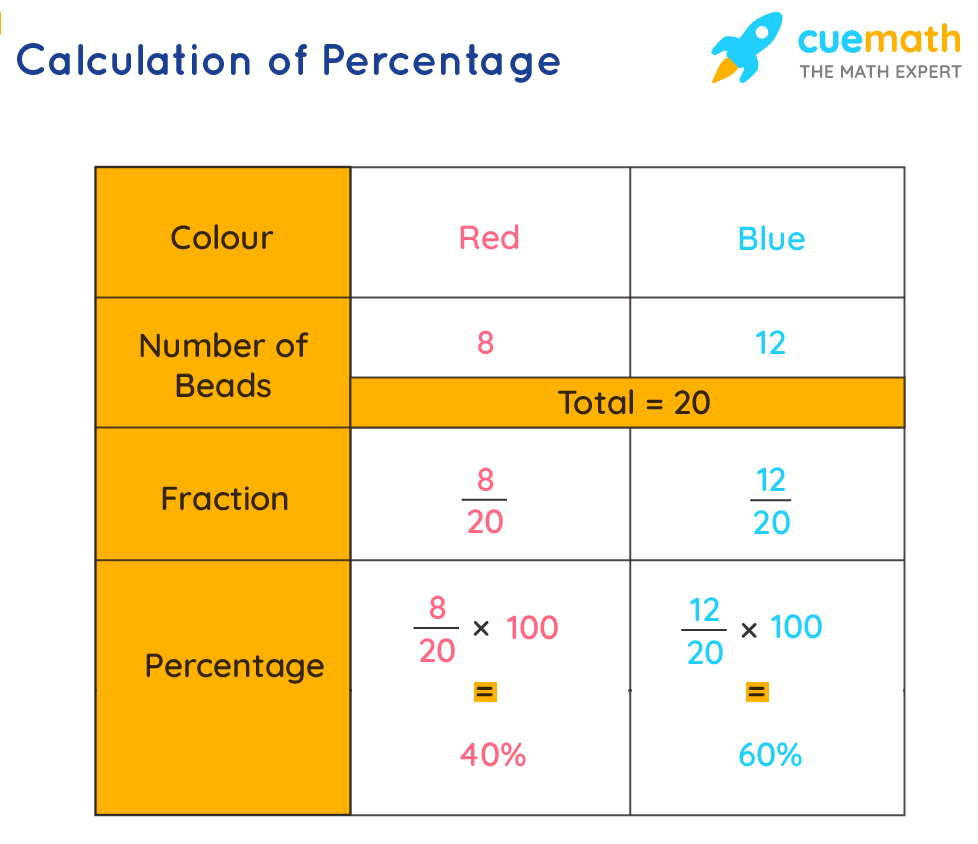
The fundamental calculation for a percentage is simple: (Part / Whole) * 100. Whether you’re calculating a tip, a discount, or a simple interest rate, this formula is your starting point. For quick calculations, a basic calculator (even the one on your smartphone) is an invaluable tool. For more complex scenarios, such as compound interest or multi-stage discounts, using spreadsheet software like Excel or Google Sheets provides powerful functionality, allowing you to build models and visualize the impact of percentage changes.
Financial Planning Software: Automated Percentage Tracking
Modern financial planning software and budgeting apps (e.g., Mint, YNAB, Personal Capital) often automate many percentage-based calculations. They can categorize your spending and show you what percentage of your income goes to housing, food, or entertainment. They can project investment growth based on assumed percentage returns and help you track your net worth and asset allocation as percentages. These tools remove much of the manual burden, allowing you to focus on the insights rather than the arithmetic.

Developing a Percentage-Minded Approach to Money
Ultimately, “making a percentage” is less about a single action and more about adopting a percentage-minded approach to all financial decisions. It involves:
-
Questioning: Always ask “What percentage?” when faced with financial figures. What percentage is this fee? What percentage is the expected return?
-
Comparing: Use percentages to compare different options fairly (e.g., compare two loans with different interest rates, or two investments with different historical returns).
-
Projecting: Understand the long-term impact of small percentage changes, especially with compounding interest and inflation.
-
Strategizing: Actively use percentages to set financial goals (e.g., save 15% of your income), allocate resources (e.g., 70% to stocks), and measure progress.
By consistently thinking in terms of percentages, you move beyond merely making calculations; you gain a profound ability to interpret financial information, anticipate outcomes, and strategically position yourself for greater financial success. It transforms you from a passive recipient of financial data into an active architect of your financial future.
aViewFromTheCave is a participant in the Amazon Services LLC Associates Program, an affiliate advertising program designed to provide a means for sites to earn advertising fees by advertising and linking to Amazon.com. Amazon, the Amazon logo, AmazonSupply, and the AmazonSupply logo are trademarks of Amazon.com, Inc. or its affiliates. As an Amazon Associate we earn affiliate commissions from qualifying purchases.