
In an increasingly complex financial world, the ability to calculate – not just mechanically, but strategically – is the bedrock of sound decision-making. From managing a personal budget to making savvy investment choices or running a successful business, numbers are the language of finance. “How you calculate” isn’t merely about arithmetic; it’s about understanding the underlying principles, leveraging the right tools, and interpreting the outcomes to forge a path toward financial prosperity. This article delves into the critical calculations that empower individuals and businesses, demystifying the quantitative side of money management.
The Foundation of Financial Literacy: Everyday Calculations
At the heart of financial independence lies the mastery of basic, yet profoundly impactful, calculations that govern our daily financial lives. These are the tools we use to understand where our money comes from, where it goes, and how it can grow.
Budgeting and Cash Flow Management: Income Minus Expenses
The most fundamental calculation in personal finance is the simple equation of income minus expenses. This seemingly straightforward exercise forms the cornerstone of effective budgeting and cash flow management. To truly understand “how you calculate” your financial health, you must:
-
Track Income: Sum up all sources of money coming in—salary, side hustle earnings, investment dividends, etc. This figure represents your gross financial input.
-
Itemize Expenses: Categorize and tally all outgoing funds. This includes fixed expenses (rent/mortgage, loan payments, subscriptions) and variable expenses (groceries, entertainment, transport). Being meticulous here reveals where your money genuinely goes.
-
Calculate Net Cash Flow: Subtract total expenses from total income. A positive number indicates a surplus, allowing for savings or investments. A negative number signals a deficit, requiring adjustments to spending or an increase in income.
-
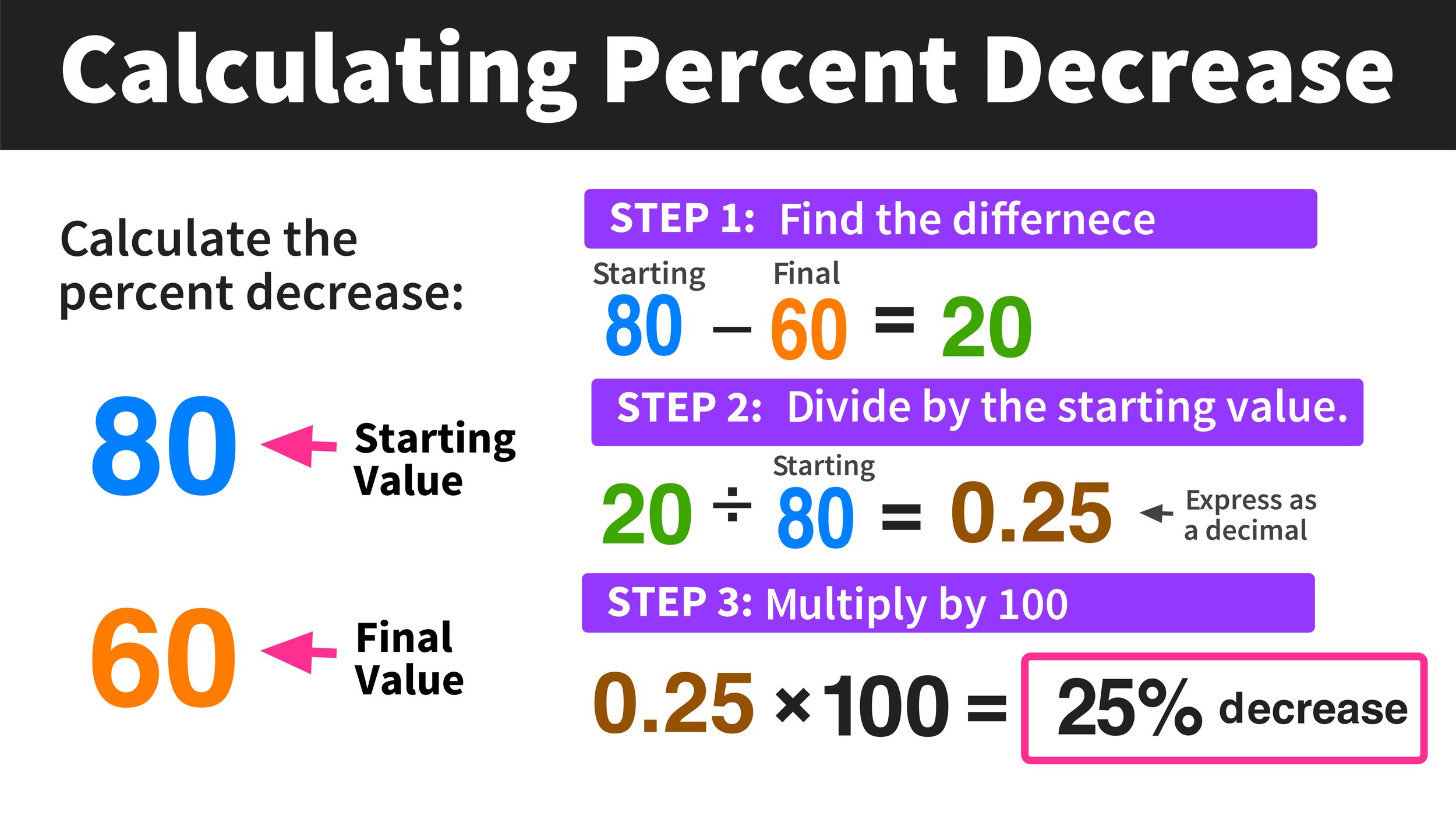
Percentage Allocation: Beyond just tracking, calculating percentages for different spending categories (e.g., 50/30/20 rule for needs, wants, savings/debt) provides a visual and actionable framework for financial control, helping you optimize your spending habits.
The precision in these calculations directly correlates with the clarity of your financial picture, enabling proactive rather than reactive money management.
Debt Management: Understanding Interest Rates and Repayment Schedules
Debt, while sometimes necessary, can be a heavy burden if not properly managed. Critical calculations here involve understanding interest and its impact on repayment.
-
Simple vs. Compound Interest: Grasping the difference is crucial. Simple interest is calculated only on the principal amount, while compound interest is calculated on the principal and on the accumulated interest from previous periods. Loans like mortgages often compound monthly, significantly increasing the total amount repaid over time.
-
Calculating Minimum Payments vs. Accelerated Repayment: Loan statements typically provide a minimum payment. Calculating how much interest you’ll pay over the life of the loan at these minimums versus the savings from paying an extra amount each month can be eye-opening. Online calculators can easily demonstrate the exponential savings achieved by accelerating principal repayment, showcasing the direct financial benefit of understanding this calculation.
-
Debt-to-Income Ratio (DTI): Lenders use this to assess your ability to manage monthly payments and repay debts. Calculating your DTI (total monthly debt payments divided by gross monthly income) provides insight into your borrowing capacity and financial leverage.
Understanding these debt-related calculations empowers you to make informed decisions about borrowing, repayment strategies, and overall financial risk.
Savings Goals: Future Value and Regular Contributions
Setting and achieving savings goals requires more than just willpower; it demands strategic calculation. Whether saving for a down payment, retirement, or a child’s education, understanding how money grows over time is paramount.
-
Target Savings Calculation: To reach a specific goal by a certain date, you need to calculate how much to save periodically. This often involves working backward from the future value needed, considering the time horizon and potential interest earnings.
-
Future Value of Investments: Utilizing formulas (or online tools) that calculate the future value of a series of regular contributions (an annuity) at a given interest rate can show you exactly how powerful consistent saving and compounding interest truly are. This calculation helps visualize your financial future and motivates adherence to a savings plan.
-
Inflation Impact: A sophisticated saver also calculates the impact of inflation. While not a direct calculation of growth, understanding inflation’s erosive effect on purchasing power ensures that your savings goals account for the real cost of future items, rather than just today’s price.
Strategic Investing: Calculating Returns and Risks
Moving beyond basic budgeting, strategic investing requires a deeper dive into calculations that measure performance, growth, and potential downsides. These calculations guide critical decisions about where and how to allocate capital.
Return on Investment (ROI): Measuring Performance
ROI is a universal metric for evaluating the efficiency or profitability of an investment. “How you calculate” ROI gives you a clear picture of your gains or losses.
-
Simple ROI: Calculated as
(Current Value of Investment - Original Cost of Investment) / Original Cost of Investment. This provides a basic percentage return. For example, if you bought a stock for $100 and sold it for $120, your ROI is (120-100)/100 = 20%. -
Annualized ROI: For investments held for more or less than a year, annualizing the return allows for an apples-to-apples comparison across different investment durations. This involves using more complex formulas that factor in the holding period.
-
ROI with Dividends/Interest: For income-generating investments, the “current value” must include all dividends or interest received in addition to any capital appreciation.
Consistently calculating ROI helps investors assess the effectiveness of their strategies and make informed adjustments to their portfolios.
Understanding Compound Interest: The Eighth Wonder of the World
Albert Einstein famously called compound interest the “eighth wonder of the world.” Understanding “how you calculate” its effect is foundational to long-term wealth creation.
-
The Power of Reinvestment: Compound interest is interest on interest. When the interest earned on an investment is reinvested, it starts earning interest itself, creating an exponential growth curve. The calculation isn’t complex in principle, but its long-term impact is profound.
-
Future Value Formula: The basic formula for compound interest is
FV = P(1 + r/n)^(nt), where FV is future value, P is principal, r is the annual interest rate, n is the number of times interest is compounded per year, and t is the number of years. While the formula can look intimidating, countless online calculators simplify this, allowing investors to input variables and instantly see the magic of compounding over different time horizons and interest rates. -
Early Start Advantage: Calculating the difference in final wealth between someone who starts investing early versus someone who delays demonstrates the undeniable power of time in compounding. Even small, consistent contributions can lead to substantial wealth over decades due to this exponential growth.
Risk Assessment: Diversification and Volatility
While precise risk calculation can be complex, basic principles involve understanding diversification and volatility.
-
Portfolio Diversification: Calculating asset allocation percentages (e.g., 60% stocks, 40% bonds) helps manage risk. The goal is to spread investments across different asset classes, industries, and geographies to mitigate the impact of poor performance in any single area.
-
Standard Deviation (Conceptually): For individual investments, volatility (how much an investment’s price fluctuates) is often measured by standard deviation. While not a calculation most individual investors perform manually, understanding its concept helps in evaluating an investment’s risk profile – higher standard deviation means higher price swings and potentially higher risk.
-
Risk-Adjusted Returns: More sophisticated investors might look at metrics like the Sharpe Ratio, which calculates the return per unit of risk. While beyond simple arithmetic, the principle helps compare investments not just on return, but on how much risk was taken to achieve that return.

Business Finance and Entrepreneurship: Critical Calculations for Success
For business owners and entrepreneurs, “how you calculate” transforms from personal financial management into the strategic management of an entire enterprise. These calculations are vital for operational efficiency, profitability, and sustainable growth.
Profit Margins: Gross, Operating, and Net
Understanding different profit margins is essential for assessing a business’s health and efficiency.
-
Gross Profit Margin:
(Revenue - Cost of Goods Sold) / Revenue. This shows how much profit a company makes from each sale after accounting for the direct costs of producing goods or services. -
Operating Profit Margin:
(Gross Profit - Operating Expenses) / Revenue. This indicates a company’s profitability from its core operations before interest and taxes. -
Net Profit Margin:
(Net Income / Revenue). This is the bottom line, showing the percentage of revenue left after all expenses, including taxes and interest, have been deducted.
Calculating and tracking these margins over time provides critical insights into pricing strategies, cost control, and overall business performance.
Break-Even Analysis: Knowing Your Tipping Point
The break-even point is a crucial calculation for any business, indicating the sales volume (in units or revenue) required to cover all costs, resulting in zero net profit.
-
Formula:
Break-Even Point in Units = Fixed Costs / (Per-Unit Revenue - Per-Unit Variable Costs).-
Fixed Costs: Costs that do not change with the level of production (rent, salaries, insurance).
-
Variable Costs: Costs that vary directly with the level of production (raw materials, production wages).
-
Contribution Margin:
Per-Unit Revenue - Per-Unit Variable Costs. This is the amount each unit sold contributes towards covering fixed costs.
-
Calculating the break-even point helps businesses set realistic sales targets, evaluate pricing strategies, and understand the financial implications of increasing or decreasing production.
Valuing a Business: Basic Multiples and Discounted Cash Flow (Concept)
For investors considering acquiring a business or entrepreneurs seeking funding, valuation is paramount. While complex, fundamental principles involve calculation.
-
Valuation Multiples: This involves comparing a business to similar ones using common multiples like Price-to-Earnings (P/E) ratio, Enterprise Value-to-EBITDA (EV/EBITDA), or Price-to-Sales. For example, if comparable companies trade at 10x earnings, and your business earns $1 million, a basic valuation would be $10 million.
-
Discounted Cash Flow (DCF): Conceptually, DCF involves forecasting a business’s future cash flows and then “discounting” them back to their present value using a specific discount rate. This calculation, while mathematically intensive, provides a theoretically sound estimate of a business’s intrinsic value based on its future earning potential.
These calculations, whether simple or complex, are instrumental in strategic business decisions, from pricing products to mergers and acquisitions.
Leveraging Financial Tools and Technology for Smarter Calculations
In today’s digital age, “how you calculate” often involves the smart use of technology. Financial tools and software have revolutionized the ease and accuracy of complex calculations, making sophisticated financial analysis accessible to everyone.
Spreadsheet Power: Excel and Google Sheets
Spreadsheets remain the workhorses of financial calculation. Their versatility and power are unmatched for organizing data and performing intricate analyses.
-
Basic Formulas: From simple sums and averages to more advanced
IFstatements and lookups, spreadsheets allow users to build custom financial models for budgeting, investment tracking, and business projections. -
Financial Functions: Excel and Google Sheets include built-in financial functions (e.g.,
PVfor present value,FVfor future value,PMTfor loan payments,IRRfor internal rate of return) that automate complex time-value-of-money calculations, saving immense time and reducing error. -
Data Visualization: Beyond calculation, spreadsheets enable the creation of charts and graphs, turning raw numbers into insightful visual representations of financial trends and performance.
Financial Calculators and Apps: On-Demand Insights
The proliferation of financial calculators and mobile apps has brought powerful calculation capabilities to our fingertips.
-
Specialized Calculators: Websites and apps offer specialized calculators for virtually every financial scenario: mortgage payments, retirement savings projections, loan amortization, compound interest, tax estimators, and more. These tools simplify complex calculations into user-friendly interfaces.
-
Budgeting Apps: Many apps automatically categorize transactions from linked bank accounts, perform real-time budget calculations, and provide spending analyses, automating much of the manual work involved in cash flow management.
-
Investment Platforms: Modern investment platforms not only facilitate trading but also offer integrated tools for calculating portfolio performance, analyzing risk, and modeling various investment scenarios.
AI and Algorithmic Finance: The Future of Calculation
While still evolving, artificial intelligence and machine learning are transforming “how you calculate” in finance, especially in areas like forecasting, risk management, and personalized advice.
-
Predictive Analytics: AI algorithms can process vast amounts of financial data to identify patterns and make highly accurate predictions about market movements, credit risk, and consumer spending, far surpassing human capabilities in speed and scale.
-
Automated Trading and Optimization: Algorithmic trading systems use complex calculations to execute trades at optimal times, while AI-powered financial advisors (robo-advisors) use algorithms to build and manage diversified portfolios tailored to individual risk tolerances and goals.
-
Personalized Financial Planning: AI tools are beginning to offer highly personalized financial planning by integrating an individual’s unique financial data with market trends, calculating optimal saving rates, investment allocations, and debt repayment strategies.

Conclusion
“How you calculate” is not just an academic exercise; it is an indispensable life skill that underpins every sound financial decision. From the foundational arithmetic of budgeting to the nuanced equations of investment analysis and business valuation, understanding numbers empowers individuals and enterprises to navigate the financial landscape with confidence and clarity. The journey from basic arithmetic to leveraging sophisticated financial tools and technologies marks a path towards greater financial literacy and ultimately, greater financial freedom. By embracing the power of calculation, we equip ourselves to build wealth, mitigate risk, and achieve our most ambitious financial aspirations. The effort put into understanding these calculations today pays dividends for a lifetime.
aViewFromTheCave is a participant in the Amazon Services LLC Associates Program, an affiliate advertising program designed to provide a means for sites to earn advertising fees by advertising and linking to Amazon.com. Amazon, the Amazon logo, AmazonSupply, and the AmazonSupply logo are trademarks of Amazon.com, Inc. or its affiliates. As an Amazon Associate we earn affiliate commissions from qualifying purchases.