
The New York Stock Exchange (NYSE) stands as a monumental pillar in the global financial landscape. Its iconic façade on Wall Street, the incessant hum of trading activity, and the ceremonial ringing of its opening and closing bells are synonymous with the heartbeat of international capitalism. For investors, traders, financial professionals, and even curious observers, understanding the precise operating hours of the NYSE is not merely a matter of trivia; it is fundamental to strategizing, executing trades, and comprehending market dynamics. The timing of its open dictates liquidity, impacts price discovery, and sets the tone for daily trading sessions that ripple across the world. In the fast-paced, interconnected world of finance, missing a crucial window or misinterpreting market sentiment around these pivotal times can have significant financial consequences. This article delves into the critical aspects of the NYSE’s trading schedule, its implications for various market participants, and the broader financial ecosystem it underpins.
The Core Trading Hours: Your Gateway to Market Action
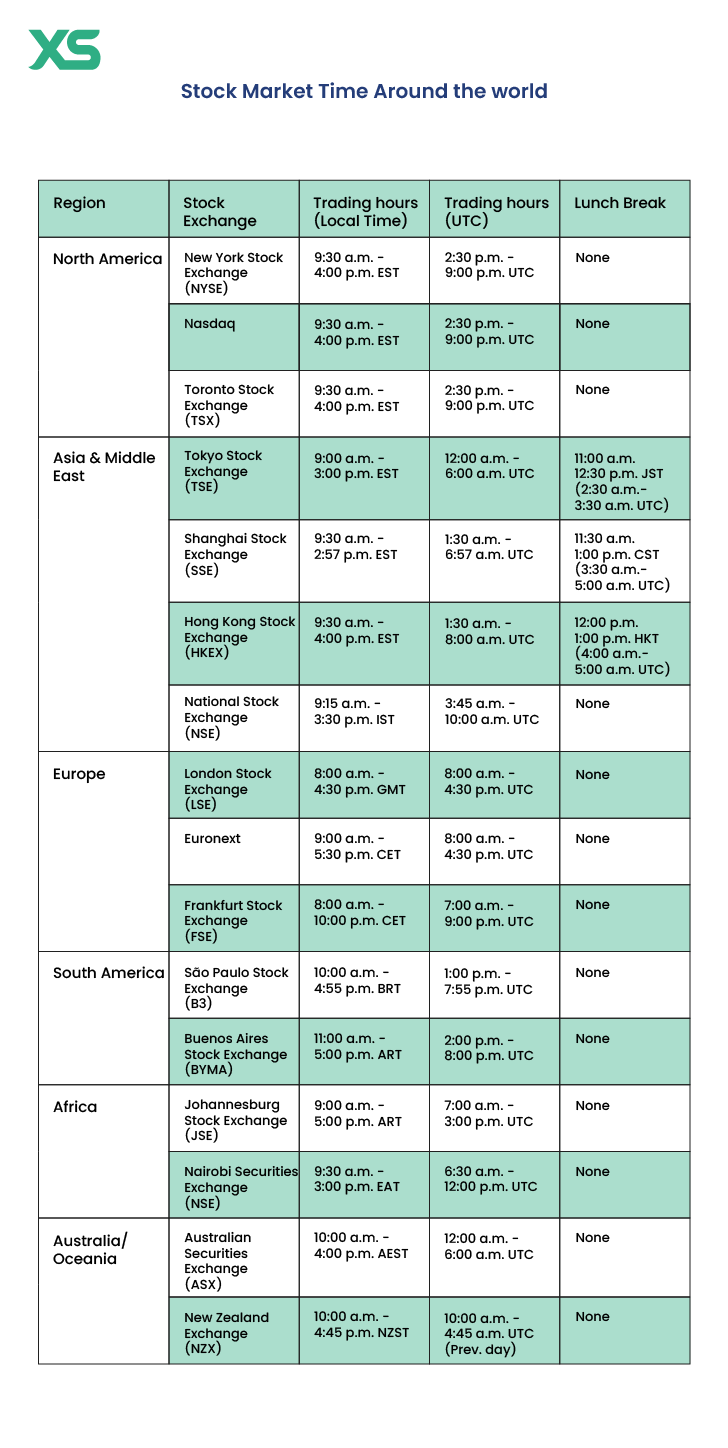
At the heart of any exchange’s operation are its standard trading hours, the period during which the vast majority of transactions occur. For the NYSE, these hours are meticulously defined, providing structure and predictability to the millions of participants who engage with it daily.
Standard Operating Schedule
The New York Stock Exchange operates on a consistent schedule, opening its doors each weekday at 9:30 AM Eastern Time (ET) and closing at 4:00 PM ET. This six-and-a-half-hour window is when the market is at its most liquid and active, facilitating the buying and selling of equities and other financial instruments. This timeframe has been largely consistent for decades, evolving from much shorter periods in the exchange’s early history to accommodate the growing volume and complexity of modern finance. The fixed schedule allows market participants worldwide to plan their strategies, monitor their portfolios, and react to unfolding economic news or corporate announcements within a predictable framework. Beyond the specific times, the consistency itself builds confidence, knowing that the market will be available and functioning reliably within these parameters, barring unforeseen catastrophic events. Understanding these core hours is the foundational knowledge for anyone looking to engage with the stock market, whether they are a high-frequency trader or a long-term investor. It’s during these hours that market depth is typically at its greatest, meaning there are more buyers and sellers available, which generally leads to tighter bid-ask spreads and more efficient price discovery.
Understanding Pre-Market and After-Hours Trading
While the 9:30 AM to 4:00 PM ET window defines the “regular” trading day, market activity surrounding the NYSE isn’t confined to these hours. The advent of electronic trading systems has ushered in the era of pre-market and after-hours trading, extending the opportunities and challenges for investors. Pre-market trading typically begins as early as 4:00 AM ET and runs until the market officially opens, while after-hours trading can extend from 4:00 PM ET until 8:00 PM ET. These extended sessions are crucial because a significant portion of market-moving news – such as earnings reports, mergers and acquisitions announcements, and major economic data releases – often occur outside regular trading hours.
For instance, companies frequently release their quarterly earnings results shortly after the market closes or before it opens, allowing investors time to digest the information before or during the next trading day. Trading during these periods allows market participants to react immediately to such news, potentially capitalising on early price movements. However, these extended sessions come with distinct characteristics and risks. Liquidity is generally much lower than during regular hours, meaning there are fewer buyers and sellers. This reduced liquidity can lead to wider bid-ask spreads, making it more expensive to execute trades, and increased price volatility, where even small orders can cause significant price swings. Consequently, while pre-market and after-hours trading offer flexibility and opportunities for quick reactions, they also demand a heightened level of caution and sophisticated understanding of market dynamics.
Recognising Market Holidays and Weekends
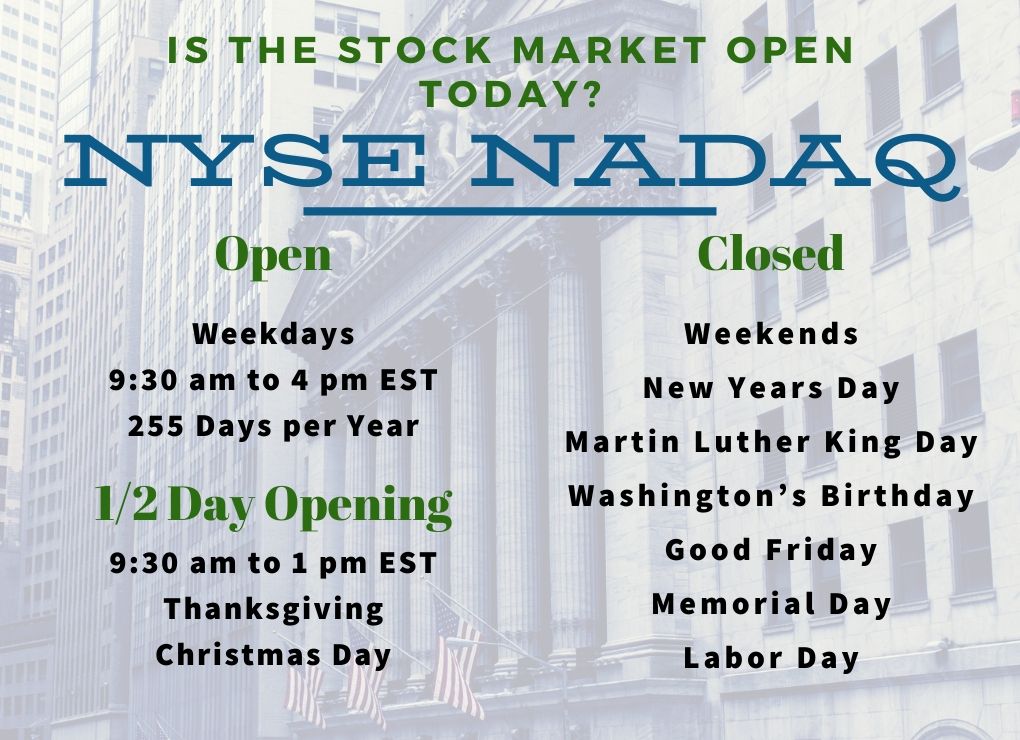
Crucially, the NYSE does not operate continuously. Like most financial institutions, it observes federal holidays and, naturally, remains closed on weekends (Saturdays and Sundays). Major holidays such as New Year’s Day, Martin Luther King, Jr. Day, Presidents’ Day, Good Friday, Memorial Day, Juneteenth National Independence Day, Independence Day, Labor Day, Thanksgiving Day, and Christmas Day typically see the exchange fully closed. Occasionally, specific circumstances or market events might lead to an early close or an unscheduled closure, though these are rare and typically announced well in advance. Keeping track of the NYSE’s holiday schedule is paramount for any investor or trader. Failing to do so can lead to missed opportunities, unexecuted orders, or frustration when expecting market access that isn’t available. Financial news outlets, brokerage platforms, and the NYSE’s official website provide updated calendars of these closures. Understanding when the market is truly “open” versus “closed” is a fundamental aspect of effective financial planning and trading strategy, preventing misguided attempts to trade and ensuring that investors align their expectations with the market’s operational reality.
Why the Opening Bell Matters: More Than Just a Ceremony
The ringing of the opening bell at the NYSE is one of the most iconic images in finance, symbolising the start of another day’s pursuit of capital and growth. But its significance goes far beyond mere ceremony, acting as a critical point of convergence for information, sentiment, and capital.
The Significance for Investors and Traders
For millions of investors and traders worldwide, the NYSE opening bell marks a pivotal moment. For long-term investors, the opening provides the first fresh data points of the day, allowing them to assess the initial market reaction to overnight news, global developments, or pre-market indicators. While they may not be making immediate trades based on the opening, understanding this initial sentiment helps inform their broader portfolio strategy. For day traders and short-term speculators, the opening is absolutely critical. The first few minutes, often called the “opening drive,” are characterised by heightened volatility and massive volume as all orders accumulated overnight, and pre-market activity consolidates into live market prices. This period offers significant opportunities for quick profits, but also carries elevated risk due to unpredictable price swings. Traders often develop specific opening range breakout strategies or gap-fill strategies to capitalise on these early movements. Moreover, the opening price of a stock can often set psychological benchmarks for the rest of the day, influencing subsequent trading patterns and investor behaviour.
Unpacking Opening Volatility and Price Discovery
The volatility observed at market open is a natural consequence of the market’s structure. Overnight, various economic announcements, geopolitical events, company-specific news, and shifts in global sentiment accumulate. When the market opens, all these dispersed pieces of information converge, and participants rush to incorporate them into their valuations. This confluence of new data and eager trading activity results in rapid price adjustments. Initial price movements are not just random; they are part of a crucial process known as price discovery. This is where the true value of a security is actively negotiated between buyers and sellers based on the latest available information.
Order imbalances also play a significant role. If there’s an overwhelming number of buy orders for a stock at the open due to positive news, its price will likely gap up significantly. Conversely, negative news can lead to a sharp decline. Market makers and institutional traders work to absorb this initial shock, facilitating liquidity and helping to stabilise prices, but the initial phase remains inherently dynamic. Understanding this period of intense price discovery allows sophisticated investors to gauge market sentiment effectively and react to significant shifts, while less experienced participants might find it prudent to observe from the sidelines until the initial frenzy subsides.
Global Repercussions: The NYSE’s Influence
As the world’s largest stock exchange by market capitalisation, the NYSE’s opening and its initial movements have profound global repercussions. Its status as a benchmark for capital markets means that its performance heavily influences other major exchanges across continents. When the NYSE opens, it often reflects sentiment from Asian and European trading sessions that have already concluded or are still active. A strong opening on the NYSE can inject optimism into European markets still trading, or provide a positive tone for Asian markets set to open later. Conversely, a weak or volatile opening can send jitters across global indices.
Furthermore, many global companies are dual-listed on the NYSE, and their performance there can directly impact their share price on their home exchanges. International funds and institutional investors heavily exposed to U.S. equities closely monitor the NYSE opening to adjust their global portfolios. The interconnectedness of modern financial markets ensures that the liquidity, sentiment, and price action originating from the NYSE’s opening bell are not confined to New York but serve as a crucial pulse for the global economy, influencing currency markets, commodity prices, and investor confidence worldwide.
Strategic Trading: Leveraging Market Open Dynamics
The unique characteristics of the market opening demand different strategic approaches, depending on an investor’s goals, risk tolerance, and time horizon. What works for a day trader may be entirely irrelevant for a long-term investor.
For Long-Term Investors: Big Picture, Little Daily Grind

Long-term investors, whose strategy revolves around holding assets for months, years, or even decades, typically pay less attention to the minute-by-minute fluctuations around the NYSE open. Their focus is on fundamental analysis: the intrinsic value of a company, its growth prospects, management quality, and macroeconomic trends. For these investors, daily volatility, including that at market open, is often considered “noise.” While they will still be aware of major market-moving news released pre-market, their decisions to buy or sell are rarely dictated by the first few minutes of trading. Instead, they might use the opening reaction to gauge the broader market’s interpretation of significant events, but their execution decisions are more likely to be based on pre-determined price targets or rebalancing schedules. They might place limit orders that are executed only when a stock hits a desired price point, regardless of the time of day, rather than attempting to catch the opening rush. Their strategy is about compounding returns over time, not about exploiting intraday price inefficiencies. Therefore, for long-term investors, the importance of the exact NYSE open time is more about having market access to place orders throughout the day rather than acting on immediate opening price action.
For Day Traders: Precision, Speed, and Risk Management
For day traders, who aim to profit from short-term price movements and close all positions before the market closes, the NYSE opening is arguably the most crucial period of the day. The heightened volatility and massive liquidity offer prime opportunities for quick gains. Strategies employed by day traders around the open often involve:
-
Opening Range Breakouts: Identifying stocks that break above or below their initial trading range within the first 5-30 minutes, anticipating further momentum.
-
Gap Trading: Capitalising on “gaps” – significant differences between a stock’s closing price yesterday and its opening price today – often caused by overnight news. Traders look for opportunities to “fill the gap” or to ride the momentum in the direction of the gap.
-
Momentum Trading: Identifying stocks experiencing significant buying or selling pressure and joining the trend early on, exiting quickly as momentum wanes.
Success in this environment requires incredible speed, robust analytical tools, and, most importantly, stringent risk management. Stop-loss orders are critical to limit potential losses from adverse price swings, and traders must be disciplined enough to cut losses quickly. The unpredictability of the open means that while opportunities are abundant, so are the risks. Without a clear strategy, precise execution, and strict adherence to risk parameters, day trading at market open can lead to significant financial setbacks. Many experienced day traders actually prefer to wait 15-30 minutes after the open for the initial frenzy to subside and clearer trends to emerge before committing significant capital.
Navigating Pre- and After-Hours: Opportunities and Pitfalls
Extended-hours trading (pre-market and after-hours) presents a unique set of opportunities and pitfalls for various types of traders. The primary opportunity lies in the ability to react immediately to news released outside regular trading hours, potentially getting ahead of the general market. For example, a company announcing stellar earnings after the market closes might see its stock price jump in after-hours trading, offering early movers a chance to profit before the next day’s regular session.
However, the reduced liquidity in these sessions creates significant challenges. Wider bid-ask spreads mean that the difference between the highest price a buyer is willing to pay and the lowest price a seller is willing to accept is greater. This translates to higher transaction costs and can make it difficult to execute large orders without significantly impacting the price. Price volatility can also be exacerbated, as fewer participants mean a single large order can move the stock price substantially. Furthermore, institutional participation is generally lower, leaving retail traders more exposed to potential manipulation or exaggerated price movements. Novice traders are often advised to approach extended-hours trading with extreme caution, if at all, due to these inherent risks. For those who do engage, using limit orders (which specify the maximum or minimum price at which you are willing to buy or sell) rather than market orders (which execute at the best available current price) is crucial to avoid unexpected fills at unfavourable prices.
The Technological Edge: Tools for Informed Market Participation
In the modern era, understanding NYSE opening times is just one piece of the puzzle. Leveraging technology has become indispensable for informed and effective market participation. The digital transformation of finance has equipped investors with tools that enhance their ability to monitor, analyse, and execute trades around the clock.
Real-Time Data and Trading Platforms
The ability to access real-time market data is non-negotiable for anyone serious about investing or trading around the NYSE open. Trading platforms provided by brokerages, financial news websites, and specialised data vendors offer instantaneous updates on stock prices, trading volumes, bid-ask spreads, and other critical metrics. These platforms often come equipped with advanced charting tools, technical indicators, and news feeds that allow users to identify patterns, gauge market sentiment, and make rapid decisions. Without real-time data, an investor would be operating blind, relying on delayed information that could be outdated within seconds, especially during volatile periods like the market open. The best platforms integrate these features seamlessly, providing a comprehensive dashboard that empowers users to monitor their watchlists, execute trades with precision, and manage their portfolio efficiently. The speed and reliability of these data feeds are paramount, as even a slight delay can mean the difference between profit and loss, particularly for high-frequency traders reacting to micro-movements at the open.
The Role of Algorithmic Trading at Market Open
The influence of algorithmic trading (Algos) and high-frequency trading (HFT) firms is particularly pronounced at the NYSE open. These sophisticated computer programs execute trades at speeds unimaginable to human traders, often within microseconds. At the market open, Algos are programmed to process vast amounts of incoming data – news headlines, pre-market price action, order book imbalances – and react instantaneously. They are designed to exploit minute price discrepancies, provide liquidity, or execute complex strategies based on pre-defined rules. Their presence contributes significantly to the high trading volumes and rapid price fluctuations seen at the open. While Algos can enhance market efficiency by narrowing spreads and providing liquidity, their speed and complexity can also exacerbate volatility, especially during periods of extreme uncertainty. Understanding that a substantial portion of the initial market activity is driven by these automated systems is crucial. Retail investors, while unable to compete on speed, can benefit by observing the patterns Algos create or by strategically placing orders to interact with their liquidity, rather than trying to outpace them.
Staying Ahead: News, Analysis, and Time Zones
Beyond data and platforms, staying informed requires diligent attention to news and analysis. Major economic announcements (e.g., inflation data, employment reports), central bank decisions, corporate earnings, and geopolitical events can all dramatically impact market sentiment and stock prices at the open. Reputable financial news sources, analyst reports, and economic calendars are essential tools for anticipating potential market reactions. Furthermore, understanding time zones is critical for international investors. The NYSE’s 9:30 AM ET open translates to different local times globally, requiring careful planning to ensure active participation or monitoring. For instance, an investor in London needs to remember that the NYSE opens at 2:30 PM GMT, while someone in Tokyo will be looking at 10:30 PM JST. Many trading platforms offer time zone conversion features, but personal awareness is key to avoiding missed opportunities or misinterpreting market events due to time differences. A disciplined routine of checking global news feeds and aligning them with the NYSE’s schedule is a hallmark of an informed market participant.
Beyond the Clock: The Future of Market Access and Trading
While the 9:30 AM to 4:00 PM ET schedule has been a steadfast tradition, the financial world is constantly evolving. Technological advancements, changing investor demands, and global competition are pushing boundaries, hinting at a future where market access and trading might transcend current limitations.
Continuous Trading and Fractional Shares
The concept of a fixed market open and close is increasingly being challenged by the desire for continuous trading. The crypto market, for example, operates 24/7, providing a glimpse into a world without defined trading hours. As financial technology advances, traditional exchanges might face pressure to extend their operational windows, potentially moving towards near-24-hour trading to accommodate a globalised investor base and prevent significant price gaps between sessions. This would fundamentally alter how investors approach the “opening” and “closing,” shifting focus to moments of major news rather than arbitrary time markers.
Another significant innovation impacting accessibility is the rise of fractional shares. This allows investors to buy a portion of a stock rather than a whole share, making high-priced stocks more accessible to those with limited capital. While not directly related to market opening times, the increasing democratisation of investing through fractional shares means that a wider array of individuals can participate in the NYSE, potentially increasing overall liquidity and diversity of participants, regardless of when they choose to trade within the market’s operational hours. These trends point towards a future where market access is not only more fluid but also more inclusive.
Decentralization and Crypto’s Influence
The emergence of decentralised finance (DeFi) and the growing acceptance of cryptocurrencies introduce another layer of complexity and potential disruption to traditional market structures like the NYSE. Cryptocurrencies trade around the clock, on decentralised exchanges (DEXs) that operate without a central authority. This model challenges the very concept of a physical exchange with defined hours. While the NYSE and traditional finance are far from being supplanted, the principles of continuous trading, global accessibility, and decentralised governance exemplified by crypto markets could influence future developments in equity trading. Discussions around tokenisation of traditional assets, for instance, could lead to novel trading mechanisms that operate outside conventional hours, allowing investors to trade “ownership” of a stock even when the underlying exchange is closed. The future might see a hybrid model where traditional stocks become tradable on platforms that offer greater flexibility, blurring the lines between traditional market hours and continuous digital asset trading.
The Evolving Landscape of Market Efficiency
The relentless pursuit of market efficiency continues to drive innovation. From the shift from floor trading to electronic systems, to the rise of algorithmic trading, every development aims to make price discovery more accurate and transaction costs lower. The future of NYSE trading hours and access will likely be shaped by this ongoing quest. Regulators balance the need for investor protection with the desire for innovation. The competitive landscape among exchanges also plays a role, pushing them to offer more appealing services, which could include extended trading hours or more sophisticated market mechanisms. As global financial markets become even more integrated, the “what time NYSE open” question might evolve from a simple query about fixed hours to a more nuanced understanding of continuous, technology-driven market access that caters to an ever-expanding and globally diverse investor base. The rhythms of global capital are intricate and dynamic, and while the NYSE’s traditional hours remain a cornerstone, the financial world is undoubtedly marching towards an even more interconnected and accessible future.
aViewFromTheCave is a participant in the Amazon Services LLC Associates Program, an affiliate advertising program designed to provide a means for sites to earn advertising fees by advertising and linking to Amazon.com. Amazon, the Amazon logo, AmazonSupply, and the AmazonSupply logo are trademarks of Amazon.com, Inc. or its affiliates. As an Amazon Associate we earn affiliate commissions from qualifying purchases.