
In the rapidly evolving landscape of digital commerce, platforms and services are continually striving to deliver more seamless, efficient, and integrated experiences for both merchants and consumers. One such transformative offering that has emerged from Amazon is “Buy with Prime.” Far more than just a payment button, Buy with Prime represents a sophisticated technological integration designed to extend the acclaimed benefits of Amazon Prime – primarily fast, free shipping and a trusted checkout experience – to third-party e-commerce websites.
At its core, Buy with Prime is a testament to Amazon’s ambition to permeate the broader digital retail ecosystem, leveraging its formidable technological infrastructure, from logistics and fulfillment networks to payment processing and customer service. For merchants, it offers an unprecedented opportunity to tap into the proven advantages of Amazon’s operational prowess without selling directly on the Amazon marketplace. For consumers, it signifies an expansion of the familiar, convenient, and reliable Prime shopping experience across a wider array of online stores. This article delves into Buy with Prime from a purely technological perspective, exploring its mechanics, implications for e-commerce tech stacks, and its role in shaping the future of online retail.

1. Demystifying Buy with Prime: An E-commerce Technology Perspective
Buy with Prime isn’t merely a branding exercise; it’s a significant technological undertaking that reconfigures traditional e-commerce paradigms. From a tech standpoint, it’s an API-driven solution that effectively bridges Amazon’s backend systems with external merchant storefronts, offering a suite of services typically reserved for products sold directly on Amazon.
Bridging Platforms: The Core Technological Premise
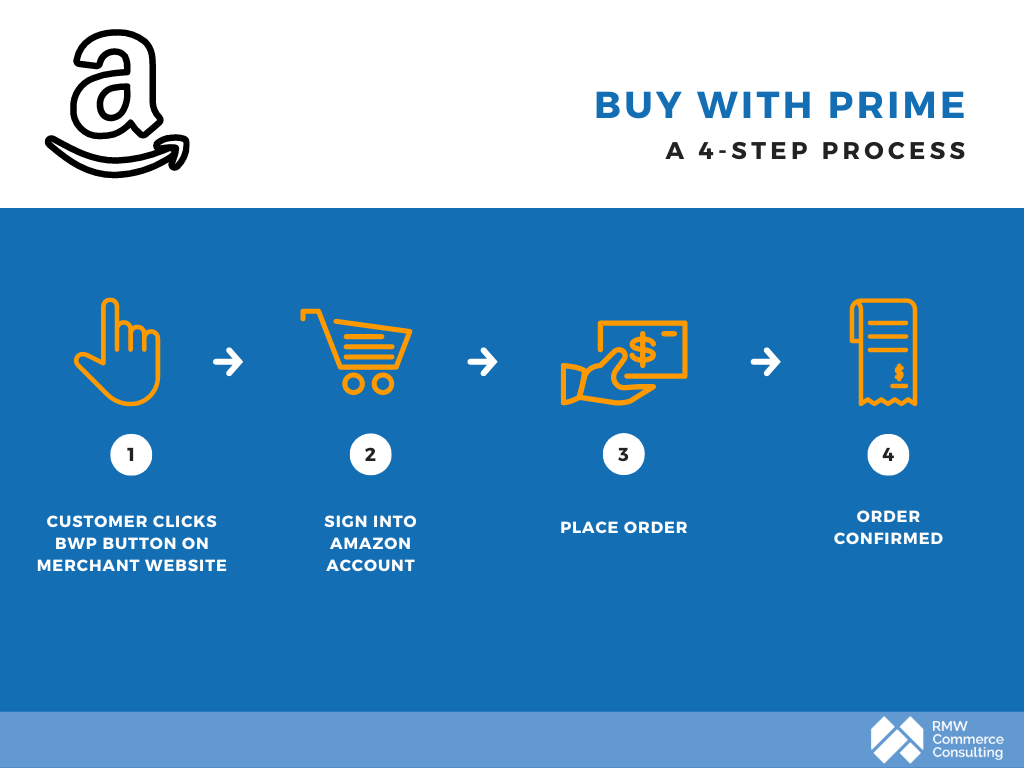
The fundamental technological premise of Buy with Prime lies in its ability to establish a secure and efficient conduit between an independent e-commerce website and Amazon’s vast fulfillment and payment infrastructure. This involves a complex interplay of data exchange, system synchronization, and operational orchestration. When a customer clicks the “Buy with Prime” button on a merchant’s site, a series of technological handshakes occur. The system authenticates the customer’s Prime membership status, accesses their shipping and payment information securely stored within their Amazon account, and initiates the fulfillment process using Amazon’s logistics network. This seamless transition from an external site to Amazon’s backend without ever leaving the merchant’s domain is a key technological achievement, minimizing friction and maximizing conversion for the customer. It represents a significant step towards a more unified e-commerce experience, blurring the lines between proprietary platforms and independent digital storefronts.
More Than Just a Badge: The Infrastructure at Play
The “Buy with Prime” badge, while visually prominent, belies the immense technological infrastructure powering it. This isn’t just a simple payment gateway integration; it encompasses Amazon’s entire fulfillment ecosystem. This includes:
-
Advanced Warehouse Management Systems (WMS): Merchants participating in Buy with Prime must send their eligible inventory to Amazon’s fulfillment centers. This implies intricate WMS integrations that manage inventory receipt, storage, picking, packing, and dispatch using Amazon’s highly optimized algorithms and robotic automation.
-
Sophisticated Logistics Network: Access to Amazon’s formidable network of planes, trucks, and last-mile delivery partners is a cornerstone. The underlying technology involves real-time route optimization, predictive analytics for delivery windows, and robust tracking systems that provide customers with consistent updates, regardless of where they purchased the item.
-
Secure Payment Processing and Fraud Detection: Leveraging Amazon Pay, the service integrates a highly secure payment processing system that handles transactions with the same level of encryption and fraud protection as purchases made directly on Amazon. This reduces risk for both merchants and consumers, relying on Amazon’s extensive experience in digital transaction security.
-
Customer Service Integration: While the merchant typically handles product-specific customer service, Prime order-related issues (shipping, delivery) can tap into Amazon’s renowned customer service infrastructure, a critical trust signal for consumers and a technological burden alleviated for merchants.
Understanding Buy with Prime from this perspective reveals it as a potent example of platform-as-a-service (PaaS) in the e-commerce space, offering a ready-to-integrate solution that leverages a behemoth’s operational tech stack.
2. The Technical Blueprint: How Buy with Prime Integrates and Operates
The successful implementation of Buy with Prime hinges on its technical architecture and the ease with which it can be integrated into diverse e-commerce environments. This involves carefully designed APIs, robust data management, and stringent security protocols.
Seamless API Integration: Connecting Merchant Stores
For merchants, integrating Buy with Prime typically involves leveraging a set of APIs (Application Programming Interfaces) and potentially SDKs (Software Development Kits) provided by Amazon. These tools facilitate the crucial connection points:
-
Product Information API: Allows merchants to sync their product catalogs, including SKUs, descriptions, images, and inventory levels, with Amazon’s system for Buy with Prime eligibility and fulfillment. This ensures consistency and accurate fulfillment.
-
Checkout Widget API: Enables the dynamic rendering of the “Buy with Prime” button and associated Prime benefits (like estimated delivery times) directly on product pages and during checkout. This widget interacts in real-time with Amazon’s systems to display relevant Prime information.
-
Order Management API: Facilitates the transfer of order details from the merchant’s site to Amazon’s fulfillment system upon successful purchase via Buy with Prime. This includes customer shipping addresses, payment confirmation, and product specifics.
-
Tracking and Notification APIs: Provides merchants with access to Amazon’s robust tracking information for each Buy with Prime order, which can then be displayed to the customer on the merchant’s site or through their own notification systems.
The elegance of this API-first approach is its flexibility, allowing integration with various e-commerce platforms (e.g., Shopify, Magento, custom-built solutions) with varying degrees of complexity, providing a common language for disparate systems to communicate effectively.
Orchestrating the Customer Journey: From Click to Delivery
The technical orchestration behind a Buy with Prime purchase is a finely tuned process designed for speed and reliability:
-
Product Page Interaction: When a customer views an eligible product, the merchant’s website uses Amazon’s APIs to query Prime eligibility and display real-time shipping estimates next to the “Buy with Prime” button.
-
Authentication and Payment: Upon clicking the button, a secure pop-up or redirect to Amazon Pay appears. Here, the customer logs in with their Amazon credentials. This step leverages Amazon’s OAuth 2.0 framework for secure authentication and authorizes payment using their stored methods.
-
Order Placement and Fulfillment Trigger: Once authorized, the order details are securely transmitted to Amazon’s fulfillment network. This triggers the complex logistical dance: inventory allocation, picking, packing, and shipping label generation, all managed by Amazon’s automated systems.
-
Real-time Tracking and Notifications: As the order progresses through fulfillment and shipping, Amazon’s tracking systems update continuously. This data is fed back to the merchant via APIs, allowing the merchant (or Amazon directly) to provide customers with accurate, up-to-the-minute status updates.
This end-to-end orchestration minimizes manual intervention, leveraging sophisticated automation and real-time data processing to ensure a smooth journey from intent to delivery.
Data Flow and Security Protocols
Handling sensitive customer and transactional data across multiple platforms requires an exceptionally robust security framework. Buy with Prime adheres to stringent protocols:
-
Tokenization and Encryption: Customer payment details are never directly shared with the merchant. Instead, Amazon Pay uses tokenization to represent payment information securely, and all data in transit is encrypted using industry-standard protocols like TLS.
-
PCI DSS Compliance: Amazon’s payment processing infrastructure is rigorously compliant with PCI DSS (Payment Card Industry Data Security Standard) Level 1, the highest level of certification, ensuring the secure handling of credit card data.
-
Data Minimization: Merchants primarily receive order-related information (what was purchased, where it’s shipping, and the customer’s contact details for support). Sensitive financial information remains within Amazon’s secure environment.
-
Fraud Detection Algorithms: Amazon deploys advanced machine learning algorithms for real-time fraud detection, protecting both merchants and customers from fraudulent transactions, a critical component of any e-commerce security stack.
These measures ensure that while Amazon’s services are extended, the integrity and privacy of customer data are maintained at the highest level, a crucial trust factor in digital commerce.
3. Technological Advantages for Merchants: Enhancing E-commerce Capabilities
For third-party merchants, integrating Buy with Prime isn’t just about offering a new payment option; it’s about leveraging advanced technological capabilities that might otherwise be prohibitively expensive or complex to build and maintain independently.
Leveraging Amazon’s Logistics Network: A Scalability Solution
One of the most compelling technological advantages is the direct access to Amazon’s world-class logistics and fulfillment network. For small to medium-sized businesses, building out a comparable infrastructure – from strategically located warehouses to advanced inventory management and last-mile delivery solutions – is an enormous undertaking. Buy with Prime offers:
-
Instant Scalability: Merchants can scale their fulfillment operations instantly, handling spikes in demand without investing in additional warehouse space, staff, or complex WMS software. Amazon’s elastic infrastructure absorbs these fluctuations.
-
Optimized Fulfillment Algorithms: Amazon’s systems use sophisticated algorithms to optimize inventory placement, picking routes, packing methods, and carrier selection, ensuring efficiency and speed. Merchants gain the benefit of these decades of technological refinement.
-
Reduced Operational Overhead: By outsourcing fulfillment, merchants can reduce their own IT footprint related to logistics, focusing instead on product development, marketing, and their core e-commerce platform.
This partnership transforms a merchant’s fulfillment capability from a potential bottleneck into a competitive advantage, powered by Amazon’s massive investment in logistics technology.
Payment Processing Efficiency and Trust Signals
Amazon Pay, integrated into Buy with Prime, offers significant technological advantages:

-
Streamlined Checkout Experience: By allowing customers to use their Amazon credentials, the checkout process is dramatically simplified, often reducing it to just a few clicks. This minimizes cart abandonment, a persistent technological challenge in e-commerce.
-
Enhanced Security and Fraud Protection: Merchants benefit from Amazon’s robust fraud detection systems and PCI-compliant infrastructure, which can be challenging and costly for individual businesses to implement and maintain at the same level.
-
Built-in Customer Trust: The Amazon brand carries significant trust in the digital payment and e-commerce space. Displaying “Buy with Prime” and leveraging Amazon Pay acts as a powerful trust signal, assuring customers of a secure and reliable transaction.
These efficiencies contribute directly to higher conversion rates and a smoother, more secure transaction experience, driven by proven payment technologies.
Data-Driven Insights and Analytics via Integration
While customer privacy is paramount, Buy with Prime does provide merchants with valuable data through integration:
-
Order Performance Metrics: Merchants gain access to dashboards that display order volumes, fulfillment times, and delivery performance for their Buy with Prime orders, allowing them to monitor the efficiency of the service.
-
Customer Insights (Aggregate): While granular individual customer data is protected, merchants can understand aggregate trends related to Buy with Prime customers, informing their marketing and product strategies.
-
Seamless Integration with Analytics Tools: The data generated from Buy with Prime orders can be integrated into a merchant’s existing analytics platforms (e.g., Google Analytics, CRM systems), providing a holistic view of their sales channels and customer behavior.
This data, while respecting privacy, empowers merchants to make more informed decisions about their products, pricing, and overall e-commerce strategy, leveraging the analytical capabilities inherent in the Amazon ecosystem.
4. The Broader Technological Impact on E-commerce and Digital Retail
Buy with Prime is more than just a new service; it’s a potent force reshaping the technological landscape of e-commerce, influencing platform interoperability, consumer expectations, and competitive dynamics.
Redefining E-commerce Platform Interoperability
Historically, e-commerce platforms have often operated as somewhat walled gardens, with limited seamless integration between different ecosystems. Buy with Prime challenges this by demonstrating a highly effective model for cross-platform interoperability.
-
Standardizing Integration: Amazon’s approach, using well-defined APIs and established protocols, sets a de facto standard for how large service providers can integrate with smaller, independent storefronts. This could pave the way for more “platform-agnostic” e-commerce features.
-
Promoting an Open Web Approach: While Amazon is a giant, its willingness to extend its core services to external sites promotes a more open and integrated web, where the best features from different providers can be combined to create superior user experiences.
-
Challenging Monolithic Platforms: By offering modular services, Buy with Prime encourages a future where e-commerce sites might be composed of best-of-breed components (e.g., Shopify for storefront, Amazon for fulfillment, Stripe for payments), rather than relying on a single, monolithic platform for everything.
This move signals a broader trend towards composable commerce, where various technological components are assembled to create flexible and powerful digital retail experiences.
Shaping Consumer Expectations for Digital Shopping Experiences
The widespread availability of Buy with Prime fundamentally shifts consumer expectations for online shopping, leveraging Amazon’s established benchmark for service.
-
Fast, Free Shipping as a Baseline: What was once a premium feature is increasingly becoming a non-negotiable expectation. Buy with Prime normalizes Amazon’s rapid delivery standards across a wider swath of the internet, forcing other retailers and logistics providers to keep pace.
-
Frictionless Checkout as a Standard: The one-click or low-friction checkout experience enabled by Amazon Pay and Prime membership becomes a new standard, pressuring other e-commerce platforms to optimize their own checkout flows for speed and simplicity.
-
Universal Trust and Reliability: The “Prime” badge instills a sense of trust, security, and reliability. Consumers begin to expect this level of assurance across all their online purchases, challenging merchants to build similar levels of confidence or integrate with services that provide it.
This technological influence effectively “Amazon-ifies” the broader internet, elevating the user experience benchmark for digital commerce across the board.
Competitive Dynamics and Innovation in Logistics Technology
Buy with Prime intensifies competition not just among retailers, but also among technology providers in the logistics and e-commerce infrastructure space.
-
Pressure on 3PLs and Shipping Carriers: Traditional third-party logistics (3PL) providers and shipping carriers face increased pressure to match Amazon’s speed, efficiency, and cost-effectiveness. This drives innovation in their own tracking, routing, and fulfillment technologies.
-
E-commerce Platform Response: Other e-commerce platforms and payment providers are compelled to develop or acquire similar integrated fulfillment and payment solutions to retain merchants and compete for market share. This could lead to a wave of mergers, acquisitions, and new product development in the tech sector.
-
Investment in Automation and AI: The drive for faster, more accurate fulfillment pushes further investment in warehouse automation, AI-driven inventory management, predictive logistics, and drone/robot delivery technologies across the industry.
In essence, Buy with Prime acts as a catalyst, accelerating technological innovation throughout the e-commerce supply chain, pushing the boundaries of what’s possible in digital retail.
5. Navigating Technical Challenges and Future Horizons
While Buy with Prime offers substantial advantages, its implementation and future evolution also present technical challenges and exciting opportunities.
Integration Complexities and Compatibility Considerations
Despite the API-driven approach, real-world integration can present complexities:
-
Platform-Specific Customizations: Different e-commerce platforms (e.g., Shopify, BigCommerce, WooCommerce, custom-built) have unique architectures and customization options, which can sometimes complicate the seamless integration of external widgets and APIs.
-
Inventory Management Synchronization: Maintaining real-time, accurate inventory synchronization between a merchant’s existing inventory systems (if they also sell via other channels) and Amazon’s fulfillment centers for Buy with Prime can be a significant technical challenge. Discrepancies can lead to overselling or underselling.
-
Attribute Mapping: Accurately mapping product attributes, variations, and pricing between a merchant’s product catalog and Amazon’s system requires careful technical setup to ensure consistency.
Addressing these requires robust development teams, thorough testing, and potentially custom middleware to ensure smooth operation across diverse tech stacks.
Scaling Infrastructure and Maintaining Performance
For Amazon, scaling Buy with Prime presents its own set of technical hurdles:
-
Geographic Expansion: Extending the Prime fulfillment network and payment services globally involves navigating diverse regulations, logistics challenges, and currency conversions, requiring significant localized technological adaptations.
-
Peak Load Management: Maintaining the performance and uptime of the entire integrated system during peak shopping periods (e.g., Black Friday, Cyber Monday) demands an incredibly resilient and scalable cloud infrastructure capable of handling massive transactional volumes.
-
Latency Management: Ensuring low latency for API calls and real-time updates across vast geographical distances is crucial for maintaining a fast and seamless user experience.
These challenges necessitate continuous investment in cloud computing, network infrastructure, and distributed systems architecture.
The Future of Unified E-commerce Experiences and Personalization Tech
Looking ahead, Buy with Prime is a precursor to an even more unified and personalized e-commerce future, driven by advanced technologies:
-
Hyper-Personalization: Imagine Buy with Prime integrating with AI-driven personalization engines that not only suggest products but also dynamically adjust shipping options or even offer predictive re-ordering based on individual Prime member behavior across all their online purchases, not just Amazon.
-
Voice Commerce Integration: The integration of Buy with Prime with voice assistants (like Alexa) could enable seamless voice-activated purchases from third-party sites, further blurring the lines between browsing and buying.
-
Augmented Reality (AR) Shopping: Future integrations could allow customers to virtually “try on” or “place” products from Buy with Prime merchants in their own environment using AR, leading to more informed purchasing decisions.
-
Blockchain for Supply Chain Transparency: The underlying logistics network could eventually leverage blockchain technology for enhanced supply chain transparency, tracking products from origin to delivery with immutable records, building even greater trust.
Buy with Prime stands as a powerful example of how large technology platforms can extend their core capabilities to empower independent businesses and elevate the overall consumer experience. Its continued evolution will undoubtedly play a pivotal role in shaping the technological backbone of tomorrow’s digital commerce.
aViewFromTheCave is a participant in the Amazon Services LLC Associates Program, an affiliate advertising program designed to provide a means for sites to earn advertising fees by advertising and linking to Amazon.com. Amazon, the Amazon logo, AmazonSupply, and the AmazonSupply logo are trademarks of Amazon.com, Inc. or its affiliates. As an Amazon Associate we earn affiliate commissions from qualifying purchases.