
The allure of the American stock market is undeniable. Home to some of the world’s largest, most innovative, and most profitable companies, U.S. equities represent a significant opportunity for investors seeking growth, stability, and diversification. From tech giants shaping the future to venerable industrial titans, the American market offers a vast landscape of investment possibilities. However, for many, especially those new to investing or residing outside the U.S., the process of buying American stocks can seem daunting. This comprehensive guide will demystify the steps involved, offering insights and practical advice to help you navigate the journey successfully.

Why Invest in American Stocks?
Before diving into the “how,” it’s crucial to understand the compelling reasons why investors worldwide consistently turn their attention to the U.S. stock market. Its inherent strengths make it a cornerstone of many well-diversified portfolios.
Market Stability and Growth Potential
The U.S. economy is the largest in the world, characterized by its resilience, innovation, and robust regulatory framework. This translates into a relatively stable investment environment compared to many emerging markets. Historically, U.S. stock markets, as represented by indices like the S&P 500, have demonstrated a strong upward trend over the long term, albeit with periodic corrections. This consistent growth potential, fueled by technological advancements, consumer spending, and corporate profitability, makes American stocks attractive for capital appreciation.
Diversification Benefits for Global Investors
For investors based outside the United States, adding American stocks to a portfolio offers significant diversification benefits. It reduces concentration risk that might arise from being solely invested in one’s home country’s market. U.S. companies often derive a substantial portion of their revenue from international markets, indirectly offering exposure to global economic growth even when investing purely in U.S.-listed equities. This geographic and economic diversification can enhance portfolio stability and improve risk-adjusted returns.
Access to Leading Innovations and Global Brands
The U.S. is a hotbed of innovation, particularly in technology, biotechnology, and renewable energy. Investing in American stocks means gaining access to companies at the forefront of global trends, developing cutting-edge products and services that shape our future. Furthermore, many U.S. corporations are global brands with strong international recognition and market penetration, offering exposure to diverse consumer bases and economies worldwide. Think of household names in technology, consumer goods, pharmaceuticals, and finance – many are headquartered and listed in the U.S.
Understanding the Basics Before You Buy
Embarking on your investment journey requires a foundational understanding of what you’re buying and the market environment. A little preparation goes a long way in making informed decisions.
What is a Stock?
At its core, a stock (or share) represents a fractional ownership interest in a company. When you buy a stock, you become a shareholder, entitling you to a claim on the company’s assets and earnings. As the company grows and becomes more profitable, the value of its shares typically increases, leading to capital gains for investors. Some companies also distribute a portion of their profits to shareholders in the form of dividends.
Key Market Indices (S&P 500, Dow Jones, Nasdaq)
The performance of the overall U.S. stock market is often measured by various indices:
-
S&P 500 (Standard & Poor’s 500): This is widely considered the best gauge of large-cap U.S. equities and the overall health of the U.S. stock market. It comprises 500 of the largest U.S. publicly traded companies by market capitalization.
-
Dow Jones Industrial Average (DJIA): Often simply called “the Dow,” it’s an index of 30 prominent companies listed on U.S. stock exchanges, typically “blue-chip” stocks. While historically significant, its limited number of components makes it less representative of the broader market than the S&P 500.
-
Nasdaq Composite: This index primarily tracks stocks listed on the Nasdaq stock exchange, which is known for its heavy concentration of technology and growth companies.
Understanding these indices helps you contextualize individual stock performance and overall market trends.
Common Stock vs. Preferred Stock vs. ETFs
When investing in American companies, you’ll primarily encounter common stock. However, other options exist:
-
Common Stock: The most prevalent type, granting voting rights (typically one vote per share) and potential for higher capital appreciation, but also greater volatility.
-
Preferred Stock: Generally offers fixed dividend payments and has a higher claim on assets than common stock in case of liquidation, but usually lacks voting rights and has less capital appreciation potential. It’s often considered a hybrid between a stock and a bond.
-
Exchange-Traded Funds (ETFs): These are investment funds traded on stock exchanges, much like individual stocks. An ETF typically holds a basket of assets, such as stocks, bonds, or commodities. For beginners, buying an ETF that tracks a U.S. index (e.g., an S&P 500 ETF) is an excellent way to gain diversified exposure to American stocks without having to research and buy individual companies.
Practical Steps to Buying American Stocks
Once you’ve grasped the fundamentals, the next step is to execute your investment strategy. The process is relatively straightforward, thanks to modern brokerage services.
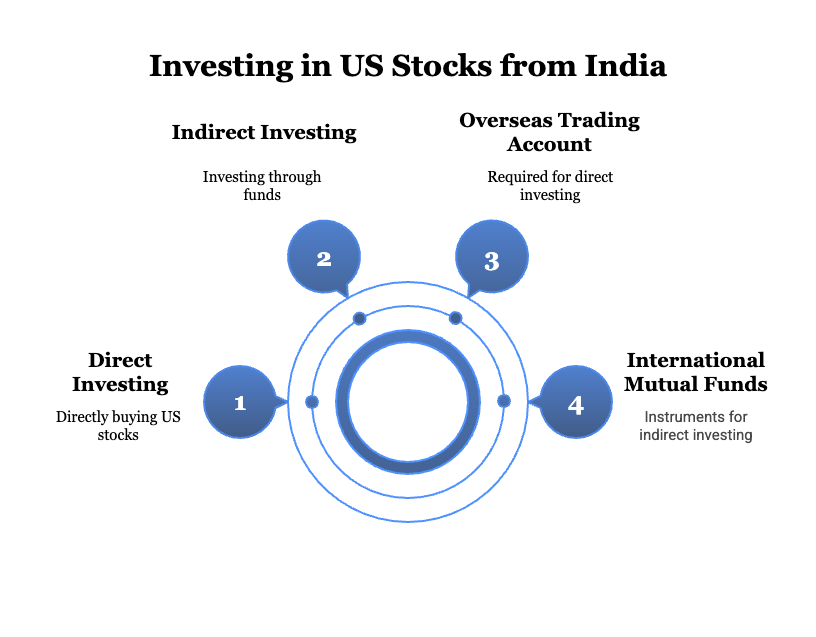
Choose a Brokerage Account
This is your gateway to the stock market. A brokerage account is a specialized investment account through which you can buy and sell securities.
-
Online Discount Brokers (e.g., Charles Schwab, Fidelity, Vanguard, E*TRADE): These are popular choices for self-directed investors. They offer low (often zero) commissions on stock trades, extensive research tools, and user-friendly online platforms. They are generally suitable for U.S. residents and often offer services to international investors, though country restrictions may apply.
-
Full-Service Brokers: These provide personalized advice, wealth management services, and portfolio management. They typically charge higher fees but can be beneficial for high-net-worth individuals or those who prefer hands-on guidance.
-
International Brokers: If you reside outside the U.S., you may need to use an international broker that specifically caters to non-U.S. residents and can handle cross-border transactions and currency conversions. Examples include Interactive Brokers, Saxo Bank, or local brokers in your country that offer access to U.S. markets. Ensure they are regulated in your jurisdiction and the U.S.
When choosing a broker, consider fees, available investment products, research tools, customer service, and ease of use.
Fund Your Account
Once your brokerage account is open, you’ll need to deposit funds. This can typically be done via:
-
Electronic Funds Transfer (ACH): Common for U.S. bank accounts.
-
Wire Transfer: Often used for larger amounts or international transfers.
-
Bank Cheque: Less common but still an option.
-
Debit Card: Some brokers allow instant funding with a debit card for smaller amounts.
Be aware of any minimum deposit requirements and potential transfer fees, especially for international transfers which may also involve currency conversion costs.
Research and Select Stocks
This is arguably the most critical step. Don’t invest in a company you don’t understand.
-
Fundamental Analysis: This involves evaluating a company’s financial health, management, industry position, and future prospects. Look at metrics like Price-to-Earnings (P/E) ratio, Earnings Per Share (EPS), revenue growth, debt levels, and competitive advantages.
-
Technical Analysis: Focuses on analyzing past market data, primarily price and volume, to predict future price movements. This is often used by short-term traders but can also inform long-term investors about entry and exit points.
-
Consider Your Investment Goals and Risk Tolerance: Are you looking for growth stocks (companies expected to grow faster than the overall market) or value stocks (companies trading below their intrinsic value)? How much risk are you willing to take? Align your stock selections with your personal financial objectives.
-
ETFs as a Starting Point: If individual stock selection feels overwhelming, begin with U.S.-focused ETFs (e.g., VOO, SPY for S&P 500, QQQ for Nasdaq 100). They provide instant diversification and track major indices.
Place Your Order (Market vs. Limit Orders)
Once you’ve identified the stock (or ETF) you want to buy, you’ll place an order through your broker.
-
Market Order: Instructs your broker to buy or sell a stock immediately at the best available current market price. While it guarantees execution, the price might fluctuate slightly from what you saw just moments before, especially in volatile markets.
-
Limit Order: Specifies a maximum price you’re willing to pay for a buy order or a minimum price you’re willing to accept for a sell order. Your order will only be executed if the stock reaches your specified price or better. This gives you more control over the price but doesn’t guarantee execution.
For most long-term investors, a limit order offers greater control and is generally recommended for purchases.
Important Considerations for American Stock Investors
Investing is more than just buying shares; it involves ongoing management and awareness of various factors.
Taxes and Regulations (for US and Non-US Investors)
Tax implications are a significant aspect of investing.
-
For U.S. Residents: You’ll typically pay capital gains tax on profits from selling stocks and income tax on dividends. The rates vary based on your income bracket and how long you held the stock (short-term vs. long-term capital gains).
-
For Non-U.S. Residents: U.S. dividend income is generally subject to a 30% withholding tax, though this can be reduced or eliminated by tax treaties between your country and the U.S. (you’ll usually need to submit a W-8BEN form to your broker). Capital gains on U.S. stocks are typically not taxed by the U.S. for non-residents, but your home country will likely tax them. Consult a tax professional specializing in international taxation for personalized advice.
Diversification and Asset Allocation
Never put all your eggs in one basket. Diversification means spreading your investments across various stocks, industries, and asset classes (like bonds, real estate, or international stocks) to reduce risk. Asset allocation refers to how you divide your investment portfolio among these different asset classes based on your risk tolerance and financial goals. For instance, a common strategy might involve a mix of large-cap U.S. stocks, international equities, and fixed income.
Long-Term vs. Short-Term Strategies
While short-term trading is possible, the most successful approach for most investors, particularly beginners, is a long-term strategy. This involves holding quality stocks for several years or even decades, allowing them to compound in value over time. Short-term trading is often characterized by higher risk, increased transaction costs, and generally requires more time and expertise.
Staying Informed and Continuous Learning
The market is dynamic. Keep abreast of economic news, company earnings reports, and industry trends. Utilize the research tools provided by your broker, read reputable financial news sources, and consider following respected financial analysts. Continuous learning about investing principles, market history, and economic indicators will empower you to make better decisions.
Potential Risks and How to Mitigate Them
While investing in American stocks offers significant opportunities, it’s crucial to acknowledge the inherent risks and implement strategies to mitigate them.
Market Volatility
Stock markets are inherently volatile, meaning prices can fluctuate significantly over short periods. Economic downturns, geopolitical events, interest rate changes, or even sentiment can trigger market corrections or crashes.
- Mitigation: A long-term perspective is key. Historically, markets have recovered from every downturn. Diversification and dollar-cost averaging (investing a fixed amount regularly, regardless of market fluctuations) can also help smooth out the impact of volatility.
Company-Specific Risks
Individual companies face risks such as poor management, declining sales, competitive pressures, or regulatory challenges. These can lead to a drop in stock price, even if the broader market is performing well.
- Mitigation: Thorough due diligence and research are essential. Avoid investing a disproportionate amount of your portfolio in a single company. Diversify across multiple stocks and industries.
Currency Risk (for International Investors)
If you are investing in American stocks from a non-U.S. country, changes in the exchange rate between your local currency and the U.S. dollar can impact your returns. A stronger U.S. dollar makes your U.S. investments worth more in your local currency, while a weaker dollar has the opposite effect.
- Mitigation: This risk is often accepted as part of international investing. Some sophisticated investors use currency hedging strategies, but for most retail investors, diversification across different currencies and markets is a more practical approach.
The Importance of Due Diligence
Never rely solely on tips or headlines. Always conduct your own research or consult with a qualified financial advisor. Understand the company’s business model, financial statements, competitive landscape, and the risks involved before committing your capital.
Conclusion
Investing in American stocks can be a powerful avenue for wealth creation and financial growth. By understanding the compelling reasons to invest, familiarizing yourself with market basics, and following a structured approach to buying and managing your investments, you can confidently participate in the U.S. market. Remember that successful investing is a marathon, not a sprint. It requires patience, discipline, continuous learning, and a commitment to long-term financial goals. With the right strategy and a professional, insightful approach, the American stock market offers a world of opportunity waiting to be explored.
aViewFromTheCave is a participant in the Amazon Services LLC Associates Program, an affiliate advertising program designed to provide a means for sites to earn advertising fees by advertising and linking to Amazon.com. Amazon, the Amazon logo, AmazonSupply, and the AmazonSupply logo are trademarks of Amazon.com, Inc. or its affiliates. As an Amazon Associate we earn affiliate commissions from qualifying purchases.