
For the modern investor, the question “What’s the Dow Jones for today?” is more than just an inquiry into a numerical value; it is a check on the heartbeat of the American economy. The Dow Jones Industrial Average (DJIA), often referred to simply as “the Dow,” remains the most iconic and widely cited stock market index in the world. Despite the rise of more comprehensive indices like the S&P 500 or the tech-heavy Nasdaq Composite, the Dow persists as the primary barometer for the general health of the industrial and corporate sectors.

Understanding what the Dow represents on any given day requires more than a glance at a green or red ticker. It demands an appreciation for the 30 “blue-chip” companies that comprise it, the price-weighted methodology that governs its movement, and the macroeconomic factors that can cause it to swing hundreds of points in a single afternoon.
Decoding the Dow: The Mechanics of the Blue-Chip Index
To interpret today’s Dow Jones performance, one must first understand its unique structure. Unlike the S&P 500, which is market-capitalization weighted, the Dow is price-weighted. This means that companies with higher share prices exert a greater influence on the index’s movement than those with lower share prices, regardless of the company’s total market value.
The History and Composition of the DJIA
Founded by Charles Dow and Edward Jones in 1896, the index originally consisted of just 12 industrial companies. Today, it has evolved into a curated list of 30 massive, stable, and industry-leading corporations. These companies are selected by a committee at S&P Dow Jones Indices to ensure that the index accurately reflects the broader U.S. economy. Because the components are “blue-chip” stocks—meaning they are well-established and financially sound—the Dow is often seen as a measure of stability rather than high-growth volatility.
The Dow Divisor and Price Weighting
A common point of confusion for investors is how the Dow can be at 39,000 points while individual stocks are priced at $200. This is managed through the “Dow Divisor.” Since the index is price-weighted, a simple average of the 30 stock prices would be disrupted every time a company undergoes a stock split or pays a dividend. The Dow Divisor is a mathematical constant used to normalize the index, ensuring that corporate actions do not artificially inflate or deflate the index’s value. This explains why a $1 move in a high-priced stock like UnitedHealth Group has a significantly larger impact on the “points” of the Dow than a $1 move in a lower-priced stock like Verizon.
Interpreting Today’s Movements: Factors That Drive the Numbers
When you check the Dow today, the number you see is the result of a complex interplay between global events, economic data, and investor psychology. Daily fluctuations are rarely random; they are usually reactions to specific catalysts.
Macroeconomic Indicators and Federal Reserve Policy
Perhaps the single most influential driver of the Dow today is the outlook on interest rates. The Federal Reserve’s decisions regarding the federal funds rate ripple through every component of the DJIA. When interest rates rise, borrowing costs for these massive corporations increase, potentially squeezing profit margins. Conversely, a “dovish” Fed—one that signals lower rates—often leads to a rally in the Dow. Investors closely watch reports on the Consumer Price Index (CPI) and employment data to predict how the Fed will act, causing the Dow to react sharply to these releases.
Corporate Earnings and Sector Performance
Since the Dow consists of only 30 stocks, the quarterly earnings reports of a single member can shift the entire index. If a heavyweight like Goldman Sachs or Microsoft reports earnings that beat analyst expectations, it can provide enough upward momentum to lift the Dow even if other sectors are lagging. This is why “Earnings Season” is a period of heightened volatility. Investors look for guidance on future revenue, debt management, and consumer demand, as these blue-chip companies are often the primary suppliers or service providers for the rest of the economy.

Geopolitical Events and Market Sentiment
The Dow is a global index in terms of its constituents’ reach. Most Dow companies generate a significant portion of their revenue overseas. Therefore, trade tensions, international conflicts, or shifts in global energy prices (specifically oil) can impact the index. Beyond the fundamentals, “market sentiment”—the collective psychological state of investors—plays a massive role. Fear and greed often cause the Dow to overshoot its “fair value” in the short term, leading to the rapid intraday swings often seen during times of global uncertainty.
How to Use Daily Market Data for Long-Term Strategy
For many retail investors, checking the Dow daily can be an emotional rollercoaster. However, the most successful market participants use daily data not as a signal to trade, but as a tool for long-term strategic positioning.
Avoiding the Noise of Day-to-Day Volatility
It is important to remember that the Dow’s daily performance is “noise” in the context of a multi-decade investment horizon. A 500-point drop might feel catastrophic, but in a market where the index is near 40,000, that represents only a 1.25% move. Professional wealth managers often use daily dips as opportunities for “dollar-cost averaging”—the practice of consistently buying into the market regardless of price to lower the average cost per share over time. By focusing on the “why” behind today’s Dow movement rather than just the “how much,” investors can avoid making impulsive, fear-driven decisions.
Rebalancing and Portfolio Health
The Dow can serve as a benchmark for your own portfolio. If the Dow is up 10% for the year and your portfolio is flat, it may indicate that your asset allocation is too conservative or that your specific stock picks are underperforming the broader market leaders. Daily monitoring helps investors identify which sectors are leading the market (e.g., tech, healthcare, or financials). If the Dow is being driven higher specifically by energy stocks while your portfolio is heavy in consumer staples, it might be time to rebalance your holdings to ensure you are capturing the growth sectors of the current economic cycle.
Modern Tools for Tracking the Dow in Real-Time
In the digital age, the way we consume market data has fundamentally changed. We no longer have to wait for the evening news or the morning paper to know “what’s the Dow for today.”
Financial News Aggregators and Apps
Real-time tracking is now available to anyone with a smartphone. Platforms like Bloomberg, CNBC, and Yahoo Finance provide tick-by-tick updates, but the real value lies in their “heat maps” and “contributor lists.” These tools show you exactly which of the 30 Dow stocks are responsible for the day’s gains or losses. For example, if the Dow is down 200 points, a quick look at a heat map might reveal that 180 of those points are due to a single company’s disappointing earnings, rather than a systemic market failure.
The Role of ETFs in Dow Participation
For those who want to do more than just watch the Dow, Exchange-Traded Funds (ETFs) have made it incredibly easy to “own” the index. The SPDR Dow Jones Industrial Average ETF Trust (ticker: DIA), often called “Diamonds,” tracks the index almost perfectly. By looking at the daily volume and liquidity of these ETFs, analysts can gauge the conviction of institutional investors. High volume on a day when the Dow is rising suggests a “healthy” rally with strong institutional backing, whereas a rise on low volume might be viewed with skepticism by seasoned traders.
The Future of the Blue-Chip Index
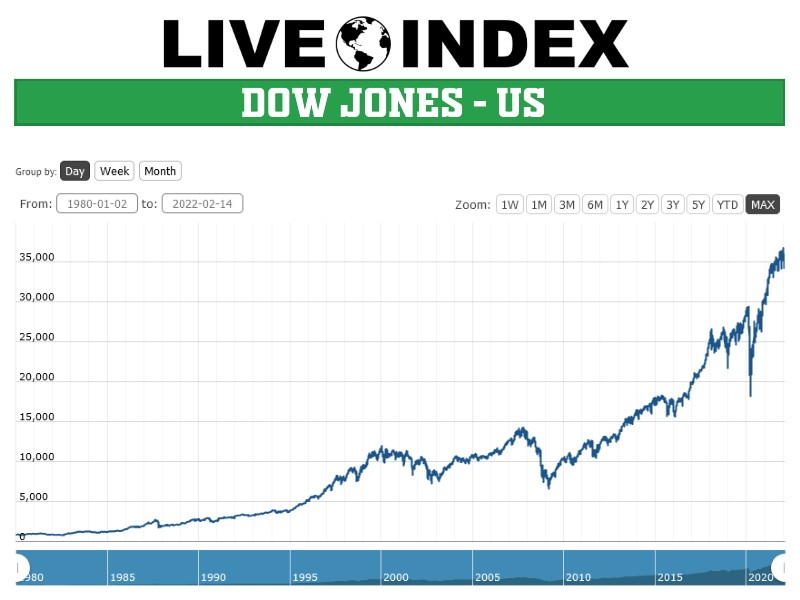
As the economy shifts toward a more digital and service-oriented model, the Dow Jones Industrial Average continues to adapt. The removal of old-guard industrial giants in favor of technology and healthcare leaders ensures that the question “What’s the Dow for today?” remains relevant to the current era of commerce.
The Dow is more than just a number; it is a narrative of American corporate history. It reflects our collective triumphs, our periods of inflation, our technological breakthroughs, and our economic recoveries. For the investor seeking to build wealth, understanding the daily movements of the Dow is about more than just tracking wealth—it is about gaining an education in the forces that shape the global financial landscape. Whether the Dow is up or down today, the insights gained from its movement provide the foundation for smarter, more informed financial decisions in the future. By moving beyond the surface-level digits and looking into the underlying economic drivers, investors can transform a simple daily check-in into a powerful component of their financial literacy.
aViewFromTheCave is a participant in the Amazon Services LLC Associates Program, an affiliate advertising program designed to provide a means for sites to earn advertising fees by advertising and linking to Amazon.com. Amazon, the Amazon logo, AmazonSupply, and the AmazonSupply logo are trademarks of Amazon.com, Inc. or its affiliates. As an Amazon Associate we earn affiliate commissions from qualifying purchases.