
In the vast and intricate world of global finance, few names resonate with the authority and influence of Standard & Poor’s. From the ubiquitous S&P 500 index, which serves as a vital barometer for the U.S. stock market, to its critical role in providing credit ratings that underpin capital markets worldwide, Standard & Poor’s is an indispensable pillar of modern financial infrastructure. Yet, for many who regularly encounter its services, the origin of its distinctive dual-barrelled name remains somewhat of a mystery. Far from being a mere branding choice, “Standard & Poor’s” is a historical testament to the merging of two distinct, pioneering forces in financial information, each contributing a unique legacy to the development of analytical tools that empower investors and businesses alike. This exploration delves into the foundational histories of these two entities, their strategic convergence, and the enduring impact of their combined legacy on personal finance, investing, and the broader economic landscape.
A Legacy Forged in Financial Information
The story of Standard & Poor’s begins not with a single visionary, but with two separate initiatives born out of the burgeoning need for transparent and reliable financial data in an era of rapid industrial expansion. Before the age of digital databases and instant market news, compiling and disseminating financial information was a painstaking, yet crucial, enterprise that laid the groundwork for informed investment decisions.
The Genesis of H.V. & H.W. Poor (Poor’s Publishing)
The “Poor” in Standard & Poor’s traces its lineage back to the mid-19th century, a period marked by explosive growth in American infrastructure, particularly railroads. Henry Varnum Poor, a former railroad executive, recognized an acute need for comprehensive, unbiased financial information about these companies. Investors, eager to capitalize on the railroad boom, lacked reliable data to assess the financial health and prospects of the myriad railway ventures. In response to this void, Poor began compiling detailed statistics.
In 1860, Henry Varnum Poor published “History of the Railroads and Canals of the United States,” which evolved into “Poor’s Manual of Railroads” by 1868. This annual publication became an indispensable resource, offering detailed financial statements, operational statistics, and historical data for virtually every railroad in the country. It was an unprecedented act of transparency, providing investors with the raw material to analyze risk and potential return, thereby professionalizing the act of investing. His son, Henry William Poor, later joined the business, expanding its scope and ensuring its continued relevance as a crucial provider of financial intelligence, particularly during the late 19th and early 20th centuries. Poor’s Publishing effectively set the standard for financial data disclosure, becoming a trusted authority for anyone looking to invest in or understand the rapidly evolving industrial economy.
The Establishment of Standard Statistics Bureau
The “Standard” component of the name emerged later, in the early 20th century, reflecting a broader evolution in the demand for diversified financial data. By the turn of the century, the American economy had diversified far beyond just railroads, encompassing myriad industrial, utility, and financial companies. Investors and businesses needed analytical tools that could capture this growing complexity.
In 1906, Luther Blake founded the Standard Statistics Bureau. Blake’s vision was to provide a wider array of financial statistics, economic indicators, and company data than previously available. Unlike Poor’s focused approach on railroads, Standard Statistics aimed for comprehensiveness, compiling data on various industries, corporate financials, and economic trends. Its offerings included detailed corporate reports, bond and stock guides, and a range of statistical services designed to give investors and financial professionals a “standard” measure against which to evaluate opportunities. The bureau quickly established itself as a leading provider of comprehensive financial and economic information, distinguishing itself through its breadth of coverage and its commitment to standardized data presentation.
The Synergistic Merger: More Than the Sum of Its Parts
While both Poor’s Publishing and Standard Statistics Bureau served critical functions in the financial ecosystem, their distinct focuses and overlapping yet complementary services naturally set the stage for a powerful consolidation. The exigencies of the Great Depression and World War II further underscored the need for robust, integrated financial intelligence.
Bringing Two Titans Together
The strategic rationale behind the merger was compelling. Poor’s, with its long history, established reputation, and deep expertise in historical financial data and bond analysis, particularly within the railroad sector, held immense value. Standard Statistics, on the other hand, brought a more modern, comprehensive approach to tracking a wider array of corporate financials and economic indicators, along with a focus on timely data dissemination. Combining these strengths promised to create an entity that was greater than the sum of its individual parts, capable of offering an unparalleled depth and breadth of financial information to an increasingly sophisticated market.
The actual merger took place in 1941. The unification was not just an administrative consolidation; it was a strategic alignment aimed at creating a dominant force in financial information services. The newly formed entity inherited decades of data, established methodologies, and a combined client base that included individual investors, institutional funds, and governmental bodies.
The Birth of Standard & Poor’s Corporation
Following the merger, the new company was officially named the Standard & Poor’s Corporation. This name was a deliberate choice, reflecting and honoring the legacy of both founding organizations. “Standard” represented the modern, comprehensive statistical approach and the commitment to standardized data, while “Poor’s” acknowledged the pioneering historical data collection and the long-standing authority established by Henry Varnum Poor and his son. The hyphenated name elegantly bridged the past and the present, signaling a continuity of excellence and an expanded scope of service.
The formation of Standard & Poor’s Corporation marked a pivotal moment in financial history. It brought together the best practices from both companies, leading to enhanced analytical offerings, broader market coverage, and ultimately, a more robust foundation for financial decision-making in a rapidly changing world. The combined entity was uniquely positioned to evolve with the financial markets, adapting to new complexities and providing the essential tools required by investors and businesses to navigate economic cycles.
Standard & Poor’s Evolution: Pillars of Modern Finance
Post-merger, Standard & Poor’s Corporation quickly cemented its position as an indispensable provider of financial intelligence. Its most enduring contributions to the financial world—market indices and credit ratings—would become cornerstones of investment strategy and business finance.
Pioneering Market Indices: The S&P 500
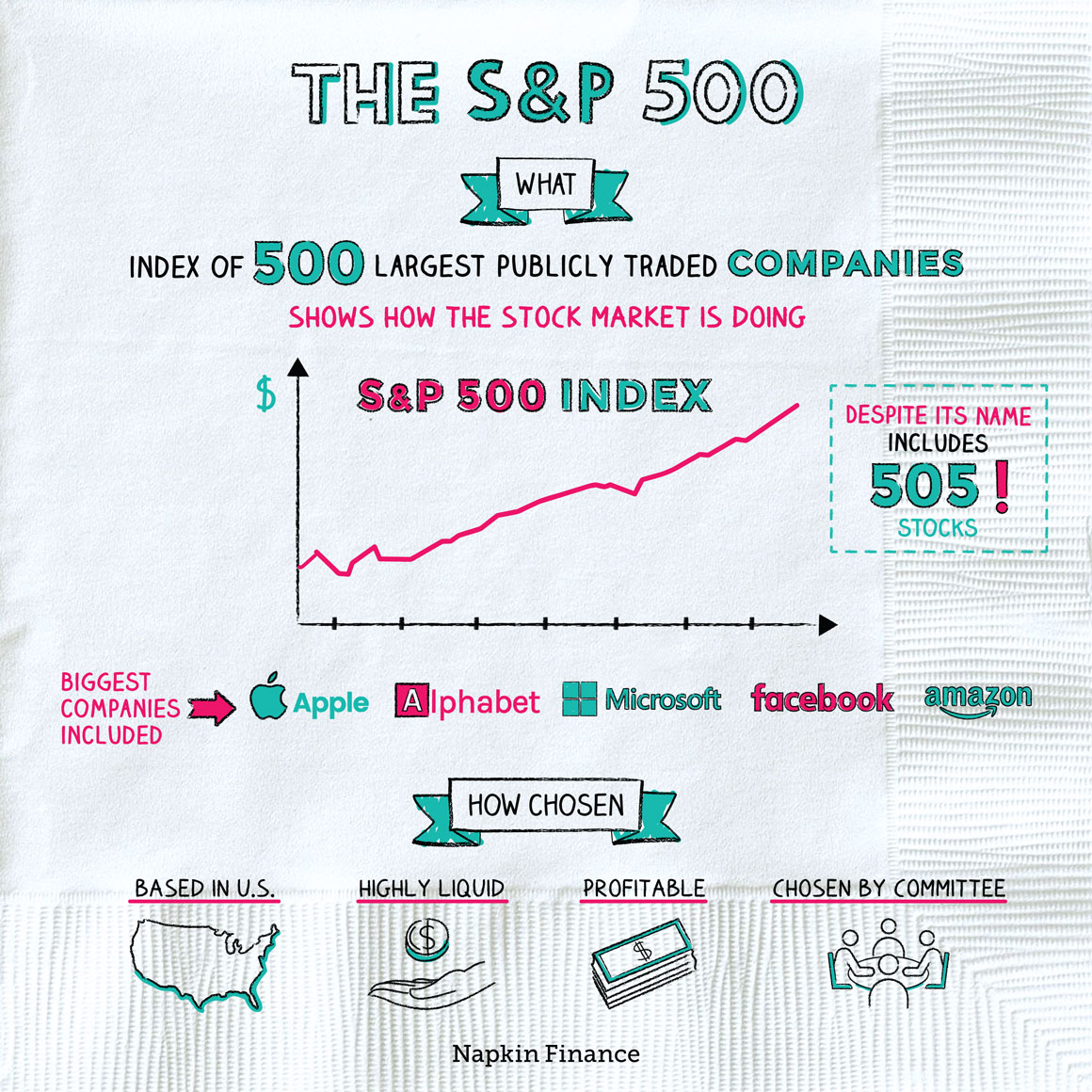
Perhaps the most famous contribution of Standard & Poor’s is its family of market indices, most notably the S&P 500. While the company had been calculating various indices since the 1920s, the S&P 500 was officially introduced in 1957. It was revolutionary for several reasons. Unlike the Dow Jones Industrial Average, which is price-weighted and includes only 30 stocks, the S&P 500 is a market-capitalization-weighted index comprising 500 of the largest publicly traded companies in the United States. This made it a far more comprehensive and representative gauge of the overall health of the U.S. equity market.
The S&P 500 quickly became the most widely recognized benchmark for large-cap U.S. equities, serving as a critical tool for investors to track market performance, evaluate fund managers, and construct diversified portfolios. Its design allows for accurate comparisons and robust analysis, making it fundamental to passive investing strategies like index funds and exchange-traded funds (ETFs). Beyond the S&P 500, the company developed a suite of other indices, such as the S&P MidCap 400 and S&P SmallCap 600, providing granular insights into different market segments, and global indices like the S&P Global 1200, extending its reach to international markets. These indices are not merely numbers; they are sophisticated financial tools that shape investment strategies and offer profound insights into economic performance.
The Authority in Credit Ratings
Another critical service that cemented Standard & Poor’s influence is its credit rating business. Building on Poor’s historical expertise in evaluating railroad bonds and Standard’s broader corporate analysis, S&P developed a robust methodology for assessing the creditworthiness of corporations, governments, and structured financial instruments. A credit rating is an independent assessment of a debtor’s ability to pay back debt. These ratings, often expressed as letter grades (e.g., AAA, BBB-, D), provide investors with crucial information about the risk associated with a particular bond or issuer.
S&P’s credit ratings play a vital role in global capital markets. They influence the cost of borrowing for companies and governments, guide investment decisions for pension funds and institutional investors, and help maintain stability in financial systems by promoting transparency and risk assessment. For businesses seeking capital, an S&P credit rating can significantly impact their access to funding and the interest rates they pay. For investors, these ratings are an essential financial tool for evaluating the risk-adjusted returns of fixed-income investments, directly impacting their personal finance and investment portfolios. The meticulous analysis and independent judgment behind S&P’s ratings have made it one of the most trusted and influential credit rating agencies worldwide.
Standard & Poor’s Today: A Global Financial Intelligence Powerhouse
From its humble beginnings as two separate publishers of financial data, Standard & Poor’s has evolved into S&P Global, a diversified global financial intelligence provider that continues to innovate and expand its influence across various facets of the financial world.
S&P Global: Beyond Indices and Ratings
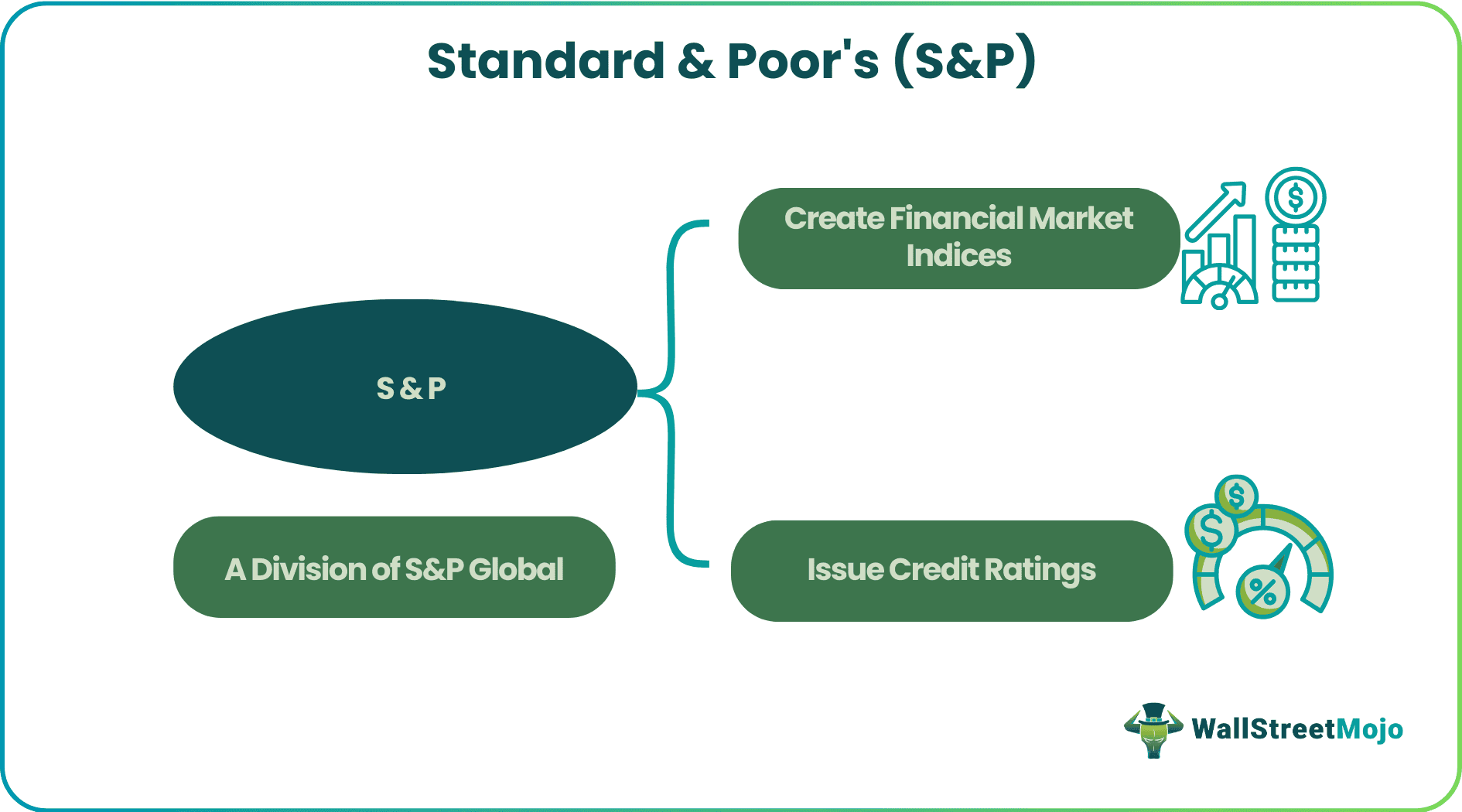
Today, the entity known as S&P Global (the parent company of S&P Dow Jones Indices and S&P Global Ratings) extends far beyond its iconic indices and credit ratings. While these remain core pillars, S&P Global has strategically diversified its portfolio to offer a comprehensive suite of data, analytics, and benchmarks across multiple sectors. This includes S&P Global Market Intelligence, which provides essential data, research, and analytics for financial professionals; S&P Global Platts, a leading independent provider of information and benchmark prices for the commodity and energy markets; and the recently integrated IHS Markit, which adds deep expertise in areas like automotive data, maritime & trade, and economic forecasting. This expansion reflects a continuous commitment to providing the critical insights needed to navigate an increasingly complex global economy. The company’s vast array of financial tools and data services underpins decisions across personal finance, corporate strategy, investing, and governmental policy.
The Enduring Legacy of the Name
The name “Standard & Poor’s,” while often shortened or subsumed under “S&P Global,” remains a powerful symbol of its foundational principles. It encapsulates over a century and a half of unwavering dedication to financial transparency, rigorous analysis, and the provision of essential market intelligence. The legacy of Henry Varnum Poor’s meticulous data collection and Luther Blake’s vision for comprehensive statistics lives on in every index calculation, every credit rating, and every data point provided by the modern S&P Global. It is a name that represents not just a company, but a continuous evolution in how financial information is gathered, analyzed, and disseminated—an evolution that has fundamentally shaped the landscape of investing, business finance, and global economic understanding. The story of “Standard & Poor’s” is, therefore, a testament to the enduring power of accurate information in driving economic growth and empowering informed financial decisions worldwide.
aViewFromTheCave is a participant in the Amazon Services LLC Associates Program, an affiliate advertising program designed to provide a means for sites to earn advertising fees by advertising and linking to Amazon.com. Amazon, the Amazon logo, AmazonSupply, and the AmazonSupply logo are trademarks of Amazon.com, Inc. or its affiliates. As an Amazon Associate we earn affiliate commissions from qualifying purchases.