
In the landscape of modern finance, the concept of “common stock” stands as one of the most powerful engines for wealth creation. For the individual investor, common stock represents more than just a ticker symbol on a screen; it is a gateway to fractional ownership in some of the world’s most influential corporations. Whether you are building a retirement fund, saving for a major purchase, or seeking to outpace inflation, understanding the mechanics, benefits, and risks of common stock is fundamental to your financial literacy.
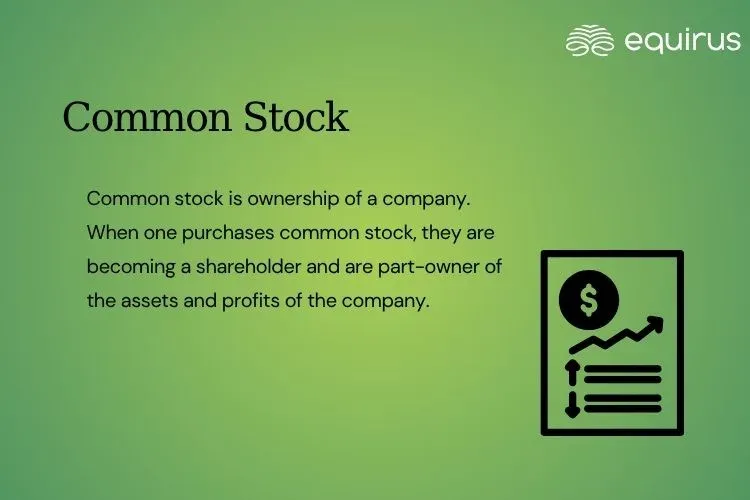
Common stock is the most prevalent form of equity ownership in a company. When you purchase a share of common stock, you are essentially buying a “piece” of that business’s future earnings and assets. While the world of investing can often feel obscured by jargon, the core of common stock is straightforward: it is a claim on a company’s success.
1. The Fundamentals of Common Stock Ownership
To understand common stock, one must first understand the concept of equity. Unlike debt, where an investor lends money to a company in exchange for interest (as seen with bonds), equity represents an actual stake in the enterprise.
The Definition of Fractional Ownership
When a company “goes public” through an Initial Public Offering (IPO), it divides its ownership into millions of small units called shares. By purchasing common stock, you become a shareholder. This entitles you to a portion of the company’s profits, usually distributed as dividends, and a claim on its assets. However, as a common stockholder, your claim is “residual.” This means that in the event of a liquidation or bankruptcy, you are last in the pecking order behind creditors, bondholders, and preferred stockholders.
Common Stock vs. Preferred Stock
While common stock is the most frequent type of equity, it is often contrasted with “preferred stock.” Preferred stock functions as a hybrid between a stock and a bond. Preferred shareholders usually receive fixed dividends and have a higher claim on assets during a bankruptcy. However, they rarely have voting rights and do not participate in the same level of capital appreciation as common stockholders. If a company like Apple or Amazon grows ten-fold, the common stockholders reap the massive rewards, whereas preferred stockholders generally only receive their fixed payments.
The Role of the Board of Directors
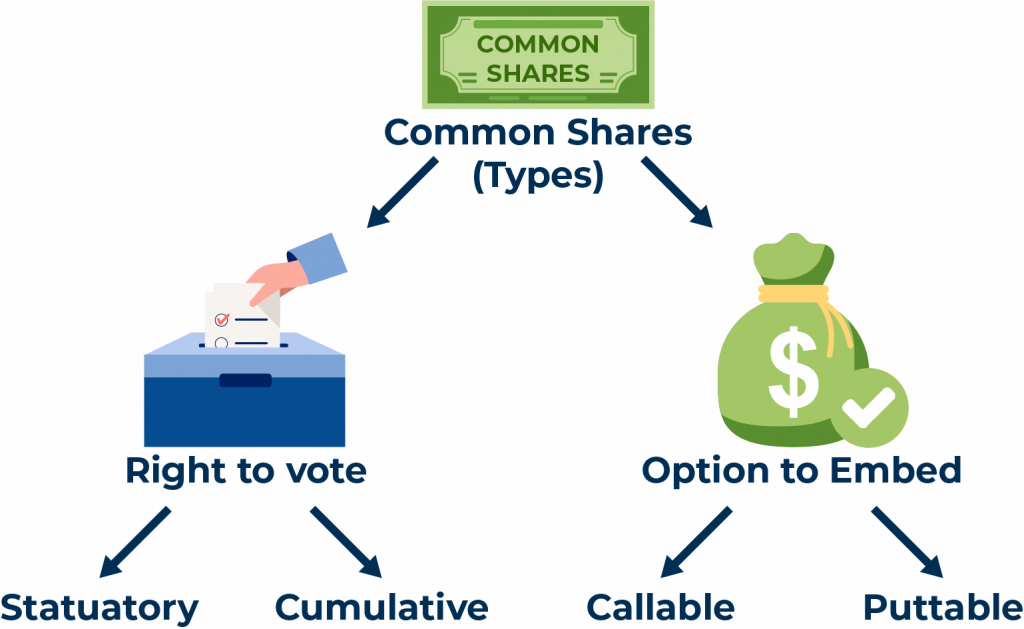
As a part-owner, you have a say in who runs the company. Common stockholders are typically granted one vote per share. These votes are used to elect the Board of Directors—the group responsible for overseeing corporate management and making high-level decisions, such as whether to issue a dividend or pursue a merger. This democratic element of common stock ensures that management remains accountable to the owners of the business.
2. Wealth Creation: How Common Stock Generates Returns
Investors gravitate toward common stock because of its historical track record of delivering higher returns than almost any other asset class over the long term. There are two primary ways an investor makes money through common stock: capital appreciation and dividends.
Capital Appreciation
Capital appreciation occurs when the market price of a stock increases over time. If you purchase a share for $50 and the company’s innovative products or expanding market share drive the price up to $150, you have achieved a capital gain. This is the “buy low, sell high” philosophy. Because there is theoretically no ceiling on how high a company’s value can go, capital appreciation offers the potential for exponential wealth growth, a phenomenon famously demonstrated by long-term investors in the tech and retail sectors.
Dividend Income and Yield
Not all companies focus solely on price growth. Many mature, profitable corporations distribute a portion of their earnings directly to shareholders in the form of dividends. Dividends provide a steady stream of passive income. For “income investors,” these payouts are essential. When dividends are reinvested to buy more shares, investors benefit from the “eighth wonder of the world”: compounding. Over decades, reinvested dividends can account for a significant portion of a portfolio’s total return.
The Power of Limited Liability
A critical but often overlooked benefit of common stock is limited liability. As a shareholder, your risk is limited to the amount of money you have invested. If a corporation faces massive lawsuits or goes into debt, creditors cannot come after your personal assets, bank accounts, or home. This protection allows individuals to participate in high-stakes business ventures without risking their entire financial livelihood.
3. Navigating the Risks and Market Volatility
While the potential for reward is high, common stock is not without its perils. In the financial world, risk and return are inextricably linked. Understanding the “downside” is what separates successful investors from those who panic during market downturns.
Market and Systemic Risk
Stock prices do not move in a straight line. They are influenced by a myriad of factors, including economic cycles, interest rates, geopolitical tensions, and investor sentiment. Systemic risk, often called “market risk,” refers to the possibility that the entire market will decline at once, such as during a recession. In these periods, even the stocks of fundamentally strong companies can lose value temporarily.
Business-Specific Risk
Beyond the broad market, there is the risk associated with the individual company. A company might suffer from poor management, a failed product launch, or a shift in consumer preferences. Unlike a diversified index, an individual common stock can go to zero if the company goes bankrupt. This is why financial advisors emphasize that common stockholders are “residual claimants”—they are the last to be paid if the ship sinks.
Volatility and Emotional Resilience
The price of a common stock is determined by the laws of supply and demand on public exchanges like the NYSE or NASDAQ. These prices can fluctuate wildly in the short term based on news headlines or quarterly earnings reports. For an investor in common stock, the greatest risk is often their own behavior—the urge to sell when prices are low and buy when they are high. Maintaining a long-term perspective is vital to weathering this volatility.
4. Strategies for Building a Stock Portfolio
For those looking to enter the market, there is no one-size-fits-all approach. Your strategy should depend on your financial goals, time horizon, and risk tolerance.
Growth vs. Value Investing
Investors generally fall into two camps: growth and value. Growth investors look for companies that are expected to grow at an above-average rate compared to the rest of the market. these companies often reinvest their profits rather than paying dividends. Value investors, on the other hand, look for “bargains”—companies that are trading for less than their intrinsic value, often characterized by low Price-to-Earnings (P/E) ratios and steady dividend payments.
The Rise of Indexing and ETFs
For many, the best way to own common stock is not by picking individual winners but by buying the entire market. Exchange-Traded Funds (ETFs) and Index Funds allow investors to buy a single “basket” that contains hundreds of different common stocks (like the S&P 500). This provides instant diversification, reducing the risk that a single company’s failure will ruin your portfolio. It is a “set it and forget it” strategy that has historically outperformed most professional money managers.
Analyzing Fundamentals
Before purchasing a common stock, savvy investors look at fundamental metrics. These include:
- Earnings Per Share (EPS): The portion of a company’s profit allocated to each outstanding share.
- Price-to-Earnings (P/E) Ratio: A valuation ratio of a company’s current share price compared to its per-share earnings.
- Dividend Yield: The annual dividend payment divided by the stock price.
Learning to read a balance sheet and income statement allows an investor to see the reality behind the marketing hype.
5. The Mechanics: How to Acquire Common Stock
In the digital age, the barriers to entry for the stock market have never been lower. What used to require a phone call to a high-priced broker can now be done with a few taps on a smartphone.
Brokerages and Digital Platforms
To buy common stock, you need a brokerage account. Modern platforms offer commission-free trading, making it accessible for those starting with small amounts of capital. Whether using a traditional firm or a fintech app, the process involves depositing cash and placing a “buy order” for a specific number of shares or even “fractional shares” (buying a portion of a single share).
Market Orders vs. Limit Orders
When buying common stock, you have choices in how you execute the trade. A “market order” instructs the broker to buy the stock immediately at the best available current price. A “limit order” allows you to set a specific price at which you are willing to buy. This gives the investor more control over their entry point, especially in a fast-moving market.

The Importance of a Long-Term Horizon
The final and perhaps most important mechanic of stock ownership is time. Common stock is best viewed as a long-term vehicle. Over days or months, the market is a “voting machine” driven by popularity; over years and decades, it is a “weighing machine” driven by actual value. By holding common stock over long periods, you minimize the impact of short-term noise and maximize the power of corporate growth.
In conclusion, common stock is the bedrock of the financial markets. It offers an unparalleled opportunity for individuals to participate in the growth of the global economy. By understanding that common stock is an ownership stake—complete with voting rights, potential dividends, and inherent risks—investors can navigate the market with confidence. While the journey of equity investing requires patience and a disciplined strategy, the rewards of owning a piece of a successful enterprise remain one of the most effective paths to financial independence.
aViewFromTheCave is a participant in the Amazon Services LLC Associates Program, an affiliate advertising program designed to provide a means for sites to earn advertising fees by advertising and linking to Amazon.com. Amazon, the Amazon logo, AmazonSupply, and the AmazonSupply logo are trademarks of Amazon.com, Inc. or its affiliates. As an Amazon Associate we earn affiliate commissions from qualifying purchases.